Best Beaches in Hawaii 2026: Island-by-Island Guide
17 min readYndira W. Tonin
The best beaches in Hawaii are not on one island, they are scattered across all of them, and they come in colors most people do not expect, powder white at Lanikai, golden at Hapuna, jet black at Punaluu, and even olive green at Papakolea. Picking "the best" is really about picking the right beach, on the right island, for the right kind of day.
Everything here was checked and is current as of 2026.
This is the all islands roundup, the standout beaches of Oahu, Maui, Kauai, and the Big Island, plus the smaller islands, gathered in one place. For each island we hit the headline beaches and link to our deeper island guides, then sort the whole lot by what you actually want, snorkeling, families, sunset, surf, seclusion, or just the most jaw dropping sand.
Two truths run underneath all of it. First, Hawaii's beaches are public, every one, even the ones fronting five star resorts, by law. Second, the ocean here is beautiful and genuinely powerful, so the same beach can be a calm paradise one season and a dangerous shore break the next. We will keep both in view.
So whether you are island hopping or just deciding where to lay your towel, here are the beaches worth the sand in your shoes, and how to match them to your trip.
Table of Contents
01
What makes Hawaii's beaches special
Hawaii has more than beautiful sand, it has variety that no other US destination comes close to, packed into a chain of islands you can hop in a short flight.
The colors alone tell the story. Volcanic geology gives Hawaii brilliant white sand beaches (much of it ground coral and parrotfish made), dramatic black sand beaches formed where lava met the sea, a famous green sand beach colored by olivine crystals, and even pockets of red sand. You can stand on four different colored beaches across a single trip.
Then there is the life. Hawaii's beaches come with green sea turtles basking on the sand, monk seals hauling out to nap, spinner dolphins offshore, and, in winter, humpback whales breaching within sight of the shore. The reefs turn many beaches into ready made snorkeling.
The trade off, and the theme of this whole guide, is that the ocean dictates the terms. Hawaii's surf flips by season and shore, calm and swimmable one month, pounding and dangerous the next, so the "best" beach is always the one matched to the conditions of the day.
One universal rule before we start island hopping, always use reef safe sunscreen. Hawaii law restricts the coral bleaching kind, and the reefs that make these beaches so beautiful depend on it. A mineral reef safe sunscreen protects you without poisoning the water.
A few things that surprise first timers, all in your favor, the water is warm year round, mid-70s to low-80s Fahrenheit, so there is no "too cold to swim" season. The beaches are remarkably accessible, most with public parking, restrooms, and showers. And despite the deep ocean setting, the real day to day risks are sun, shore break, and current far more than the sharks people tend to fret about.
Come prepared for the sun and respectful of the surf, and Hawaii's beaches are as welcoming as they are beautiful. With that, let us go island by island.
02
Best beaches on Oahu
Oahu packs the most variety into the smallest space, with a beach for every mood within an hour's drive of Waikiki.
Lanikai Beach (with neighboring Kailua) is regularly called the best beach in Hawaii, and in person it earns it, powder soft sand, calm bright blue water, and the two Mokulua islands floating offshore. It is the postcard. Waikiki Beach, beneath Diamond Head, is the lively, do everything beach, gentle surf to learn on, calm swimming, and a sunset crowd that applauds. Hanauma Bay is the island's premier snorkeling, a protected crater reef teeming with fish.
For drama, the North Shore beaches (Sunset, Waimea Bay, Pipeline) are summer swimming spots that transform into legendary big wave arenas each winter, gorgeous to watch year round.
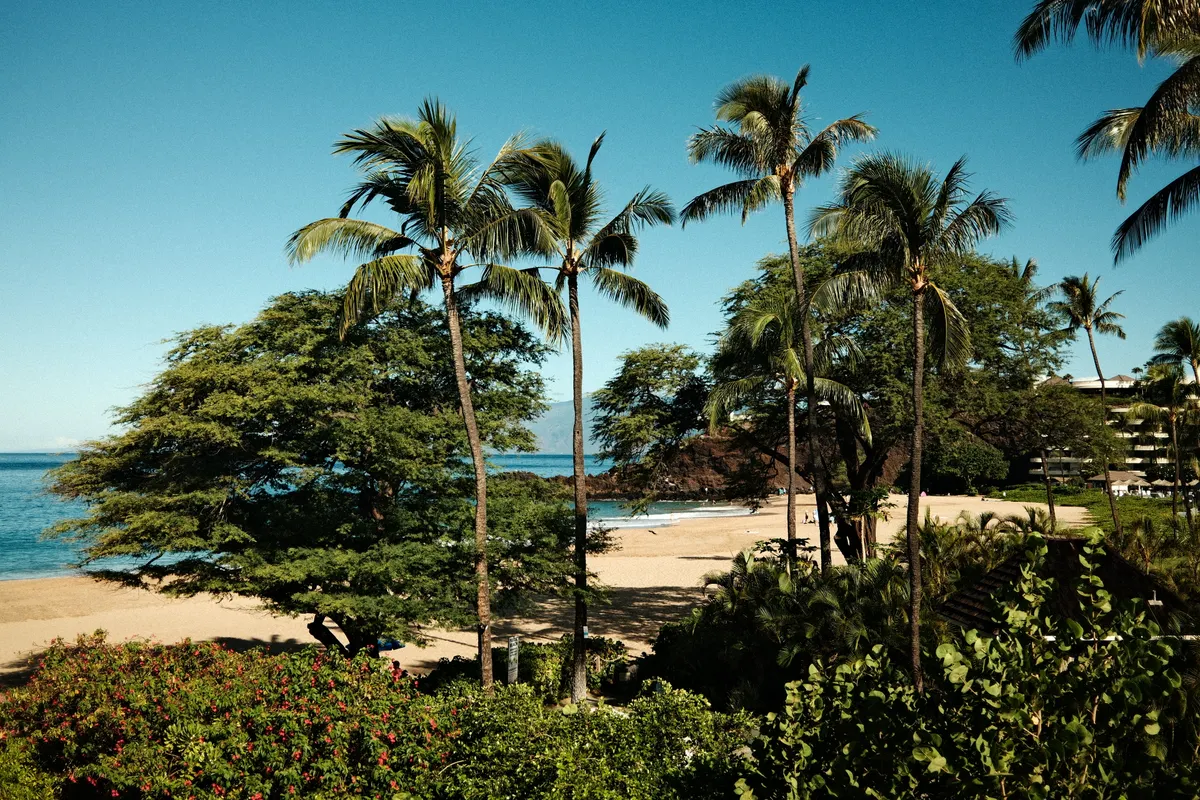
Photo by Umay Isik via Pexels
Two more Oahu favorites round it out, the man made Ko Olina lagoons on the sunny west side, calm, protected, and ideal for toddlers and nervous swimmers, and Sans Souci (Kaimana) Beach at the quiet Diamond Head end of Waikiki, a local favorite swim away from the main crowds. Between Lanikai's calm, Waikiki's surf, Hanauma's reef, and the North Shore's winter giants, Oahu genuinely covers every kind of beach day within an hour of the city.
Because Oahu is the home island for so many visitors, its beaches are the most accessible and the most varied. For the full rundown, see our best beaches on Oahu guide and the dedicated Kailua and Lanikai guide. If you only have one island and want range, calm bays, snorkeling, surf, and city beach all close together, Oahu is hard to beat.
★4.9(3,571)
Waikiki: Turtle Canyon Snorkel Adventure on Oahu
2 hours
Free cancellation
from
$85
03
Best beaches on Maui
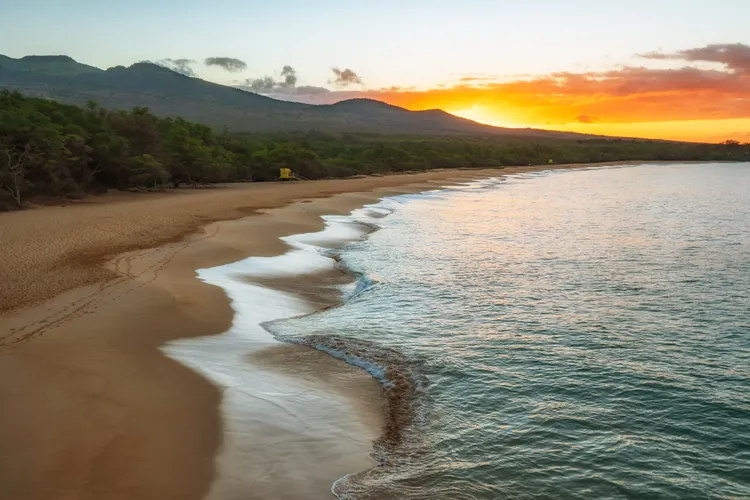
Maui's beaches are the resort vacation ideal, long, golden, sunny, and lined with some of the best snorkeling in the state.
Kaanapali Beach on the West side is the classic, three miles of sand fronting the resorts, with Black Rock at the north end for easy snorkeling and a nightly cliff diving ceremony. Wailea, on the sunny South shore, is the calm, polished counterpart, a string of gorgeous crescents with views to Lanai. Makena (Big Beach) is the wild, enormous, undeveloped showstopper just south, but with a powerful shore break to respect.
The snorkeling deserves its own mention, Molokini, the crescent crater off the South shore, is among the best snorkel sites in Hawaii, and Kapalua Bay up north is a calm, family friendly gem.
Beyond the big names, Napili Bay offers calm, family friendly West side snorkeling without the resort scale, and Hookipa Beach near Paia is the place to watch the windsurfers it is famous for and find green sea turtles hauled out on the sand at golden hour. Out at the end of the Road to Hana, Hamoa Beach is a gorgeous gray sand crescent worth the drive.
Maui's beaches reward matching the coast to the conditions, generally calm and sunny on the West and South shores, wilder on the North and Hana sides. Our best beaches on Maui guide breaks them down by region, and the Road to Hana guide covers the dramatic black sand beaches out east. For sun and snorkel reliability, Maui is the island many beach lovers rank first.
04
Best beaches on Kauai
Kauai's beaches are the most dramatic in Hawaii, and the most season dependent, because the Garden Isle's surf is also the most dangerous.
Hanalei Bay on the North Shore is the showpiece, a two mile crescent backed by waterfall streaked mountains, calm and swimmable in summer, a serious surf arena in winter. Tunnels (Makua) nearby is summer snorkeling heaven, and Kee Beach marks the end of the road beneath the Na Pali cliffs (it needs a reservation now). On the sunny, reliable South Shore, Poipu Beach stays swimmable year round and is the best family pick, with monk seals frequently napping on the sand.
For the truly wild, the West side's Polihale runs for miles to the foot of the Na Pali Coast, enormous, empty, and the best sunset on the island.
For the calmest, most kid safe water, Lydgate's man made ocean pools on the East Side stay swimmable even when the surf is up, and Anini Beach on the North Shore sits behind one of Hawaii's longest reefs, calm and shallow in summer. Kauai does have gentle options, you just have to know where the reef does the protecting.
The cardinal Kauai rule, North Shore beaches are summer only for swimming, while the South and East shores (Poipu, Lydgate) stay calm year round. Polihale on the west side adds the wild card, the longest beach in Hawaii, remote and empty, with the island's best sunsets (and currents too strong for swimming). And a planning note that catches people out, Kee and Tunnels now sit inside Haena State Park, which requires advance reservations for out of state visitors, so book ahead if the far North Shore is on your list.
Our best beaches on Kauai guide lays out the all important season rule beach by beach. Kauai wins on sheer beauty. It just demands the most respect for the water.
05
Best beaches on the Big Island
The youngest island has the fewest classic sand beaches, but the most unusual ones, thanks to all that active volcanism.
Hapuna Beach on the sunny Kohala Coast is the headliner and often ranked the best all around beach in the state, a broad, half mile sweep of soft white sand with usually calm, swimmable water. Nearby Kaunaoa (Mauna Kea Beach) is an equally gorgeous crescent.
But the Big Island's signature is colored sand. Punaluu Black Sand Beach is the famous one, jet black volcanic sand where green sea turtles (and sometimes endangered hawksbills) bask on the shore. And Papakolea, reached by a long hike near the island's southern tip, is one of only a handful of green sand beaches on earth, tinted olive by olivine crystals.

Photo by Adrien Olichon via Pexels
For easy snorkeling, Kahaluu Beach near Kona is a protected bay thick with fish and turtles, and Manini'owali (Kua Bay) is a gorgeous white sand cove on the Kohala Coast when the water is calm. Add Magic Sands (a fun bodyboarding beach near Kona whose sand famously washes away in winter swells and returns in summer) and you have a beach lineup unlike anywhere else. Worth knowing how to plan it, because the island is so young, the white sand beaches are concentrated on the Kohala Coast in the sunny northwest, where Hapuna, Kaunaoa, and Kua Bay cluster within a short drive. Elsewhere the coast is dramatic black lava and pocket coves rather than long sand. Base your Big Island beach days around Kohala, and treat the black and green beaches as the bucket list detours they are.
The Big Island is not where you go for endless resort sand, it is where you go to stand on black and green beaches that exist almost nowhere else, as our things to do on the Big Island guide explores.
06
Lanai and Molokai
The two smallest of the main visitor islands are where you go to leave the crowds entirely.
Lanai has Hulopoe Beach, a protected marine reserve that is one of the best snorkeling and swimming beaches in all of Hawaii, calm, clear, and often shared with spinner dolphins. It is reachable as a day trip by ferry from Maui, which makes it a feasible add-on.
Molokai is the least developed of all, and its star is Papohaku Beach, three miles of broad golden sand that is one of the largest beaches in Hawaii and frequently completely empty. The catch is that Molokai's beaches often have strong currents and little infrastructure, so they are more for solitude and scenery than casual swimming.
Getting to them takes a little effort, Lanai by ferry from Lahaina or a short flight, Molokai by a quick hop from Oahu or Maui, which is precisely what keeps them so empty. Neither has the beach infrastructure (lifeguards, rentals, facilities) of the bigger islands, so they reward day trippers and seekers of quiet over anyone wanting resort beach comfort.
Neither island is a typical beach resort destination, and that is exactly the appeal. If your idea of the best beach is one with almost nobody else on it, Lanai's Hulopoe (for swimming and snorkeling) and Molokai's Papohaku (for sheer empty space) are the islands' best kept secrets.
For most trips these are add-ons rather than bases, but they round out the picture, Hawaii's "best beaches" range from packed and famous to ones where you may not see another soul.
07
The best beaches by category
If you would rather choose by what you want than by which island, here is the whole state sorted by beach day,
- Best for snorkeling: Hanauma Bay (Oahu), Molokini and Kapalua (Maui), Tunnels (Kauai, summer), Hulopoe (Lanai), Kahaluu (Big Island).
- Best for families and easy swimming: Poipu and Lydgate (Kauai), Hapuna (Big Island), Kapalua (Maui), Lanikai and Ko Olina lagoons (Oahu).
- Best for sunset: Polihale (Kauai), Wailea and Kaanapali (Maui), the west side Oahu beaches, Hapuna (Big Island).
- Best for surfing: the North Shore (Oahu) in winter, Hanalei (Kauai), Honolua Bay (Maui). Waikiki for learning.
- Best for seclusion: Papohaku (Molokai), Polihale (Kauai), Makena and the Hana side beaches (Maui).
- Most unique sand: Punaluu (black) and Papakolea (green) on the Big Island, the red sand Kaihalulu near Hana (Maui).
- Best for whale watching (winter): West Maui (Kaanapali) and the South Kohala coast (Big Island), where humpbacks breach close to shore from December to April.
- Best for a first timer who wants it easy: Hapuna (Big Island), Kaanapali (Maui), Poipu (Kauai), Waikiki (Oahu), all with facilities, gentle water, and simple access.
- Best all around: Hapuna (Big Island), Lanikai (Oahu), Kaanapali (Maui), Poipu (Kauai).

Photo by Paul Blessington via Pexels
The honest meta answer, there is no single best beach in Hawaii, only the best one for your island, your group, and the day's conditions. Pick the category that matters most to you, then match it to the island you are visiting.
And whatever the category, go in the morning, calmer water, easier parking, better light, and fewer crowds, on every island.
08
Beach safety across Hawaii
Hawaii's beaches are beautiful and, in the wrong conditions, genuinely dangerous, the state sees a sobering number of ocean drownings each year, overwhelmingly visitors who underestimate the water. None of this should scare you off. It should make you a smart, prepared beachgoer.
The single most important principle, season and shore decide where to swim. As a rule across the islands, north- and west facing shores get big, dangerous surf in winter (roughly October, April), while south- and east facing shores are calmer then. Summer often flips it. When in doubt, ask.
A few non negotiables, true on every island,
- Swim at lifeguarded beaches and ask the lifeguard about conditions, they know that beach hour by hour. The official Hawaii Beach Safety site posts current hazards and which beaches are guarded.
- Never turn your back on the ocean, and obey posted warning signs and closures.
- Respect shore break and rip currents. If caught in a rip, do not fight it, float, swim parallel to shore, then angle back in.
- Many beaches have no protective reef. If the water is churning, brown, or breaking hard, stay out.
And the conservation rules that keep Hawaii's beaches worth visiting, reef safe sunscreen only, never touch or approach the turtles and monk seals (it is illegal), and pack out everything you bring. Our best time to visit Hawaii guide covers the seasonal swell patterns in more depth.
Respect the ocean and Hawaii rewards you with the best beach days of your life. Take it lightly and it is unforgiving. The smart beachgoer gets both the beauty and the safety.
09
Which island has the best beaches?
The question every first timer asks, and the honest answer is "it depends on what you mean by best."
For variety and accessibility, Oahu wins, calm bays, surf, snorkeling, and a famous city beach all within an hour. For reliable sun and easy resort beach perfection, many rank Maui first, with its long golden sands and Molokini snorkeling. For sheer dramatic beauty, Kauai is unmatched, with the caveat that its surf is the most dangerous and seasonal. And the Big Island wins for the unusual, black and green sand you cannot find together anywhere else, plus the standout Hapuna.
If you are choosing one island for a beach focused trip, the simplest guidance, Maui or Oahu for the most dependable, varied beach days, Kauai if beauty trumps everything and you will respect the season, the Big Island if you want beaches as geological wonders. Our best island to visit guide digs into the full comparison.
And remember you do not have to choose just one. The islands are a short hop apart, and many trips pair two, commonly Oahu with Maui or Kauai, to sample very different beach personalities in a single visit without much added travel time.
The truth most locals will tell you, though, is that there is no losing choice. Every Hawaiian island has beaches that would be the single best beach in almost any other place on earth. Pick the island that fits the rest of your trip, and the beaches will not disappoint.
And since the best beach days are unhurried ones, if your trip touches Oahu and you want a celebration on the sand handled for you, setup, styling, and teardown, a private beach picnic is what we do here, and you can see how it works. On every other island, the beach itself is the whole event.
FAQ: Hawaii's beaches
What is the best beach in Hawaii?
It depends on what you want, but the most commonly cited contenders are Lanikai on Oahu (powder sand and bright blue water), Hapuna on the Big Island (the best all around), Kaanapali and Wailea on Maui, and Hanalei and Poipu on Kauai. There is no single winner, only the best beach for your island and the day's conditions.
Which Hawaiian island has the best beaches?
Oahu has the most variety and accessibility, Maui the most reliable sunny resort beaches and snorkeling, Kauai the most dramatic beauty (with the most dangerous surf), and the Big Island the most unusual (black- and green sand beaches). Maui or Oahu are the safest picks for a first beach focused trip.
Are there black sand beaches in Hawaii?
Yes, the most famous is Punaluu on the Big Island, with jet black volcanic sand and basking sea turtles. Maui has black sand beaches along the Road to Hana (notably Waianapanapa), and the Big Island also has Papakolea, one of the world's few green sand beaches.
Are Hawaii's beaches free and public?
Yes. By law, all beaches in Hawaii are public up to the high water line, including those fronting resorts, every resort must provide public beach access and parking. You can visit any beach in the state for free, though some state parks (like Haena on Kauai or Makena on Maui) charge entry or require reservations for out of state visitors.
When is the best time to go to the beach in Hawaii?
Early morning year round, for the calmest water, best visibility, and easiest parking. Seasonally, north- and west facing shores are calmest in summer (May, October), while south- and east facing shores are reliable in winter, so match the shore to the season, and always check conditions and warning signs.
Which Hawaii beaches are best for snorkeling?
Top picks include Hanauma Bay on Oahu, Molokini crater and Kapalua Bay on Maui, Tunnels Beach on Kauai (summer only), and Hulopoe Bay on Lanai. Go in the calm morning hours, use reef safe sunscreen, and never touch the coral or chase the turtles.
Disclosure: Some links on this page are affiliate links. If you book or buy through them we may earn a small commission, at no extra cost to you. As an Amazon Associate, we earn from qualifying purchases.