10 Best Beaches in Oahu (2026): Swim, Snorkel, Surf
16 min readYndira W. Tonin
Oahu has about 125 miles of coastline and something like 50 beaches worth a towel, which is wonderful right up until you have one free afternoon and no idea which one to drive to. So let me make it simple.
The best beaches in Oahu divide cleanly by side of the island, the windward (east) side for the prettiest sand and calm bright blue water, the south shore for convenience and sunsets, the west side for the driest skies and the best swimming lagoons, and the North Shore for big wave drama in winter and glassy swimming in summer. Match the side to the season and the day's weather, and you will never have a bad beach day. Fight the season, say, trying to swim the North Shore in January, and the ocean will win. It always does.
Here is the whole island, beach by beach, with what each one is actually good for.
Table of Contents
- How Oahu's beaches break down
- The windward side, the prettiest sand
- The south shore, convenient and sunset ready
- The west side, driest skies, calmest water
- The North Shore, surf in winter, swim in summer
- Where to snorkel on Oahu
- Beach logistics, parking and what to bring
- Beach safety, the rules that keep the day fun
- Quick picks, the best Oahu beach for...
- Where to stay by beach
- FAQ, Oahu beaches
01
How Oahu's beaches break down
Oahu is a loop, and each side has a personality set by the wind and the swell.
The windward (east) side faces the trade winds, which sounds bad and is actually great, the wind keeps it cool, and the offshore reefs make for that postcard blue water. This is the prettiest coast on the island and the most reliable for calm swimming most of the year.
The south shore, where Honolulu and Waikiki sit, is the convenient side, the easiest beaches to reach, gentle waves much of the year, and the sunsets. Summer (May to September) brings the south shore swell, so the surf picks up then. For the town by town lineup, see our beaches in Honolulu guide.
The west (leeward) side is the driest and sunniest, the trade winds dump their rain on the mountains before they reach here, which is why the resorts and the calm Ko Olina lagoons are out this way.
And the North Shore is the split personality. From roughly November to February it is the big wave capital of the planet, and the same water that is a glassy swimming pool in July becomes genuinely deadly in January. More on that in the safety section, because it matters more than anything else in this guide.
The one rule to remember, in winter, swim on the south and windward sides. In summer, the whole island opens up. Our best time to visit Hawaii guide has the month by month detail if you want it.
The other half of the equation is wind. The windward side catches the trade winds, which keep it cool and feed that famous bright blue water. The leeward west side sits in the mountains' rain shadow, which is why it stays dry and sunny.
Match the side to the day's forecast and you will almost always find good water somewhere, even when one coast is having an off day.
02
The windward side: the prettiest sand
If you only have time for one coast, make it this one.
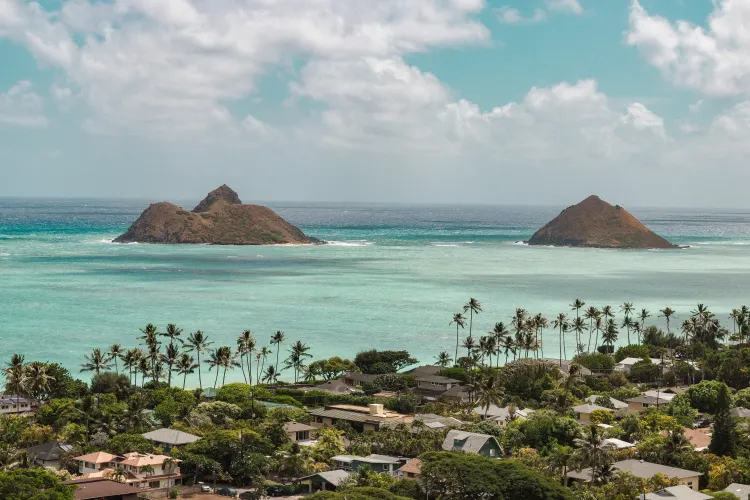
- Lanikai Beach. The famous one, powder soft sand, impossibly bright blue water, and the two Mokulua islands sitting offshore like a screensaver. It is calm, shallow, and gorgeous. The catch is access, parking is residential, tight, and policed, so go early in the morning and walk in through the marked beach paths. No facilities, so bring what you need.
- Kailua Beach. Lanikai's bigger, easier sibling, right next door, 2.5 miles of white sand, a real parking lot, restrooms, calm water, and kayak rentals out to the islands. This is the best all rounder on the island for a family beach day, see more in our things to do on Oahu with kids guide.
- Waimanalo Beach. Three miles of soft, uncrowded sand backed by the Ko'olau range. Quieter than Kailua, just as pretty, and a local favorite for exactly that reason.
- Bellows Beach. A tree shaded windward gem that is only open to the public on weekends (it sits on a military base), which keeps it blissfully uncrowded. Worth planning a Saturday around.
- Makapu'u Beach. Dramatic, with bodyboarders and a lighthouse on the point, beautiful to look at, but the shore break is strong, so it is more for watching than for a casual swim.
A windward beach at golden hour, with dinner already set up and nobody packing up but you, is about the most romantic evening Oahu offers, it is the kind of thing we set up, if that is your speed. Several of these beaches are also where couples get married, see our Oahu beach wedding packages. It is also where we run all inclusive Oahu beach elopements, if you are planning something bigger than dinner.

Photo by Olusola O on Unsplash
03
The south shore: convenient and sunset ready
The south shore is where you stay and where you default, easy to reach, easy to enjoy.
- Waikiki Beach. Not the prettiest sand on the island, but you cannot beat the convenience, gentle rolling waves perfect for learning to surf, lifeguards, and Diamond Head framing the sunset. Underrated for first timers, and the best place on Oahu to take a beginner surf lesson.
- Ala Moana Beach Park. A long, calm, reef protected beach right by the city with big shade lawns and the Magic Island peninsula, flat water, easy parking, and a local favorite for an after work swim (and one of the most popular spots to get married on Oahu). The most underrated beach in Honolulu.
- Hanauma Bay. The headline snorkeling spot (more in the snorkel section below), a protected marine reserve in a volcanic cone. Closed Mondays and Tuesdays, and it requires a timed reservation that sells out fast.
- Sandy Beach. Gorgeous golden sand and a punishing shore break that locals love for bodyboarding and that sends visitors to the ER every year. A watch do not swim beach unless you genuinely know what you are doing.
The south shore also gets its own summer swell from May to September, so the same gentle Waikiki water that teaches beginners in winter can pick up real waves in July.
Check the surf report, and when in doubt, swim the lifeguarded stretches, Waikiki and Ala Moana both have them, and the guards will happily point you to the safe spot.

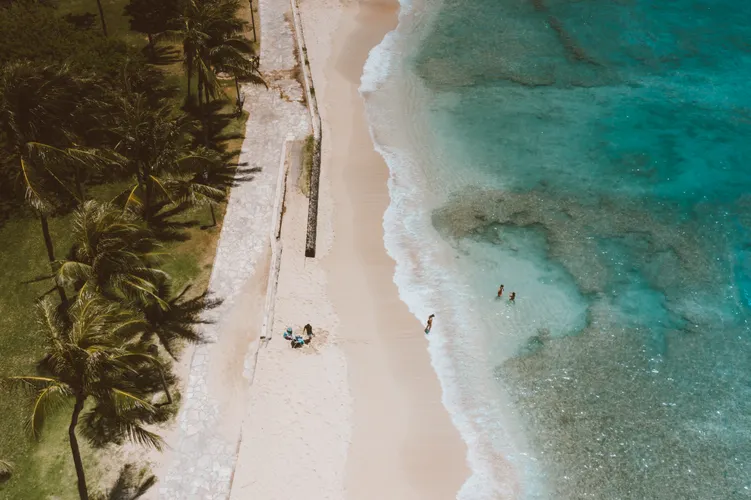
Photo by Spenser Sembrat on Unsplash
04
The west side: driest skies, calmest water
When the rest of the island is gray, the west side is usually sunny.
- Ko Olina Lagoons. Four calm, man made lagoons with white sand and rock walls that keep the open ocean out, the best swimming on the island for small kids, and some of the most reliable sunsets anywhere on Oahu. A flat path links all four, and the Four Seasons, Aulani, and Marriott sit right behind them.
- Electric Beach (Kahe Point). An excellent snorkeling spot for confident swimmers, the warm water outflow from the power plant across the road draws huge amounts of marine life. Currents can be strong, so it is not a beginner spot.
- Makaha Beach. A classic local surf beach further up the leeward coast, with winter waves and a laid back, less touristed feel.
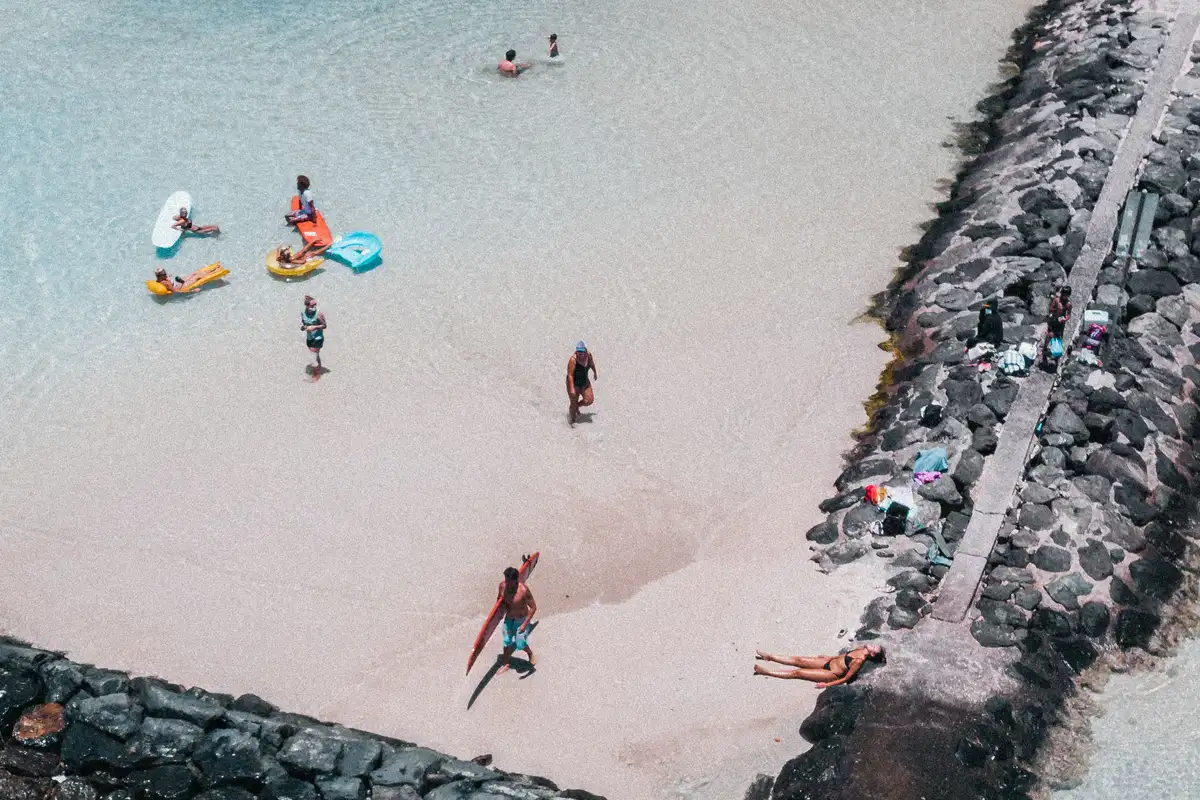
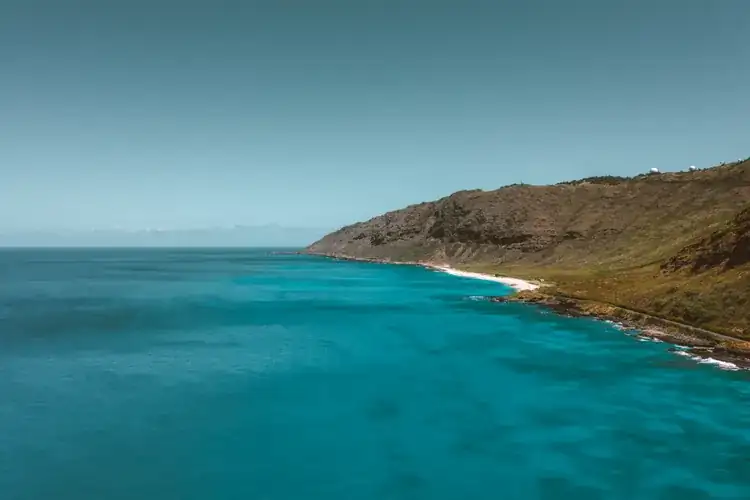
Photo by Jess Loiterton via Pexels
05
The North Shore: surf in winter, swim in summer
The North Shore is a full day trip, 60 to 75 minutes from Waikiki, and it changes completely with the season. For the deep version, see our guide to the best beaches on the North Shore of Oahu.
- Waimea Bay. A wide, cinematic bay, a calm swimming pool with a famous jump rock in summer, and a thundering 30-foot big wave arena in winter. The single most dramatic beach on the island either way.
- Sunset Beach. Exactly what it says, and a premier winter surf break. Glassy and swimmable in summer.
- Ehukai Beach (the Banzai Pipeline). The most famous wave in surfing breaks just offshore here in winter. Watching pros thread the barrel from the sand is a spectacle, and free.
- Sharks Cove and Three Tables. Two of the best snorkeling spots on the island in summer, with rich reef and fish. In winter they turn into a washing machine and close to swimmers.
- Laniakea Beach (Turtle Beach). Green sea turtles haul out here to bask year round, keep your distance (it is the law), and never crowd them for a photo.
- Kuilima Cove at Turtle Bay. A reef sheltered cove that stays calm and snorkel friendly even during winter swells, the rare North Shore beach you can actually swim in January.
If you would rather not drive the loop, a full day circle island tour hits the best of these with someone else at the wheel, handy in winter, when the surf crowds choke the two lane highway.
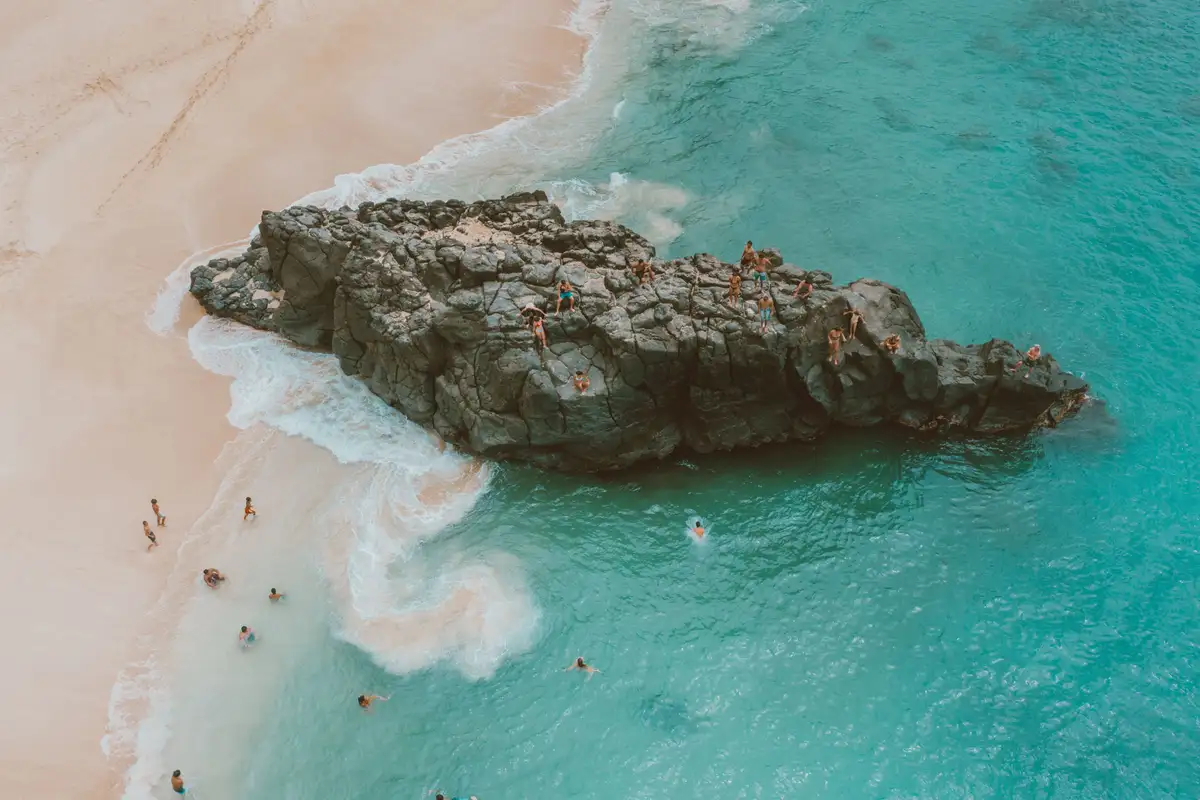
Photo by Jess Loiterton via Pexels
06
Where to snorkel on Oahu
The short version, by skill level,
- Beginners and families: Hanauma Bay (protected, shallow, packed with fish, reserve ahead) and the Ko Olina lagoons (calm and clear).
- Summer, intermediate: Sharks Cove and Three Tables on the North Shore, the best fish volume on the island, but only from roughly May to September. In winter, stay out.
- Confident swimmers: Electric Beach on the west side, where the marine life is dense but the currents demand respect.
A couple of universal rules, never touch or chase the green sea turtles (it is illegal and they bruise easily), wear reef safe sunscreen, and go with a buddy. If you would rather skip the logistics, a guided snorkeling tour handles the gear, the transport, and picking the spot with the best conditions that day. For the full activity rundown beyond the water, see our things to do in Oahu guide.
★4.9(3,571)
Waikiki: Turtle Canyon Snorkel Adventure on Oahu
2 hours
Free cancellation
from
$85

Photo by Kaydn Ito on Unsplash
07
Beach logistics: parking and what to bring
The beaches are free. The logistics are what trip people up. A few things that make the day easier.
Parking is the real constraint at the best beaches. Lanikai is phasing out street parking, a permanent daytime no parking rule on the loop roads (Mokulua and Aalapapa) is rolling out around mid-2026, holiday weekend bans are already in force, and there is no public lot, so the move is to park at Kailua Beach Park and walk the 10 minutes over. Kailua, Ala Moana, Waimea Bay, and the Ko Olina lagoons all have actual lots, but they fill on weekends and holidays. The rule across the island, the prettier the beach, the earlier you should get there, and a weekday morning beats a weekend afternoon every time.
Shade is scarce. Most Oahu beaches have little or none, so bring a hat, a pop up shade if you burn, and plenty of water, the trade winds keep you cool while the sun quietly cooks you.
Facilities vary a lot. Kailua, Ala Moana, Waimea Bay, and Bellows have restrooms and showers. Lanikai and many smaller beaches have nothing. Food trucks cluster near the North Shore and Haleiwa, while the windward and west side beaches have less nearby, pack a cooler.
What to pack: reef safe sunscreen (the chemical kind is banned here), water, a hat, reef shoes for the rocky snorkel spots, a cheap mask if you are not renting one, and a bag to carry out everything you bring in.
And go early. Across the island, the prettiest beaches have the smallest lots, so a 9 a.m. arrival is the difference between parking at the sand and circling a residential street while your group slowly turns on you.
08
Beach safety: the rules that keep the day fun
This is the most important section in the guide, so read it even if you skip the rest. The ocean here is beautiful and it is not a swimming pool.
- Respect the season. North Shore and west side surf from November to February is genuinely dangerous and drowns strong, confident swimmers every single year. When the waves are big, the beach is for watching, not swimming. No photo is worth it.
- Swim at lifeguarded beaches, and if you are unsure of conditions, ask the lifeguard, that is what they are there for. Check the daily forecast and warnings at the official Hawaii Beach Safety site before you go.
- Know shore break. Beaches like Sandy Beach and Makapu'u have waves that break directly on the sand and break necks. Gorgeous to watch, dangerous to play in.
- Mind rip currents. If you are pulled out, do not fight it, swim parallel to shore until you are free, then back in. Panic drowns more people than the current does.
- Give the turtles room. Federal guidelines say keep at least 10 feet from honu. Observe the NOAA wildlife viewing guidance and let them be.
- Wear reef safe sunscreen (the chemical kind is banned here) and consider reef shoes for the rocky snorkel spots.
None of this is meant to scare you off the water, it is meant to keep your trip the good kind of memorable.
One rule above all, for the kids and the overconfident adults alike, if you are ever unsure about the water, ask the lifeguard before you get in. They watch that exact patch of ocean all day.
"I was not sure, so I asked" is how the best beach days end the same way they started, with everyone still on the sand.
09
Quick picks: the best Oahu beach for...
When you just want the answer,
- Families with little kids: Ko Olina Lagoons or Kailua Beach, calm, facilities, easy parking.
- The prettiest sand and photos: Lanikai, hands down.
- Swimming: Lanikai, Waikiki, Ala Moana, or the Ko Olina lagoons.
- Snorkeling: Hanauma Bay (reserve ahead). Sharks Cove in summer.
- Sunset: anywhere on the west side, Ko Olina is the most reliable.
- Watching big wave surf: Pipeline or Waimea Bay, winter only.
- A long beach walk: Waimanalo or Kailua, miles of uninterrupted sand.
- Restrooms, showers, and easy parking: Ala Moana or Kailua.
- Seclusion: Waimanalo, or Bellows on a weekend.
- Learning to surf: Waikiki, every time.
If you can only fit one beach day, make it a windward morning, Lanikai or Kailua before the parking fills, then a slow lunch in Kailua town.
And to end the day right, drive west for sunset, the Ko Olina lagoons face exactly the right direction.
10
Where to stay by beach
Where you sleep decides which beaches are easy. Three main bases,
- Waikiki / south shore for convenience, nightlife, and the most lodging at every price point, browse Waikiki hotels (also on Booking.com) for the widest range.
- Ko Olina / west side for calm lagoons, reliable sun, and the best sunsets, if you do not mind driving for everything else, compare Ko Olina hotels (also on Booking.com) to weigh the resorts.
- Kailua or the North Shore for a quieter, more local base near the prettiest beaches, mostly via vacation rentals, plus North Shore stays on Expedia (also on Booking.com) around Turtle Bay and Haleiwa.
Eat a plate lunch on the sand, swim on the right side of the island for the season, and stay out of the water when the lifeguard tells you to. Do those three things and Oahu's beaches will give you the trip the postcards promised, which, for once, is not an exaggeration.
One last tip for picking a base, stay on the side whose beaches you most want, because crossing the island for a swim gets old fast.
Beach lovers who want variety split the difference near Honolulu, the south shore is at your door, and the windward and west beaches are each about 30 to 40 minutes away.
FAQ: Oahu beaches
What is the best beach on Oahu?
For overall beauty, Lanikai on the windward side. For a family day with facilities, Kailua or the Ko Olina lagoons. For snorkeling, Hanauma Bay. For surf watching, Waimea Bay or Pipeline in winter. The "best" one depends on what you want that day, and which side of the island the weather favors.
Which side of Oahu has the best beaches for swimming?
The windward (east) side, Lanikai, Kailua, Waimanalo, has the calmest, prettiest swimming water most of the year, along with the protected Ko Olina lagoons on the west side. In winter, stick to the south and windward sides and stay out of the North Shore surf.
Can you swim at the North Shore in winter?
Mostly no. From November to February the North Shore surf is large and dangerous, and most beaches there are for watching, not swimming. The exception is Kuilima Cove at Turtle Bay, a reef protected cove that stays calm. In summer, the whole North Shore becomes swimmable.
Is it safe to swim at Oahu beaches?
Yes, at the right beach in the right season, swim at lifeguarded beaches, respect posted warnings, and never swim in big surf. Most ocean injuries happen when visitors underestimate winter waves or shore break at beaches like Sandy Beach. Check the daily Hawaii Beach Safety forecast and ask a lifeguard if unsure.
What is the best beach on Oahu for families?
The Ko Olina lagoons (calm, walled off water and easy parking) and Kailua Beach (gentle water, restrooms, kayak rentals) are the two best family beaches on the island.
Do you need a car to get to Oahu's beaches?
Not for the south shore beaches, Waikiki and Ala Moana are walkable or a short rideshare from most hotels. For the windward (Lanikai, Kailua), west side (Ko Olina), and North Shore beaches, rent a car for the day or take a tour. They are too far and too poorly served by transit for a casual trip.
What is the best free beach on Oahu?
Nearly all of them, Oahu's beaches are public and free, including Lanikai, Kailua, Waimanalo, and Waimea Bay. The main exception is Hanauma Bay, which charges a $25 nonresident entry fee (kids free), $3 parking, and a required advance reservation. Everywhere else the only real cost is parking. The sand itself never has a gate.
What is the best month for Oahu beaches?
For calm, swimmable water island wide, May through September. In winter (November to February) stick to the south and windward sides and the protected lagoons, and treat the North Shore as a place to watch the surf rather than swim in it.
Disclosure: Some links on this page are affiliate links. If you book or buy through them we may earn a small commission, at no extra cost to you. As an Amazon Associate, we earn from qualifying purchases.