10 Best Beaches in Kauai: The Shores Worth Planning Around
23 min readYndira W. Tonin
The best beaches in Kauai are the most dramatic in Hawaii, mountain backed crescents, jungle fringed bays, and the cliffs of the Na Pali Coast, but they come with the strictest rules, because Kauai's ocean is also the most dangerous in the islands. Beauty and respect, in equal measure.
These details were last verified in 2026.
The single most important thing to understand here is the season. Kauai's coast flips, in winter (roughly October to April), the famous North Shore beaches, Hanalei, Tunnels, Kee, get pounded by giant, deadly surf and are off limits for swimming. In summer they go calm and become some of the best snorkeling on earth. The South and East shores stay swimmable year round.
Get the season right and Kauai's beaches are paradise. Get it wrong and you are looking at life threatening shore break and rip currents. This guide is sorted by region, with that season rule baked into every recommendation, plus honest safety talk, parking, and the reservation rules that now govern the most famous spots.
So pack the reef safe sunscreen, check the surf report, and let us find the right beach for the right month. There is a perfect Kauai beach for every day of your trip, you just have to match it to the season and the swell.
Table of Contents
01
Kauai beaches by region (and the season rule)
Kauai is round, and its beaches divide into four coasts, each with its own character and its own best season. Learn this and the whole island makes sense.
The North Shore (Hanalei, Tunnels, Kee, Anini) is the most jaw dropping, beaches backed by green cathedral mountains and waterfalls, including hidden Secret Beach below the Kilauea cliffs. But it is a summer only swimming zone, from roughly October to April, monstrous winter surf makes the water deadly. In summer it is sublime.
The South Shore (Poipu and around) is the dry, sunny, reliable side. Its beaches are the most consistently swimmable year round, with the trade off that it can see its own smaller summer south swell. This is your winter beach base.
The East Side (the "Coconut Coast", Lydgate, Kapaa) is central, convenient, and home to some of the most protected, family friendly swimming on the island. Less postcard dramatic, more dependable.
The West Side (Polihale, Kekaha) is remote, arid, and enormous, miles of empty sand and the island's best sunsets, but with strong currents and few facilities. It is for scenery and solitude, not casual swimming.
The takeaway, and the rule this whole guide runs on, North Shore in summer, South and East shores in winter (and year round). The Kauai state parks overview maps them all, and our things to do in Kauai guide places the beaches among the rest of the Garden Isle.
A practical note on getting around, Kauai has one main highway that wraps about three quarters of the island and dead ends at the Na Pali cliffs on both the north and west ends, you genuinely cannot drive all the way around. So your beach options are shaped by where you sleep, the North Shore and the far West are each a real, slow drive from the South.
Plan beach days by region rather than zig zagging across the island, and budget for scenic, sometimes one lane bridge roads, especially up north past Hanalei. The island is small but the driving is unhurried by design.
Match the coast to the calendar and you will never have a bad, or unsafe, beach day here.
02
Hanalei Bay
If one beach is the face of Kauai, it is Hanalei Bay, a two mile crescent of golden sand wrapped around a perfect bay, backed by emerald mountains streaked with waterfalls. It is the postcard, and somehow it over delivers in person.
In summer, the bay calms into a wide, gentle playground, easy swimming, beginner friendly surf (Hanalei is one of the best places in Hawaii to learn), stand up paddling, and golden hour magic from the historic Hanalei Pier. The little town of Hanalei behind it is all surf shops, taro fields, and laid back charm.
In winter, the bay transforms into a serious surf arena with big, powerful waves and strong currents, beautiful to watch, dangerous to enter. Come for the view and the surf watching, but stay out of the water unless you genuinely know what you are doing.
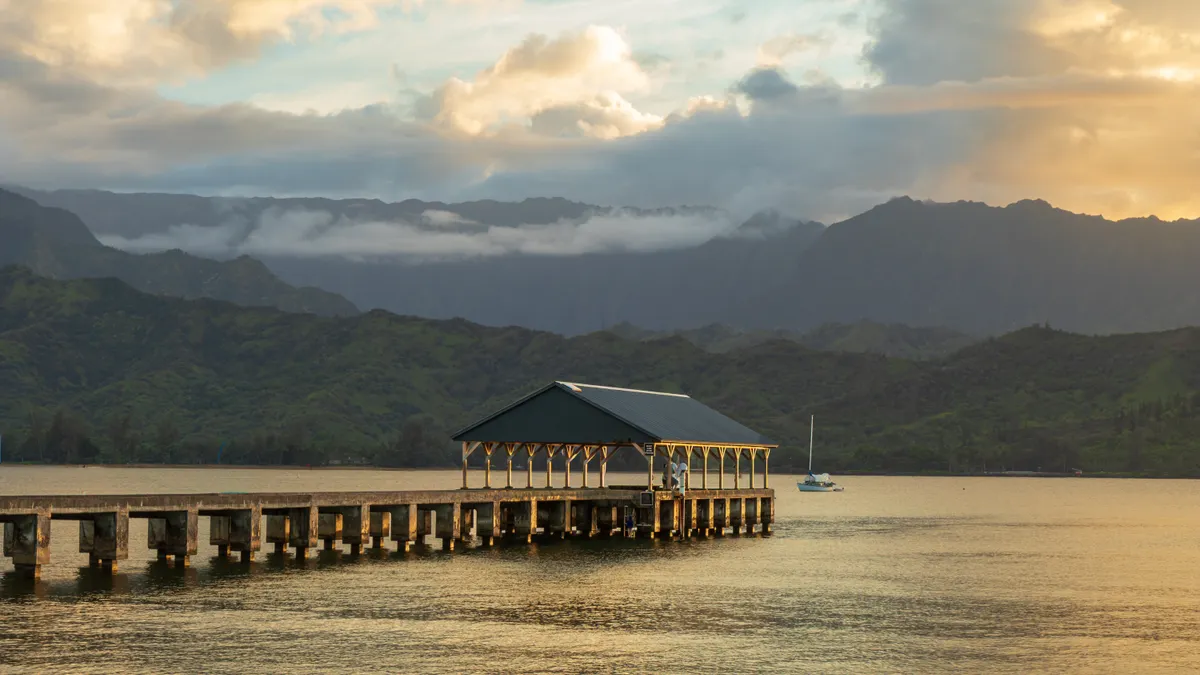
Photo by Edoardo Colombo via Pexels
Behind the beach, the town of Hanalei is half the charm, a single laid back strip of surf shops, taro fields, food trucks, and shave ice, fronted by a wildlife refuge where endangered Hawaiian waterbirds nest among the taro. The Hanalei River that empties into the bay is a gentle paddle in its own right, popular for stand up paddleboarding when the bay is calm.
Parking is along the streets and in a couple of small lots that fill early, so arrive in the morning, and note that the one lane bridges on the road in keep the crowds (and the pace) down by design. Whatever the season, Hanalei is worth the trip just to stand on the sand and look back at those mountains, it is one of the most beautiful spots in all of Hawaii, and the heart of any North Shore beach day.
Our complete Hanalei Bay guide covers the parking, the swimming seasons, and a beach by beach tour of the bay.
03
Tunnels and Kee Beach
At the far end of the North Shore, where the road ends against the Na Pali cliffs, sit two of Kauai's most famous beaches, and two of its most season dependent.
Tunnels Beach (Makua) is a snorkeling and diving wonderland in summer, named for the underwater lava tubes and arches that shelter a vivid reef. When the water is calm (summer only), it is among the best shore snorkeling in Hawaii. The catch is parking, there is almost none at Tunnels itself, so most people park at nearby Haena Beach Park and walk over.
Kee Beach sits at the very end of the road, a lovely reef protected lagoon in summer and the trailhead for the Kalalau Trail into the Na Pali wilderness. It is gorgeous, and it is now inside Haena State Park, which requires advance reservations and a shuttle or parking booking for out of state visitors. Plan this one ahead. You cannot just show up. The Haena State Park site has the current system.
What you see at Tunnels in calm summer water is the payoff for the parking hassle, a maze of coral, lava arches, and channels thick with tropical fish, frequent green sea turtles, and excellent visibility, genuinely among the best shore snorkeling in the state. Kee's reef protected lagoon is gentler and good for beginners when it is flat.
On the Haena reservation, out of state visitors must book entry, and either a parking slot or the North Shore shuttle, in advance through the state system, slots are limited and go fast, so lock it in when you set your dates. The shuttle from Hanalei is often the easier option than fighting for the tiny lot.
The hard rule for both, summer only for the water. In winter, the same gorgeous reefs are battered by lethal surf, and people who ignore the warning signs get swept out every year. Snorkel them in calm summer conditions, admire them from the sand in winter, and always check with the lifeguards first.
04
Anini Beach
For the North Shore's calmest, most family friendly water, locals point to Anini Beach, and it is an underrated gem.
Anini is protected by one of the longest fringing reefs in Hawaii, which sits well offshore and knocks down the swell, creating a broad, shallow, lagoon like stretch that is usually calm and safe for swimming, snorkeling, and wading even when other North Shore beaches are choppy. That makes it a rare North Shore spot that works for young kids and nervous swimmers.
It is also mellow and uncrowded, a long, tree shaded beach park with camping, picnic areas, and a local, unhurried feel rather than a resort scene. Snorkeling along the inner reef is gentle and rewarding, and the shallow water warms up nicely.
The usual season caveat applies in a softer form, the reef protects Anini better than most North Shore beaches, but big winter swells can still send surge over the reef, so check conditions. In summer, it is about as easy and pleasant as the North Shore gets.
It is also a favorite for gentle water sports, the protected lagoon is a popular spot for beginner stand up paddling and windsurfing, and the shallow inner reef is forgiving for first time snorkelers and kids learning to use a mask. The beach park has restrooms and a campground, making it an easy half day base.
One quiet tip, the far end of Anini, past the main park, is where the channel through the reef opens up, beautiful, but where any current concentrates, so keep little ones to the shallow protected stretch.
If you want North Shore beauty without North Shore danger, Anini is the answer, calm, shaded, and friendly, a local favorite that most visitors drive right past on their way to the famous names.
05
Poipu Beach
On the sunny South Shore, Poipu Beach is Kauai's most reliable, do everything beach, and the one to build a winter trip around, since it stays swimmable when the North Shore is closed out. For the whole area around it, see our Poipu guide.
Poipu's signature feature is a tombolo, a sandbar that juts into the ocean and splits the beach into two crescents. The protected inner bay is shallow, calm, and ideal for young children, while the outer areas offer good snorkeling and gentle boogie boarding. Lifeguards are on duty daily, which adds real peace of mind.
It is also one of the most reliable places in Hawaii to see Hawaiian monk seals, which regularly haul out to nap on the sand behind roped off areas, and green sea turtles in the water. Both are protected and endangered, admire from a distance, never approach.
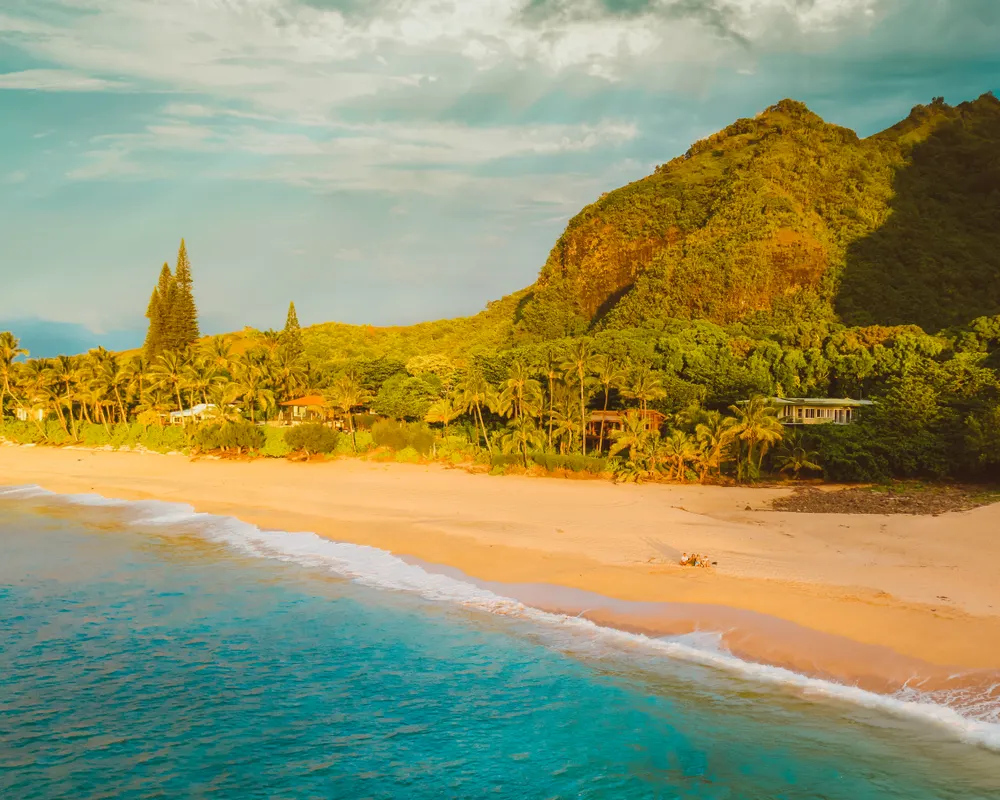
Photo by Jess Loiterton via Pexels
For snorkeling specifics, the rocky areas at the edges of the bay, and nearby spots, hold reef fish and good visibility, and the calm inner pool lets nervous beginners practice in waist deep water. It is a rare beach that genuinely serves toddlers, snorkelers, boogie boarders, and sunbathers at once.
The surrounding Poipu area is the South Shore's resort hub, so amenities, parking, and food are all close at hand, and a few minutes away are the Spouting Horn blowhole, the old plantation town of Koloa for lunch, and the path to wilder Mahaulepu. You can easily build a full South Shore day around a Poipu base.
For an all around, year round, family safe beach with snorkeling, wildlife, and lifeguards, Poipu is the easy pick, and the anchor of a South Shore stay.
06
More South Shore beaches
Poipu has good company on the South Shore, and a few neighbors are worth knowing for variety.
Shipwreck Beach (Keoneloa) is a wide, dramatic stretch backed by a sandstone cliff (the launch point for the scenic Mahaulepu Heritage Trail). It has bigger shore break than Poipu, drawing bodyboarders and the cliff jumping crowd, so it is better for walking, watching, and hiking than for casual swimming.
Mahaulepu Beaches, reached by a bumpy dirt road past the resorts, are wild, undeveloped, and beautiful, a rugged coastline of pockets of sand and lithified cliffs that feels remote despite being minutes from Poipu. Strong currents make them more for exploring and scenery than swimming, but they are a gorgeous escape from the crowds.
Farther west, near Hanapepe, Salt Pond Beach Park is the west side's safe swim counterpart, a reef protected, lifeguarded bay with a shallow keiki pond that stays calm year round, even when the south shore sees its own swell.
Baby Beach Poipu is a tiny, very shallow, reef protected pool that is exactly what the name suggests, a safe spot for toddlers to splash, beloved by local families.
Two more South Shore spots round it out. Lawai (Beach House) Beach is small but one of the South Shore's best snorkeling and sunset spots, popular with surfers and easy to reach. And out west of Poipu, Salt Pond Beach Park in Hanapepe, where Hawaiians still harvest sea salt from traditional pans nearby, is a protected, lifeguarded, family friendly beach that many visitors never reach.
The South Shore pattern is clear, Poipu for the main event, the others for variety, drama at Shipwreck, wildness at Mahaulepu, snorkeling and sunset at Lawai, and a gentle wading pool at Baby Beach. All stay accessible year round, which is why the south is the dependable side of the island.
07
Lydgate Beach
Over on the East Side, Lydgate Beach Park is the answer to one question every family asks, where is the safest swimming on Kauai? Here.
Lydgate's trick is a pair of man made rock walled ocean pools that keep the surf and currents out entirely, creating calm, protected swimming and snorkeling that is safe even for small children and even when the ocean beyond is rough. There are fish inside the pools to snorkel, lifeguards, and a huge grassy park with picnic areas and one of the best playgrounds on the island.
It is not the most dramatic beach on Kauai, it is practical rather than postcard, but for families, beginners, or anyone wanting a guaranteed calm swim regardless of season, it is invaluable. The central East Side location (near Kapaa and Wailua) also makes it easy to reach from anywhere on the island.
The broader East Side, the "Coconut Coast," has more beaches along it, but many, like Kealia Beach just up the coast, have unprotected surf and currents. Lydgate's walled pools are what set it apart. Pair a calm Lydgate swim with the nearby Wailua River and waterfalls for an easy, family friendly East Side day, as our things to do in Kauai guide lays out.
The park is also home to Kamalani Playground, a sprawling community built wooden playground that buys parents a genuine break, and it anchors a long beachfront path good for a stroll or a bike ride. Right at the mouth of the Wailua River, it sits in the middle of the East Side's cluster of easy attractions.
When the swell is up everywhere else, Lydgate is the reliable, kid proof fallback, worth knowing before you need it.
08
Polihale and the wild west
For something completely different, the West Side delivers Kauai at its most raw, and Polihale State Park is the headliner, a remote, arid, jaw dropping stretch of beach that runs for miles to the foot of the Na Pali cliffs.
Polihale is the longest beach in Hawaii, a vast expanse of golden sand and dunes with almost no one on it, backed by towering cliffs and facing the open Pacific. The sunsets here, with nothing between you and the horizon, are the best on an island full of good ones. It feels like the literal end of the road, because it is.
Getting there is part of the deal, it is reached by a few miles of rough, often muddy dirt road that many rental contracts technically prohibit, so go in good conditions, ideally with higher clearance, and never when it has been raining. There are minimal facilities, so bring everything, water, food, shade, sunscreen.
A serious safety note, Polihale has powerful surf, strong currents, and no lifeguards, so it is generally not a swimming beach. Come for the scale, the solitude, the dunes, and the sunset, but keep the swimming to a cautious wade at most, and never turn your back on the ocean.
The far end of Polihale runs up against the start of the Na Pali cliffs, the only place you can stand on a beach and see where that legendary coastline begins from land. The adjacent stretch of coast is the "Barking Sands," named for the sound the dry dunes make underfoot. Camping is allowed with a state permit, and a sunset out here, miles from anyone, is a genuinely rare kind of quiet.
It is the antidote to any crowded resort beach, enormous, empty, and elemental. Treat it as a scenic, sunset, four wheel drive adventure rather than a swim, and Polihale is worth every mile of that rough drive.

Photo by Roberto Nickson via Pexels
09
The Na Pali Coast by boat
No Kauai beach guide is complete without the coast you cannot drive to. The Na Pali Coast, 17 miles of impossibly steep, fluted green cliffs plunging into the sea along the roadless North Shore, is the most spectacular coastline in Hawaii, and arguably anywhere.
You reach it three ways, a strenuous hike (the Kalalau Trail from Kee), a helicopter, or, the way most people see it best, by boat. A summer boat tour cruises the base of the cliffs, ducking into sea caves, passing hidden beaches and waterfalls, usually with a snorkel stop and a near guaranteed escort of spinner dolphins.
A Na Pali Coast snorkel tour is the classic way to do it, a half day on the water with the cliffs towering overhead, gear and guidance included. Morning trips get the calmest water, and the whole thing runs in summer when the North Shore seas lie down. Winter swells shut most tours down.
★4.8(1,644)
Kauai: Na Pali Coast Super Raft Snorkel Adventure
4.5 hours
Free cancellation
from
$235
There is a boat for every style. Rafts (Zodiacs) are fast, splashy, and nimble enough to nose into sea caves. catamarans are smoother, roomier, and better for families or anyone wary of a bouncy ride. And most depart from the West Side (Port Allen or Kikiaola) or, in summer, from the North Shore closer to the cliffs. They cruise past Kalalau Beach and hidden waterfalls that you simply cannot reach any other way.
If a boat is not your thing, a helicopter tour delivers the same cliffs (plus Waimea Canyon and the island's interior waterfalls) from the air in under an hour, pricier, but the other spectacular way to see the Na Pali. And the hardy can earn it on foot, the Kalalau Trail from Kee Beach hugs the cliffs, with even the first two miles to Hanakapiai Beach delivering jaw dropping coastal views (a permit is required to go beyond).
A few honest notes, it is open ocean, so take motion sickness precautions if you are prone, and the season is everything, these tours are a summer affair. But if you do one splurge on Kauai, this is the one. Seeing the Na Pali cliffs rise straight out of the sea, from the water, is the kind of thing that recalibrates your sense of what a coastline can be.
10
Which Kauai beach is right for you?
With this many beaches across four coasts, here is the cheat sheet, match your priority to the pick,
- Best all around / safest swimming: Poipu (South) year round, or Lydgate's walled pools (East) for guaranteed calm.
- Most beautiful: Hanalei Bay (North), the mountain backed crescent, at its best in summer.
- Best snorkeling: Tunnels (North) in calm summer water. Poipu and Lawai (South) the rest of the year.
- Best for young kids: Lydgate's protected pools (East), Baby Beach and Poipu's inner bay (South), Anini (North, in summer).
- Best sunset: Polihale (West), with nothing between you and the horizon.
- Most dramatic / wild: Polihale and Mahaulepu, remote, enormous, elemental.
- Best for surfing or learning: Hanalei Bay (North) in summer, with beginner waves and surf schools in town.
- Best chance of wildlife: Poipu for monk seals and turtles. Most North Shore reefs in summer for turtles.
The honest meta tip, let the season and the swell make the first cut, then pick by vibe. In winter you are choosing among the South and East beaches. In summer the whole island opens up and the North Shore becomes the star. There is no single "best" beach on Kauai, there is the best one for your day, your group, and the month you visit.
And whatever you choose, go in the morning. Across every coast, the water is calmest, the parking easiest, and the light best before the trade winds and the crowds arrive, the one rule that holds island wide, no matter which beach wins your vote.
11
Beach safety and when to go
Kauai is the most beautiful of the Hawaiian islands and, in the water, the most dangerous. It has the highest rate of ocean drownings in Hawaii, almost always among visitors who underestimate the surf. None of this should scare you off, it should make you smart.
The cardinal rule, again, season dictates coast. In winter (October, April), swim on the South and East shores (Poipu, Lydgate) and stay out of the North Shore water. In summer, the North Shore calms and opens up. Always check the surf forecast and the beach warning signs before you get in.
A few non negotiables,
- Swim at lifeguarded beaches (Poipu, Lydgate, Hanalei in summer, Kee in summer) and ask the lifeguard about conditions, they know that beach hour by hour.
- Never turn your back on the ocean, and obey posted warnings and closures. "When in doubt, do not go out" is a local mantra for a reason.
- Respect currents and shore break. Many Kauai beaches have no protective reef. If the water is moving or the waves are dumping, stay out.
- Watch for flash flood and rain. Kauai is the wettest of the main islands, and heavy rain can make roads (and that Polihale track) treacherous fast.
- If you are caught in a rip current, do not fight it. Stay calm, float, and swim parallel to shore until you are out of the pull, then angle back in, or wave for the lifeguard. Panic and swimming straight against a rip are what turn a scare into a tragedy.
It helps to know which beaches are actually patrolled. On Kauai, county lifeguards staff a set of the busier beaches, Poipu, Lydgate, Hanalei (summer), Kee (summer), Salt Pond, and a handful more, and those are the smart places to swim, especially with kids. The official Hawaii Beach Safety site posts current hazards, surf, and which beaches are guarded. A two minute check the morning of, alongside the surf forecast, tells you everything. The ocean here changes by the day and the tide, what was glassy yesterday can be a washing machine today.
And the universal rules, reef safe sunscreen only, never touch or approach the monk seals and turtles, and pack out everything. Our best time to visit Hawaii guide covers the seasons in more depth.
Respect Kauai's ocean and it rewards you with the most beautiful beach days in the islands. Take it lightly and it is genuinely unforgiving. Plan by the season, heed the lifeguards, and you will be fine.
12
Where to stay
Where you base yourself on Kauai should follow the same logic as the beaches, the season, and the coast you want to wake up on.
The South Shore (Poipu) is the safest year round bet, especially for a winter trip, sunny, dry, with the most reliable swimming beaches, a cluster of resorts and condos, and easy access to the West Side. If you want dependable beach weather and swimmable water no matter the month, stay in Poipu.
The North Shore (Princeville/Hanalei) is the most spectacular, with Hanalei Bay, Tunnels, and the Na Pali gateway on your doorstep, best for a summer trip when the water is calm. It is greener, rainier, and more remote, which is exactly its appeal. The East Side (Kapaa/Wailua) is the central, value friendly middle ground, close to everything with the calm Lydgate pools nearby. You can compare Kauai hotels on Expedia (also on Booking.com) across all three coasts.
On budget, Kauai skews pricey, but condos and vacation rentals, especially on the East Side and around Poipu, offer far better value than the resorts, with kitchens that take the sting out of the island's spendy dining. Wherever you land, expect more rain than the brochures admit. Kauai is the Garden Isle precisely because it is the wettest, and a passing shower is the toll for all that green. Pack a light layer and do not let it derail a beach day, the sun usually returns within the hour.
For a first trip, many people choose Poipu for reliability or Hanalei for beauty, and the island is small enough, about an hour and a half end to end, to day trip the rest. Our best island to visit guide helps if you are still deciding between islands.
One honest aside, since we are an Oahu beach picnic outfit, we set up over on Oahu, not Kauai, so we cannot meet you on Hanalei's sand. But the same philosophy carries, the best Kauai beach days are early, season smart, and unhurried. (If your trip also touches Oahu, you can always see what we do here.) Pick your coast, watch the swell, and let the Garden Isle do the rest.
FAQ: Kauai beaches
What is the best beach in Kauai?
It depends on the season and what you want. Hanalei Bay is the most beautiful (and great for swimming and surfing in summer), Poipu is the best all around, year round, family safe beach, Tunnels is the best summer snorkeling, Lydgate is the safest swimming with its walled pools, and Polihale is the most dramatic and remote.
When can you swim on Kauai's North Shore?
Summer only, roughly May through September, when the surf lies down. In winter (October to April), the North Shore beaches, Hanalei, Tunnels, Kee, get huge, dangerous surf and strong currents and are not safe for swimming. In winter, swim on the South Shore (Poipu) or East Side (Lydgate) instead.
Which Kauai beaches are best for families?
Lydgate Beach, with its man made rock walled ocean pools, is the safest and most kid friendly, calm even when the ocean is rough. Poipu Beach has a protected, shallow inner bay with lifeguards, and Baby Beach in Poipu and Anini Beach on the North Shore (in summer) are also gentle, calm options for young children.
Do you need a reservation for Kauai beaches?
For most, no, but Kee Beach is now inside Haena State Park, which requires advance entry and parking (or shuttle) reservations for out of state visitors (Haena Beach Park, the county beach just before it, is still free and first come). Book ahead through the state parks system. You cannot just drive up. Most other Kauai beaches are free with no reservation.
Is it safe to swim in Kauai?
At the right beach in the right season, yes, but Kauai has Hawaii's highest ocean drowning rate, almost all visitors. Swim at lifeguarded beaches (Poipu, Lydgate, summer Hanalei), match the coast to the season (North Shore summer only), check warning signs, and never turn your back on the ocean. When in doubt, do not go out.
How do you see the Na Pali Coast?
By boat, helicopter, or the strenuous Kalalau Trail hike from Kee Beach. A summer boat or raft tour along the cliffs, often with snorkeling and dolphins, is the most popular way and arguably the best. Tours run in summer when the North Shore seas are calm. Winter swells shut most of them down.
Disclosure: Some links on this page are affiliate links. If you book or buy through them we may earn a small commission, at no extra cost to you. As an Amazon Associate, we earn from qualifying purchases.

