Big Beach Maui: The Honest Makena State Park Guide
20 min readYndira W. Tonin
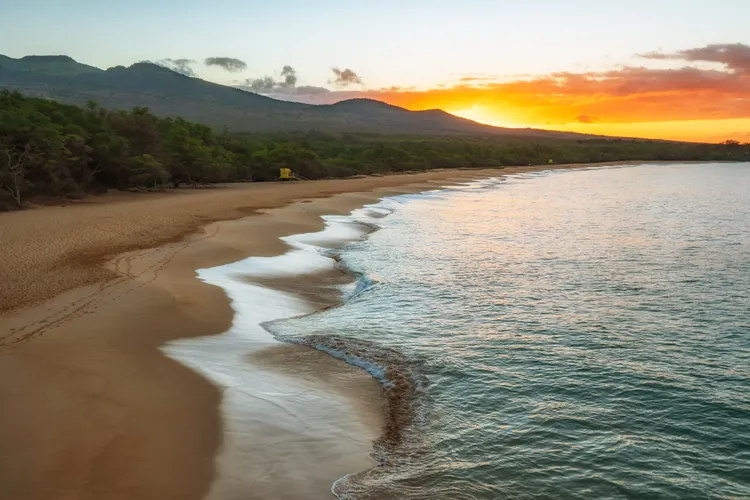
Big Beach Maui is the long, wide stretch of golden sand at Makena State Park (Mākena) on the south shore - gorgeous to look at, and a serious place to swim. Hawaiians call it Oneloa (ʻŌneloa), "long sand," and the beach earns the name: roughly two thirds of a mile of sand, uncommonly wide for Maui, with a shore break that lands right at your feet.
Here's the part the postcard leaves out. The same wave that makes Big Beach photogenic is the one that dislocates shoulders, and there's no reef out front to snorkel. That isn't a reason to skip it. It's a reason to come for the right things - the sand, the sunset, the view of Molokini and Kahoolawe (Kahoʻolawe) on the horizon - and to read the water before you wade in.
This guide covers all of it: where Big Beach is and how to get there, the parking lots and the current fees, the shore break in plain English, Little Beach over the rocks, whether you can snorkel here (short answer: not really), what to actually do, when to go, what to pack, and where to stay nearby. Fees and hours are current as of June 2026.
It's written for first time visitors deciding whether Big Beach belongs on the Maui shortlist, and it's honest about who should swim and who should just stand there with a camera. Standing there with a camera, for the record, is a completely respectable way to spend an evening here.
Table of Contents
- Where Big Beach is
- What Big Beach actually is
- The shore break
- Parking, fees, and hours
- Little Beach over the rocks
- Can you snorkel here?
- What to actually do
- When to go
- What to bring
- Where to stay nearby
- Is it worth it?
- FAQ
01
Where Big Beach is, and how to get there
Big Beach sits at the south end of Makena Alanui Road, about four miles past the Wailea resorts on Maui's south shore. It's the last big beach before the pavement gives up and the road turns to old lava at La Perouse Bay, so you're driving to the quiet edge of the developed coast. The whole Makena area stays wild because of it - a beach location with nothing built on top of it, which is exactly the appeal.
From the Wailea resort strip it's a 10-to-15-minute drive; from Kihei (Kīhei) about 25 minutes; from the Kahului airport roughly 40 minutes; and from West Maui (Kaanapali, Lahaina) closer to an hour. There's no shortcut and no traffic to speak of once you're past Wailea - just a two lane road, a few resort gates, and then the lots.
Offshore you'll see two landmarks that orient the whole south shore: the crescent islet of Molokini and the long, low island of Kahoolawe. Both sit on the horizon straight out from the sand, and both look better the lower the sun gets.
Here's the drive in numbers, from the places you're most likely staying:
Big Beach from the main south Maui bases
The move: For directions, point your GPS at "Makena State Park," not "Big Beach" - the official name on the map gets you to the right gate. Drive time: ~15 min from Wailea, ~25 from Kihei. Note: Fill the gas tank in Kihei; there's nothing past Wailea.
Getting to Big Beach
Tap to open Google Maps with turn-by-turn directions.
If this is your first pass at the island's coastline, our best beaches in Maui guide maps how Big Beach stacks up against the calmer, snorkel friendly options - useful before you commit a whole afternoon to the wild one.
02
What Big Beach actually is: Oneloa at Makena State Park
Big Beach is one beach with three names and a cinder cone for a bookend. "Big Beach" is the nickname, Oneloa is the Hawaiian name, and Makena Beach is what older maps and some signs call it - all the same wide arc of golden sand inside Makena State Park. It runs about two thirds of a mile, and it's noticeably wider than most Maui beaches, so even on a busy day it doesn't feel stacked. The "Big" is literal and comparative at once - it's a big beach on its own, and it's the big one next to the little cove on the far side of the cinder cone.
At the north end stands Puu Olai (Puʻu Olai), a 360-foot volcanic cinder cone that drops straight into the ocean. It's the natural wall between Big Beach and the smaller cove on the far side, and it's the thing doing the paperwork between the two beaches - more on what's over there shortly. The sand itself is the other surprise: soft, deep, and properly golden, the kind your feet sink into rather than the coarse stuff you find on a lot of the island. It's backed by a scrubby line of kiawe trees rather than a row of hotels, and those trees are both the only natural shade and thorny underfoot, so the open sand is where you'll actually settle in.
That last part is the whole appeal. There are no resorts on Big Beach - no towers, no concession stands renting you a float, no hotel lawn. It's a state park, which is why the development stops at the tree line and the view stays clean.
Big Beach at Makena State Park, Maui
The flip side of "undeveloped" is "bring your own everything," and the flip side of that wide open beauty is an ocean with nothing to soften it. Which brings us to the part of Big Beach everyone should understand before they get in.
03
The shore break is the whole story
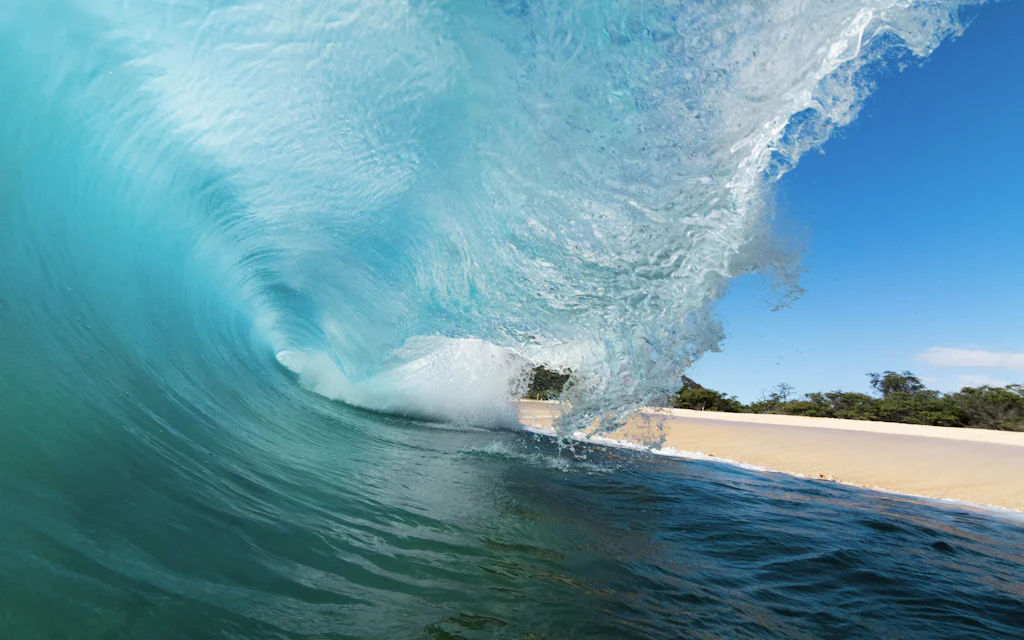
Read this section even if you skim the rest. Big Beach has a powerful shore break - waves that rise up and slam down right at the water's edge instead of rolling in gently. On a calm day it's manageable. On a south swell it is not, and the official state parks page carries a blunt warning that the shore break can be very dangerous.
The danger is specific. A shore break picks you up in shallow water and drops you onto hard packed sand, which is how this beach produces sprained wrists, dislocated shoulders, and the occasional neck and back injury every year. Bodysurfers and skimboarders who know the beach ride it on purpose; that does not mean it's safe for a casual swim. If the waves are breaking straight down with a loud crack, that's your signal to stay shallow or stay out.
The principle behind this is bigger than one beach: in Hawaii, drownings, not sharks, are the real ocean danger. The rules that keep you safe are boring and reliable - never turn your back on the ocean, keep your feet where you can stand, and when you're unsure, don't go in.
Big Beach is lifeguard staffed, which is a genuine advantage over the wilder beaches with no one watching. Use it: always read the posted warning flags and any signs, ask the lifeguards how the day is running, and check the state's ocean safety conditions before you drive out. If you have small kids or you're a nervous swimmer, the honest call is to treat Big Beach as a wade and photograph beach and save real swimming for somewhere calmer.
How to handle Big Beach's shore break
- 1Before you wade
Watch a full set first
Stand and watch the waves for a few minutes. If they're slamming straight down on the sand with a loud crack, that's a no-swim day for most people.
- 2If you go in
Stay where you can stand
The danger is the wave that lifts you in shallow water and drops you on hard-packed sand. Keep it shallow, never turn your back on the ocean, and get out if the sets build.
- 3Who should sit it out
Kids, weak swimmers, big-swell days
On a summer south swell the break is expert-only. Families are far better off at calmer Maluaka or a Wailea beach a few minutes away.
- 4Always
Use the lifeguards and the flags
Big Beach is lifeguard-staffed. Read the posted warning flags, ask the tower how the day is running, and check Hawaii's ocean safety site before you drive.
None of this is meant to scare you off the beach - it's meant to put you in the water on the right day and keep you out of it on the wrong one. Treat the shore break with respect and Big Beach is one of the best afternoons on the island.
04
Parking at Big Beach: the lots, the fees, and the hours
Big Beach has three entrances, and the first one fills first. The first entrance is the main paved lot - closest to the lifeguards, the restrooms, and the food trucks - so it's both the most convenient and the first to go, usually full by midmorning on a nice day. The second entrance, a short walk down the sand, is the same paved setup and usually holds spaces a little longer. The third entrance is just roadside shoulder parking along Makena Alanui for the south end of the beach - free for all when the official lots are full, and the move on a busy Sunday.
The first lot is the large, paved main area with the restrooms, a few picnic tables, and the lifeguard towers. The facilities are basic but real for a wild beach, and there are no chair or umbrella rentals, so whatever you carry in is what you've got.
Here's the part most older guides get wrong, so use the current numbers: for nonresidents it's $5 per person to enter plus $10 per vehicle to park, per Hawaii State Parks. Hawaii residents enter free with a local ID. Plenty of blog posts still say "$5 to park" - that was the old single fee, and it has since split into the per person plus per vehicle structure the busy Maui state parks now use.
The gate is open 5:00am to 7:00pm daily, extended to 7:45pm in summer (roughly May through July) to cover the later sunsets. Don't get caught inside at closing - they lock the lots, and a car shut in overnight is a bad end to a good beach day.
The move: Arrive before 10am for a paved space, or use the third entrance roadside parking later. Cost: $5 per person + $10 per vehicle, nonresidents. Note: Bring a little cash for the food trucks - Jawz Tacos and friends usually post up by the lot.
The three Big Beach lots, in order
- 1First entrance
The main paved lot
Closest to the lifeguards, restrooms, and food trucks - and the first to fill, usually full by mid-morning on a nice day.
- 2Second entrance
The southern paved lot
A short walk down the sand, usually holds spaces a little longer. Same $5 per person and $10 per vehicle for non-residents.
- 3Third entrance
Roadside, to the south
Shoulder parking along Makena Alanui for the south end of the beach - the move when the lots are full. Don't block the road.
- 4Timing
Morning, and not on Sunday
Come before 10am for a paved space and calmer water. Sunday is the busiest day of the week, locals and visitors both.
05
Little Beach: what is over the rocks
The cove on the far side of Puu Olai is Little Beach, a small clothing optional beach reached by a short rock scramble from the north end of Big Beach. You climb a worn path over the lava shoulder of the cinder cone - a few minutes, a little hands on in spots, not a hike - and drop down to a sheltered pocket of sand that's calmer than Big Beach and a fraction of the size.
It's worth saying plainly so there are no surprises: Little Beach has long been Maui's best known nude beach, and you'll likely see people coming and going on the trail. If that's not your scene, you'll know within the first thirty seconds and can simply turn around; if it doesn't bother you, it's a pretty, protected cove. Either way, treat it like any beach - mind your camera, mind your manners.
The water in the cove is usually gentler than the shore break next door because Puu Olai blocks some of the swell, but it's still open ocean with no lifeguard on that side, so the same caution applies. There are no restrooms and no easy exit other than back over the rocks, so it's a pack light, leave nothing kind of spot - bring water, bring out your trash, and watch your footing on the way back up at dusk when the path is in shadow.
The bigger point for planning: Big Beach, Little Beach, and the calm snorkeling beach a few minutes south are three different experiences, and knowing which one you actually want saves a lot of confusion in the parking lot. Most people only need Big Beach itself; Little Beach is a side trip for the curious, not a required stop.
Big Beach vs Little Beach vs Maluaka
Big Beach (Oneloa)Our pick
Makena State Park
- Long, wide golden sand
- Powerful shore break - experts swim, everyone else wades
- Sunsets, sunbathing, people-watching
- Lifeguards, restrooms, food trucks
Little Beach
Over Puu Olai, north end
- Small cove past a short rock scramble
- Historically clothing-optional
- Calmer water than Big Beach
- No facilities - it's a walk-in
Maluaka (Turtle Town)
Five minutes south
- Calm, sandy, family-friendly
- The snorkeling Big Beach doesn't have
- Green sea turtles offshore
- Where to actually get in the water
06
Can you snorkel at Big Beach? The honest answer
Short version: not really - Big Beach has no protecting reef, and the shore break clouds the water with churned up sand. It looks like it should be great snorkeling, all that turquoise and space, and the water is quietly lying to you. There's nothing for the fish to live on right off this stretch, and the visibility drops the moment the waves pick up. On a genuinely flat summer morning you might spot a few fish around the rocky points at either end of the beach, but the middle is a plain sandy bottom with little to see - and "flat" is not Big Beach's default setting.
The good news is that the snorkeling Big Beach lacks is five minutes down the road at Maluaka Beach, the spot known as Turtle Town. Maluaka is calmer, sandier, family-friendly, and genuinely good for green sea turtles and reef fish - exactly what people come to Big Beach hoping for and don't find. Our Maluaka Beach guide has the full breakdown, and the wider best snorkeling in Maui roundup sorts the south shore reefs by who they're for.
If you'd rather be taken straight to the fish - and to the turtles you won't reliably see from Big Beach's sand - a guided Turtle Town kayak and snorkel trip launches right from this Makena coastline and skips the guesswork.
★4.9(312)
Turtle Town Coastal Kayak & Snorkel: Turtles Guaranteed
3 hours
Free cancellation
from
$129
So come to Big Beach for the sand and the sunset, and budget a separate morning for the water. Trying to make Big Beach into a snorkeling beach is the single most common way people leave it disappointed - the beach is doing exactly what it's good at, which simply isn't that.
07
What to actually do at Big Beach
If swimming and snorkeling are both off the table on a rough day, you might wonder what's left. Plenty - the activities here are low key but real, and Big Beach is a lounging, walking, and sunset beach first, and a swimming beach only when conditions allow. Here's where the wide open, resort free thing pays off, with big ocean views and room to spread out.
What to actually do at Big Beach
Stay for sunsetDo this
The west-facing sand turns gold while Molokini and Kahoolawe sit on the horizon, and the crowd thins to the people who get it. The single best reason to come.
Hike Puu Olai30-45 min
The 360-foot cinder cone at the north end is a short, steep scramble to a wide view of the beach, Little Beach, and the channel. Closed-toe shoes, not flip-flops.
Bodysurf or skim - experts onlyExperts only
The shore break that's dangerous for swimmers is a playground for experienced bodysurfers and skimboarders. Watch a few sets and be honest about your level.
Walk the whole beachFree
Two-thirds of a mile of sand each way, widest and quietest down at the south end by the third entrance. A barefoot walk at low tide costs nothing.
Stay for the sunset
This is the headline. The beach faces west, so the late light turns the whole half mile gold while Molokini and Kahoolawe sit black on the horizon. The crowd thins to the people who planned for it, and it's free. If you only do one thing at Big Beach, do this one.
Hike Puu Olai
The 360-foot cinder cone at the north end is a short, steep scramble to a wide view over Big Beach, Little Beach, and the channel out to Kahoolawe. It's 30 to 45 minutes round trip and it's loose underfoot - wear closed toe shoes, not the flip flops you wore to the sand.
Bodysurf or skim, if you're an expert
The same shore break that's dangerous for swimmers is a playground for experienced bodysurfers and skimboarders. It isn't a classic surfing beach - the wave is a shore break, not a rolling point break - but when the surf is up, the regulars come out to ride it. Watch a few sets, be honest about your skill, and remember the landing is hard sand, not soft water. This is a know your level activity, not a try it and see one.
Walk the whole beach
Two thirds of a mile of sand each way, widest and quietest down at the south end by the third entrance. A barefoot walk at the cooler end of the day costs nothing and is the easiest way to feel why this beach is special.
08
When to go: time of day, day of week, and season
The single best time to visit Big Beach is a weekday morning - easiest parking, smallest crowd, and the calmest water of the day before the afternoon wind and swell build. The second best time is sunset, any day. The two worst things you can do are show up at midday on a Sunday and expect a parking space.
When to go to Big Beach
Weekday morningBest
Easiest parking, smallest crowd, and the calmest water of the day before the afternoon wind and swell build. The move.
Sunset, any dayGolden hour
The beach faces west, so golden hour is the headline. Come 60 to 90 minutes before sundown to park and settle in.
Avoid Sunday middaySkip
Sunday is the busiest day, and midday means a packed lot and sand hot enough to jog across. The least pleasant window.
Summer vs winterSeason
Summer south swells make the shore break biggest and most dangerous. Winter is often calmer at the shore and brings humpbacks offshore from about December to March.
Day of the week matters more here than at most beaches. Sunday is the busiest day, locals and visitors both, and the lots are picked clean by late morning. A Tuesday or Wednesday is a different, calmer beach. Time of day matters just as much: the golden sand that's a pleasure at 8am becomes hot enough to jog across by 1pm, and the parking goes from easy to hopeless on the same curve. Maui's onshore trade winds build through the afternoon too, so the glassy morning water roughens up by lunchtime - one more vote for an early start. If your only free window is the afternoon, aim for late in it, when the wind eases off and the light starts doing the work.
Season changes the water more than the crowds. Summer brings the south swells that make the shore break biggest - and most dangerous - so summer is when you're most likely to be wading rather than swimming. Winter is often calmer right at the shore, and it's whale season: humpbacks pass offshore from roughly December into March, and the high vantage from Puu Olai is a fine free whale watching perch. Rain is rare on this dry leeward coast in any month, which is part of why the south shore is the sunny side.

Photo: Ganapathy Kumar on Unsplash
09
What to bring: there is no drinking water
Big Beach's best feature - no development - is also the catch: there's no drinking water in the park, no shop, and almost no natural shade once the morning sun clears the trees. Pack like you're going somewhere remote, because you sort of are.
The short list that actually matters:
- Water, and more than you think - there's none to buy inside, and the south shore sun is relentless.
- A beach umbrella or pop up shade - the kiawe trees give patchy shade at the back of the sand, but it runs out fast on a full day.
- Reef safe mineral sunscreen - the chemical kind is banned in Hawaii, and this side burns you through a hazy sky.
- Water shoes if you plan to scramble Puu Olai or pick over the rocks to Little Beach.
- Cash and a cooler - for the food trucks by the lot and because the nearest store is back in Kihei.
A couple of things people forget once they've made the drive: the restrooms are basic and there are no showers, so a jug of water to rinse sandy feet earns its place in the trunk, and a beach mat or low chairs beat sitting straight on sand that's blazing by midday. A small first aid kit isn't a bad idea either, between the thorny kiawe, the lava rock, and a shore break that scrapes people on the sand. None of it is exotic - it's just the stuff that's genuinely annoying to be without two thirds of a mile from your car.
The move: Treat it like a half day expedition, not a quick stop - water, shade, and snacks in the car before you leave Kihei. Note: Pack out everything; it's a state park, so leave it cleaner than you found it, and no glass on the sand.
10
Where to stay near Big Beach
Because Big Beach is resort free, the nearest places to stay are in Wailea and Kihei, about four miles north. Wailea is the polished, high end end of the south shore; Kihei is the older, more affordable beach town next door. Both put you 15 to 25 minutes from the Makena sand, which is as close as lodging gets.
On the Wailea side, the Grand Wailea is the marquee resort - the big pools, the spa, the full luxury treatment a few minutes up the coast from Big Beach. It's the splurge base for a south shore trip.
Grand Wailea Maui
Wailea$$$$
PoolFree breakfast
Compare prices
If you'd rather spend the resort money on the rest of the vacation, Kihei is the value play, and the Maui Coast Hotel is the reliable midrange pick - walkable to Kihei's own beaches, an easy drive to Makena, and a fraction of the Wailea rate. The honest trade is polish versus price, and plenty of people happily take the price.
Worth knowing: Makena itself has almost no lodging anymore - the old Makena resort closed years ago - so Wailea and Kihei really are the two options for staying close. Wailea leans resorts and condos with manicured beaches and a quieter, pricier feel; Kihei is condos, smaller hotels, and a string of public beaches, with more restaurants per dollar and a livelier strip. Either base keeps you a short, traffic free drive from the Makena sand, which is the part that matters.
For the wider picture, our where to stay in Maui guide compares the regions, or you can compare south Maui hotels on Expedia to base yourself near the Makena end of the coast.

Photo: Luke Scarpino on Unsplash
11
Is Big Beach Maui worth it?
Yes - with one honest reframe. Big Beach is worth it as a looking and sunset beach, not as a swimming or snorkeling one. Go in expecting a wide, wild, beautiful stretch of sand with a serious shore break, and it's one of the best beaches on the island. Go in expecting calm turquoise you can float in all afternoon and you'll be let down by a beach that was never trying to be that.
Who it's for: sunset chasers, photographers, strong ocean swimmers who can read a shore break, and anyone who wants a real beach without a resort behind it. Who should manage expectations: families with little kids, nervous swimmers, and anyone here to snorkel - all of whom are better served at calm Maluaka five minutes south, or a gentle Wailea beach a few minutes north. The beach rewards the visit you actually plan for.
Who Big Beach is (and isn't) for
Worth it forGo
Sunset chasers, photographers, strong ocean swimmers, and anyone who wants a wide, wild, resort-free beach with a real south Maui view.
Manage expectationsNote
It's a looking-and-lounging beach more than a swimming one, and there's no shade once the morning's gone. Bring an umbrella and pick your water moments.
Skip the swim ifCaution
You've got young kids, you're a nervous swimmer, or a summer swell is running. Wade only, or drive five minutes to calmer Maluaka.
Not a snorkeling tripHonest
There's no reef and the shore break clouds the water. Come for the sand and sunset; book Turtle Town for the fish.
One honest note in closing, since we'd rather be useful than salesy: we set up beach picnics on Oahu, not Maui, so we have no stake in your Makena plans - which is exactly why you can trust the call to come here for the sand and the sunset and to swim somewhere calmer. The best Big Beach evening is a simple one: park before the lot fills, walk the sand, respect the water, and stay until Molokini turns gold. If you're still mapping the island's beaches, the black sand beach on the Road to Hana is the wild east coast counterpart to this south shore one - read that next.
FAQ: big beach maui
Is Big Beach the same as Makena Beach and Oneloa?
Yes - they're three names for the same beach. "Big Beach" is the common nickname, "Oneloa" is the Hawaiian name (it means "long sand"), and "Makena Beach" is the older map name. All refer to the long golden beach inside Makena State Park. Just don't confuse it with the smaller Little Beach over the rocks, or with Maluaka Beach a little to the south.
Are there food trucks at Big Beach Maui?
Usually, yes. A handful of food trucks park in and around the main lot most days - Jawz Tacos is the long running favorite, with shave ice and other vendors rotating through. They're cash friendly and not guaranteed, so bring a cooler as backup and don't count on them at sunset or in the off season.
Is Big Beach good for kids and families?
Only with caution. The shore break that injures adults is worse for small children, so families should treat Big Beach as a sand and wading beach and keep little ones at the water's edge. For actual swimming and snorkeling with kids, calm Maluaka (Turtle Town) five minutes south or a sheltered Wailea beach is the better call.
Can you bring a dog to Makena State Park?
No - dogs aren't allowed at Big Beach or in Makena State Park, aside from registered service animals, which is standard for Hawaii state parks and beaches. Leave the dog at your stay, especially given the midday heat on the open sand and in a parked car.
How do you get to Little Beach from Big Beach?
Climb the rock path over Puu Olai at the north end. From the far right of Big Beach (facing the ocean), a short, worn trail scrambles over the lava shoulder of the cinder cone and drops into the Little Beach cove - a few minutes, a little hands on, and not stroller friendly. Wear shoes you can grip in, not flip flops.
Cover photo: Jake Houglum on Unsplash.
Disclosure: Some links on this page are affiliate links. If you book or buy through them we may earn a small commission, at no extra cost to you. As an Amazon Associate, we earn from qualifying purchases.