Best Time to Visit Hawaii (2026): Month-by-Month Weather Guide
27 min readYndira W. Tonin
The best time to visit Hawaii is April, May or September, October, the shoulder seasons when the weather is near perfect, the beaches are not a contact sport, and the flights have not yet decided they are worth a small car.
That is the short answer. If you trust me and book those months, you will have a wonderful trip. Go. Have a great time. Tell the whales I said hello.
But if you want the full picture, because maybe your boss only approves vacation in August, or your mother in law insists on Christmas in Kailua, or you just like knowing what you are walking into, read on.
This is the honest, month by month guide. No sponsored fluff. No "every month is magical" corporate cheerleading. Just what you actually need to know.
Table of Contents
- The Quick Answer
- Why Hawaii Is Different From Every Other Destination
- Month by Month Guide, What You are Actually Getting
- The Activity-Specific Guide
- Hawaii's Festivals Worth Planning Around
- The Thing Nobody Else Tells You
- Do You Need a Passport to Visit Hawaii?
- How Many Islands Does Hawaii Have?
- Hawaii Weather in December and January
- Does the Best Time Change by Island?
- FAQ, Best Time to Visit Hawaii
- The Bottom Line

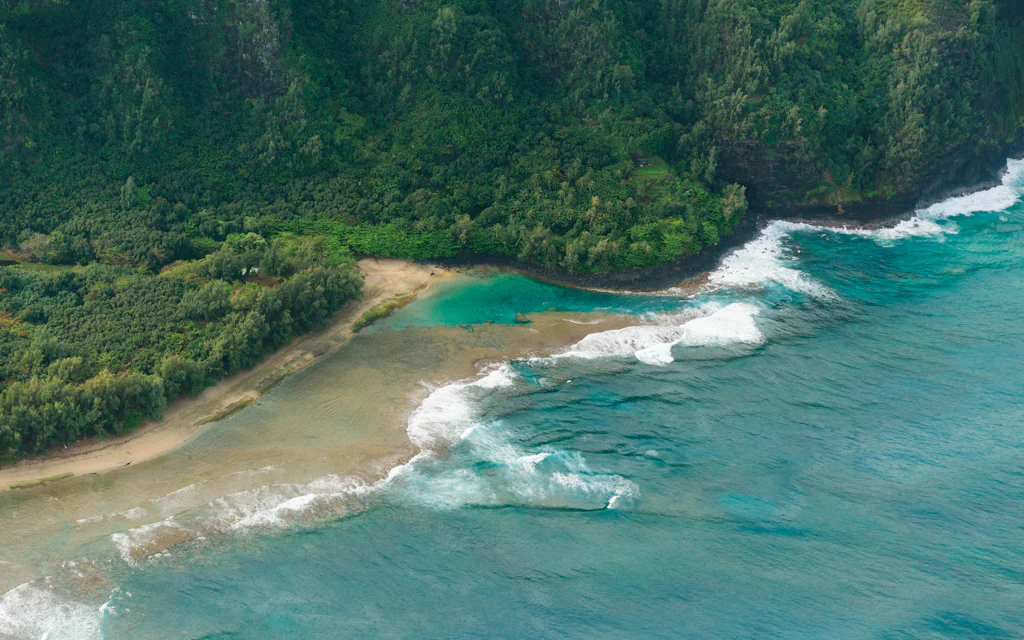
Photo by Jordan McQueen on Unsplash
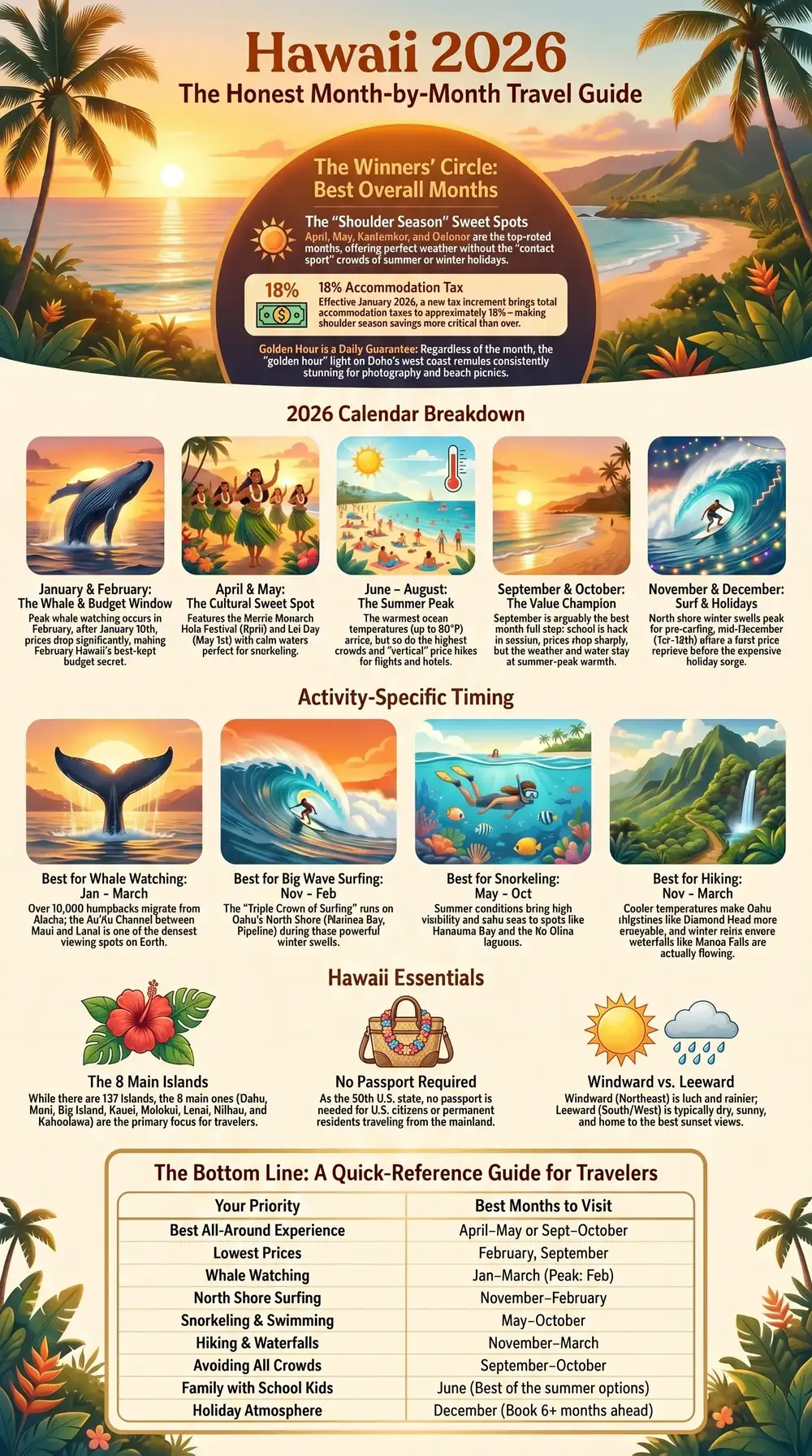
Hawaii month by month, the best windows for weather, prices, whales, surf and snorkeling.
01
The Quick Answer (For the Featured Snippet Crowd)
- Best overall months: April, May, September, October
- Best weather: May through September
- Cheapest flights & hotels (also on Booking.com): Mid-January through February, and again in September
- Best whale watching: January through March
- Best surfing (north shore): November through February
- Best for avoiding crowds: September, October, early November
- Worst for crowds and prices: Mid-December through January, and June through August
Now let us actually talk about why.
02
Why Hawaii Is Different From Every Other Destination
Hawaii's weather, decoded
Most "best time to visit" guides treat weather like a light switch, on or off. Hawaii does not work that way.
The islands sit in the middle of the Pacific, roughly 2,400 miles from California (yes, farther than most people picture when they are staring at their phone at 11pm buying tickets). They have trade winds. They have microclimates. They have a windward side that can be soaking on a Tuesday while the leeward beach, 20 minutes away, is bone dry and lit like a screensaver. The National Weather Service's Hawaii Pacific page has the most current and reliable rainfall data if you want to go deep on this.
The "rainy season" in Hawaii is November through March, when the winter months are typically wetter. But here is what that actually means, temperatures rarely drop below 70°F, the rain usually comes in quick bursts rather than all day gray misery, and the windward (northeast) side of each island gets the bulk of it, while drier leeward coasts still see pleasant conditions. Choose your beach carefully and the "rainy season" will feel like a very mild version of spring anywhere else. For the rainfall and temperatures spelled out month by month, our Hawaii weather by month guide is the companion to this one.
The "dry season" is April through October. June usually brings the lowest rainfall and more clear skies on leeward sides. But the trade winds pick up, which means some north facing shores get choppy, and summer crowds are real, especially July and August when half of America has school out and the other half has given themselves permission.
What never really changes is the warmth. Daytime temperatures sit in a narrow band all year, low-80s in winter, high-80s at the summer peak, and ocean temperatures only drift from the low-70s up to about 80°F. Hawaii is consistently warm enough to swim in any month, with warm temperatures, sunny days, and plenty of sunny weather. There is no "too cold" season, only a wetter side of the island and a drier one.
None of this is bad. It is just different. And knowing the difference means you stop worrying about "the weather" and start thinking about which beach, which side of the island, which time of day.
(Spoiler, golden hour exists every single day in Hawaii. That part never changes.)
What the islands look like before you pick a month
03
Month by Month Guide: What You are Actually Getting
When to go, by priority
January: Whale Season Begins. So Do the Holiday Hangovers.
January in Hawaii is complicated.
On the upside, humpback whales migrate in from Alaska. If you have never seen a 50,000-pound animal breach next to your boat at sunrise, I genuinely do not know how you are getting through life.
On the downside, January is peak season. Christmas to New Year crowds have just cleared, but prices stay elevated through the first two weeks, and the winter swell on the north shore makes some beaches genuinely dangerous for casual swimmers, this is the season to watch experienced surfers from the sand, not paddle out yourself.
Average temperature on Oahu, 73 to 80°F. Rain probability on the windward side, higher than you would like.
Best for: Whale watching. Surfing spectators (the Eddie Aikau can run in January). Budget travelers who book after January 10th.
Best time to visit Hawaii for budget specifically? February. January is the shoulder of that, decent, but not there yet.
February: The Honest Budget Window
This is the month everyone overlooks, and it is probably the best kept secret in Hawaiian travel.
Post holiday hangover has fully kicked in. Airlines and hotels drop prices to shake loose the inventory, so travelers can often find deals during this stretch. Booking ahead can also help you lock in a good deal and some of the best prices. The humpback whales are at peak numbers, February is legitimately the best month to see them, with more whales in Hawaiian waters than any other time of year. The north shore swell is still running. And the crowds are as thin as they get.
What is the catch? Weather on the windward side can be unpredictable. Rain showers are more frequent than in summer. But Ko Olina and the leeward beaches stay largely dry, and February in Hawaii beats February basically anywhere else on Earth.
Best for: Budget travelers. Whale watching. Anyone proposing who wants a humpback breach in the background of the photo (I cannot make this happen but the universe occasionally cooperates).
March: Spring Break Arrives, Whales Begin to Leave
March is a split personality month.
Early March, still quiet, still affordable, still excellent whale watching.
Late March, spring break traffic hits. Hotels reprice overnight. The beaches on the south and west sides of Oahu start filling up like the parking lot at a Costco on a Saturday.
If you are going in March, go early March. Book well ahead. And yes, the whales will still be there into early April.
Hawaiian temperatures in March, 74 to 81°F. Ocean, low 70s and warming. The dry season is beginning on the leeward shores.
Best for: Late whale watching. Early spring visitors who book ahead.
April: The Sweet Spot Opens
Here it is. April is where the calculus flips in your favor.
Spring break is over. Whale season is winding down but not fully gone. The weather is genuinely lovely, warm, mostly dry on the west and south shores, trade winds gentle rather than aggressive. Prices drop from the spring break spike. And the vibe of the islands shifts. Fewer packed tour buses. More room on the beach.
April also brings the Merrie Monarch Festival on the Big Island, the world's most prestigious hula competition, held in Hilo the week after Easter. It sells out years in advance, so if you want tickets, plan accordingly. But even if you do not attend, April is also a fantastic time for Hawaiian cultural celebrations beyond the festival itself, and the cultural energy around the islands, Hawaiian arts, chant, and hula at their highest level, is worth being here for.
Best for: Almost everyone. Great weather, lower prices, meaningful elbow room. One of our top two picks.
May: The Other Sweet Spot
If April is a strong contender, May might be the actual winner.
Ocean temperatures have climbed into the high 70s. The north shore winter swells have calmed into summer conditions, perfect for snorkeling and swimming, not just watching surfers from a respectful distance, and May often brings clear skies that make it a wonderful time for outdoor activities. Visibility on dive sites is excellent. And May 1st is Lei Day, a genuinely charming statewide celebration of Hawaiian culture with lei competitions, live music, and hula.
Prices are still below summer peak. Crowds are below summer peak. The weather is near its best. The one date to plan around, Memorial Day weekend at the end of May is the unofficial kickoff to the summer rush, so aim for before or after it.
May is also when we start seeing couples arrive for beach picnics at sunset and genuinely not know what to do with themselves because everything is so beautiful it feels almost unfair, especially when the setup includes gourmet food and premium décor. (We have been setting up picnics on these shores long enough that this no longer surprises us. It still does not get old.)
Best for: Everyone. Especially water activities, photography, and anyone who wants to make the locals jealous of their own island.
June: Summer Arrives. So Does Everyone Else.
June is lovely in Hawaii. Let us not pretend otherwise. June usually brings the lowest rainfall of the year, along with sunny days, warm temperatures, reliably clear skies on the leeward shores, and a festive energy that works especially well for beach heavy trips.
It is also when summer demand kicks in properly. Airfares climb. Hotels fill. The popular beaches, Waikiki Beach, Ala Moana Beach Park, the rest of the South Shore, start to feel less like a postcard and more like a metropolitan pool.
June 11th is King Kamehameha Day, a state holiday with parades and celebrations, particularly vivid in Honolulu.
If you can, choose June over July or August. The crowds are building but have not peaked. Prices are rising but have not gone vertical.
Best for: Families with school age children who have no choice about timing. Cultural travelers interested in King Kamehameha Day.
July & August: Beautiful But Busy
Let us be honest, July and August in Hawaii are great. The weather is excellent. Ocean temperatures are at their warmest. It is Hawaii, and July and August are the hottest months, though trade winds can soften the feel a bit.
The thing is, everyone knows this. July and August are the most popular months to visit, which means the most expensive flights, the most expensive hotels, the most crowded beaches, and the longest wait at the most crowded restaurants.
If July or August is your only option, you will still have a great trip. Just book early, budget more than you think you need, and choose your beaches strategically, the western shores of Oahu (Ko Olina, Kapolei) and Kailua on the windward side stay more manageable than Waikiki at peak. Pack for the stickier side of summer, too, late season humidity, especially in August, makes the heat feel hotter than the number on the thermometer.
Best for: People who have no flexibility and want the warmest ocean temperatures. Everyone else, see April, May and September, October.
September: The Other Best-Kept Secret
If May is the best spring month, September is the best fall month, and it might just be the single best month to visit Hawaii full stop.
Here is the math, school is back in session across the mainland. Families with kids have gone home. Prices drop sharply after Labor Day. But the weather does not know any of this. September is still dry, warm, and beautiful on the leeward shores. The trade winds are pleasant. The ocean is at its annual warmest (typically 80°F).
Crowds? Noticeably thinner than August, with fewer visitors. Rates? Noticeably lower. Weather? Essentially identical to August.
This is the move.
The two sweet spots against the busy stretch
Shoulder sweet spots
April, May, September, October
- Weather near its best, warm and dry on the leeward shores
- Crowds and prices below the summer peak
- September ocean at its annual warmest, about 80F
- Prices drop sharply after Labor Day
- Our top picks for almost everyone
Peak summer
June, July, August
- The warmest ocean and the hottest months
- The busiest and priciest stretch of the year
- Popular beaches feel less like a postcard and more like a pool
- Rates often 20 to 40% above shoulder season
- Book early and budget more than you think you need
Best for: Couples, solo travelers, and anyone without school age children. The best value month in Hawaii, and a fantastic time for outdoor activities because the weather stays summer like while the island feels quieter.
October: Fall in Paradise (Without Any of the Fall)
October continues September's gift. The summer crowds are gone. Prices are still lower than peak. The weather remains warm and dry on the west and south coasts, and October is still a fantastic time to visit thanks to warm water and lighter crowds.
Late October is when the north shore begins to wake up, the first winter swells start arriving, which is exciting if you like watching elite surfers do things that seem physically impossible, and worth knowing about if you prefer your beach calm.
The Aloha Festivals, a celebration of Hawaiian culture with music, arts, and the famous Floral Parade in Honolulu, typically run September through October. The Hawaii Food & Wine Festival also brings star chefs to multiple islands across the fall, if you would rather eat your way through the season and catch more cultural celebrations. One more reason, or two, to be here.
Best for: Repeat visitors who've done summer and want to see the difference. Anyone who appreciates value. Early season surf watchers.
November: Transition Month
November is when Hawaii starts to feel different. The north shore swells build in earnest. The Pipeline and Sunset Beach begin their world famous winter surf season. The windward side picks up more rain. And the holiday season approaches, which means prices begin to climb in anticipation of December, though hotel prices can still stay reasonable in early November before holiday demand ramps up.
Early November is still an excellent time to visit, lower prices, manageable crowds, and the surf is spectacular to watch. It is also when the Kona Coffee Cultural Festival runs on the Big Island, a multiday stretch of farm tours and tastings in Hawaii's most famous coffee region, worth timing if you are on the Kona side. Late November gets complicated, Thanksgiving drives a significant traffic spike that rivaled summer peaks in recent years. In some areas, November is often the rainiest month, though Hawaii's microclimates vary widely by island and coast.
Best for: Early November for value travelers and surf spectators. Avoid late November unless family obligations require it.
December: Beautiful, Expensive, and Worth It If You Plan Right
December in Hawaii is genuinely lovely. Christmas in Kailua is not a hardship.
It is also the most expensive time of year to visit, particularly the two weeks around Christmas and New Year's. Book six months out minimum if you are going over the holidays. Prices are at or near their annual peak, and availability on popular accommodations can genuinely run out.
Mid-December before the 20th offers a window of somewhat lower prices before the holiday surge. And the whales begin to return in December, by Christmas, if conditions cooperate, you can spot humpbacks from the shore.
Best for: Holiday travelers who've planned well ahead. Anyone in that window of December 1 to 18.
04
The Activity-Specific Guide
Best Time to Visit Hawaii for Whale Watching
December through early April, with February as the single best month. An estimated 10,000+ humpback whales make the 3,000-mile journey from Alaskan feeding grounds to Hawaiian breeding grounds each winter. The waters around Maui are particularly productive, the Au'Au Channel between Maui and Lana'i is one of the densest humpback concentrations on the planet, so if you plan to visit Maui for whales, this is the key seasonal window. Book a morning whale watching tour for the closest look, and check the Hawaii Whale Research Foundation for the science behind the spectacle. The season generally runs from late fall into early April. Whales are the seasonal headline, but the marine life shows up year round, green sea turtles, spinner dolphins, and reef fish are near givens on almost any boat trip, whatever month you sail.
★4.9(2,754)
Maui Eco-Raft Tour: Eye-Level Whale or Dolphin Watching - Lahaina
2 hours
Free cancellation
from
$85
Best window by activity
Whale watchingWinter
December, April, peak January, March, off the leeward coasts.
Big wave surfingWinter
November, February on the North Shore, watch, do not paddle out.
Snorkeling + swimmingSummer
May, September, when the south and west shores go glassy.
HikingShoulder
April, May and September, October, drier trails, less mud.
Best Time for Surfing
November through February for the north shore of Oahu, this is when Waimea Bay, Pipeline, and Sunset Beach run at their world famous best. The Triple Crown of Surfing happens during this window.
April through September for beginner and intermediate surfers, gentler south and west swells make breaks like Waikiki and Ko Olina far more approachable, especially on a first trip. It is the right window for a beginner surf lesson at Waikiki, where the rolling whitewater is practically built for first time surfers.
Best Time for Snorkeling and Swimming
May through October. Ocean visibility is best, water temperatures are warmest, and calmer ocean conditions make swimming and snorkeling easier as the north shore swells that complicate winter water access have settled.
Hanauma Bay on Oahu (book ahead, it requires reservations) is spectacular in the summer months, and a guided snorkeling tour takes the planning off your plate. Ko Olina's four lagoons are reliably calm year round, and the northern shores are generally calmer in summer than in winter, which is exactly why it is one of our most popular Ko Olina picnic locations for sunset setups any month of the year. Whenever you go in the water, wear reef safe (mineral) sunscreen, Hawaii bans the chemical kind, and the reef you came to see depends on it.
Best Time for Hiking
Counter intuitively, November through March for the island of Oahu. Cooler temperatures make the ridgeline hikes (Diamond Head, Manoa Falls, Koko Head) significantly more enjoyable. Winter rains also mean waterfalls are actually flowing, Manoa Falls in January is a completely different experience than Manoa Falls in August.
For the Big Island and the Kilauea Volcano area, year round, with less rain on the Kona side in summer.
The best window for each thing you came to do
Whale watchingDec to early Apr
February is the single best month, with more humpbacks in Hawaiian waters than any other time of year.
North shore surfingNov to Feb
Waimea Bay, Pipeline and Sunset Beach at their world famous best, plus the Triple Crown of Surfing.
Snorkeling and swimmingMay to Oct
Best visibility, warmest water, and calmer conditions once the winter swells settle.
Hiking on OahuNov to Mar
Cooler ridgeline hikes and waterfalls that are actually flowing after the winter rains.
Cheapest pricesFeb and Sep
The gap right after the holidays and right after summer, when weather barely changes but prices fall off.
The Cheapest Time, Hotel Rates, and Peak Periods
Mid-January through February, then again in September and early October, when travelers usually get the best prices.
Hotel rates track demand more than weather. The peak periods, summer (June, August) and the Christmas to New Year stretch, carry the highest hotel prices and the thinnest availability, often 20 to 40% above shoulder season. The general rule is to book early if you are traveling in summer or over the holidays. The Christmas to New Year stretch is usually the most expensive, while shoulder season is where travelers can still find deals. The cheapest time is the gap right after the holidays (February) and right after summer (September), when the weather barely changes but the prices fall off.
The 2026 addition, Hawaii implemented a new accommodation tax increment effective January 2026 (bringing the total to approximately 18% on some hotel bills). Book smart, the shoulder seasons still represent meaningful savings over peak, but factor the taxes in when comparing.
05
Hawaii's Festivals Worth Planning Around
A few cultural events are worth building a trip around, or at least booking earlier for. Two in particular fill hotel rooms months ahead.
Hawaii festivals across the calendar
Merrie Monarch FestivalLate March or April
The world's most prestigious hula competition, held in Hilo on the Big Island the week after Easter. Tickets and Hilo hotels sell out close to a year in advance.
Lei DayMay 1
A charming statewide celebration of Hawaiian culture with lei competitions, live music and hula.
King Kamehameha DayJune 11
A state holiday honoring Hawaii's first king, with floral parades, the big one runs down Kalakaua Avenue in Honolulu.
Aloha FestivalsSeptember, October
A celebration of Hawaiian culture with music, arts and the famous Floral Parade in Honolulu.
Kona Coffee Cultural FestivalEarly November
A multiday stretch of farm tours and tastings on the Big Island, worth timing if you are on the Kona side.
Merrie Monarch Festival
The world's most prestigious hula competition, held in Hilo on the Big Island the week after Easter (so it moves with the calendar, late March or April). Tickets sell out close to a year in advance and Hilo's hotels go with them, so if you want to attend, book that before anything else. Even without a seat, the islands hum with Hawaiian arts that week.
King Kamehameha Day
A state holiday on June 11th honoring Hawaii's first king, marked by floral parades and lei draping ceremonies across the islands, the Honolulu parade down Kalakaua Avenue is the big one. It is a genuine local celebration, not a tourist production, and a fine reason to be on Oahu in mid June.
For the rest of the calendar, Lei Day (May 1), the Aloha Festivals (September, October), and the Hawaii Food & Wine Festival (fall) are folded into the month notes above.
06
The Thing Nobody Else Tells You
Here is the angle that does not make it into most guides,
Golden hour in Hawaii exists every day of the year.
Sunset at Ko Olina is not a summer event. It is a daily event, and it is extraordinary in January just as it is in July. The light that hits the water in the hour before sunset on Oahu's west coast is the same light that makes every beach picnic photo look like it was taken by a professional on a $10,000 camera, regardless of the month.
If you are visiting to experience Hawaii, sunsets, beaches, the ocean, the feeling of sand under your feet and tropical water around you, there genuinely is no bad month. There are cheaper months, quieter months, months with better whale watching or better surf. But none of that changes what a Hawaiian beach at golden hour looks like.
Wherever your calendar lands, the beach will be there. Want someone else at the helm? A small group sunset sail off Waikiki catches that same golden hour from the water. But if you want to make a real event of it, our Oahu beach picnic packages are available year round, no "peak season" surcharge, just a beautifully styled setup waiting for you when you arrive.
07
Do You Need a Passport to Visit Hawaii?
Do you need a passport?
No. Hawaii is the 50th state of the United States. US citizens and permanent residents do not need a passport to travel between Hawaii and the mainland.
If you are arriving from outside the United States, you follow the same US entry requirements as any other state, passport and applicable visa or ESTA.
08
How Many Islands Does Hawaii Have?
How many Hawaiian islands
Technically, 137 named islands, reefs, and shoals make up the Hawaiian archipelago.
In practice, the 8 main islands are what travelers visit,
- Oahu (most visited, home to Honolulu and Waikiki)
- Maui (second most visited, whale watching capital)
- Big Island / Hawai'i Island (volcanoes, diverse climates)
- Kauai (most dramatic scenery, the "Garden Isle")
- Molokai
- Lanai
- Niihau (privately owned, no public access)
- Kahoolawe (restricted access)
For most first time visitors, Oahu or Maui is the natural starting point.
09
Hawaii Weather in December and January: What to Expect
What Hawaii's winter actually feels like
December: Average temperatures 73 to 80°F on Oahu. More rain on the windward (north and east) sides, as the winter months are typically wetter overall, though leeward beaches (Ko Olina, Waikiki south shore) still offer pleasant conditions for beach time. Water temperature approximately 75°F. Whale season begins late December.
January: Similar temperatures. Peak holiday crowds have cleared by mid January. North shore swell is at its most powerful, and ocean conditions there are roughest in midwinter. Whale watching begins in earnest. This is the transition from expensive to genuinely affordable.
10
Does the Best Time Change by Island?
A little, the shoulder season sweet spot holds everywhere, but each island has its own personality worth timing around. Hawaii's islands share a climate, not a temperament, and the "best" month shifts depending on which one you are chasing.
Each island has its own best timing
OahuAny month
The most year round reliable. Winter brings legendary North Shore surf while Waikiki and the leeward west side stay sunny.
MauiDec to Apr
The whale capital. The channel between Maui, Lanai and Molokai fills with humpbacks, the best whale watching in the state.
KauaiMay to Sep
The green one earns its greenery with rain. Late spring through early fall is the safer bet for dry hiking and Na Pali coast days.
Big IslandYear round
Choose your own weather. Kona is one of the driest spots in the state, Hilo one of the wettest, so the side you base on matters most.
Oahu
The most year round reliable, and our home island. Winter (November, February) brings the legendary North Shore surf, go watch Pipeline, do not paddle out, plus a little more windward rain, while Waikiki and the leeward west side stay sunny. We would send a first timer here in any month.
Maui
Visit Maui from December through April for the whale capital experience, the channel between Maui, Lanai, and Molokai fills with humpbacks, and it is the best whale watching in the state. Otherwise dry and sunny. Shoulder season is ideal.
Kauai
The green one, which is a gentle way of saying the wettest. The garden island earns its greenery with rain, especially in winter. Late spring through early fall (roughly May, September) is the safer bet for dry hiking and Na Pali coast boat days.
Big Island
The choose your own weather island. The Kona (west) side is one of the driest places in the state year round. Hilo (east) is one of the wettest, and thanks to microclimates, one side can get heavy rain while another stays dry. Here, which side you base on matters more than which month you pick.
Island hopping? The shoulder seasons, April, May and September, October, are still the universal answer, the months when every island is at its most agreeable at once.
FAQ: Best Time to Visit Hawaii
What month is cheapest to visit Hawaii?
February consistently offers the lowest combination of airfares and hotel rates. Mid-January (after the holiday surge clears) and September are close runners up, so start planning early if you want the lowest shoulder season airfare and room combinations. Booking 60 to 90 days out for shoulder season travel typically yields the best rates. Expect those rates to run roughly 20 to 40% below the December peak, often the gap between a midrange room around $150 to 200 and one closer to $250 to 300 over the holidays.
Is it worth going to Hawaii in winter?
Yes, with context. Winter (November, February) brings more rain to the windward sides, larger surf on the north shore, and lower prices outside the holiday window. The leeward beaches remain predominantly dry. Whale watching is exceptional. And the temperatures are still 72 to 80°F, which is "winter" only by Hawaiian standards.
What is the least crowded time to visit Hawaii?
September and early October, post summer, pre holiday, school back in session, with fewer crowds. February is also relatively quiet outside Valentine's Day weekend, with fewer visitors. The secret most guides skip, the ocean is at its warmest in September and October, so you get bath warm water without the summer rush, arguably the best swimming month of the year.
When is the best month to visit Hawaii for the first time?
May is the best month for a first trip because it hits the intersection of excellent weather, reasonable prices, warmer ocean, and manageable crowds. If May does not work, September is the equal and opposite answer on the other side of summer.
What is the weather like in Hawaii in January?
Warm and mild, 73 to 80°F. Temperatures on Oahu average 73 to 80°F in January. The windward north and east shores see more frequent rainfall. Ko Olina and the south/west shores are predominantly dry. Ocean is approximately 74°F. North shore surf is powerful and spectacular.
Is there a rainy season in Hawaii?
Yes, but a gentle one, November through March. It looks nothing like a mainland rainy season. Rain typically comes in short tropical bursts rather than all day cloud cover. The leeward (west/south) coasts of each island are dramatically drier than the windward sides year round. Calling it a "rainy season" somewhat overstates the reality for most beach focused visitors.
When is hurricane season in Hawaii?
June through November, peaking in August, September. The Atlantic season does not apply to Hawaii. The Central Pacific season is the one that matters here. Hawaiian hurricanes and tropical storms are relatively rare, and most fizzle to rain before landfall, the most significant recent example was Hurricane Lane in 2018. Travel insurance is always a reasonable idea if you are traveling in the summer or fall.
Best time to visit Hawaii if I want a sunset beach picnic?
Any month you are there.
Seriously. The sun sets in the west. Oahu's west coast, Ko Olina, Kapolei, the Waianae shore, faces directly into the Pacific. For practical travel tips, check sunset timing, trade wind exposure, and the beach you choose when planning an evening picnic. That sunset is extraordinary in February. It is extraordinary in July. It is extraordinary in November. The time of year changes the angle slightly and the tourist density considerably, but the light is always there.
The best time for a sunset beach picnic in Hawaii is the week you are actually visiting.
Is $2,000 enough for a week in Hawaii?
Per person, yes, as a total for two, only if you plan it tightly. Budget about $2,000 each and a couple can have a comfortable midrange week, a condo or modest hotel, a rental car, a few paid experiences, and meals out. Try to do the same week on $2,000 total for two and it gets tight fast, you will want a kitchen over restaurants, free beaches and hikes over paid tours, and flexible airfare dates, because the flight from the mainland is the single biggest swing in the whole budget.
The honest move is to price your flights first, then build the rest around what is left. Our Hawaii on a budget guide breaks down where the money actually goes and the swaps that save the most.
Is $1,000 enough for a week in Hawaii?
For most travelers, no, not for a full week including lodging. Realistically, $1,000 covers either your round trip flight or a few days on the ground, not both. You can stretch it to a week only with real effort, points or miles for the flights and hotels, camping or a hostel instead of a resort, a kitchen instead of restaurants, and zero paid tours.
If $1,000 is the whole budget, treat it as the down payment and either save more or shorten the trip, a great three- or four day Oahu visit beats a stressful week counting every dollar. The same budget guide shows how far careful planning really stretches.
11
The Bottom Line
Here is how to choose,
| Your Priority | Best Months |
|---|---|
| Best all around experience | April, May or September, October |
| Lowest price | February, September |
| Whale watching | January, March (peak: February) |
| North shore surfing | November, February |
| Snorkeling & swimming | May, October |
| Hiking with waterfalls | November, March |
| Avoiding all crowds | September, October |
| Family with school kids | June (better than July, August) |
| Holiday atmosphere | December (book 6+ months ahead) |
No month is a bad month in Hawaii. Some months are just more expensive than others, and some are more crowded than others. The weather is reliably warm, and these beautiful islands and beaches are reliably beautiful every single day of the year.
Your job is to pick the month that fits your budget, your activities, and your travel style. Hawaii's job is to deliver the golden hour.
It always does.
If this guide helped you decide, you might also enjoy browsing our Oahu picnic planning guides on the blog, we cover proposals, bachelorettes, and the best beaches for each occasion. Or head back to the Hawaii Picnics & Beach Events homepage to see what a fully styled sunset picnic actually looks like when it is set up and waiting for you.
Planning a trip to Oahu? Whatever month you choose, we would love to set up a beach picnic at sunset for you, at Ko Olina, Kailua, Waikiki, or wherever the light takes you. View our packages and availability → or get in touch directly, we are happy to help you plan around your dates.
Disclosure: Some links on this page are affiliate links. If you book or buy through them we may earn a small commission, at no extra cost to you. As an Amazon Associate, we earn from qualifying purchases.


