Things to Do in Kona: 18 Best Picks on the Big Island
23 min readYndira W. Tonin
Kona is where the Big Island keeps its sunshine, its coffee, and the best night snorkeling on the planet. If you only have a few days on Hawaii's west coast, here is the whole thing in one breath, the best things to do in Kona on Hawaii's Big Island are night snorkeling with manta rays, snorkeling Kealakekua Bay, touring a Kona coffee farm, standing in a 400-year-old Place of Refuge, and beach hopping down Alii (Aliʻi) Drive until the sun clocks out.
This guide is current as of 2026.
That is the island in a sentence. You could stop reading and go book the manta tour right now.
(Do not, though. There is a parking situation. On the Big Island there is always a parking situation.)
Kona, officially Kailua-Kona, sits on the dry, leeward side of Hawaii Island, which is the travel brochure way of saying it almost never rains on your vacation. The big volcanoes block the trade wind clouds, so while Hilo on the east side is collecting its 130-odd inches of rain a year, you are on the Kona coast reapplying sunscreen and pretending you remembered to the first time. It is the side most people fly into, base themselves on, and never quite leave.
This guide is the honest version. Not "47 magical hidden gems," half of which turn out to be a gas station with a nice view. Just the things actually worth your hours, in roughly the order I would do them, with the catches nobody puts in the captions.
01
What is in this guide
- Swim with manta rays after dark
- Snorkel Kealakekua Bay and the Captain Cook Monument
- Tour a Kona coffee farm
- Stand in the Place of Refuge, Puuhonua o Honaunau
- Wander old Kailua-Kona town
- Catch a Kona luau
- Find your beach in Kona
- Watch the sun go down from the water
- Day trips worth the drive from Kona
- How many days in Kona, and when to go
- Where to stay in Kona
- Things to do in Kona FAQ

Photo by Jakob Owens on Unsplash
02
Swim with manta rays after dark
Start here. If you do one thing in Kona, do this.
After sunset, boats motor a few minutes offshore to a couple of reliable spots, most often Garden Eel Cove near the airport, or the cove off Keauhou, Keauhou Bay, where crews shine bright lights down into the water. The light grows plankton. The plankton draws the manta rays. And then you are floating on the surface, holding a lighted board, while animals with 12-foot wingspans do slow barrel rolls a hand's width below your stomach.
They have names. Local operators have catalogued hundreds of individual mantas by the unique spot patterns on their bellies, so your guide will cheerfully announce "that is Lefty" while you are quietly recalculating your entire relationship with the ocean. The mantas are filter feeders, no stinger, no teeth worth worrying about, no interest in you beyond the soup of plankton you happen to be floating in. It is the gentlest possible way to be deeply, wonderfully unsettled.
★4.8(6,015)
Big Island Manta Ray Night Snorkel
2.5 hours
Free cancellation
from
$94
Here is my one hill to die on for this whole post, the manta ray night snorkel, really, night snorkeling here, is worth booking even if you book nothing else in Kona. The signature sunset trip has racked up nearly 6,000 reviews at around 4.8 stars, which is not the score you get for a boat ride and a flashlight. Book a snorkel trip rather than the scuba version unless you are already certified, you float on the surface either way, and the mantas come up to you. It is Kona's signature manta ray night snorkeling experience.
Two honest catches. It is dark, it is open water, and the boat rocks, so take motion sickness tablets an hour before if you are at all prone, figuring out you get seasick while a manta loops your midsection is poor timing. And bring a towel and a light jacket for after. "tropical" and "wet at 8 p.m. in the wind" are two very different climates, and the boat ride back will teach you the difference.
03
Snorkel Kealakekua Bay and the Captain Cook Monument
Kealakekua Bay is, on a calm morning, the best snorkeling in Hawaii, and I do not say that to be cute. It is a marine life conservation district, the water is glassy and clear, and the reef in front of the Captain Cook Monument drops into coral reefs and a coral garden absolutely stuffed with fish, the odd reef shark, and spinner dolphins that rest in the bay by day. Kealakekua Bay and Two Step are two of Kona's best snorkeling spots.
The bay is also where Captain James Cook was killed in 1779, which the white obelisk on the north shore commemorates. Standing on Hawaiian water reading a British monument to a man who did not have a good final trip is a strange little history sandwich, and it is part of what makes the spot stick with you as a small collision of Captain Cook, place, and Hawaiian history.
Getting in the water is the catch. The land around the monument is essentially access controlled, the old hiking trail down is brutal and often discouraged, and kayak landings are tightly regulated to protect the reef. The clean answer for most visitors is a Kealakekua Bay snorkel and sail tour, you sail down the coast, the captain reads the conditions, and you snorkel the good reef without turning the morning into a permit seminar.
If you would rather stay on land, drive south to Two Step at Honaunau Bay, right next to the Place of Refuge. There is no sand, you enter off a flat lava shelf using two natural "steps", but the reef is excellent and the access is free. Bring water shoes. Lava is not a barefoot surface, and your soles will write you a strongly worded letter.
One bit of etiquette that matters here, do not chase the dolphins. They use the bay to sleep, federal guidelines ask you to keep your distance, and crowding them is both rude and increasingly illegal. Admire them from across the water and let them rest. You came for the reef anyway, and if you want nearby history after, Honaunau National Historical Park is right there.
04
Tour a Kona coffee farm
Kona's world famous coffee is the only thing in this guide with its own counterfeit problem. The genuine article grows in a thin 30-mile belt of volcanic slope above the coast, the right elevation, the afternoon cloud cover, the rich young soil, and almost nowhere else on earth has that exact recipe. That scarcity is why "10% Kona blend" exists, which is the coffee equivalent of waving a photo of a steak at you and calling it dinner.

Photo by David Restrepo on Unsplash
So go to the source. The upcountry road through Holualoa and Captain Cook winds past Kona coffee farms, many of them family run, where a Kona coffee farm tour walks you from the cherry on the tree to the cup in your hand, picking, pulping, drying, roasting, and the part you actually came for, the tasting. You may even come across places like Heavenly Hawaiian along the way, and in Holualoa it is easy to break up the outing with a stop at local coffee shops. Most run an hour or two and cost less than a fancy lunch.
A few things I learned the slightly expensive way. "Peaberry" is not a marketing word, it is a single rounded bean instead of the usual two flat halves, and it tends to taste a touch brighter, so try it. Buy your bag at the farm, not the airport. And if you do not drink coffee, the same belt grows cacao and macadamia, so you can tour your way to a chocolate tasting and feel very smug about your life choices.
This is also the most weather proof thing in Kona, which matters more than you would think on a beach trip. Rough surf, cloudy afternoon, yesterday's sunburn finally presenting its invoice? A shaded farm and a flight of single origin pours is a genuinely lovely way to spend two hours doing nothing remotely athletic. Time it for the heat of the early afternoon and you have turned the one dud weather window into a highlight.
05
Stand in the Place of Refuge: Puuhonua o Honaunau
This is the one to slow down for. Puuhonua (Puʻuhonua) o Honaunau (Hōnaunau) National Historical Park, on the coast south of Kona, was a place of refuge in old Hawaii and part of a landscape tied to ancient Hawaiian settlements, a sanctuary where a person who had broken a sacred law, a kapu, could flee for their life. Reach it, and a priest could perform a ceremony of absolution. You walked out forgiven. Defeated warriors and non combatants sheltered here in times of war, too.
It is, in the most literal sense, a place older than the country you flew in from, and it has the calm to match. A massive dry stacked stone wall, built around the 1500s without a drop of mortar and still standing square, separates the refuge from the royal grounds, part of a broader network of nearby historic sites that give this stretch of coast its cultural weight. Carved wooden kii temple images stand guard over the reconstructed heiau. Sea turtles haul out on the black rocks like they hold the lease.
Go in the morning or late afternoon, walk slowly, and read the signs, the National Park Service has the full story on site and it deserves more than a quick lap for the photos if you want to understand local culture respectfully. This is sacred ground, not a backdrop, stay on the marked paths, do not climb the walls or the platforms, and give the turtles a wide berth.
Pair it with Two Step snorkeling next door and you have built the best half day on this coast, history, then reef, then a lava shelf swim, all within a few hundred yards of each other. Entry is a modest per vehicle fee, and the receipt is good for a week if you fall for the place and want to come back at a quieter hour.
06
Wander old Kailua-Kona town
Kailua-Kona the town is small, walkable, and pleasantly ramshackle, strung along Alii Drive where it meets the water on Kailua Bay. This is the afternoon and evening part of your trip, shave ice, poke bowls, flip flop shopping, and a seawall that is basically engineered for doing nothing while the ocean shows off, all with that easy aloha spirit.
Two stops earn the walk. Hulihee (Huliheʻe) Palace was a vacation home for Hawaiian royalty, a breezy seaside place stacked with koa wood furniture and family portraits, a quietly affecting look at the monarchy at leisure. Directly across the street, Mokuaikaua Church claims the title of Hawaii's oldest Christian church, built in the 1830s from lava rock and crushed coral mortar, with a steeple you can pick out from the water.
Then there is Kailua Pier, where, for one weekend every October, the Ironman World Championship turns this sleepy strip into the most intense endurance race on earth. Just beside it, Kamakahonu Beach makes an easy quick stop swim. The rest of the year it is where kids cannonball into the harbor and outrigger canoe clubs paddle out at dawn. Both versions are very Kona, and the contrast is the whole personality of the town.
Alii Drive is also dinner and sunset headquarters. Grab a table facing west, order something with the day's catch in it, and time your meal to the light. A few waterfront spots also layer in live music once evening settles. Speaking of which, here is a small confession, since I would rather be honest than salesy, we run beach picnics, but only on Oahu, so on the Kona side you are gloriously on your own. (If your trip also touches Oahu, that part's our beach, starting at $349 for two. If it does not, just buy the good poke and tip well.)

Photo by Caleb Carl on Unsplash
07
Catch a Kona luau
Yes, a luau is touristy. It is also a genuinely good night out, and on the Kona coast it throws in a sunset over the water for free.
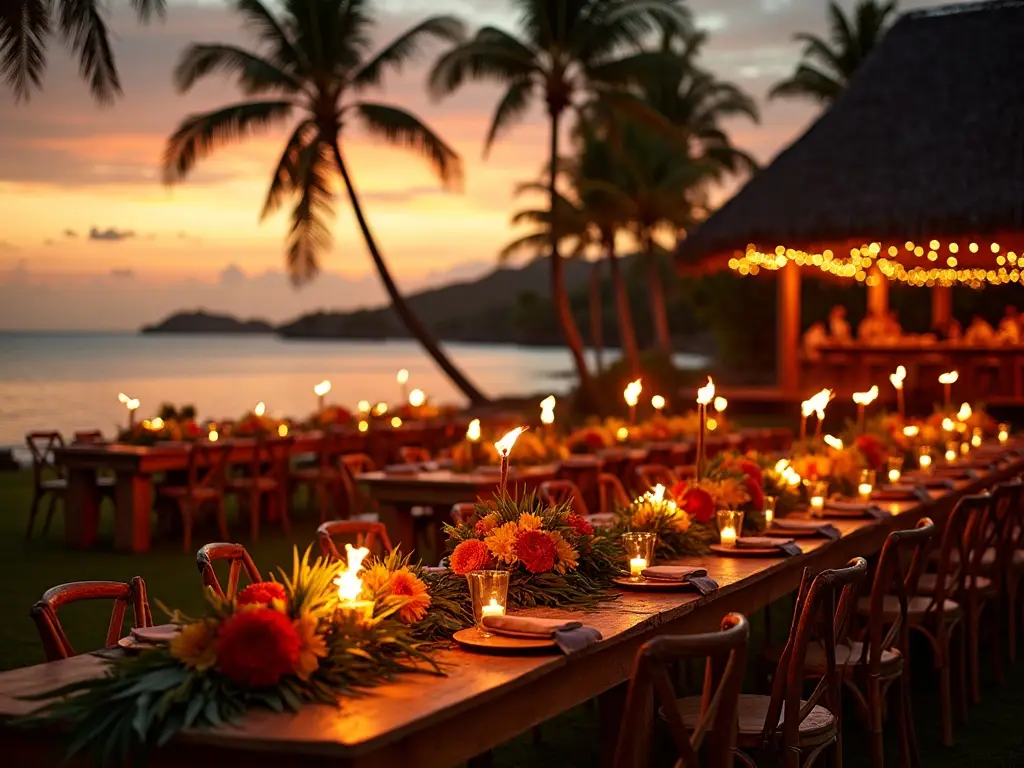
The Kona side standards are the resort luaus, Voyagers of the Pacific at the Royal Kona Resort and Island Breeze at the Courtyard King Kamehameha, both set near luxury resorts and aimed partly at travelers who want full resort amenities. Both do the full imu roasted kalua pig, an open bar, and a Polynesian revue with the fire knife finale. Go in with the right expectation, it is a dinner show, not a history lesson, and it is priced like one, a Hawaii resort luau runs well over $100 a head. Worth it once, especially with kids or a first timer in the group.
If a luau is high on your list, our honest guide to picking a luau breaks down what separates a great one from a buffet with a soundtrack, and most of it applies island wide, especially if you want an easy, Hawaiian style evening.
08
Find your beach in Kona
Kona's coastline is young lava, so some of the area's best beaches are fewer and frankly weirder than Maui's, with sandy stretches broken up by rockier shoreline, and you have to know which one you want before you drive to it.
- Magic Sands Beach (Laaloa (Laʻaloa)) is the classic in town swim and bodyboard beach, and "magic" because the sand genuinely washes away in winter swells and returns in summer, like a beach with commitment issues. Glorious when it is there. A field of bare lava when it is not.
- Kua Bay (Maniniowali (Maniniʻōwali)) is the postcard, one of Kona's notable white sand beaches, with bright white sand and electric blue water just north of the airport. It is also the most popular, so the lot fills by midmorning and you will do the slow vulture circle of shame waiting for someone to leave. Go early.
- Kahaluu (Kahaluʻu) Beach Park is the easiest snorkeling in Kona, a sheltered, shallow bay packed with fish and green sea turtles, with lifeguards and actual restrooms. It is where you learn to snorkel before you spend money on a boat.
- Makalawena is the reward beach, a sandy hike in past Kekaha Kai, no facilities, no crowds, sublime. This is the one you earn on foot, and the lava rock between you and it is the price of admission.
A blunt truth about Kona beaches, the surf and the lava do not care about your plans. Check the Hawaii Beach Safety forecast before you commit to a swim spot, watch for the high surf and brown water flags, and when a lifeguard tells you the current's working today, believe them on the first telling rather than the third. The ocean here is spectacular and completely indifferent to your itinerary, which is exactly how it should be.
09
Watch the sun go down from the water
Kona faces dead west, with no other island parked on the horizon, which makes it one of the best sunset coasts in all of Hawaii. You can do this two ways.
The cheap way, post up on the Alii Drive seawall, the Kahaluu shoreline, or any west facing beach with a cold drink, and watch for the green flash, that split second emerald flicker as the sun's last edge drops below a clean ocean horizon. It is real, it is a genuine trick of atmospheric refraction, and Kona's flat sea gives you a better shot at catching one than almost anywhere in the islands.
The splurge way, a Kona sunset catamaran sail. You glide down the coast with a drink in hand, the cliffs go gold, and on winter trips from roughly December through March the humpback whales routinely photobomb the whole production, so the sail can double as a casual whale watching tour. Two hours, no driving, no parking, and someone else does the cleanup.

Photo by John Baker on Unsplash
If you want a free spot with a built in show, the lawn and seawall in front of Hulihee Palace and the little crescent at Kahaluu both line up dead west, and both come with a parking lot you can actually find. Bring a takeout poke bowl, claim a patch of grass, and you have assembled the cheapest good dinner in Kona.
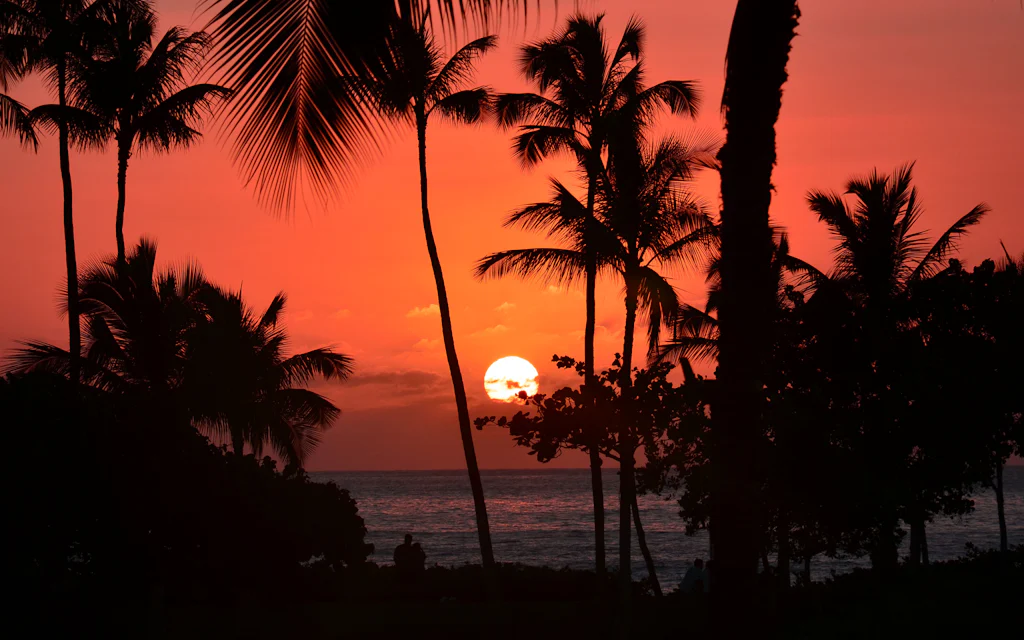
Either way, here is the move nobody tells you, stay put for fifteen minutes after the sun's gone. Kona's afterglow, the long pink and orange wash once the sun is down, is often better than the main event, and that is exactly when half the beach folds the towels and leaves, with the shoreline and palm trees slipping into silhouette. Let them go. Bring a reef safe mineral sunscreen for the daytime, a light layer for after dark, and stay for the encore. And if you timed it right, the sunset sail dropped you back at the harbor with just enough evening left to make the manta tour, a genuinely great one two punch if your stomach is up for two boats in a day.
Which Kona thing should you book first?
Manta ray night snorkelOur pick
- Best for
- Everyone — the one unmissable thing in Kona
- The catch
- After dark and open water; book ahead and take a seasick tablet
Kealakekua Bay snorkel
- Best for
- The clearest reef in Hawaii on a calm morning
- The catch
- Land access is limited — easiest by boat tour
Kona coffee farm tour
- Best for
- Rainy afternoons, non-divers, and caffeine pilgrims
- The catch
- It's a tasting and a walk, not a thrill ride
Volcanoes day trip
- Best for
- First-timers who want to stand on an active volcano
- The catch
- Two-plus hours each way from Kona — make it a full day
10
Day trips worth the drive from Kona
Kona is a fantastic base on the west side of the Big Island, while Hilo sits on the east side, but the island is genuinely enormous, bigger than all the other Hawaiian islands put together, so some of the best stuff is a drive away. Three day trips are worth the windshield time, especially because they add beaches and hiking trails to the payoff beyond the drive.
Hawaii Volcanoes National Park is about two to two and a half hours southeast, and it is basically non-negotiable on a first trip. You can stand at the rim of Kilauea (Kīlauea), walk through a lava tube, and, when the volcano is actively erupting, watch the caldera glow after dark. It pairs naturally with Punaluu (Punaluʻu), one of the island's famous black sand beaches, on the way down, which I have written up in the black sand beach guide.
Mauna Kea is the other worldly one. From the visitor station at 9,000 feet you get some of the clearest, darkest stargazing on earth, and a Mauna Kea summit and stars tour handles the altitude, the cold, and the driving so you are not white knuckling a rental van down a gravel road in the pitch dark. It is summit of a volcano cold up there even in July, so a real jacket is genuinely not optional.
Waipio (Waipiʻo) Valley on the north end is the dramatic green amphitheater you have seen on every Big Island postcard, though access to the valley floor has been restricted in recent years, so check the current rules before you go and be ready to admire it from the lookout instead.
For the full lay of the land, drive times, which side is which, what to skip, start with the Big Island map guide and the broader things to do on the Big Island roundup. Between them they will keep you from cheerfully booking a sunrise tour that needs a 3 a.m. alarm two hours away from your hotel, and if you are planning those longer loops, the route is much easier with a rental car.
11
How many days in Kona, and when to go
Give Kona three to four days of a Big Island trip. Two is enough for the manta tour, one good snorkel, and a coffee farm. Four lets you add the Volcanoes and Mauna Kea day trips without sprinting through any of it. If you have got a full week on the island, base a few nights in Kona and a few in Hilo so you are not driving back and forth across a very large rock every single day, especially if you are coming from the east coast and want to pace the trip a little more carefully.
Kona's weather barely has a bad season, it is the dry side, with plenty of sunny mornings, but the water has moods. Summer, May through September, brings the calmest seas and the best snorkeling and beach days. Winter, December through March, brings bigger surf, the humpback whales, and slightly higher prices around the holidays. The manta tours and the coffee farms run year round regardless of the season. For the wider picture, the best time to visit Hawaii guide breaks down the whole calendar month by month.
A few logistics that will save you a headache,
- Rent a car. Kona has almost no useful public transit for visitors, the sights are spread along the coast and up the slope, and the day trips flat out demand one. Budget for a rental from Kona Airport and you have solved most of your problems.
- Parking fills early. Kua Bay, Two Step, and the popular trailheads run out of spots by midmorning. Early start, every time, it is the cheat code for the whole island.
- Pack layers anyway. It is the dry tropics at sea level and genuinely cold on Mauna Kea, so check the Hawaii packing list before you find yourself buying a $60 fleece in a gift shop at 13,000 feet.
The free, official Big Island visitor site is a solid second opinion on current conditions and seasonal events if you want to sanity check any of this and plan a better Kona adventure.
12
Where to stay in Kona
For a curated shortlist by area and budget, see our where to stay in Hawaii hub and our where to stay on the Big Island guide, both cover the Kona coast.
Most visitors base in one of three zones. Kailua-Kona town and Alii Drive put you walking distance from dinner, the seawall, and the pier, the most convenient, least resort y option and the easiest for a first trip. Keauhou, just south, is quieter and sits close to a reliable manta ray cove. And the Kohala Coast resorts, 30-ish minutes north, are the big ticket beachfront stays with the calmest swimming sand on the whole island. Some travelers pick Kohala for the larger resorts, while others prefer more flexible vacation rentals in town. You can compare Big Island hotels on Expedia (also on Booking.com) across Kona, Keauhou, and Kohala.
If you are choosing purely on water, Kohala has the better beaches. If you are choosing on walkable dinner and vibe, stay in town. Ocean view rooms on this coast all face the sunset, which is not nothing on a sky like this one.
There is a budget angle, too. Kailua-Kona town runs the gamut from modest condos to midrange hotels and vacation rentals, so it is the easiest place to keep the nightly rate sane while staying close to the action. The Kohala resorts are where the price tag lives, but they buy you a swimmable beach and a pool the kids will not leave, worth it for some trips, overkill for others. And if you are doing the Volcanoes day trip, a single night near Hilo or Volcano village on the back half of the week saves you a brutal round trip drive and lets you catch the caldera glow after dark without falling asleep at the wheel on the way home.
I will be straight that this is the one section I cannot hand you a booking link for yet, I do not have a Big Island lodging partner I would actually stand behind, and I am not going to point you at an Oahu link and pretend it is local knowledge. When that changes, this is exactly where it will live. Until then, search "Kailua-Kona" or "Kohala Coast" on your hotel site of choice, sort by the map, and book the one that is closest to the water you care about most.
13
Things to do in Kona FAQ
What is Kona, Hawaii best known for?
Kona is best known for three things, world famous coffee, specifically Kona coffee grown in a narrow volcanic belt above the coast. The manta ray night snorkel, one of Hawaii's signature ocean experiences. And being the sunny, dry, leeward base of the Big Island. The Ironman World Championship triathlon also calls Kailua-Kona home each October.
How many days do you need in Kona?
Three to four days is the sweet spot. Two days covers the highlights, manta rays, a snorkel, and a coffee farm. Four days lets you add day trips to Hawaii Volcanoes National Park and Mauna Kea without rushing. On a week long Big Island trip, split your nights between Kona and Hilo to cut down on driving.
Is Kona or Hilo better to stay on the Big Island?
Kona is the sunnier, drier side with calmer water, more beaches, and most of the resorts, the better base for swimming, snorkeling, and sun. Hilo is greener, rainier, and closer to the volcano and the waterfalls. The ideal Big Island trip uses both, a few nights each so you are never driving the whole island in a single day. If the green side wins you over, our things to do in Hilo guide covers that half in full.
What is the best time of year to visit Kona?
Kona is good year round because it is the dry side. Summer (May to September) brings the calmest seas and best snorkeling. Winter (December to March) brings bigger surf, humpback whales offshore, and holiday season prices. The manta tours and coffee farms run in every season.
Can you see manta rays in Kona during the day?
The famous manta experience is a night tour, because the boats use bright lights to attract the plankton the mantas feed on, and that only works after dark. You can occasionally spot mantas while diving or snorkeling by day, but the reliable, near guaranteed encounter is the after sunset trip.
Do you need a car in Kona?
Yes. Public transit is minimal for visitors, the beaches and sights are spread along the coast and up the mountain, and the best day trips to Volcanoes and Mauna Kea require driving. Rent a car at Kona International Airport and plan for early starts, since the popular beach and trailhead lots fill by midmorning.
Is the Kona snorkeling good for beginners?
Very. Kahaluu Beach Park is one of the easiest, most protected snorkel spots in Hawaii, shallow, calm, full of fish and turtles, with lifeguards and facilities. It is the ideal place to get comfortable before committing to a boat trip out to Kealakekua Bay or the manta cove.
Disclosure: Some links on this page are affiliate links. If you book or buy through them we may earn a small commission, at no extra cost to you. As an Amazon Associate, we earn from qualifying purchases.


