Hawaii Volcanoes National Park: Top Things to Do and See
18 min readYndira W. Tonin
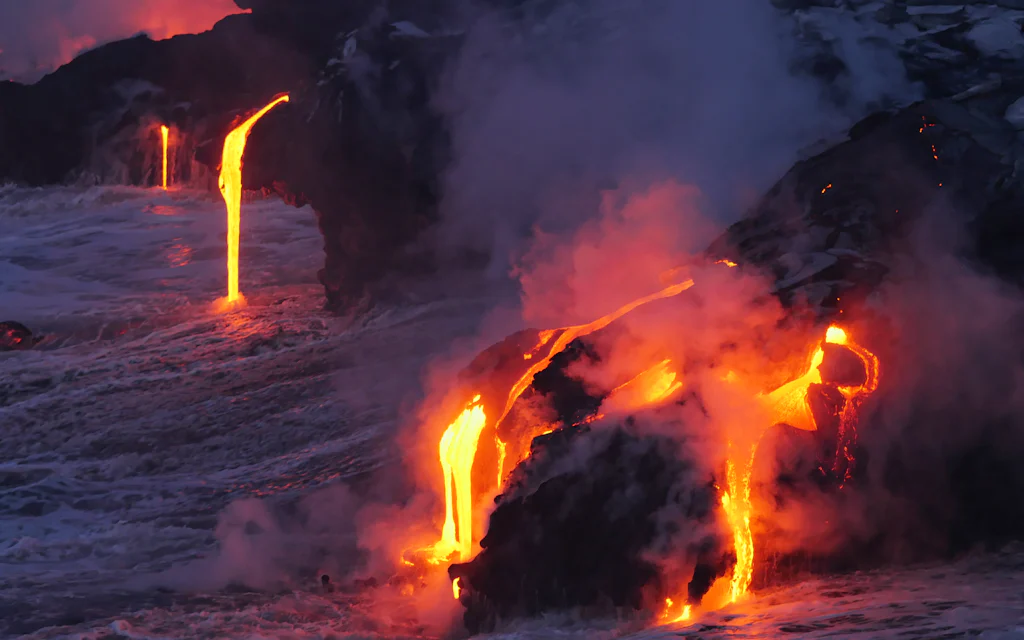
Hawaii Volcanoes National Park, on the Big Island, is one of the most extraordinary places in the United States, a living volcanic landscape built around Kilauea, one of the most active volcanoes on Earth. You can peer into a vast steaming crater, walk through a lava tube, drive across hardened lava flows to the sea, and, when Kilauea is erupting, watch the ground itself glow.
The single most important thing to know up front, active lava is not guaranteed. Kilauea erupts in episodes, on its own schedule, so whether you will see flowing lava depends entirely on timing and luck.
Everything here, from the eruption status to the fees, was checked against the USGS and the park, current as of 2026. The good news is that the park is spectacular with or without an active eruption, and this guide covers both.
Here is how to visit, what to see, how lava viewing works when it is happening, the fees and hours, and the real safety you need to respect in a place where the earth is still being made.
Table of contents
- What is Hawaii Volcanoes National Park?
- Will you see lava? How eruptions work
- The top things to see and do
- The Thurston Lava Tube and Kilauea Iki
- Chain of Craters Road
- How to view an active eruption
- Fees, hours, and getting there
- Safety, vog, tephra, and the rules
- Best time to visit and what to bring
- Where to stay
- FAQ
01
What is Hawaii Volcanoes National Park?
The park protects two of the world's most active volcanoes, Kilauea and the much larger Mauna Loa, on the southeast side of the Big Island, and it is a UNESCO World Heritage Site for good reason.
Its centerpiece is Kilauea, a shield volcano whose summit holds the enormous Halemaumau (Halemaʻumaʻu) crater, traditionally revered as the home of Pele, the Hawaiian volcano deity. Around it sprawls a surreal landscape, steaming vents, sulphur banks, hardened black lava flows, rainforest, and a road that descends from a misty summit to a coastline built of cooled lava. It is, quite literally, the Earth under construction.
What to do at Hawaii Volcanoes National Park
Crater Rim Drive & overlooksOur pick
- Best for
- The easy, always-open core — drive the rim and stand over Kilauea's vast, steaming Halemaumau crater
- The catch
- Vog (volcanic smog) can blur the views on still days
Thurston Lava Tube & Kilauea Iki
- Best for
- Walking through a 500-year-old lava cave and hiking across the floor of a once-molten crater
- The catch
- The Kilauea Iki loop is a real ~4-mile hike with a climb out
Chain of Craters Road
- Best for
- A 22-mile drive down to the coast past craters, lava fields, and ancient petroglyphs, ending at a sea arch
- The catch
- It's a dead-end road — budget 2–3 hours round trip
Active lava viewing
- Best for
- When Kilauea is erupting, glowing lava in Halemaumau — no permit needed, best before dawn
- The catch
- Only when it's actually erupting; check the USGS status first
The scale is hard to overstate. The park spans more than 300,000 acres, from the summit of Mauna Loa down to the sea, across tropical rainforest, high alpine desert, and barren lava flats. Kilauea has been erupting on and off for centuries and, in recent decades, almost continuously, which is why the landscape here is so raw and young, in places literally days or years old rather than the millions of years that shaped the other islands.
Mauna Loa, the giant next door
The park's other volcano is Mauna Loa, the largest active volcano on Earth, rising to 13,677 feet and measuring some 33,500 feet from its seafloor base to its summit. It is not erupting now, its last eruption was late 2022, and its summit road stays closed beyond the first cattleguard, so most visitors admire it from a distance while they focus on Kilauea. It is a quiet giant, and worth knowing it is there.
This is the Big Island's number one attraction and one of the most visited spots in all of Hawaii, and it earns it. People who love raw geology find nowhere better. Even on a day with no flowing lava, you can stand on the rim of a live caldera, walk through a tunnel left by molten rock, and drive past decades of eruptions frozen mid flow, a full, unforgettable day that pairs naturally with the rest of things to do on the Big Island.
02
Will you see lava? How eruptions work
Here is the one strong opinion in this guide, and it will save you disappointment, do not plan your whole trip around catching flowing lava, because nobody can promise it.
Kilauea erupts in episodes, bursts of activity separated by pauses that can last days, weeks, or longer. During an active phase, lava can fountain and pool dramatically in Halemaumau. During a pause, the crater simply steams.
Recent activity has been remarkable. Since December 2024, Kilauea has run one of the most episodic fountaining eruptions ever documented, and by mid-2026 it had produced 51 separate episodes, some with fountains topping 950 feet. But even then, the lava comes and goes, episode 51 fountained for about eight hours on July 15 2026 and then paused, so any given day is a roll of the dice.
The only reliable way to know is to check the status before you go. The USGS Hawaiian Volcano Observatory posts daily Kilauea updates and alert levels, and the National Park Service eruption page tells you exactly where and whether lava is currently visible. Check both within a day or two of your visit.
When we last checked, in mid July 2026, the summit was paused between episodes at an advisory alert level, with the observatory forecasting the next one for late July or early August, exactly the kind of detail that is true today and wrong next week.
The episodic eruption, by the numbers
It is also worth understanding that "seeing lava" has looked very different across the park's history. In some past eras you could hike to where lava poured into the ocean, or watch rivers of it cross old roads.
In the current summit eruption phase, viewing is mostly a glow and fountaining contained within the Halemaumau crater, seen from the rim. Both are extraordinary, but they are not the same picture, and old photos of red rivers can set up the wrong expectation. Read the current NPS description of where and what is visible so you know what you are actually likely to see.
So set your expectations right, hope for lava, but plan for a park that is magnificent without it. If you happen to catch an eruption, it is the experience of a lifetime. If you do not, you will still have one of the best days on the Big Island.
03
The top things to see and do
Even without active lava, the park is packed with otherworldly sights off the main roads. Here is what to prioritize.
The essentials,
- Kilauea Overlook and the summit caldera, the jaw dropping view down into Halemaumau, and the best vantage when an eruption is glowing.
- Crater Rim Drive, the loop road around the summit, linking overlooks, steam vents, and trailheads. The easy backbone of any visit.
- Steaming Bluff (Wahinekapu) and the Sulphur Banks, ground that literally steams and hisses, where rainwater meets volcanic heat.
- The Thurston Lava Tube (Nahuku (Nāhuku)), a walk through lava cave (more below).
- Chain of Craters Road, the 19-mile descent to the coast (more below).
The park's greatest hits
Halemaumau overlooks
the live summit caldera, and the eruption glow when it is on
Nahuku lava tube
a walk through cave, lit 8am to 8pm, tiny parking lot
Kilauea Iki Trail
3.3 miles across a 1959 lava lake floor
Chain of Craters Road
19 miles down to the sea and the Holei arch
Devastation Trail
a paved half mile across a cinder buried forest
Sulphur Banks
steaming, hissing ground and yellow crystals
The Devastation Trail and quieter corners
Beyond the headline stops, the park rewards a slower look. The Devastation Trail is a short, flat, paved half mile across a cinder field buried by the 1959 Kilauea (Kīlauea) Iki eruption, easy for anyone.
Volcano Art Center near the entrance shows local work, and the historic Volcano House hotel, the only lodging inside the park, has a lounge with a picture window straight into the caldera, a warm dry place to take it in on a rainy day. Birdwatchers and rainforest lovers will find native forest most visitors blow right past.
Start at the temporary welcome center for the day's conditions and a map, then work the summit area first. With a single day you can comfortably do the summit overlooks, the lava tube, a short crater hike, and the Chain of Craters drive, a remarkable amount of geology for one park entrance.
04
The Thurston Lava Tube and Kilauea Iki
Two of the park's most beloved experiences sit right next to each other near the summit, and together they make a perfect half day.
The Thurston Lava Tube (Nahuku) is a cave left behind by a river of molten lava roughly 500 years ago, a cool, dripping, lantern lit tunnel you can walk straight through, with rainforest crowding the entrance and exit. It is short, easy, and genuinely magical, especially for kids, and it gives you a visceral sense of how the island was built. Go early or late to avoid the midday crowds in the narrow passage.
Right beside it begins the Kilauea Iki Trail, one of the best day hikes in Hawaii. The roughly 3.3-mile loop drops about 400 feet through thick rainforest down to the floor of Kilauea Iki crater, which was a churning lava lake in a 1959 eruption (its fountains hit a record 1,900 feet) and is now a hardened plain still venting wisps of steam. Walking across a former lake of fire, with the crater walls rising around you, is unforgettable, just budget a couple of hours and a steep climb back out.
A practical note, if you only have energy for part of the loop, hike it clockwise to reach the crater floor sooner and turn back when you have had enough. The trail is well marked but a real hike at altitude with a 400-foot climb out, so bring water and decent shoes, flip flops on the sharp crater floor ruin the walk. Pair it with the lava tube next door and you have the park's best three hours on foot.
05
Chain of Craters Road
If you do one drive in the park, make it Chain of Craters Road, a 19-mile descent that is a geology lesson and a coastal drama rolled into one.
The road winds down about 3,700 feet from the summit rainforest to the sea, crossing decades of lava flows along the way, some so recent the road was rebuilt over them. You pass a string of pit craters, vast fields of black and silver hardened lava, and pull offs with sweeping views, ending near the coast at the Holei (Hōlei) Sea Arch, where the ocean hammers a cliff of lava rock. A short walk away are the Puuloa (Puʻuloa) Petroglyphs, more than 23,000 ancient carvings and one of the largest such fields in the islands, where Hawaiian families once placed a newborn's piko in the rock for a long life.
It is a dead end road, there are no services and no gas, and you drive back up the way you came, so fuel up first, bring water, and budget two to three hours round trip with stops. At the bottom, depending on the eruption, the road may end where past lava flows once buried it, a stark reminder of who is really in charge here. It is the part of the park that best shows the sheer scale of what Kilauea has built and unbuilt.
The drive is also a lesson in time. Near the top you cross flows from the 1970s, then older grassed over ones, then stark fresh black fields, decades of eruptions laid out like rings in a tree. Stop at the marked pullouts and read the signs, and watch for nene, the endangered native goose, up top.
06
How to view an active eruption
When Kilauea is erupting at the summit, the park becomes one of the few places on Earth you can safely watch lava, and the good news is it is accessible to everyone.
When lava is active in Halemaumau, the National Park Service opens viewing areas along Crater Rim Drive, overlooks like Uekahuna and Keanakakoi with direct sight lines down into the glowing crater. Which ones are open shifts with the eruption, some western overlooks were closed through 2026 after heavy tephra fall, so check the park's eruption viewing page for the current spot. The overlooks are free to use beyond park admission, no special permit or ticket, you just walk up, and the glow is most dramatic in the dark.
How to watch the lava
- 1First
Check HVO and NPS
confirm an episode is actually erupting, not paused
- 2Then
Find the open overlook
the open Crater Rim Drive spots shift with conditions, the park posts the current one
- 3Go
Before dawn or late night
the glow is best in the dark and the crowds are thinnest
- 4Bring
Flashlight and warm layers
the summit sits near 4,000 feet and runs cool and wet
A few tips when an eruption is on, go before sunrise or late at night (after about 10 p.m.) to beat the worst crowds and traffic, which jam up between roughly 5 and 9 p.m. as everyone arrives for sunset. Bring a flashlight, warm layers (the summit is cool and around 4,000 feet), and patience for parking. And keep your expectations honest, sometimes the "lava" is a glow and a column of gas rather than rivers of orange, but standing above a live, erupting crater in the dark is awe inspiring either way.
Photography tip, a phone struggles with the dark, high contrast scene, so steady it on a railing and let a night mode work. But resist spending the whole time behind a screen. The sound of an active crater and the red light flickering on the steam are the parts a photo cannot hold, so watch for a few minutes before you reach for the camera.
07
Fees, hours, and getting there
The logistics are refreshingly simple, which makes the park easy to fold into a Big Island trip.
The entrance fee is $30 per private vehicle, good for 7 days and up to fourteen people, with lower rates for motorcycles and for anyone on foot or bike, where kids under sixteen are free. The park is open 24 hours a day, year round, which is exactly why predawn and late night eruption viewing is possible.
If you are visiting all three of Hawaii's national parks, the $55 Hawaii Tri-Park Annual Pass covers Volcanoes, Haleakala, and Puuhonua o Honaunau for a year and pays for itself fast. Note that the main Kilauea Visitor Center has been closed for renovation since early 2025, with a temporary Welcome Center at Kilauea Military Camp, about 1.25 miles past the entrance, open roughly 9am to 4:45pm. Check current conditions before you go, since closures and viewing areas shift with the volcano.
Fees, hours, and passes
Getting there, the park entrance is on Highway 11 on the southeast side of the island. From Hilo it is about a 45-minute drive.
From the Kona/Kohala resort areas on the west side, budget 2 to 2.5 hours each way, which is why many west side visitors make it a long full day trip or an overnight. Map it into a wider Big Island road trip and the drive itself, across the island's volcanic spine, becomes part of the experience.
Getting to the park
If you would rather not drive yourself, especially from the far Kona side, a Volcanoes National Park tour handles the long round trip and the guiding, often bundling the park with waterfalls, a black sand beach, and other highlights into one full day. It is a popular choice for cruise passengers and anyone short on time.
★4.6(575)
Big Island, Hawaii: Volcanoes National Park Safari
55 minutes
Free cancellation
from
$379
08
Safety: vog, tephra, and the rules
A live volcano demands respect, and a few real hazards are worth understanding before you go, none of them should scare you off, but all deserve attention.
The main ones,
- Vog, volcanic smog of sulphur dioxide and fine particles. It can irritate eyes and lungs, especially for people with asthma or heart conditions. Check air quality advisories and take it easy if you are sensitive.
- Tephra, when fountaining is active, the wind can carry volcanic glass fibers (known as Pele's hair) and fragments onto roads and trails, which can irritate skin, eyes, and airways. Heed any closures.
- Cliffs, cracks, and thin crust, stay on marked trails and behind railings. The ground near the caldera can have unstable edges and hidden earth cracks, and hardened lava can be sharp and brittle.
Beyond that, the usual rules apply, do not take lava rock (locals will tell you Pele's curse follows those who do, the park gets packages of returned rocks every year from regretful visitors), do not venture past closure signs for a photo, and follow the rangers, whose guidance changes quickly with the volcano. Treat it as the powerful, sacred, living place it is, and it rewards you safely.
The real hazards
VogCheck air quality
sulphur dioxide haze, rough on asthma, heart conditions, and kids
Pele's hair
glass strands that blow miles from a fountaining vent
Ground cracks
unstable edges and hidden sinkholes, stay behind barriers
Sharp lava
brittle rock and closed crusts, marked trails only
Do not take rock
the park gets returned lava in the mail every year
The risks are real but manageable. People get into trouble almost exclusively by ignoring the rules, crossing barriers near unstable edges or pushing past advisories during high vog. Do none of those, keep an eye on children near the rim, and you can enjoy a live volcano with peace of mind.
The Hawaiians who have lived alongside Kilauea for centuries treat it with respect, not fear, and that is the right posture for a visitor too.
09
Best time to visit and what to bring
You can visit Hawaii Volcanoes National Park year round, but timing your day well makes a big difference.
For an active eruption, the glow is best in the dark, so predawn or after about 10 p.m. is both the most dramatic and the least crowded. For general sightseeing, early morning brings the clearest air (less vog buildup) and the fewest people on the lava tube and trails. The summit weather is cool, misty, and often rainy, it sits around 4,000 feet, so it is far cooler than the beaches and can shift fast.
Pack accordingly,
- Layers and a rain jacket, the summit is cool and wet, even when the coast is hot and sunny.
- Closed, sturdy shoes, lava rock is sharp and trails can be rough.
- A flashlight or headlamp, essential for the lava tube and night eruption viewing.
- Water, snacks, and a full tank, services inside the park are limited.
When planning, season matters less than time of day, since the park is worth visiting year round, though the drier summer months see a bit less of the summit's frequent rain and weekdays are quieter. If an eruption is happening, though, throw the usual scheduling out the window and prioritize a night or predawn visit on whatever day you can, an active Kilauea is worth rearranging a trip for.
Get the timing and layers right and you set up for the park at its best, not shivering in a cloud in shorts.
What to pack for the park
Layers and rain jacket
4,000 feet up, cool and misty even when the coast bakes
Closed sturdy shoes
lava rock is sharp and trails are rough
Flashlight or headlamp
for the lava tube and night eruption viewing
Water and a full tank
services inside the park are limited
10
Where to stay
Most visitors see the park as a day trip, but where you base changes how easy that is, and our where to stay on the Big Island guide breaks down the options.
The closest beds are in Volcano Village, a small, misty town just outside the entrance with B&Bs and a few inns, ideal if you want to do predawn or night eruption viewing without a long drive. Hilo, about 45 minutes away, is the nearest real town with hotels and the most convenient larger base.
From the Kona and Kohala resorts on the west side, the park is a 2-to-2.5-hour drive, so west side visitors often make it a dawn to dusk day or an overnight in Volcano or Hilo. You can compare Big Island hotels on Expedia (also on Booking.com) across Volcano Village, Hilo, and the Kona side.
There is a real case for the overnight, especially if an eruption is active. Basing in Volcano Village lets you see the glow at night and again before dawn, the two best windows, without two long drives in the dark, and the cool fern draped town is a charming contrast to the resort coast.
Since we are an Oahu company, we have no stake in where you stay on the Big Island, but our guides to the best of the Big Island and the nearby Mauna Kea stargazing help you plan the trip. If your travels also touch Oahu, our picnic packages are there for a sunset.
However you do it, Hawaii Volcanoes National Park is one of the few places on Earth where you can watch the planet build itself. Go with the status checked and the layers packed, and it delivers like nowhere else.
FAQ
Can you see lava at Hawaii Volcanoes National Park?
Sometimes, only when Kilauea is actively erupting, which happens in unpredictable episodes. When lava is flowing at the summit, the park opens viewing areas along Crater Rim Drive with no permit needed, best seen before dawn or at night. Check the USGS Hawaiian Volcano Observatory and the National Park Service eruption page before you go, since activity changes constantly.
How long do you need at Hawaii Volcanoes National Park?
Plan at least a full day. In one day you can drive Crater Rim Drive and its overlooks, walk the Thurston Lava Tube, hike part of Kilauea Iki, and drive Chain of Craters Road to the coast. With more time, or to catch a night eruption, staying overnight in nearby Volcano Village or Hilo helps a lot.
Is Hawaii Volcanoes National Park worth visiting without lava?
Absolutely. Even with no active lava, you can stand over the steaming Halemaumau caldera, walk through a lava tube, hike across the floor of a former lava lake at Kilauea Iki, drive Chain of Craters Road past vast lava fields to a sea arch, and see ancient petroglyphs. It is the Big Island's top sight in any conditions.
Is it safe to visit an active volcano?
Yes, within the park's marked areas and rules. The main hazards are vog (volcanic smog) that can affect sensitive people, tephra (volcanic glass) during fountaining, and unstable cliffs and earth cracks near the caldera. Stay on marked trails, heed closures and ranger guidance, and check current conditions, and a visit is safe and well managed.
Disclosure: Some links on this page are affiliate links. If you book or buy through them we may earn a small commission, at no extra cost to you. As an Amazon Associate, we earn from qualifying purchases.


