Sharks Cove Oahu: Snorkeling Guide, Tips & More
18 min readYndira W. Tonin
A map of Oahu trick first, find Haleiwa, slide three minutes north, and you have found Sharks Cove, the best shore snorkeling on the island, and the one beach name that makes first timers hesitate at the water's edge.
This guide is current as of 2026.
Let me put you at ease. The "sharks" part is a real estate technicality, not a forecast.
In summer, Sharks Cove on Oahu's North Shore is a glassy, fish stuffed aquarium you can walk into from the rocks. In winter, it is a washing machine that will rearrange your skeleton. Same cove, two completely different personalities, and the entire trick to enjoying it is knowing which one is showing up the day you visit.
This is the honest guide, when to go, how to get in without shredding your feet, where to park before the lot fills, and what is actually worth packing.
Getting to Sharks Cove
Tap to open Google Maps with turn-by-turn directions.
Table of contents
- What (and where) is Sharks Cove?
- Summer vs. winter, the one thing that matters
- The rocky entry, and why you need water shoes
- What you will actually see underwater
- The tide pools, where the kids disappear
- Three Tables and the rest of Pupukea
- Parking, facilities, and the food trucks
- What to bring (and what to leave)
- How to get to Sharks Cove
- Where to stay near the North Shore
- FAQ
01
What (and where) is Sharks Cove?
Sharks Cove is a small, rocky bay in Pupukea, on Oahu's North Shore, about a mile past Haleiwa town and directly across the street from a row of food trucks that will become very important later.
It sits inside the Pupukea Marine Life Conservation District, which is government speak for "everything here is protected, so look but do not touch." No fishing, no taking, no standing on the coral like it owes you money. That protection is exactly why the fish act like they have never been chased, because, mostly, they have not.
The name is the most misleading thing about the place. White tip reef sharks do live in the deeper water off the North Shore, but they keep to themselves out past where snorkelers go, and sightings inside the cove are rare enough to be a story you would dine out on for years. The cove was named for shape and lore, not for body count.
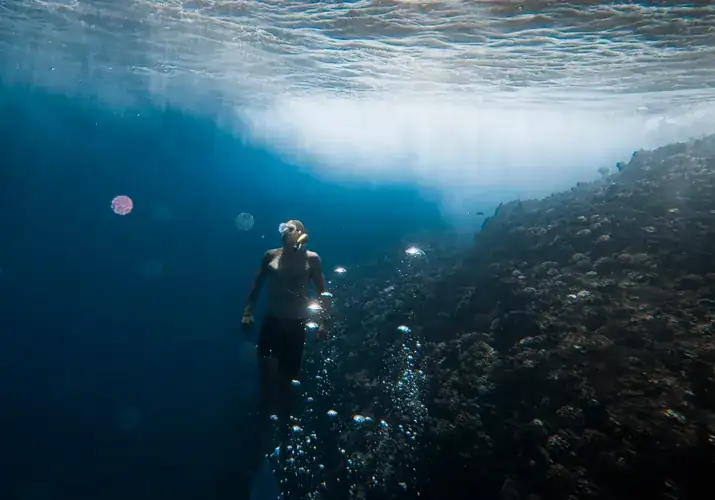
What makes it special is the structure. Lava rock wraps the cove into a natural pool, so on a calm day the water inside stays protected while the open ocean does its thing outside. That is the summer magic. It is also, in winter, the exact wall that turns incoming swell into chaos.
It is not a secret, either. Scuba and snorkel outlets routinely rank Sharks Cove among the best shore entry spots in Hawaii, and Pupukea more broadly is one of the most visited marine reserves on Oahu. That fame is a blessing and a tax, the underwater scene is spectacular, and the parking lot knows it. Manage your expectations on crowds and your morning is close to perfect.

Photo by Chengbo Zheng on Unsplash
02
Summer vs. winter: the one thing that matters
If you remember nothing else, remember this, snorkel Sharks Cove in summer (roughly May through September), and stay out of the water in winter.
Hawaii's North Shore surf season runs October through April, peaking December through February, which is precisely when the same waves that make Pipeline famous turn Sharks Cove into a place that drowns strong swimmers. There is no lifeguard stationed at the cove. The ocean does not grade on effort.
In summer, the swell shuts off, the surface goes flat, and visibility opens up to 30 feet or more. The cove becomes the calm, shallow, beginner friendly aquarium everyone photographs. In winter, that same cove can have waves breaking over the rocks and surging through the entry point with enough force to slam you into lava.
The rule is not "summer good, winter bad" so much as "check the actual conditions, every single time." Even in summer, a south or wrap around swell can sneak in. Before you go, check the Hawaii Beach Safety surf forecast for the North Shore, and apply the oldest rule in the ocean, if the water looks angry, white, or like it is moving sideways, you do not get in. You go get a garlic shrimp plate instead and try again tomorrow.
This is the single mistake that turns a perfect Sharks Cove morning into an ambulance ride. Respect the season and the cove is one of the gentlest snorkels on Oahu. Ignore it and it is one of the most dangerous. There is no shame in driving an hour, seeing whitewater exploding over the rocks, and turning around, that is not a failure, that is a person who gets to keep all their original skin.
03
The rocky entry, and why you need water shoes
Sharks Cove is not a sand beach. Let us sit with that, because people keep expecting one and keep being personally offended when it is not.
You get into the water by climbing over and around volcanic rock, uneven, sharp, slick with algae lava that was clearly designed by someone who hates ankles. There is usually a spot on the right side where locals enter. Watch where experienced snorkelers go in and follow their line rather than picking your own dramatic cliff.
This is why water shoes are not optional here. Flip flops betray you the instant they get wet, and bare feet on lava rock is how you start a vacation with stitches. A cheap pair of closed toe water shoes is the difference between gliding in and doing the wounded flamingo hobble while strangers watch.
Time your entry between the gentle pulses of water, keep low, and use your hands. Sit down and scoot if you have to, dignity is overrated and you are wearing a snorkel mask anyway. Once you are floating, the rocks stop being the enemy and become the whole point, they are what the fish live in, and the moment your face hits the water you will forgive them everything.
Getting back out is the same move in reverse, ideally not while a set is rolling in. Pick your exit spot before you are tired, aim for it early, and let a small wave gently set you down on the rock rather than fighting your way up against the backwash. Patience at the edge is free. Stitches are not.
04
What you will actually see underwater
Here is where Sharks Cove earns the hype. For a spot you can walk to from a parking lot, the marine life is genuinely absurd.

Photo by Giulia Salvaterra on Unsplash
On a good summer day you will drift over,
- Yellow tang and convict tang, the little neon yellow and zebra striped fish that look like someone spilled a highlighter
- Parrotfish crunching on coral with a sound you can actually hear underwater
- Moorish idols and butterflyfish, the ones that look airbrushed
- Humuhumunukunukuapuaa (Humuhumunukunukuapuaʻa), the Hawaii state fish, with a name longer than the fish
- Wrasses, goatfish, needlefish, and the occasional moray eel tucked into a crevice, minding its business
- Green sea turtles (honu), if the day decides to be generous
The turtles are the headliner, and they show up on their own schedule, not yours. If one cruises by, give it room, staying back at least 10 feet from honu is not just polite, it is federal law, and a turtle has never once been impressed by a selfie.
The middle of the cove runs roughly 7 to 16 feet deep and gets deeper as you swim out toward the mouth, but you do not need depth to score. The structure means fish cluster tight around the rock walls and ledges, so the best viewing is often in the shallow margins, not the center. Float near the edges, breathe slow, and let the cove come to you.
Visibility is the wildcard. On a flat, sunny summer morning it is gin clear and you will see 30 feet in every direction. After any bump of swell or a windy afternoon it goes milky and the magic dims. Early, calm, and bright is the trifecta, one more reason the dawn patrol gets the best of Sharks Cove.
05
The tide pools: where the kids disappear
Not everyone in your group wants to put their face in the ocean, and Sharks Cove quietly solves this.

Photo by Esha Verma on Unsplash
Along the rocky shelf, summer's low tide leaves behind shallow tide pools, warm, calm, knee deep little tanks full of tiny fish, hermit crabs, and the occasional confused sea cucumber. For small kids, nervous swimmers, or anyone who'd rather wade than snorkel, this is the best seat in the house.
The pools are also where you will lose track of a seven year old for forty five minutes, because nothing on Earth holds a child's attention like a crab that does not want to be held.
A few ground rules, since this is a conservation district,
- Look, do not take. Shells, rocks, and critters all stay. What you pocket here, the next family does not get to see.
- Do not stand on the coral or the urchins. Both lose that fight, and the urchins lose it into your foot.
- Reef safe sunscreen only. The wading crowd sits in still, shallow water where regular sunscreen pools and poisons the very thing they came to look at.
Bring a cheap pair of polarized sunglasses for the pool watchers, too, the glare off shallow water hides half of what is down there, and a quick swap to polarized lenses turns a blank puddle into a busy little city of gobies and shrimp.
Mind your timing, though, the same rocks that make calm pools at low tide can get washed over as the water rises. A pool that is a safe paddling tank at 8 a.m. can be a surge channel by noon. Keep an eye on the set of the ocean, not just the pool in front of you, and move the small humans back well before the water starts reaching for them.
06
Three Tables and the rest of Pupukea
Sharks Cove gets the fame, but it has neighbors, and on a busy morning they are your release valve.
A two minute walk south sits Three Tables, named for the three flat slabs of reef that poke above the surface at low tide. It is a little more spread out, often a little less crowded, and the snorkeling is just as good once you are past the entry. Same rules apply, summer only, watch the rocks, check the water.
The whole stretch is part of the protected Pupukea district, so you are essentially choosing your spot within one big underwater preserve. If the Sharks Cove lot is a circus, drift down to Three Tables and you have often got more water to yourself. The reef structure is a touch deeper and more open there, which experienced snorkelers tend to prefer and timid first timers tend not to, pick the spot that matches your comfort, not your ego.
Want the rest of the North Shore in one loop? Sharks Cove pairs naturally with Waimea Bay, Laniakea ("Turtle Beach"), and Haleiwa town, see the North Shore Oahu guide for how to string them together, and the best snorkeling on Oahu for how the cove stacks up against Hanauma Bay and the rest.
If you are carless or just do not want to gamble on the parking lot, a circle island day tour is the low stress way to fold Sharks Cove into a full North Shore loop. The good ones stop at the snorkel spots, the turtle beach, and a shrimp truck, then drive you home while you nap.
★4.8(4,263)
Oahu Circle Island Tour with Waimea Valley Waterfall
8 hours
Free cancellation
from
$154
07
Parking, facilities, and the food trucks
The parking lot at Sharks Cove is small, free, and full by midmorning. That is the whole equation.
Aim to arrive by 9 a.m., especially on weekends. After that you are circling the lot like a vulture or parking along the highway shoulder and walking, which is fine, just budget for it. There is a marked crosswalk to get over Kamehameha Highway, and you should use it, because North Shore traffic does not expect a snorkeler to materialize mid lane.
One real warning, North Shore parking lots have a reputation for car break ins, and a beach bag full of valuables sitting on the seat is an invitation. Take what matters into the water in a dry bag, leave nothing visible, and you remove the whole problem.
Facilities are basic but real, there are public restrooms and outdoor showers by the lot, which your sandy, salty self will appreciate. No lifeguard, no gear rental booth on the sand, no concession stand inside the cove itself, so anything you did not bring, you do not have until you cross back to the trucks.
What there is, gloriously, is the strip of food trucks directly across the highway. This is half the reason to come. You can roll out of the water and into a plate of North Shore garlic shrimp, the buttery, garlicky, napkin destroying dish the area is famous for, plus acai bowls, tacos, and shave ice. Snorkel, then shrimp. It is the correct order of operations.
One quiet, honest tell, a beach morning here pairs absurdly well with a set up and styled North Shore picnic to land the afternoon, our Sunset Picnic for Two starts at $349 if you would rather someone else handle the spread. Either way, eat well. You earned it on those rocks.
08
What to bring (and what to leave)
Sharks Cove rewards the prepared and punishes the casual. Pack like you mean it.

Photo by Marc Snailum on Unsplash
Bring:
- Your own mask, snorkel, and fins. There is no rental booth at the cove, and this brings me to my one strong opinion, just buy a set. A decent snorkel set runs about $35 to 40, while renting in Haleiwa runs $12 to 15 a day. Snorkel three days and you have bought the gear and own it forever, and a mask fitted to your face beats a mystery rental that fogs and leaks every time.
- Water shoes. Non-negotiable, see the entire section above.
- Reef safe sunscreen. Required by Hawaii law, and you are swimming in a protected reef. Reef safe sunscreen only.
- A dry bag. Car break ins happen at North Shore lots. A small dry bag lets you take your phone and keys into the water instead of leaving temptation in the car.
- Water and a hat. There is no shade at the cove. The sun does not negotiate.
Leave:
- Anything valuable, in plain sight, in your car. Do not make it easy. Trunk it or take it.
- Gloves and anything for "grabbing." It is a conservation district. Hands stay to yourself.
- Winter expectations in winter. If the surf's up, the cove is a no. Pivot to a boat snorkel tour out of calmer South Shore water instead, the guides chase the conditions for you.
For the full rundown of what earns a spot in the bag, the Hawaii packing list covers the rest of the trip.
09
How to get to Sharks Cove
From Waikiki, Sharks Cove is about an hour's drive, and an hour and a half of a different planet. You will trade high rises for pineapple fields and one lane bridges.
The fastest route is the H-1 to the H-2 north, then Kamehameha Highway (Route 99, then 83) up and over to the North Shore, following signs toward Haleiwa. Roll through Haleiwa town, keep going north past Waimea Bay, and Sharks Cove appears on your left with the food trucks on your right. Plug "Sharks Cove" into your map and trust it.
The drive itself is part of the day. If you have got time, see the best beaches on Oahu and the map of Oahu for the stops between Waikiki and the cove, Waimea, Laniakea, Haleiwa, so you are not just driving, you are collecting.
Give yourself a buffer on the timing. Haleiwa town is a built in trap in the best way, coffee, shave ice, surf shops, art galleries, and the two lane highway through it slows to a crawl on weekends and whenever the surf is firing. An hour door to door is the optimistic number. Budget ninety minutes if you want to stop, and you will want to stop.
No car? The circle island tour above handles the whole loop, and the public bus (TheBus, route 60) does reach the North Shore from Honolulu, though "reach" and "quickly" are doing a lot of work in that sentence. The ride from Waikiki can eat two plus hours each way, which is a big chunk of a snorkel day. For most visitors, a rental car or a guided tour is the difference between a relaxed morning and a logistics seminar.
10
Where to stay near the North Shore
Here is the honest version, most people do not stay on the North Shore, they stay in Waikiki and drive up. The North Shore is gloriously sleepy, which is the point, but it means limited lodging.
If you want to wake up near the surf, the area around Turtle Bay and Haleiwa has vacation rentals and one resort, and it is magic for sunrise. Just know you are trading nightlife and restaurant variety for stars and quiet.
Your North Shore options come down to three flavors. There is Turtle Bay, the one full service resort up here, sitting on its own point with golf, restaurants, and sunrise from your lanai. There are vacation rentals and cottages scattered around Haleiwa, Pupukea, and Sunset Beach, which are the move if you want a kitchen, a bit of yard, and the feeling of actually living on the North Shore for a week. And there is tent camping at spots like Malaekahana for the budget and stars crowd. All three trade restaurant variety and nightlife for quiet, dark skies, and a five minute drive to the cove instead of an hour.
If you would rather have the city at your door and treat the North Shore as a day trip, which is what most visitors do, base yourself in Waikiki (also on Booking.com), where the hotels, food, and beach are stacked in walking distance and the cove is a one hour drive whenever you want it. The full where to stay in Oahu guide breaks down every region if you are still deciding. For a first Oahu trip with one or two North Shore days planned, Waikiki almost always wins on convenience. For a slow, snorkel every morning week, stay up north and never look back.
FAQ
Is Sharks Cove safe to snorkel?
In summer, yes, it is one of the calmest, most beginner friendly snorkels on Oahu when the surf is flat. In winter (October, April), it can be deadly, with no lifeguard and waves breaking over the rocks. Always check the surf forecast first, and never get in if the water looks rough.
Are there actually sharks at Sharks Cove?
Rarely. White tip reef sharks live in deeper North Shore water but stay away from the shallow cove where snorkelers go. The name comes from the cove's shape and local lore, not from frequent shark sightings. In summer, the cove is far more turtle than shark.
When is the best time to snorkel Sharks Cove?
Summer, roughly May through September, when the North Shore swell shuts off and the water goes flat and clear. Within the day, early morning is best, calmer water, better light, and a parking spot before the lot fills around midmorning.
Do I need water shoes at Sharks Cove?
Yes. The entry is over sharp, slippery volcanic rock, not sand. Closed toe water shoes protect your feet getting in and out, and they are the single most important piece of gear besides your mask. Bare feet or flip flops are how people leave with cuts.
Where do you park at Sharks Cove?
There is a small free lot right at the cove on Kamehameha Highway, across from the food trucks. It fills by midmorning, so arrive by 9 a.m. After that, park along the highway shoulder and use the crosswalk. Do not leave valuables visible in the car.
Is Sharks Cove good for kids?
In calm summer conditions, yes. The shallow tide pools along the rocks are perfect for small children and nervous swimmers to wade and spot fish and crabs without deep water. Keep them in water shoes, watch the rising tide, and stay out entirely when the surf is up.
Sharks Cove rewards two simple habits, come in summer, and come early. Do both, bring water shoes and your own mask, and you get the best shore snorkeling on Oahu for the price of a parking spot and a shrimp plate.
Get the season wrong and it is a hard no. Get it right and you will be planning your next morning back before you have toweled off.
Been to Sharks Cove? Tell me your best turtle sighting, or your worst lava rock entry, and which North Shore shrimp truck actually deserves the line.
More of the island → Oahu's best beaches.
Disclosure: Some links on this page are affiliate links. If you book or buy through them we may earn a small commission, at no extra cost to you. As an Amazon Associate, we earn from qualifying purchases.


