Best Snorkeling on Oahu: Top Spots and Tips for 2026
15 min readYndira W. Tonin
The best snorkeling on Oahu comes down to one rule, match the spot to the season and your skill, and you will see fish, turtles, and coral that look airbrushed. Get it wrong, and you will fight current and cloudy water for nothing.
Everything here was checked and is current as of 2026.
Here is the honest shortcut. Hanauma Bay is the best all around spot and the easiest for beginners. Sharks Cove is the North Shore gem in summer. Electric Beach is for the adventurous. And for turtles, you go by boat. The rest of this guide fills in the details.
The single most important thing to understand is the seasons. Oahu's surf flips sides through the year, so the calm, clear water moves with it, and snorkeling the wrong coast in the wrong month is the most common rookie mistake.
So this is sorted by spot, with the timing, the difficulty, and the catch for each, plus what you will actually see down there and how to do it without hurting yourself or the reef. Mask on. Let us go.
Table of Contents
01
Before you go: seasons, timing, and rules
Oahu's best snorkel spots
Hanauma BayBest overall
The classic, the most fish variety, in a protected bay. Reservation + fee. Go early.
Sharks CoveSummer
North Shore, summer only, rocky entry, brilliant fish and structure.
Electric BeachAdvanced
A warm power plant outflow pulls in fish + turtles. For confident swimmers.
Turtle CanyonBy boat
Boat only, near guaranteed green sea turtles over the reef.
Ko Olina lagoonsBeginners
Calm, protected water, the easiest for kids and first timers.
Three facts run every good snorkel day on Oahu. Learn them and you are ahead of most visitors.
Season decides the coast. In winter (roughly November to April), the big swells hit the north and west shores, so North Shore spots like Sharks Cove become dangerous and murky. In summer (May to October), the North Shore goes glassy and the south side can pick up its own smaller swell. As a rule, North Shore in summer, south and east shores more reliable year round.
Mornings win. The wind comes up most afternoons, churning the surface and dropping visibility. Get in the water early, before about 10am, for the calmest, clearest conditions. This is the same lesson the whole island teaches.
The reef has rules, and they matter. Hawaii restricts coral bleaching sunscreens, sea turtles and monk seals are protected by law, and standing on coral kills it. More on all of that below, but go in knowing this is a living ecosystem, not a swimming pool.
A quick reality check on conditions, if the water looks brown, foamy, or angry, it is not a snorkel day, no matter what your itinerary says. Check the surf report, ask a lifeguard, and never get in at an unfamiliar spot with strong current. Our best time to visit Hawaii guide breaks the seasons down further.
One more piece of timing nuance, the south shore can pick up its own modest surf in summer, while the windward and west sides are often workable when the north is closed. There is almost always somewhere on Oahu snorkeling well, the trick is matching the day to the right coast.
When in doubt, lean on the lifeguards. Oahu's are excellent, they know that beach's moods better than any app, and a thirty second question can save your whole morning. Ask whether it is good to snorkel right now, and actually listen to the answer.
Get those three right, season, morning, respect, and the rest is just picking a spot.
02
Hanauma Bay (the classic)
Know before you go
If you do one snorkel on Oahu, do this one. It is the best all around spot on the island and the friendliest to beginners.
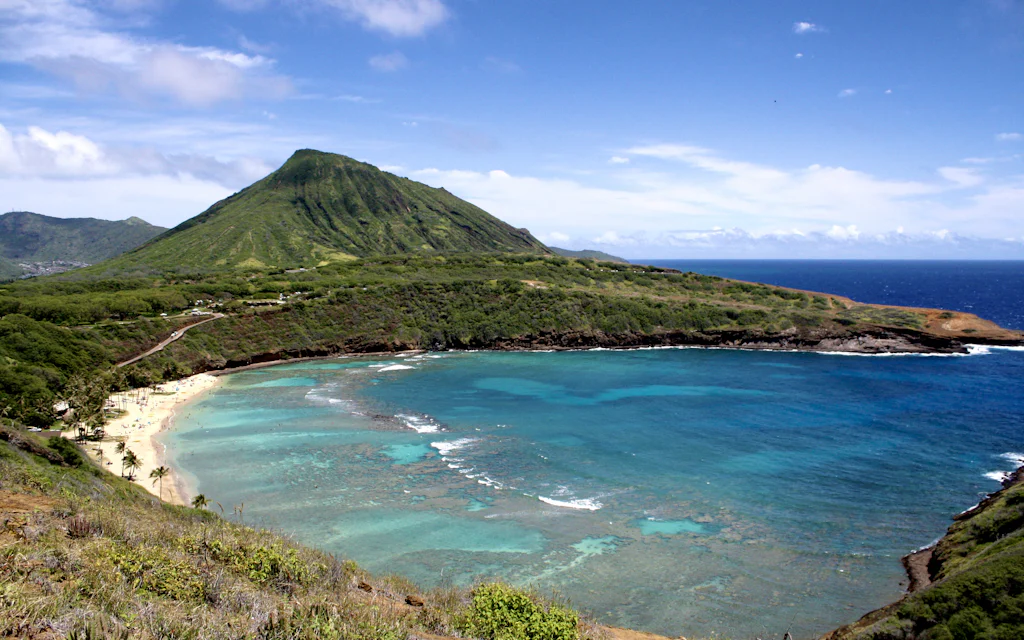
Hanauma Bay is a protected marine reserve set in an old volcanic crater about 20 minutes east of Waikiki. The curved bay shelters the water, so it stays calm and clear, and decades of protection mean the fish are abundant and unbothered, including the absurdly named Hawaii state fish, which you will almost certainly meet.
The trade off is logistics. It costs $25 per person to enter (kids 12 and under, Hawaii residents, and active duty military stationed here are free), it is closed Mondays and Tuesdays, and you need a reservation, which are released online a couple of days ahead and sell out within minutes. Set an alarm.
A few tips to do it well,
- Book the reservation the second they release. This is the single barrier. Everything else is easy.
- Go at opening. Early means calm water, parking, and fewer crowds in the lagoon.
- Watch the short conservation video (required once a year) and stay inside the inner reef if you are new, the outer reef has current.
A bit of context makes the visit richer. Hanauma was loved nearly to death by the 1980s, too many feet on the coral, too much fish food in the water, so the strict reservation system and the conservation video exist to let the reef heal. It has worked. The fish life today is the payoff.
The bay is shaped like a bowl, with a sandy bottomed inner lagoon that is calm and beginner perfect, ringed by a reef that drops off beyond. Stay inside the reef line your first time, and save the deeper outer edges for when you are confident.
It is the most managed snorkel experience on Oahu, and for first timers that is exactly the appeal, amenities, lifeguards, gear rental, and a reef that delivers.

Photo by Victoria Ballesteros on Unsplash
03
Sharks Cove and Three Tables (North Shore)
Do not let the name scare you. Sharks Cove is one of the best snorkel spots on the island, in summer.
Part of Pupukea Beach Park on the North Shore, Sharks Cove is a tumble of volcanic rock that creates little coves, caverns, and ledges absolutely full of fish. The terrain is more interesting than Hanauma's open lagoon, the marine life is diverse, it is free, and it is usually far less crowded.
The enormous catch is the season. This works only in summer, when the North Shore lies flat. In winter, the same spot is pounded by huge, deadly surf and is completely off limits for snorkeling. People drown on the North Shore every year ignoring this. Do not be one of them.
Right next door, Three Tables (named for the flat reef shelves offshore) offers a slightly mellower version of the same summer only North Shore snorkeling, with sandy entries between the rock.
There is more to the stop than the water. At low tide the cove's edges become tide pools worth poking around, and the strip across the road has grown into a row of food trucks and a dive shop, so you can rent gear and grab a poke bowl or a smoothie without leaving the area.
A few notes, the rocky entry is sharp, so water shoes help, and there are no lifeguards right at the cove. Go on a calm summer morning, ideally near a higher tide so you clear the shallow rock, get in where it is sandy, and stay aware of the surge near the rocks. And genuinely check the surf forecast first, North Shore conditions change fast, and a flat dawn can turn into a churning afternoon. Pair it with a North Shore day and you have got a perfect summer outing. Snorkeling beyond Oahu? Our best snorkeling in Hawaii guide covers Molokini, the Big Island, and Kauai.
04
Electric Beach (for the adventurous)
This one is a little weird, a little wonderful, and not for nervous swimmers.
Kahe Point Beach Park, universally called Electric Beach, sits on the west side across from a power plant. The plant discharges warm water into the ocean through a pipe, and that warm plume draws a genuinely wild amount of marine life, schools of fish, rays, dolphins, and turtles all gather here.
The snorkeling can be spectacular, with big schools and great coral once you reach the outflow. The reason it earns its "adventurous" label, the best stuff is a real swim offshore, and the area can have strong current. This is not a wade in and float spot.
Who it is for, confident swimmers and snorkelers who are comfortable in open water and reading current. Who should skip it, beginners, young kids, and anyone not at ease swimming a distance from shore.
Set expectations before you go. From the small parking lot you cross the road and enter over a rocky shoreline, then swim out toward the two large pipes pushing the warm water. On a good day the payoff is sudden, you cross a stretch of nothing and arrive at a wall of fish.
It is also a popular shore dive site, so you will often see scuba divers here, which tells you something about both the depth and the draw. If the surface is choppy or the current is noticeable on entry, save it for another day.
Go on a calm day, ideally with a buddy, enter where the sand is, and do not push out to the pipe if the water is moving. When conditions line up, it is one of the most fish dense spots on Oahu, the warm water really does work like a magnet.
05
Turtle Canyon and boat snorkeling
If your dream is swimming with sea turtles, the surest way is to go to them, by boat.
Turtle Canyon is a reef off the Waikiki/Diamond Head coast where Hawaiian green sea turtles (honu) gather at cleaning stations, and it is only reachable by boat. A snorkeling tour runs out to spots like this with gear included, which is by far the easiest way to reliably see turtles in clear, deep water away from the crowds.
★4.9(3,571)
Waikiki: Turtle Canyon Snorkel Adventure on Oahu
2 hours
Free cancellation
from
$85
The boat approach has real advantages beyond the turtles. You skip the parking and reservation hassle, a crew handles safety and finds the fish, the water offshore is often clearer than the shoreline, and it is reassuring for less confident swimmers to have a boat right there.
It is also the move in winter, when shore snorkeling on the north and west sides is out. South shore boat trips run more reliably year round, so a tour can save an otherwise un snorkelable week.
A word on why the turtles gather here, the canyon has "cleaning stations," spots where small fish eat algae off the turtles' shells, so honu queue up and hover patiently while they get detailed. Floating quietly above that ancient routine is one of the best things you can do in Hawaii's water.
Most tours pair the turtle stop with a second reef and throw in drinks, gear, and sometimes a flotation device, which makes them genuinely beginner friendly. Morning departures get the calmest water, and the snorkel boats often leave from the same Waikiki stretch as the sunset sails.
A gentle but firm note, turtles are protected by law. Never touch, chase, or ride one, and give them a wide berth, roughly ten feet. Good operators drill this, and it is on you to follow it. Watching a honu glide past on its own terms beats crowding it every time.
Oahu's reef regulars
Green sea turtlesHonu
Honu, protected. Look, never touch or chase. Common at most spots.
Reef fishColorful
Tangs, wrasses, parrotfish, and the bright state fish, the humuhumu.
Eels + octopusHidden
Moray eels tucked in the rocks and a well camouflaged octopus.
Monk seals + raysLucky day
Rarer sightings, give an endangered monk seal a wide berth.
06
Easy spots for beginners and families
Not everyone wants a crater reservation or an offshore swim. A few gentle spots are perfect for kids, nervous beginners, and casual floaters.
Easy Oahu Snorkel Spots for Beginners and Families
Kuilima CoveNorth Shore
Tucked beside Turtle Bay Resort, protected by an outer reef that keeps the water calm even when the coast is rowdy. Shallow, sandy, and family friendly even in shoulder seasons.
Ko Olina LagoonsWest side
Man made, calm, and protected, with gentle water and resort amenities. Light on coral but easy and safe, a fine place for a child's first mask and snorkel.
WaikikiSouth shore
Holds fish along the reef edges and near the Natatorium. Calm, lifeguarded water makes it an easy practice ground before you tackle a bigger spot.
Queen's BeachSouth shore
Calm, protected pockets along the Waikiki shoreline let nervous first timers practice breathing through a snorkel in waist deep, lifeguarded calm.
Kuilima Cove, tucked beside the Turtle Bay Resort on the North Shore, is protected by an outer reef that keeps the water calm even when the coast is rowdy. It is shallow, sandy, and one of the few North Shore spots that is friendly to families and reasonable even in shoulder seasons.
The Ko Olina lagoons on the west side are man made, calm, and protected, light on coral but easy and safe, with gentle water and resort amenities. They are a fine place for a child's first mask and snorkel, and the Ko Olina hotels (also on Booking.com) put you right on them.
Even Waikiki itself holds fish along the reef edges and near the Natatorium, and the calm, lifeguarded water makes it an easy practice ground before you tackle a bigger spot.
A couple more gentle options round out the list. The protected pockets along the Waikiki shoreline, and the calm water near Queen's Beach, let nervous first timers practice breathing through a snorkel in waist deep, lifeguarded calm before committing to a reef.
The key with all the beginner spots is to lower the stakes, shallow, calm, sandy bottomed, and supervised. Get comfortable clearing your snorkel and trusting the mask in easy water, and the marquee reefs stop being intimidating. Everyone who loves snorkeling started by standing up every thirty seconds, that is completely fine.
These will not give you Hanauma's fish density, but for a relaxed first try, building confidence, or keeping small kids happy, they are exactly right. Start gentle, then graduate to the marquee spots once everyone is comfortable.
07
What you will see underwater
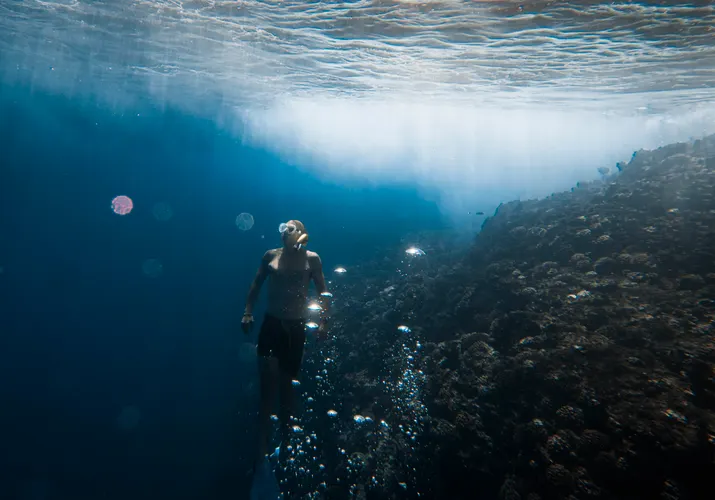
The reward for all this planning is a genuinely great cast of characters. A quick field guide so you can name them as they drift past,
- The humuhumunukunukuapua'a, the reef triggerfish and Hawaii state fish, grumpy, painted, and everywhere.
- Yellow tang, flat, electric yellow discs that look like swimming highlighters.
- Parrotfish, the big blue green ones audibly crunching coral. That crunch becomes sand. Some of that beach was once parrotfish lunch.
- Moorish idol, the elegant black, white, and yellow one with the long trailing fin (yes, that is Gill from "Finding Nemo").
- Green sea turtles (honu), the headline act, protected and unbothered, cruising the reef like they own it, which they do.
- The occasional ray or reef shark, harmless, shy, and a genuine thrill if you are lucky.
Beyond the fish, look closer and the reef itself rewards attention. You will spot branching and lobe corals in muted golds and purples, spiny sea urchins wedged in crevices, and, if you are patient and lucky, an octopus shifting color against the rock or a moray eel's head poking from a hole (harmless, as long as you do not stick a hand in).
Half the joy is the slow looking. Hover still over one patch of reef for a few minutes and a whole tiny city reveals itself, cleaner shrimp, darting wrasses, a crab minding its business. The reef rewards the unhurried far more than the racer.
Learn five of these names and a snorkel turns from "pretty fish" into a reef you can actually read. For the full story on the state fish and its neighbors, that guide goes deeper on who is who.
Time it for calm, clear water
08
Safety, gear, and reef etiquette
Safety + reef etiquette
A little care keeps you safe and keeps the reef alive. None of it is hard.
For safety,
- Never snorkel alone, and never turn your back on the ocean. Use the buddy system, and if there is a lifeguard, snorkel near them.
- Respect current and surf. If the water is moving, brown, or breaking, get out. Most snorkeling trouble on Oahu is someone in over their head in current.
- Know the season. North Shore in winter is for watching waves, not swimming in them.
For gear, a mask that seals, a snorkel, and fins are all you need. Defog the mask, test the seal before you are in deep, and rent on the spot if you did not pack your own, most beach huts and every boat tour have it.
For the reef,
- Use reef safe (mineral) sunscreen. Hawaii restricts oxybenzone and octinoxate because they bleach coral. The state's marine program explains why. Zinc protects you without poisoning the reef.
- Never touch or stand on coral. It is a living animal that grows about an inch a year. One fin kick can erase a decade.
- Give turtles and seals their space and never feed the fish.
Do that, and you get the whole painted show for free. If you are building a full beach day around it, that is squarely our world, we set up beach picnics on Oahu, and you can see how that works here, but the reef itself asks only that you leave it as you found it.
FAQ: snorkeling on Oahu
Where is the best snorkeling on Oahu?
Hanauma Bay is the best all around spot and the easiest for beginners, with calm, clear water and abundant fish. Sharks Cove on the North Shore is excellent in summer, Electric Beach is great for confident swimmers, and boat tours to spots like Turtle Canyon are the surest way to see sea turtles.
When is the best time to snorkel on Oahu?
Early morning year round, before the afternoon wind churns the water. For the North Shore (Sharks Cove, Three Tables), only snorkel in summer (May to October), when the big winter swells are gone. South and east shore spots are more reliable year round.
How much does Hanauma Bay cost?
Entry is $25 per person. Children 12 and under, Hawaii residents with ID, and active duty military stationed in Hawaii are free. It is closed Mondays and Tuesdays and requires a reservation, released a couple of days ahead online and selling out within minutes.
Is snorkeling on Oahu safe for beginners?
Yes, at the right spots. Hanauma Bay, Kuilima Cove by Turtle Bay, the Ko Olina lagoons, and calm Waikiki are all beginner friendly. Avoid Electric Beach and any North Shore spot in winter as a beginner, always use the buddy system, and snorkel in the morning when the water is calmest.
Can you see sea turtles snorkeling on Oahu?
Yes. Green sea turtles (honu) are common on Oahu reefs, and a boat tour to a spot like Turtle Canyon is the most reliable way to see them. They are protected by law, never touch, chase, or feed a turtle, and keep about ten feet of distance.
Do you need reef safe sunscreen on Oahu?
Yes. Hawaii restricts sunscreens containing oxybenzone and octinoxate because they bleach and kill coral. Use mineral (zinc based) reef safe sunscreen, or cover up with a rash guard, to protect both your skin and the reef you came to see.
More of the island → Oahu's best beaches.
Disclosure: Some links on this page are affiliate links. If you book or buy through them we may earn a small commission, at no extra cost to you. As an Amazon Associate, we earn from qualifying purchases.