Mermaid Cave Oahu: The Truth About Finding This Hidden Sea Cave
19 min readYndira W. Tonin
Let us clear one thing up before we drive 45 minutes for it, there are no mermaids. None. I checked, twice, with goggles. The Mermaid Cave in Oahu is named for the vibe, not the residents.
All of this was last checked in 2026.
The Mermaid Cave in Oahu is a hidden lava rock sea cave on the island's leeward (west) coast, near the town of Nanakuli, where at low tide a shaft of sunlight pours through an opening in the ceiling and turns a pool of trapped seawater an unreasonable shade of glowing blue. That is the magic. That is the photo your cousin posted that started this whole search.
It is also free, unmarked, lifeguard free, and completely underwater at high tide. The same hole that makes the photo can, on the wrong day, make the rescue.
So this is the honest guide, what the cave actually is, exactly how to find a thing with no sign, where to park without ruining a Nanakuli family's morning, how to read the tide like an adult, and the days you should look at the opening, nod respectfully, and leave.
Table of contents
- What is the Mermaid Cave on Oahu?
- Where exactly is it, and how to find it
- Getting there and parking
- The tide rule (read this twice)
- Is the Mermaid Cave safe? The honest danger talk
- Best time to visit
- What to bring
- Respecting Nanakuli (this is someone's neighborhood)
- What else to do on the west side
- Where to stay nearby
- FAQ
01
What is the Mermaid Cave on Oahu?
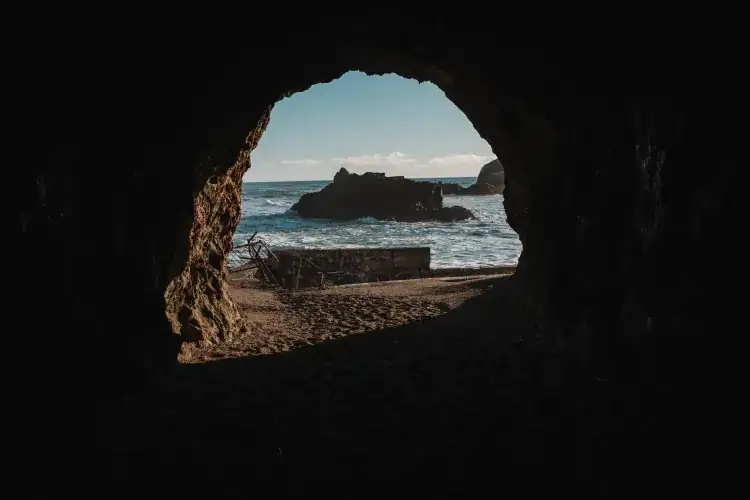
The Mermaid Cave is a limestone and lava sea cave, really a collapsed lava tube, tucked into the rocky shoreline beside Nanakuli Beach Park on Oahu's west coast. From the surface, it does not announce itself. It looks like a couple of unremarkable holes in a flat rock shelf, the kind of thing you would step over on your way to somewhere more obvious.
Drop through one of those holes at low tide, though, and the rock opens into a chamber maybe the size of a generous living room, half filled with seawater. Light comes down through the ceiling openings, hits the water, and bounces around the walls in that aquarium blue glow that launched a thousand reels.
That is the whole appeal. There is no waterfall, no gift shop, no plaque. It is a hole in the ground that happens to be beautiful for about three hours a day.
The "Mermaid Cave" name is pure internet, by the way. It is not an official site, it is not on the brown highway signs, and locals have known it for generations as simply the caves at Nanakuli. The mermaid branding showed up when the photos did.
Two things follow from "it is just a hole in the rock." First, conditions run the entire show, there is no staff deciding it is safe today. Second, it rewards patience and punishes ego, which is roughly the opposite of how most people approach a viral photo spot.
It is worth setting expectations on the actual experience, too. On a good day you climb down, the chamber glows, you float in cool water under a skylight of lava, and it feels like you found a secret. On a busy day you queue on a hot rock shelf for your turn at the same opening, get your three minutes, and climb out so the next group can have theirs. Same cave, very different morning, and which one you get is mostly about timing, which is what the rest of this guide is for.
02
Where exactly is it, and how to find it
The cave sits along the rocky point at the south end of Nanakuli Beach Park, in Waianae, on the leeward side of Oahu. Your map pin is the beach park. The cave is a short walk from there along the shoreline rocks.

Photo, Jess Loiterton / Pexels
Here is the part the pretty photos skip, nothing is labeled. You are looking for two modest openings in a flat lava shelf, with small rocks and shells scattered around the lip, set back near a chain link fence with a No Trespassing sign. (Yes, the famous cave is right next to a sign telling you not to be famous there. Read on for what that actually means.)
From the beach park, walk south toward the rocky point and follow the back edge of the lava shelf. Go slowly. The whole shelf is pocked with holes, and not all of them are the photogenic one, some are just ankle traps with an attitude. Watch your feet the entire time.
When you find the main opening, you will know, because you will see straight down into glowing water and immediately understand the fuss.
A few honest notes on finding it,
- Go in daylight, on a falling tide. Hunting for an unmarked hole in low light is how people roll ankles.
- Do not trust a dropped pin blindly. Several point to the parking, not the opening. The shoreline walk is the real navigation.
- If the shelf is awash with waves, you are too early (or it is the wrong day). A safe approach is a dry ish shelf, not one the ocean is already washing over.
03
Getting there and parking
From Waikiki, the Mermaid Cave is about a 45-minute to one hour drive west, traffic depending, and on this island, traffic always depends. You will take the H-1 west until it becomes Farrington Highway (Route 93), follow the coast through the leeward towns, and turn toward the water at Nanakuli.
You really want a car for this one. Public transit technically reaches the west side, but pairing a bus schedule with a tide chart is a logistics puzzle I would not wish on anyone trying to relax. If you would rather not drive yourself across the island, a circle island day tour covers the leeward and windward coasts without you ever fighting for a spot, though most circle tours will not stop at the cave itself.
Parking is free and simple by Oahu standards, which is to say it still requires manners. You can use the lot at Nanakuli Beach Park and walk five to ten minutes to the rocks, or find legal street parking on Keaulana Avenue closer to the point.
Two rules that matter more here than at the tourist beaches,
- Do not block driveways or park on the grass. This is a residential, largely Native Hawaiian community, not an attraction with overflow parking. Treat the street like you are parking outside a stranger's home, because you are.
- Take everything with you. Smash and grab from rental cars is a genuine Oahu pastime. Leave nothing visible, not a bag, not a charging cable, not the optimism that "it will be fine."
There are restrooms and showers at the beach park, which is more than most of Oahu's secret spots offer. Use them before the rock scramble, not after.
04
The tide rule (read this twice)
If you remember one thing from this entire guide, make it this, the Mermaid Cave is a low tide only destination. At high tide the chamber fills, the ceiling openings sit at or below the waterline, and the gorgeous photo spot becomes a place where the ocean can hold you under rock. There is no version of "I will just risk it" that ends well at high tide.
So you check the tide before you go. Not vibe check it from the parking lot, actually check it.
Pull up the NOAA tide predictions for the Waianae/leeward area before you leave, and aim to arrive an hour or two before the day's low tide. That gives you a falling tide and a window of relatively safe access while the water keeps dropping. Cross reference the surf forecast too, a low tide on a big west or south swell can still send waves washing over the shelf, which defeats the entire point.
Here is a quick way to think about whether today is your day.
Is today a Mermaid Cave day?
Green light, goOur pick
- Best for
- Falling-to-low tide, small flat surf, sunny mid-morning, calm leeward forecast
- The catch
- Still never go alone, and still confirm the tide chart yourself
Yellow light, wait
- Best for
- Low tide but lingering swell, wind chop, or heavy cloud
- The catch
- Look from the rim, photograph the opening, skip the descent
Red light, skip it
- Best for
- Any high or rising tide, any real west/south swell, storm or dusk
- The catch
- The chamber floods and the exit disappears — come back another day
A falling to low tide with small, flat surf and a sunny morning is the green light combination people drive out for. Anything with real swell, wind chop, or a rising tide pushes you straight into "admire from the rim and leave." The cave will still be there next trip. You would like to be, too.
One more honest note, the famous sunbeam needs sun overhead, so a clear sky between midmorning and early afternoon does the heavy lifting on the photo. A cloudy low tide is safe enough to look at, but the water will not glow like the pictures, and you will wonder what the fuss was about.
05
Is the Mermaid Cave safe? The honest danger talk
Now the part nobody puts in the caption. The Mermaid Cave is genuinely beautiful and genuinely risky, and pretending otherwise would make me exactly the kind of blog the next cautionary tale links to.
The hazards are specific, not vague,
- Getting trapped. Climb into the chamber and misjudge the tide, and the exit you dropped through can close over with water. Getting in is easy. Getting out, against a rising tide and slick rock, is the hard part nobody films.
- Waves through the openings. A surge can push water, and you, around inside the chamber with real force. Lava rock does not have a soft side.
- Slips and ankle traps. The shelf is jagged, uneven, and drilled with holes. Plenty of injuries here are simply a rolled ankle a long, painful hobble from the car.
- No lifeguard, slow help. This is the west side, not a patrolled Waikiki beach. If something goes wrong, rescue is minutes and miles away.
So here is the one strong opinion I will plant a flag on, if you are not a confident ocean swimmer, do not climb into the cave at all. Look at it, photograph the opening, enjoy the leeward coast, and skip the descent. The Mermaid Cave is the single Oahu spot I will actively talk a nervous swimmer out of, and I say that as someone whose whole business depends on you having a wonderful day at the beach, not a memorable one in the wrong way. A glowing photo is not worth a real emergency.
If you do go in, never alone, only on a falling tide, only when you are certain you can climb back out, and only after you have watched the water for a solid ten minutes first. That is not me being a nag. That is the difference between a great morning and a very bad one. For the wider picture on Oahu water conditions, the state's Hawaii Beach Safety site is worth a look before any leeward swim.
06
Best time to visit
Timing the Mermaid Cave is really three clocks at once, the tide clock, the sun clock, and the season clock.
Tide clock: low tide, always. Arrive an hour or two ahead of the predicted low so you catch the water on its way down. This is non-negotiable, and I have now said it enough times that you can hear it in your sleep, which is the idea.
Sun clock: midmorning to early afternoon, roughly 9 a.m. to noon, when the sun is high enough to drop through the ceiling and light the pool. Too early and the chamber's dim. Too late and you have lost the beam (and possibly the tide).
Season clock: summer, broadly May through September, brings calmer, flatter water to the leeward and south shores, which is exactly what you want here. Winter sends bigger swells that can wash the shelf and slam the openings. The west side is drier and sunnier than the rest of Oahu year round, so your odds of that clear overhead sun are honestly pretty good.
Put the three together and the sweet spot is clear, a summer weekday morning on a falling tide under a blue sky. Weekday matters more than you would think, weekends bring local families to the beach park, and an unmarked cave plus a crowd plus a slick shelf is a recipe for waiting your turn on a ledge.
If you are still mapping out which month to fly in, our guide to the best time to visit Hawaii breaks down weather, crowds, and prices island wide so the cave's summer window fits a trip that works overall.
07
What to bring
The Mermaid Cave is a gear light outing, but the few things that matter, really matter. This is not a flip flops and a phone situation.

Photo, Francesco Ungaro / Pexels
- Water shoes. Non-negotiable. The lava rock is sharp enough to open up a bare foot, and you will be climbing over it wet. Closed toe water shoes with grip save the day and the toes.
- A waterproof phone pouch. You came for the photo. Do not drown the camera getting it. A floating pouch means one less heartbreak.
- Reef safe sunscreen. The west side is sunny and exposed, and Hawaii law requires reef safe formulas anyway. Put it on at the car, before you are slick and salty.
- A dry bag for your keys, phone, and a towel while you are scrambling. Lava rock and loose pockets are not friends.
- Goggles or a mask, if you want to actually see the glowing water under the surface rather than just from above.
- Water and a snack. Nanakuli has shops, but the rocks do not, and the west side sun is a thirsty business.
What you can leave behind matters too. Leave the inflatable flamingo at the hotel, there is no sand stage for it here, and a sea cave is no place to wrangle pool floats. Skip the good camera unless it is in a sealed housing. Salt spray and slick rock end expensive electronics. And do not bother with a beach umbrella or chairs, because there is nowhere flat and dry to plant them. This is a pockets and a dry bag outing, not a beach day haul.
For a full rundown of trip gear beyond this one stop, our Hawaii packing list covers the rest of the suitcase.
08
Respecting Nanakuli (this is someone's neighborhood)
Quick gut check before the fun part, the Mermaid Cave is not a resort amenity. It is a natural spot in a tight knit, largely Native Hawaiian community that has watched its quiet shoreline turn into a parking problem one viral video at a time.
That No Trespassing sign by the openings is a real thing, not set dressing. Access and conditions change, and the shoreline rocks border private and posted areas, so read the signs on the day and do not hop a fence for a photo. A picture is never worth trespassing for.
The Hawaiian concept here is malama, to care for, to protect. The state even built a whole responsible travel program around it. You can read about traveling pono (the right way) before you go. It boils down to leaving a place better than you found it, which is not a tall order.
In practice that means,
- Pack out every scrap. If you brought it in, it leaves with you. The rescues and the rubbish are what get spots like this closed.
- Keep the noise down. Families live thirty feet from where you are parking. No Bluetooth speaker concerts.
- Yield to locals. This is their beach, their water, and their everyday. You are the guest. Act like it, and you will get the warm version of Hawaii instead of the tired one.
None of this is heavy. It is just the difference between being a visitor a community is glad to see and being the reason a gate goes up. Be the first kind.
09
What else to do on the west side
The cave is a two to three hour adventure, tops, because that is all the tide gives you. The good news is the leeward coast pairs it nicely with a half day of other things, so the long drive earns its keep.
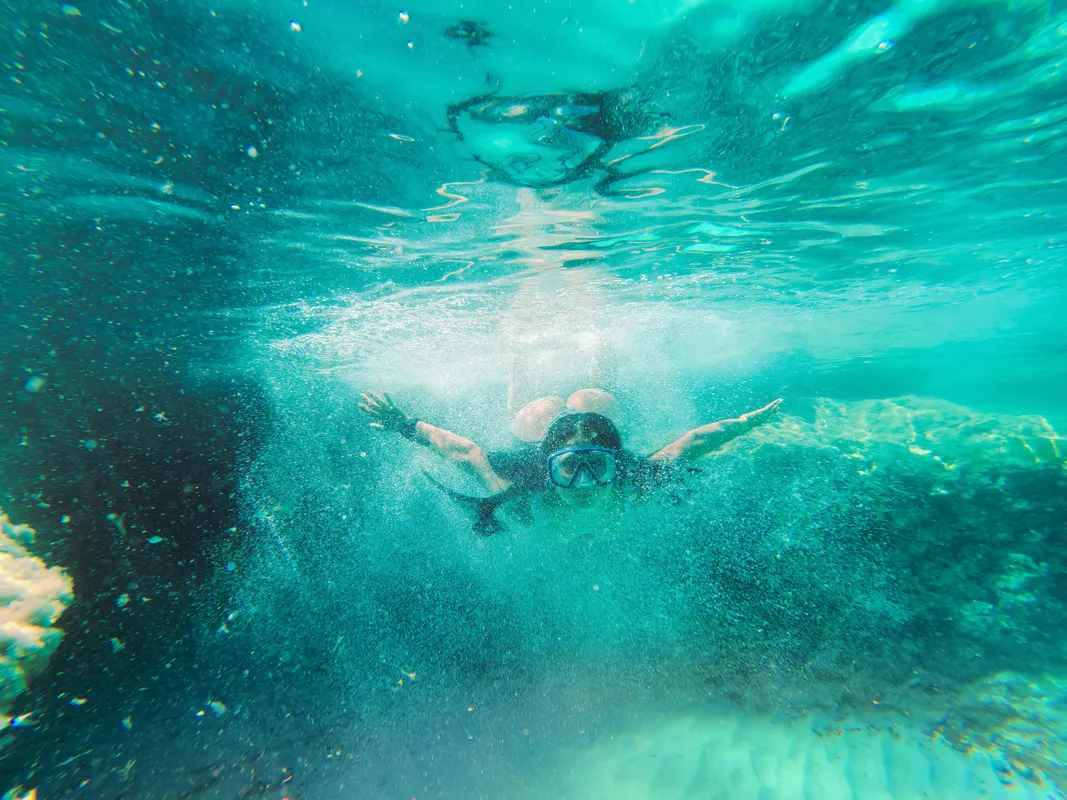
The water out here is some of the clearest on the island, and the snorkeling off the west coast, turtles, reef fish, the occasional pod of spinner dolphins offshore, is a genuine highlight. The most reliable way to see it is from a boat out of nearby Ko Olina, which skips the shore entry guesswork entirely.
Photo, Zakhar Vozhdaienko / Pexels
Prefer to find your own fins and mask spot? Our guide to the best snorkeling on Oahu maps the calm water spots by season, and a guided snorkel tour takes the where is it safe decision off your plate entirely.
Down the road, Ko Olina's four calm man made lagoons are the antidote to a morning of jagged rock, flat, swimmable, shaded, and forgiving. They are also where, full disclosure, we set up our beach picnics. A sunset table for two on the west side runs from $349 if you want someone else to handle the styling and the cleanup while you handle the sunset. (One mention, and we will move along, here is the rundown if it is your kind of evening.)
For the bigger map of how the leeward coast connects to the rest of the island, our other honest single spot guides, like Sharks Cove for tide pool snorkeling up north, or China Walls for cliff side drama in the east, round out the "beautiful but read the conditions" list.
10
Where to stay nearby
If the west side is your speed, quieter, sunnier, away from Waikiki's wall of high rises, basing yourself out here changes the math on those tide timed mornings. Instead of a predawn drive across the island chasing a low tide, the cave becomes a short hop down the coast.
Ko Olina is the natural base. It is the leeward side's resort cluster, about fifteen minutes from Nanakuli, with the calm lagoons, a marina, and golf if that is your thing. You can browse Ko Olina hotels and resorts (also on Booking.com) to see what is open for your dates.
That said, most first time visitors still base in Waikiki and day trip out, and that is a perfectly reasonable call, you trade an early drive for being closer to the airport, the nightlife, and everything else. If you are weighing the options, our where to stay on Oahu guide lays out the trade offs by neighborhood and trip style.
If you want to stay even closer to the cave itself, the leeward towns of Nanakuli, Waianae, and Makaha have vacation rentals that put you minutes from the shoreline. They are quieter and more local than any resort, which is the appeal and also the trade off, fewer amenities, fewer restaurants, and a longer haul to the airport and Honolulu. Lovely if the west side is the point of your trip. Less convenient if it is one stop on a packed itinerary.
Either way, book the side of the island that matches what you actually want to do most days, then treat the cave as the special morning detour it is, not the thing your whole trip orbits.
FAQ
Is the Mermaid Cave in Oahu real, and are there actually mermaids?
The cave is very real, a lava tube sea cave by Nanakuli Beach Park on Oahu's west coast. The mermaids are not. The name is internet branding for the glowing blue water and otherworldly light, not a marine biology claim. You will find clear water, light beams, and the occasional fish, but no one with a tail.
Is it safe to visit the Mermaid Cave?
It can be, on the right day, with the right caution, and it genuinely is not on the wrong one. Visit only at low tide, only in calm surf, never alone, and only climb in if you are a confident swimmer who is certain you can get back out. At high tide or in any real swell, the chamber floods and it becomes dangerous. When in doubt, look from above and skip the descent.
What is the best time to visit the Mermaid Cave?
A summer weekday morning on a falling tide, under a clear sky, roughly between 9 a.m. and noon. Low tide is mandatory for access, high overhead sun is what makes the water glow, and summer (May through September) brings the calmer leeward water you want. Check a tide chart and the surf forecast before you leave.
Where do you park for the Mermaid Cave?
Use the free lot at Nanakuli Beach Park and walk five to ten minutes to the rocks, or find legal street parking on Keaulana Avenue closer to the point. Do not block driveways, do not park on the grass, and take all valuables with you, this is a residential neighborhood, not a tourist lot.
How long does a visit take?
Plan for about two to three hours total once you are there, which is roughly the safe low tide window. The drive from Waikiki adds 45 minutes to an hour each way, so budget a half day overall and pair it with other leeward stops to make the trip worth it.
Do I need water shoes for the Mermaid Cave?
Yes. The shelf is sharp, uneven lava rock that you will cross while wet, and bare feet get cut here regularly. Closed toe water shoes with real grip are the single most useful thing you can bring, ahead of even the camera.
There are no mermaids, the parking is a test of character, and the ocean keeps office hours. But hit a clear summer low tide with your water shoes on and a little respect for the neighborhood, and the Mermaid Cave in Oahu earns every minute of that drive, glowing, quiet, and yours for a couple of hours before the tide takes it back.
Disclosure: Some links on this page are affiliate links. If you book or buy through them we may earn a small commission, at no extra cost to you. As an Amazon Associate, we earn from qualifying purchases.


