Hawaiiby WemberPicnics
Hawaii Guide

China Walls Oahu: An Honest Guide to the Cliff-Jump Spot

19 min readHawaii Picnics by Wember

China Walls is a flat lava shelf in Hawaii Kai where locals jump off cliffs, snorkel in calm summer water, and watch the south shore's best sunset — and where the ocean fishes someone off the rocks on a depressingly regular basis.

So let's do this properly.

China Walls on Oahu (officially Koko Kai Mini Beach Park, in the Portlock neighbourhood) is free, gorgeous, and genuinely dangerous on the wrong day. Get the conditions right and it's one of the most rewarding spots on the island. Get them wrong and you become the cautionary tale the next blog post warns people about.

This is the honest guide — where it is, where to park without enraging an entire cul-de-sac, how the cliff jumping actually works, when the snorkeling is good, and the one ocean rule that keeps you off the evening news.

Table of contents

What (and where) is China Walls?

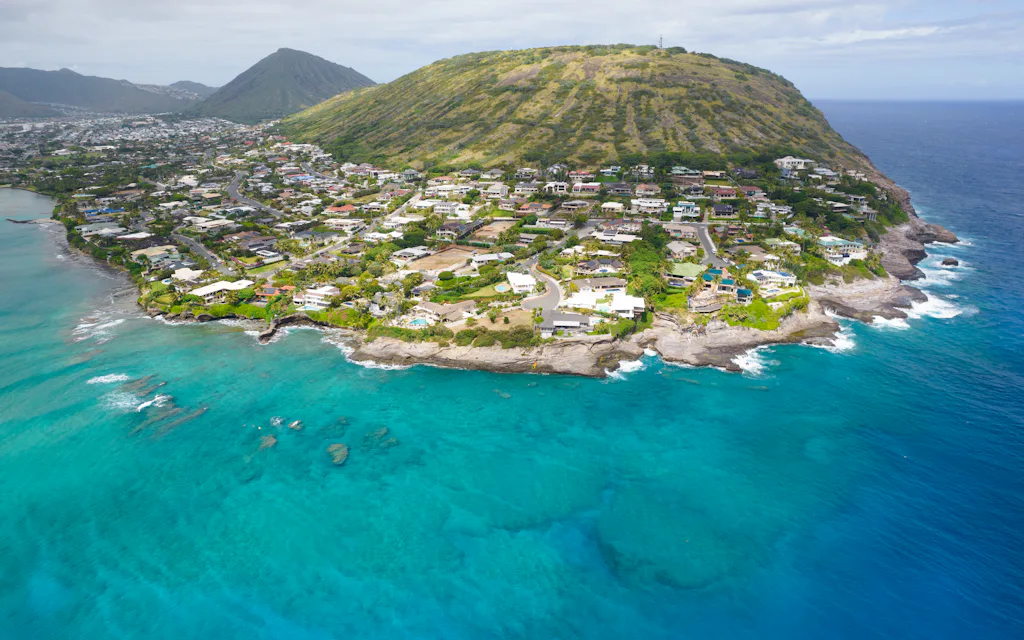
China Walls is a long, flat ledge of lava rock on the southeastern tip of Oahu, in the Portlock area of Hawaii Kai. The "wall" is exactly that — a low cliff face where the land stops and drops straight into deep blue water.

The name comes from the surf break. When a south swell hits, the wave peels along the wall in a long, fast line that surfers have compared to a section of the Great Wall — hence "China Walls." On flat days it's a sunbathing-and-jumping shelf; on swell days it's a serious wave.

There's no sand here. Let's get that out of the way now, because people keep showing up expecting a beach and being personally offended by geology. It's a rock platform you walk out onto, with the open Pacific on three sides and not a grain of sand in sight.

That's also what makes it special. You're standing at the edge of the island with nothing between you and the horizon, the water is absurdly clear, and the whole place has a cliff-edge, end-of-the-world feel that a regular beach just doesn't. It's a local favourite for sunsets, photo shoots, first dates, and the kind of cliff jump you'll be bragging about for years (or for the rest of the car ride, minimum).

It's not a secret spot, either. It shows up on enough "best of Oahu" lists that the small residential streets around it stay busy, especially near sunset. Manage your crowd expectations and your timing, and it still delivers.

How to get there, and the parking situation

China Walls sits about 25 minutes east of Waikiki, past Diamond Head, Kahala, and Hawaii Kai proper. You're aiming for the end of Portlock Road, then Hanapepe Place — a quiet residential cul-de-sac that did not ask to become a tourist attraction.

Punch Koko Kai Mini Beach Park into your maps app rather than "China Walls," which will get you closer to the actual access point. From the end of the cul-de-sac, a short paved path and a set of steps lead down to the lava shelf. It's a two-minute walk, not a hike — this is one of the few jaw-dropping Oahu spots that doesn't make you earn it with calves of fire.

Now, the parking. Here is where I have to be the bearer of bad news.

There is no lot. You park on the street, in a tight residential neighbourhood, where the locals are (understandably) tired of blocked driveways and people treating their front yard like a trailhead. Spots are limited and fill fast before sunset.

So: park legally, don't block driveways or fire hydrants, don't leave valuables in the car (smash-and-grab is a real Oahu sport), and be a decent human. The fastest way to get China Walls closed to visitors is for everyone to behave like it's a stadium parking lot. Treat it like you're parking outside a stranger's house — because you are.

If you'd rather skip the driving-and-parking puzzle entirely, a circle-island day tour hits the southeast coast and the big-name lookouts nearby without you ever touching a parking space.

Oahu lava-rock coastline dropping straight into deep blue ocean

Photo: Alfo Medeiros / Pexels

Cliff jumping at China Walls

The cliff jumping is why China Walls went from "local surf spot" to "thing on your Oahu list." The ledge sits roughly 15 to 20 feet above the water, depending on where you stand and the swell, and the water below is deep enough to jump into when conditions are right.

I want to be clear about that last part, because it's the whole game: when conditions are right. China Walls is not a managed attraction. There's no lifeguard, no rope, no staff member checking the depth for you. You are making an adult decision with real consequences.

Here's what experienced jumpers actually do:

  • Watch first. Stand at the edge for a full ten minutes and read the ocean before you do anything. Watch the sets, watch where the water rises and drops, watch where other people are getting in and out.
  • Check the depth and the surge. The water level moves with the swell. A jump that's clean on a low pulse can put rock uncomfortably close on the drawback.
  • The hard part is getting out, not jumping in. This is the bit nobody Instagrams. There's no ladder. You climb back out over slick lava, ideally with a wave gently lifting you up to the ledge rather than scraping you across it. Pick your exit before you jump.
  • Never jump alone, and never on a big-surf day. If the wall is getting hit by whitewater, the answer is no. Not "maybe." No.

Footwear matters more than you'd think — slick rock plus bare feet is how the day ends early. A grippy pair of water shoes earns its place in the bag here.

And if cliff jumping into unpatrolled water isn't your idea of a relaxing holiday — completely fair, I'm right there with you — China Walls is still a spectacular place to just sit, swim, and watch braver souls audition for a sprained ankle.

Snorkeler floating over clear turquoise water near a rocky Hawaii shore

Photo: Jess Loiterton / Pexels

Snorkeling and swimming

On a calm summer day, the water around China Walls is clear, deep, and surprisingly good for a swim and a snorkel. Visibility can be excellent, and the lava structure that makes the cliff also makes habitat — you'll see reef fish, the occasional turtle, and that deep-blue drop-off that makes the whole place feel bottomless.

The catch is the entry and exit. There's no gentle sandy wade-in here; you're getting into deep water off a rock ledge, which means you should be a confident swimmer and you should treat the climb back out with the same respect as the cliff jumpers do.

Timing makes or breaks it. Go in the morning, before the trade winds rough up the surface, and on a day with no south swell — the same flat conditions that make the cliff jumping safe make the snorkeling clear. Stay close to the wall where the structure holds the fish, keep an eye seaward the entire time, and don't drift out past the point where you'd have an easy line back to your exit rock.

If your idea of snorkeling involves walking in from a beach and not negotiating with a lava cliff, you have better options nearby. Honestly, for first-timers and families, a calm-water boat trip is the smarter call — you get the fish and the turtles without the rock-shelf gymnastics, and somebody else is watching the water while you stare at it.

For more shore-based options, our guides to the best snorkeling on Oahu and Sharks Cove on the North Shore cover spots with easier entries and lifeguards on duty — both worth a look before you commit to swimming at the wall.

Pack reef-friendly habits and reef-friendly products. Hawaii law restricts certain sunscreen chemicals, so grab a reef-safe sunscreen before you go — better for the coral, and increasingly the only kind you can legally buy on-island anyway.

Surfing the wall

China Walls is, first and foremost, a surf break — and a good one, when a south swell is running. The wave peels left along the wall in a long, fast line that draws a dedicated local crew.

It is not a beginner wave. The takeoff is close to the rocks, the wave moves quickly, and a wipeout puts you in the same lava-shelf situation the cliff jumpers are managing — except now you've got a board attached to you. This is a spot for surfers who already know what they're doing and who know this particular break.

If you're new to surfing and the south shore has you itching to paddle out, do it the sane way: take a beginner surf lesson on a forgiving Waikiki wave with sand under you and an instructor beside you. Build the skills there, then come watch the China Walls crew and understand why it's a "watch, don't paddle" spot for most visitors.

Even if you never get in the water, China Walls is a genuinely great place to watch surfing. On a good swell, you can sit on the ledge a safe distance back and watch experienced surfers thread the wall right in front of you — closer than you'd ever get at a big-name break like Pipeline, and without fighting a North Shore crowd for the view.

Just keep one eye on the ocean and a healthy buffer between you and the edge while you spectate. The waves that make the surfing good are the same ones that pull spectators off the rocks. More on that in a minute.

Golden Hawaii sunset glowing over the ocean and dark lava rocks

Photo: Matthew Leland / Pexels

The sunset (the real reason to come)

Here's my honest opinion, backed by years of locals voting with their feet: the cliff jumping gets the clicks, but the sunset is the real reason to come to China Walls.

Facing southwest off the corner of the island, the wall gets an unobstructed view of the sun dropping into the open Pacific, with no buildings, no other land, and that whole end-of-the-island drama wrapping around you. The lava rock glows, the spray catches the light, and the crowd goes quiet in the way crowds only do for a really good sunset.

It's one of the best sunset spots on the south shore — and it's free. Bring something to sit on (that rock is not kind to the spine), arrive 30 to 45 minutes early to claim a perch and watch the colour build, and keep your distance from the edge as the light fades and the rocks get harder to read.

If you'd rather see that same south-shore sunset from the water instead of the rocks, a sunset catamaran sail out of Waikiki gives you the colours, the open ocean, and a drink in hand without the parking saga or the slippery ledge.

And one honest aside, since sunsets are our actual day job: China Walls is a rock shelf, not a picnic beach — there's nowhere to set out a spread, and you wouldn't want to. If you want the sunset-on-a-blanket version done properly, we set up luxury sunset picnics on Oahu's actual sand beaches from $349. China Walls is for the view; a real beach is for the blanket. Different tools for different jobs.

For more south-shore golden-hour ideas, see our roundup of the best sunsets in Hawaii.

Is China Walls safe? The honest danger talk

No. Not inherently. And anyone who tells you otherwise is selling something.

China Walls is one of the spots where Oahu's ocean-rescue crews stay busy. The combination that catches people is specific and worth understanding:

  • You're standing on a low, flat ledge right at sea level. There's no high ground, no buffer. A rogue set can wash straight over the rock.
  • The rock is slick and the drop is straight into deep water. Slip near the edge and you're in the ocean whether you planned to be or not.
  • There's no lifeguard and no easy exit. Once you're in on a rough day, getting back out over the lava is the hardest part.

The single rule that keeps you safe is the oldest one in Hawaii: never turn your back on the ocean. Most of the people who get swept off these rocks were facing inland — taking a photo, talking to a friend, watching the sunset — when a bigger set came through. The ocean does not announce itself.

Before you go, check the surf. The National Weather Service Honolulu issues south-shore surf forecasts and high-surf advisories, and the Hawaii Beach Safety site maps current conditions and hazards spot by spot. If there's a south swell or a high-surf advisory up, China Walls is a look-from-a-distance day, not a get-on-the-rocks day.

Here's where I'll happily talk you out of it: if you're not a strong, confident ocean swimmer, if you've got little kids, or if the surf is up at all — this is not your spot that day. There are calmer, lifeguarded beaches ten minutes away that will give you a better afternoon and a guaranteed ride home in your own car. No view is worth more than that.

Best time to visit

Two timing questions matter at China Walls: which season, and which time of day.

Season. For swimming, snorkeling, and cliff jumping, you want the calmest water — and on the south shore that's roughly the winter months, when the big surf is up on the North Shore and the south side goes quiet. The flip side: summer (roughly April through September) is south-swell season, which brings the surfers but also the bigger, more dangerous shore conditions for everyone else. The headline rule holds either way: check the actual forecast for the day, because a south swell can show up any time.

Time of day. Mornings are calmest, least crowded, and best for swimming or jumping — the water tends to be glassiest before the wind picks up, and you'll have the rocks closer to yourself. Late afternoon and sunset are busiest, most beautiful, and worst for parking. If you want both, come for a morning swim and a separate evening for the sunset, because doing all of it in one trip means circling the cul-de-sac for a parking spot during the exact window the sunset crowd arrives.

Day of week, too. Weekends and holidays pull a big local crowd — families, surfers, sunset photographers, the works — which is lovely for atmosphere and miserable for parking. A weekday visit is noticeably calmer on both counts. And if you're here between roughly December and April, the same southeast clifftops are a decent perch for spotting humpback whales offshore, so bring a little patience and look out to sea between sets.

If you only get one visit, I'd take a calm, clear sunset over a midday swim every time. But that's a personal hill, and you're allowed to die on a different one.

What to bring

China Walls has no facilities. No bathrooms, no showers, no snack bar, no lifeguard tower, no shade beyond what you bring. Pack like you're going somewhere with nothing, because you are — the nearest real services are back in Hawaii Kai proper, a few minutes by car.

  • Water and snacks. There's nowhere to buy anything once you're on the rocks. Hawaii Kai Towne Center, a few minutes back, is your last stop for supplies.
  • Water shoes. Lava rock plus bare feet equals a bad time. Covered above.
  • Reef-safe sunscreen and a hat. There's zero shade on that ledge and the reflected sun off the water is brutal.
  • A dry bag. If you're swimming or jumping, you want your phone, keys, and wallet in something waterproof and not sitting in an unlocked car.
  • A waterproof phone pouch. For the cliff-jump video you're absolutely going to take, and to keep salt spray off your phone on the rocks.
  • Something to sit on. That rock is not a couch. A towel or a packable mat saves your tailbone, especially during a long sunset wait.
  • A headlamp or phone light, if you're staying for sunset. Once the sun's down, the path back up over the rock gets dark fast, and reading uneven lava by phone-screen glow is a sprained-ankle waiting to happen.

A quick word on rubbish: there are no bins, so whatever you carry in, you carry out. China Walls stays open to visitors because locals tolerate the crowds, and the fastest way to lose that goodwill is a trail of cans and snack wrappers on someone's neighbourhood coastline.

What to leave behind: anything you'd cry about losing to the ocean or a car break-in. And the expectation of a beach. It bears repeating — there is no sand. Make peace with that before you arrive and you'll have a wonderful time.

What else is nearby in Hawaii Kai

China Walls is a 20-minute stop, not a full day. The good news is it sits in the middle of Oahu's best stretch of southeast coastline, so you can easily string together a half-day.

  • Hanauma Bay — the island's most famous snorkeling spot, a protected bay with calm water and reef fish, about ten minutes away. Reservations required, closed Mondays and Tuesdays, but worth the planning for first-time snorkelers who want guaranteed-calm water.
  • Halona Blowhole Lookout — a roadside stop a few minutes further east where the ocean shoots up through a lava tube, plus the little "Eternity Beach" (Halona Cove) below it.
  • Lanai Lookout — a quick pull-off with dramatic layered-lava cliffs and, in winter, a decent chance of spotting whales offshore.
  • Koko Crater Railway Trail — if your legs want a challenge, this brutal stairway-up-an-old-railbed sits right behind Hawaii Kai. It is a thigh-destroyer with a payoff view, and a popular sunrise mission for people who hate their quads.
  • Maunalua Bay — the calm, flat-water bay on the Hawaii Kai side, where kayak, paddleboard, and jet-ski outfitters launch. It's the gentle counterpoint to the cliffs: protected water, easy access, good for families.
  • Makapuu Point Lighthouse Trail — keep going east and the paved lighthouse walk delivers one of the best whale-watching lookouts on the island in winter, plus the Makapuu tide pools below.

String a couple of these together and you've got a proper southeast-Oahu afternoon — China Walls for the sunset, a lookout or two for the photos, and a trail if your legs are feeling ambitious. For the bigger picture of how the island fits together, our guide to the best beaches on Oahu maps out where everything sits, and our best hikes on Oahu roundup covers the Koko Crater climb in detail.

Where to stay nearby

There's no lodging right at China Walls — Portlock is a residential neighbourhood, and Hawaii Kai is mostly homes and a shopping center, not hotels. So the real question isn't "where do I stay at China Walls," it's "where do I base myself on Oahu so the drive out here is short and the rest of my trip still works." A few options, in order of how most people actually do it.

Almost everyone visiting bases themselves in Waikiki, about 25 minutes west, and drives out. Waikiki gives you the most hotels at every price point, walkable food and beaches, and an easy straight shot east along the coast to China Walls and the rest of the southeast lookouts. Browse Waikiki hotels and you'll have China Walls, Hanauma Bay, and Diamond Head all within a half-hour drive.

If you want to split the difference, Kahala sits between Waikiki and Hawaii Kai — quieter, leafier, more residential, and ten minutes closer to the rocks. It trades the nightlife and the crowds for a calmer base that's still an easy drive to town when you want it.

And if you'd rather be right on the quiet southeast side, look at vacation rentals in Hawaii Kai itself — you'll swap the hotel scene for a marina, a Costco run, and a five-minute drive to the wall. It's a smart pick if you're the type who'd rather watch the sunset from China Walls three nights running than fight Waikiki traffic for the privilege. For more on picking a base across the island, our guide to where to stay on Oahu breaks down each area.

FAQ

Is China Walls free to visit?

Yes. China Walls (Koko Kai Mini Beach Park) is free and open to the public. There's no entrance fee and no reservation — the only "cost" is finding legal street parking in the residential neighbourhood, which is the genuinely hard part.

Can you cliff jump at China Walls?

Yes, people cliff jump from the roughly 15-to-20-foot ledge into deep water, but it's unsupervised and only safe in calm conditions. There's no lifeguard, no ladder, and the hardest part is climbing back out over slick lava rock. Never jump alone, never on a high-surf day, and always watch the water for at least ten minutes first.

Is China Walls dangerous?

It can be. It's one of the spots where Oahu's ocean-rescue crews respond regularly. The danger comes from standing on a low, flat ledge at sea level with no lifeguard, where rogue waves can wash people off the rocks. On calm days it's relatively safe for confident swimmers; on high-surf days it's genuinely hazardous. Always check the surf forecast and never turn your back on the ocean.

When is the best time to visit China Walls?

For calm water and swimming, go on a morning with no south swell — the south shore is generally calmest in the winter months. For the sunset (the real highlight), arrive 30 to 45 minutes before sundown to get a parking spot and a perch. Always check the day's surf forecast regardless of season.

Where do you park for China Walls?

There's no parking lot. You park on the residential streets near the end of Portlock Road and Hanapepe Place, where spots are limited and fill up before sunset. Park legally, don't block driveways, and don't leave valuables in your car. Searching "Koko Kai Mini Beach Park" in your maps app gets you to the right access point.

Is there a beach at China Walls?

No. China Walls is a flat lava-rock shelf, not a sand beach. You get into the water off the rocks. If you want an actual sandy beach nearby, Halona Cove (below the Blowhole) and Hanauma Bay are both a few minutes east.

Disclosure: Some links on this page are affiliate links. If you book or buy through them we may earn a small commission, at no extra cost to you. As an Amazon Associate, we earn from qualifying purchases.

Make a Day of It

Book the experiences in this guide

Hand-picked tours through Viator. We may earn a commission if you book, at no extra cost to you.

Keep reading

More from the blog

Stop planning. Start the sunset.

Hundreds of couples, families and groups have let Hawaii Picnics sweat the details on Oahu's best beaches. Pick a date and we'll build the evening around the light.

(808) 599-0950