Halona Beach Cove Oahu: Eternity Beach by the Blowhole
22 min readYndira W. Tonin
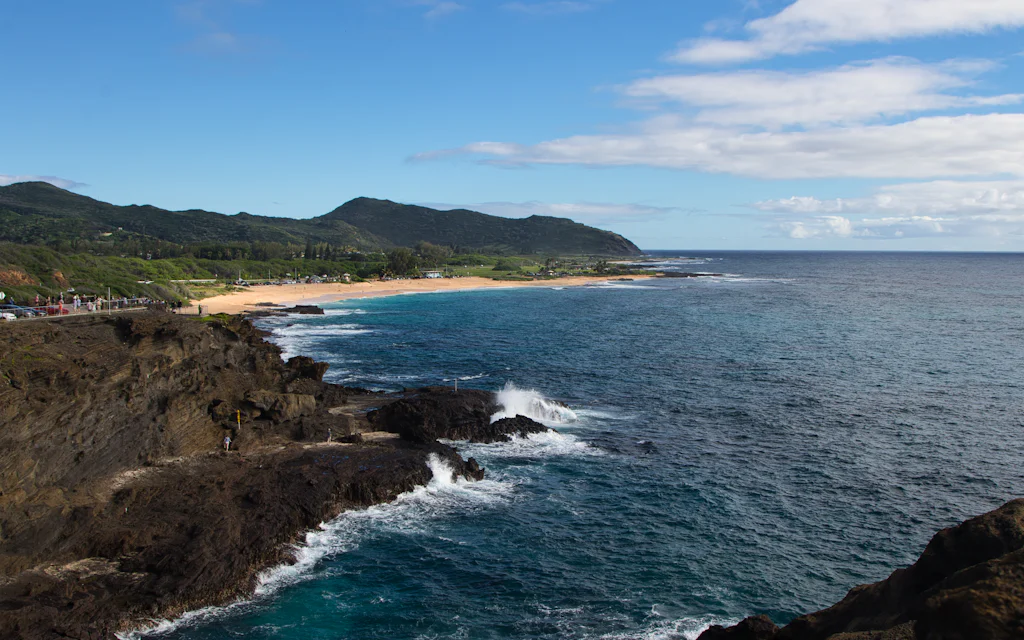
Halona Beach Cove is the postcard sized beach you have definitely seen and probably cannot name, a pocket of sand wedged between black lava cliffs on Oahu's southeast corner, with water the color of a swimming pool advertisement. You reach it by climbing down from the Halona Blowhole Lookout, which most people only stop at for ninety seconds before the tour bus honks.
Those ninety second people are missing the good part.
The cove is located about 30 minutes (roughly 12 miles) east of Waikiki, just past Hanauma Bay on the Kalanianaole Highway. It is free, it has no lifeguards, no bathroom, no shade, and a rocky trail down that was designed specifically to test your ankles. It is also genuinely one of the prettiest small spots on Oahu, Hawaii's most visited island, which is exactly why it deserves an honest guide instead of a drone shot and a wish.
So here is the whole thing, checked for 2026. The blowhole, the cove the movies made famous, the lava tube cave most visitors never notice, where to put your car, when the water is friendly, and the one rule that keeps the southeast coast from ruining your trip.
Getting to Halona Beach Cove
Tap to open Google Maps with turn-by-turn directions.
Table of contents
- What (and where) is Halona Beach Cove?
- The Halona Blowhole, Oahu's roadside geyser
- Eternity Beach, the cove from the movies
- The lava tube cave at the back of Halona Cove
- How to get there, and the parking situation
- Swimming and snorkeling at the cove
- Is Halona Beach Cove safe? The honest danger talk
- Best time to visit
- What to bring, gear and local tips
- What else is nearby on the southeast coast
- Where to stay nearby
- FAQ
01
What (and where) is Halona Beach Cove?
Halona Beach Cove, Eternity Beach to the movie crowd, is a tiny crescent of sand tucked at the bottom of a rocky inlet on the southeast shore of Oahu, located directly below the Halona Blowhole Lookout. Halona is Hawaiian for "lookout" or "peering place," which makes it the most honest place name on the island. Same patch of sand, three identities, like a beach in witness protection,
What everyone calls Halona Cove
Halona Beach CoveOn the map
The official name, the one the highway signs and the map pin use.
Eternity BeachOn your screen
The Hollywood name, earned with the wave soaked kiss in 1953's From Here to Eternity.
Cockroach CoveWhat locals say
The local name, nobody can say for sure where it came from, and nobody puts it on a postcard.
The cove itself is small, we are talking a short stretch of sand hemmed in by lava walls on both sides, not a place you will be tossing a frisbee. What it lacks in size it makes up for in drama, the rock framing, the deep blue water funneling in, and the way the whole thing feels tucked away even though there is a packed parking lot directly above your head.
It sits on the stretch of coast just past Hanauma Bay, between the bay and Sandy Beach Park, with the Koolau range at your back, Koko Crater over your shoulder, and open ocean in front. This is the rugged, scenic, cinematic side of Oahu, less swaying palms and mai tais, more lava and spray. If your mental image of Hawaii is Waikiki, the southeast coast is the plot twist.
And before you drive out, expect a look and maybe dip spot, not a lie on the sand all day spot. The cove is gorgeous for an hour. It is not built for a beach chair marathon, and the next few sections explain why.
02
The Halona Blowhole: Oahu's roadside geyser
The Halona Blowhole is the reason the parking lot above the cove exists, and it is a proper natural show off. On the right swell, the ocean forces seawater up through an old lava tube and fires a spout as high as 30 feet into the air, complete with a deep whoomp sound and a fine salt mist that drifts back over the railing onto everyone's sunglasses.
Here is the geology, minus the textbook. Thousands of years ago, molten lava flowing into the sea hardened into lava tubes. Waves now shove water into the bottom of one of those tubes, the pressure has nowhere to go but up, and you get a roadside geyser that runs on nothing but the Pacific Ocean and good timing. No batteries, no staff, no off season closure.
The catch is the "right swell" part. On a flat, calm day the blowhole can be a polite little burp, a gurgle, a six inch dribble, and a crowd of people pointing their phones at a wet rock and waiting. On a day with real south or east energy, it is spectacular. The ocean runs the schedule, and it does not take requests. Kauai's Spouting Horn is the same trick on a bigger scale, up to 50 feet, from an easy railed lookout.
Halona Blowhole, by the numbers
Watch it from the railing, always. I cannot stress this enough, and I am going to repeat it in the safety section because it is the part people ignore, the rocks below the lookout are wet, sloped, and regularly swept by waves. People climb out toward the spout for a better photo every single day, and the southeast coast has a long, grim history of turning that decision into a rescue (or worse).
So enjoy the geyser like a civilized geyser enthusiast, from behind the railing, with your feet on the paved overlook, letting the ocean do the dangerous part. The view from up there is half the reason to stop anyway, on a clear day you can see all the way to Molokai and Lanai across the channel, and in winter whale season (roughly December through March) humpbacks pass close enough to count. The rocky point beside the lookout is called Bamboo Ridge, where locals have line fished since the 1920s. Give the poles room.
03
Eternity Beach: the cove from the movies
You have seen Halona Beach Cove before. You just saw it in black and white. Burt Lancaster and Deborah Kerr, the couple rolling in the surf in 1953's From Here to Eternity, filmed the love scene that put the cove on the map, and Hollywood has kept it as a filming location ever since, 50 First Dates, then Pirates of the Caribbean, On Stranger Tides, which dressed the cove up as Whitecap Bay. The sand has logged more screen time than most working actors. Not bad for a little beach the size of a tennis court.
Halona Cove's film career
From Here to Eternity1953
Burt Lancaster and Deborah Kerr's wave washed kiss, the film won eight Academy Awards and the cove won a nickname.
50 First Dates2004
Henry and Lucy's beach scenes, the cove plays the romantic backdrop again, half a century later.
Pirates of the Caribbean, On Stranger Tides2011
The cove stood in for Whitecap Bay, where the mermaid scene was filmed.
Standing down in it, you get why directors keep coming back. The lava walls frame the water like a natural set, the sand is soft, and on a calm day the cove glows that absurd bright blue that looks color graded even when it is not. It is small, it is photogenic, and it feels like a secret, right up until a wedding party and three other couples climb down the same rocky trail you did.
What you actually get at Halona
The Halona BlowholeFrom the railing
A roadside geyser that fires seawater as high as 30 feet on the right swell, run by nothing but the Pacific and good timing. Watch it from behind the railing.
Eternity Beach, the movie coveClimb down
The crescent of sand from 1953's From Here to Eternity, later Pirates of the Caribbean, On Stranger Tides. About the size of a tennis court, busiest midmorning to midafternoon.
The lava tube caveCalm days only
A short cave tucked into the rocks on the inland side of the sand, left from the same ancient flows. Walk in only when the ocean is calm and the tide is not rising. Bring a phone light.
A reasonable expectation setter, because the "hidden gem" label oversells it a touch, the cove is small and it has become a fixture of the tour circuit, busiest midmorning to midafternoon. The sand can fill up quickly. If your fantasy is a private movie beach all to yourself, you will want to be standing on it near sunrise, before the buses and the rental Mustangs arrive.
None of that makes it less worth seeing. It just makes it a place to visit deliberately rather than a place to spread out for the day. Come for the cliff faces, the bright blue, and the fun of standing in a piece of film history. Stay flexible about the crowd, and time it well (more on that below), and Eternity Beach earns every one of its nicknames.
04
The lava tube cave at the back of Halona Cove
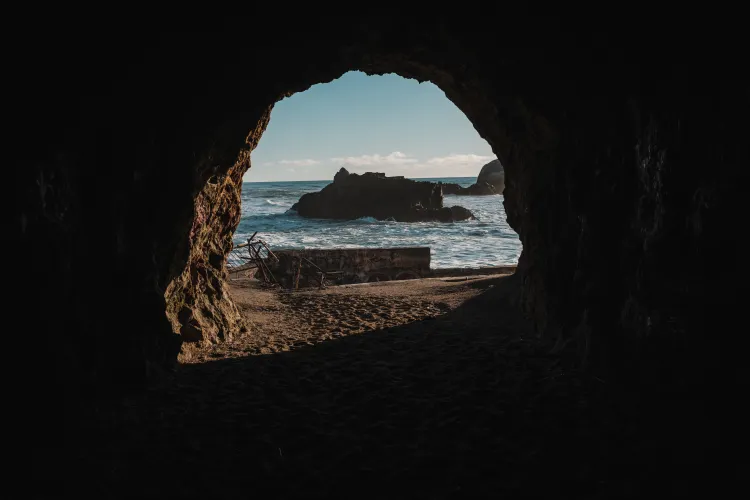
Halona Cove has one more feature most visitors never notice, a lava tube cave tucked into the rocks on the inland side of the sand, left over from the same ancient volcanic flows that built the blowhole next door. On a flat day you can walk into it, it is one of the few places on Oahu where you can stand inside a lava tube with the ocean a few steps away.
Treat the exploring with the same caution as the swimming. Go in only when the ocean is genuinely calm and the tide is not rising, never when waves are reaching the back of the beach, and bring a phone light, it is darker in there than it looks from outside. A surging set can push water into the cave with you in it, and that is an experience nobody recommends twice.
On the right morning, though, it is a lovely two minute detour, cool shade in a cove with none, a natural frame for the photo everyone else shoots from the sand, and a small adventure to go with the movie trivia.
05
How to get there, and the parking situation
Halona Beach Cove is about a 30-minute drive east of Waikiki along the Kalanianaole Highway (Route 72), past Diamond Head, Kahala, and Hanauma Bay, you will pass the bay's entrance road about five minutes before the lookout. You are aiming for the Halona Blowhole Lookout, which is exactly what you punch into Google Maps. Some people search "Halona Beach Cove Oahu" instead and get a pin on the sand itself, do not navigate to that one. The cove has no separate entrance, no sign, and no parking of its own. You park at the blowhole and climb down.
The lot is a small roadside pull off right on the highway, roughly 20 to 25 cars, and it is the entire bottleneck of the operation. Parking and entry cost exactly $0, rare for a headline Oahu stop, which is part of why it fills up, especially on weekends and in whale season. It is a favorite tour bus stop, and on a busy late morning you may find yourself doing slow, hopeful laps waiting for someone to leave. The good news, turnover is quick, because most visitors are blowhole photo then gone in a few minutes. The bad news, so is everyone else's patience.
Getting to Halona by the numbers
A few ground rules that keep the lot from descending into chaos, pull fully into a marked spot, do not idle in the highway travel lane waiting for a space (that is how fender benders happen at 45 mph), and do not leave anything visible in the car, the southeast lookouts are a known target for smash and grab break ins. Take your valuables down to the sand with you, in something waterproof.
Getting down to the cove is the other half of the trip. From the right hand side of the lot, an unofficial rocky trail drops over the lava to the sand. It is not hiking exactly, figure two or three minutes, but it is genuinely steep and slippery, with loose footing and sharp rock. Closed toe shoes earn their keep here, flip flops will betray you halfway down, and anyone unsteady on rough ground should enjoy the view from the railing instead. Take it slowly, use your hands, and do not attempt it carrying a cooler in each arm.
If the idea of driving 30 minutes to fight for a roadside spot makes you tired, the honest alternative is to let someone else handle the wheel. A circle island day tour runs this exact stretch of coast and stops at the big southeast lookouts, so you get the blowhole and the views without ever touching a parking space.
★4.8(4,263)
Oahu Circle Island Tour with Waimea Valley Waterfall
8 hours
Free cancellation
from
$154
06
Swimming and snorkeling at the cove
On a genuinely calm day, Halona Beach Cove can be a lovely place to swim. The water is clear, the cove is sheltered enough to feel protected, and there is some rock structure on the sides that holds a few fish for a casual snorkel, on a lucky flat morning you might even share the shallows with a sea turtle. On the right day, it is a nice dip in a spectacular setting.
On the wrong day, it is a washing machine with a rock liner, and there are no lifeguards to fish you out.
That is the whole story of this cove in one line. The same lava walls that make it beautiful also funnel and bounce the swell, so when there is any size running, the cove gets a punchy, surgey shorebreak that slams onto a short steep beach, with strong currents pulling along the rocks at the edges. There is no gentle, wade in to your knees zone here, the sand drops off, and the waves can pick you up and put you down with more enthusiasm than you signed up for.
So the rule is simple, swim only when it is calm, and decide that from the lookout before you climb down. From up top you can read the whole cove, whether the water's glassy or whether sets are exploding against the rocks. If it looks rough from the railing, it is rough, and your swim just became a photo.
Swim day or lookout only day
Climb down and swim
When it is genuinely calm
- Water reads glassy from the railing, no sets exploding on the rocks
- Confident ocean swimmers, no small kids in the shorebreak
- Clear and sheltered, with rock structure on the sides for a casual snorkel
- On a lucky flat morning you might even share the shallows with a sea turtle
Admire from the railing
When any size is running
- A punchy, surgey shorebreak slams onto a short steep beach
- Strong currents pull along the rocks at the edges, no lifeguards to fish you out
- There is no gentle wade in zone, the sand drops off fast
- Save the swim for a calmer day, or pick a lifeguarded beach fifteen minutes away
If you specifically came to snorkel and the cove is churned up, do not force it. Oahu has far better, far calmer snorkeling within a short drive, much of it with a lifeguard watching and an easy sandy entry. For genuinely reliable, beginner friendly water, a calm bay snorkeling tour takes you to turtle filled spots with somebody else minding the conditions, and our guide to the best snorkeling on Oahu maps out the shore spots that do not require reading a shorebreak first.
When the cove cooperates, treat the reef like a guest treats a house, a good reef safe sunscreen is both the kind thing and, under Hawaii law, increasingly the only kind you can legally buy on island anyway.
07
Is Halona Beach Cove safe? The honest danger talk
Time for the part the drone footage skips. Halona Beach Cove and the surrounding southeast coast are beautiful, and they are also one of the stretches where Oahu's ocean rescue crews stay genuinely busy. None of what follows is meant to scare you off, it is meant to keep you off the news.
Three things stack up here. There is no lifeguard at the cove. The shorebreak can turn powerful fast when surf is up. And the rocks around the blowhole and the cove path are wet, sloped, and periodically swept by waves that arrive without an RSVP.
The single rule that keeps you safe is the oldest one in Hawaii, never turn your back on the ocean. Most people who get swept off these rocks were facing inland when it happened, lining up a photo, fixing a sandal, watching the blowhole the wrong way round. The dangerous wave is the one you did not see coming, and you do not see it coming if you are posing for the camera.
Is today a Halona Beach Cove swim day?
Green light, go for itOur pick
- Best for
- Glassy, flat water you can see from the lookout, a calm forecast with light trades and no south swell, closed-toe shoes for the climb, and an early-morning arrival before the buses
- The catch
- Still no lifeguard — keep your group close and never turn your back on the ocean
Yellow light, look, do not swim
- Best for
- Any size in the water, a punchy shorebreak slapping the sand, a packed mid-day lot, or weaker swimmers in the group
- The catch
- The cove drops off fast and surges — enjoy the cliffs and the blowhole from up top instead
Red light, railing only
- Best for
- A high-surf advisory, waves washing the rocks, small kids, flip-flops, or fading light on the path
- The catch
- This is an unguarded cove on a rescue-heavy coast — a rough day here is how people get hurt
Two free tools make the call for you before you ever leave the hotel. The National Weather Service Honolulu posts shore by shore surf forecasts and warns when high surf is on the way, and Safe Beach Day maps live conditions and hazards beach by beach. Check both the night before, if there is an advisory up or real swell in the forecast, make Halona a lookout only day and save the swim for a calmer one. A little caution at the planning stage is what a good southeast coast trip is built on.
And here is where I will happily talk you out of it. If the surf is up at all, if you have got small kids, or if you are not a confident ocean swimmer, the cove is not your spot that day, admire it from the railing and move on. There are calmer, lifeguarded beaches fifteen minutes away that will give you a better afternoon and a guaranteed ride home in your own car. No cove is worth more than that, and the prettiest sand on the island is still just sand.
08
Best time to visit
Two timing questions decide your visit, which time of day, and which season.
Time of day, go early. Sunrise is the sweet spot at Halona, and it is not close. The cove faces roughly east, so early light hits the sand and the cliffs head on instead of flattening it out at midday. You also get cool air, lighter wind, the calmest water of the day, and, the genuinely decisive part, actual parking, before the tour buses and the late risers turn the lot into a slow motion demolition derby. An early start here pays you back three different ways.
A Halona sunrise that works
- 1Night before
Check the forecast
NWS Honolulu surf forecast plus a glance at the high surf advisories. Flat and light trades = swim day. Anything else = lookout day.
- 2~6:15 am
Leave Waikiki
About 12 miles east on the Kalanianaole Highway. 30 minutes with no traffic, past Diamond Head and Hanauma Bay.
- 36:45 am
Blowhole first
Catch the spout backlit by sunrise from the railing, with the lot still half empty.
- 47:00 am
Climb down
Rocky trail from the right side of the lot, hands free, shoes with grip. The cove faces east, so the light lands on the sand.
- 58:30 am
Out before the buses
Back up the trail and on to Hanauma Bay, Makapuu, or breakfast in Hawaii Kai.
Season, the forecast outranks the calendar. This corner of the island does not follow the North Shore's tidy winter on, summer off script. The southeast corner catches trade windswell all year, and summer adds long period south swells on top, which is why Sandy Beach Park next door is a year round shorebreak theater, not a seasonal one. The genuinely calm days come when the trades go light and no south swell is running, and that can happen in any month. So do not book the cove by season, check the day's forecast, look down from the railing, and let the water vote. (Winter does add one argument for the lookout, the whales.)
One honest aside, since sunset on the sand is literally our day job, Halona Beach Cove is a tiny, rocky, surgey pocket with a slippery climb and no flat ground, a wonderful place to see, and a terrible place to lay out a proper spread. If you want the blanket and board version of an Oahu beach evening, we set up beach picnics on the island's actual sand beaches from $349. The cove is for the cliffs and the photo. A real beach is for the picnic. Different tools, different jobs.
If you can only visit Halona once, make it a sunrise on a flat, calm day. You will get the light, the parking, the quietest version of the cove, and the rare chance to stand on a famous movie beach without thirty other people negotiating for the same square of sand.
09
What to bring: gear and local tips
Halona Beach Cove has nothing. No restrooms, no showers, no drinking water, no snack stand, no shade, no lifeguard tower, just sand, rock, and ocean. Pack like you are heading somewhere with zero services, because that is exactly what this is. The nearest real supplies are back toward Hawaii Kai, several minutes by car. Here is what I recommend,
- Closed toe shoes or sturdy water shoes. The trail down is steep, loose, and sharp, and the cove itself is rocky at the edges, wear them for the climb, not just the water. A grippy pair of water shoes is the single best thing you can pack for this spot. Flip flops are how the climb goes wrong.
- Water and snacks. There is nowhere to buy anything once you are on the sand. Bring more water than you think you need. That lava amphitheater holds heat.
- Reef safe sunscreen and a hat. There is no shade in the cove and the reflected sun off the water and pale sand is brutal by late morning.
- A dry bag. Keep your phone, keys, and wallet with you on the sand rather than in a car that smash and grab thieves treat as a vending machine. Waterproof matters here, because the shorebreak reaches farther up the beach than you would guess.
- A waterproof phone pouch. For the cove photos you are absolutely going to take, and to keep salt spray off your screen on the rocks above.
- A towel and something to sit on. No facilities means no beach chairs to rent, either. What you carry down is what you have got.
A quick word on trash, there are no bins here, so everything you carry in, you carry out. The southeast coast stays open and beautiful because people pack it out, and the fastest way to get a beloved cove fenced off is to leave it looking like the morning after a tailgate.
What to leave behind, anything you would mourn losing to a wave or a car window, and the expectation of a full beach day. Make peace with "short stop, big view" before you arrive and you will have a wonderful time.
10
What else is nearby on the southeast coast
The smartest way to do Halona is to fold it into a southeast coast morning, because the best stretch of lookouts and beaches on Oahu is strung along this one coastal road. The blowhole is a 20-minute stop, not a destination unto itself, so build a loop.
Build a southeast coast loop around Halona
Hanauma Bay5 min west
Oahu's most famous snorkeling, calm, protected, reef rich. Reservations required. Closed Mondays and Tuesdays.
Lanai Lookout2 min west
Layered lava cliffs and a solid winter whale watching perch, right off the road.
Sandy Beach Park3 min east
A famous local bodyboarding shorebreak. Lifeguarded, brutal, and strictly for watching unless you know exactly what you are doing.
Makapuu Lighthouse Trail10 min east
A paved walk to one of the island's best lookouts, with tide pools below and whales in winter.
China Walls10 min west
A flat lava shelf in Portlock that locals treat as a sunset bench. Same rules as Halona, respect the ocean.
The deep dive guides, Hanauma Bay covers the reservation system (book exactly 48 hours ahead, slots vanish in minutes. $25 entry plus $3 parking for nonresidents as of 2026), the Makapuu Lighthouse Trail guide walks the paved climb and the tide pools, and the China Walls guide has the honest version of Portlock's flat lava shelf, where locals spend sunsets jumping into deep water. If your legs want a real hike, the Koko Crater railway stairs, 1,000-plus ties straight up the old tramway, start ten minutes away at Koko Head District Park.
If you would rather see a different side of the island entirely, the easy southeast win is the crater walk above Waikiki, a Diamond Head guided tour pairs neatly with a southeast coast morning and gives you the postcard view over the whole shoreline. For the bigger picture of how it all connects, our roundup of the best Oahu beaches maps where each of these sits.
String two or three of these together and you have got a proper half day, Hanauma for the snorkel, Halona for the cliffs and the blowhole, a lookout or two for the photos, and Makapuu if the legs are willing.
11
Where to stay nearby
There is no lodging at Halona Beach Cove itself, this is a wild stretch of state shoreline, not a resort strip, and the nearest neighborhood, Hawaii Kai, is mostly homes and a shopping center rather than hotels. So the real question is not "where do I stay at the cove," it is "where do I base myself so the drive out here is short and the rest of the trip still works."
Almost everyone visiting bases in Waikiki, about 30 minutes west, and drives out along the coast. Waikiki gives you the most hotels at every price point, walkable food and beach, and a straight shot east to Halona, Hanauma Bay, and the rest of the southeast lookouts. Browse Waikiki hotels (also on Booking.com) and you will have the whole southeast coast within a half hour drive. To shave that to about ten minutes, the Kahala and Hawaii Kai area (also on Booking.com) sits right above the southeast coast, a quieter, upscale base within reach of Halona, Hanauma, and the blowhole.
If you would rather wake up closer to this side of the island, look at Hawaii Kai itself, quieter, residential, built around a marina, and a ten minute drive from the blowhole. You trade the nightlife and the beachfront hotel scene for calm and proximity, which is a smart swap if you are the type who'd rather catch a sunrise at the cove than fight Waikiki traffic for the privilege.
For a fuller breakdown of which area fits which kind of trip, our guide to where to stay on Oahu walks through each one, and the where to stay hub compares every neighborhood side by side. Wherever you land, keep the plan simple, Halona is an early morning stop, so pick a base that makes the drive painless and you will actually make it out before the crowds do.
FAQ
Why do locals call it Cockroach Cove?
Nobody knows for sure, and locals seem to enjoy that. The leading theories, the cove's shape and the way it tucks under the cliff, or an old story that the name was meant to keep curious people away. Whatever the origin, the name has stuck for generations, and it has done absolutely nothing to keep anyone away.
Can you get to Halona Beach Cove by bus?
Yes, with patience. TheBus routes 22 and 23 run from Waikiki out the Kalanianaole Highway toward Sea Life Park and stop along this stretch of coast, figure 45 minutes to an hour each way, and check thebus.org for the current routes and times before you commit. With a rental car it is a 30-minute drive. The bus trades time for not fighting the parking lot.
Is Halona Beach Cove kid friendly?
The lookout is. The cove mostly is not. The blowhole railing is a great, safe stop with small kids, pavement, a fence, and a geyser. The climb down is the filter, steep, loose rock that small children and anyone carrying them will not enjoy. If your kids are confident scramblers and the day is dead calm, the sand is a fine picnic perch, but with little ones, the lifeguarded beaches back toward town are the better swim.
Are there sea turtles at Halona Beach Cove?
Sometimes, on calm days. The rocky edges of the cove hold enough reef life for a casual snorkel, and on flat mornings a turtle occasionally cruises through the clear water. Do not count on it, and if one shows up, give it 10 feet of space. Federal protection is real. For reliable turtle sightings, Laniakea on the North Shore is the sure thing.
Is Halona Beach Cove worth visiting?
Yes, if you go in with the right expectations. Halona packs three experiences into one free stop, the blowhole, the movie beach, and the lava tube, and rewards a 30-to-60-minute visit with photos most people drive past. It is not a full day beach, it is small, gets crowded midday, and has no facilities. Go early, fold it into a southeast coast loop, and it is one of the best quick stops on the island.
More Oahu travel guides → Oahu's best beaches · things to do on Oahu.
Disclosure: Some links on this page are affiliate links. If you book or buy through them we may earn a small commission, at no extra cost to you. As an Amazon Associate, we earn from qualifying purchases.