Spouting Horn Kauai: The Honest Guide to the South Shore Blowhole
10 min readYndira W. Tonin
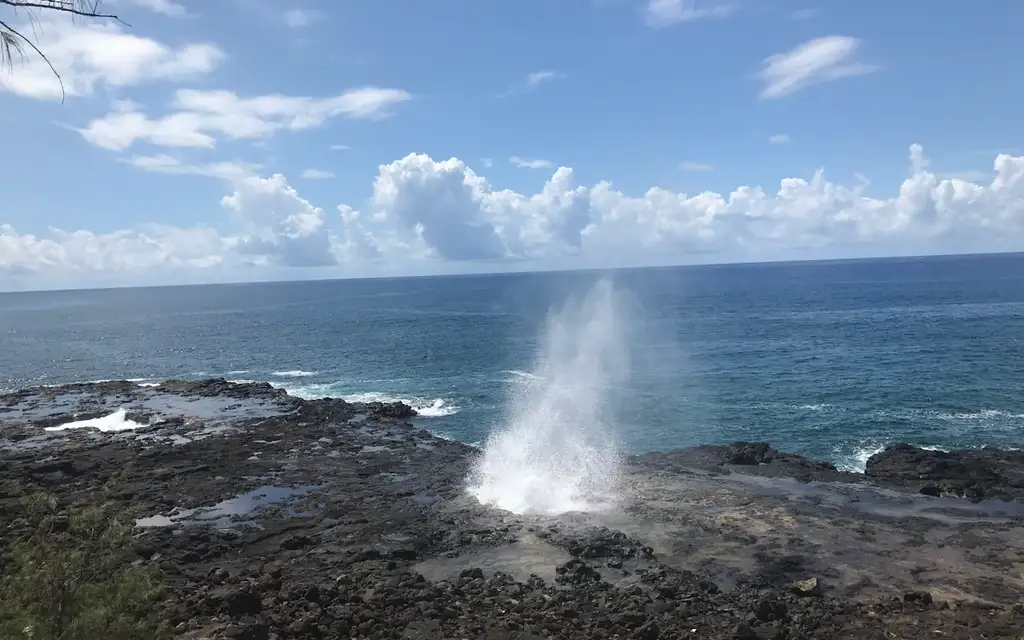
Spouting Horn Kauai is a free roadside blowhole on the south shore that fires seawater up to 50 feet into the air every time a big wave slams under the lava shelf. It is the rare Hawaii sight that costs nothing, takes fifteen minutes, and still earns the photo.
This is the honest travel guide to Spouting Horn — how the blowhole works, the legend behind the sound, how to get there and park, the best time to catch a real spout, and whether it is worth a stop. It is also one of the easiest stops on any things to do in Kauai list. As of 2026, here is the rundown. We run beach picnics on Oahu, not Kauai, so there is no pitch here — just the stop.
01
What Spouting Horn Kauai is: a natural wonder, and how the blowhole works
Spouting Horn is a blowhole — a hole in a lava rock shelf on Kauai's south shore at Poipu (Poʻipū), where the ocean does a magic trick with plumbing. A wave rolls in off the Pacific, pushes through a natural lava tube under the rock, and the water has nowhere left to go but straight up. Out the top it shoots, a powerful fan of spray that can reach heights of up to 50 feet on a strong set and a few polite feet on a calm one.
The whole thing runs on a flat bench of old lava that the surf has been working for centuries. Waves arrive in sets, not on a metronome, so the show comes in pulses: a stretch of nothing, a few small puffs, then a wave lines up just right and the spout goes off. Stand there five minutes and you will get a big one.
The sound is the other half of the show. A beat before each spout, air gets shoved through the opening ahead of the water and lets out a low moan — the distinctive hissing noise that gave the place its legend. There is a second, smaller hole beside the main one that mostly just breathes: plenty of hissing, not much water.
You watch all of it from a railed lookout, a safe distance back, which is the correct distance. The shelf is slick, the spout is unpredictable, and the rocks past the rail have hurt people who decided the photo was worth a closer angle. It is not.
Spouting Horn at a glance
02
The legend of the giant lizard
Long before the geology lesson, Hawaiians explained the hissing with a story, and this Hawaiian legend is a good one. As the legend goes, this coast was guarded by a giant moo (moʻo) — a lizard spirit — that ate anyone who tried to fish these waters. A young man named Liko went in anyway. The moo lunged, and Liko slipped into a lava tube too narrow for the creature to follow, trapping it inside. The roar and hiss you hear at Spouting Horn is said to be that moo, still trapped below, still complaining about it.
We tell that one straight, because it is not ours to make a punchline of — it is how a place got its name. In Hawaiian tradition, moo are water guardians, so a moo standing watch over a fishing ground is the whole point of the story, not background colour for a tourist photo.
The other piece of history is more recent, and more human. A neighboring blowhole, the Kukuiula Sea Plume, once spouted even higher than this one — until the 1920s, when the sugar plantation dynamited it. The salt spray was drifting onto the cane fields and ruining the crop, so they blew up a natural wonder to save the sugar. That sounds absurd now, but this is sugar country: Koloa, just up the road, was the site of Hawaii's first commercially successful sugar plantation, founded in 1835. Spouting Horn is simply the one they left standing — and it still puts on a better show than the cane fields ever did.
03
How to get to Spouting Horn Park: parking, directions, and tips
Spouting Horn is located at the end of Lawai Road in Poipu, about a ten minute drive from Koloa (Kōloa) town and the Poipu resorts. From the main highway, take Highway 50 to Koloa Road (Highway 530), drop down through Koloa, then follow Poipu Road and turn onto Lawai Road; it dead ends at Spouting Horn Park. From Poipu Beach it is a five minute hop west along the same road.
Getting to Spouting Horn Park
Tap to open Google Maps with turn-by-turn directions.
Coming straight from the airport, it is about a 25-minute drive south from Lihue (Līhuʻe). There is no gas or food at the lookout itself, so fuel up and grab lunch in Koloa or Poipu on the way.
Parking is free, with an ample public lot right at the viewing area, though it can fill when a tour bus lands, so early morning or late afternoon is calmer. There are restrooms, which is more than most roadside stops on Kauai offer, and the path from the lot to the railing is short, paved, and accessible, so it is one of the few stops you can roll a stroller or wheelchair right up to the view.
The other fixture here is the vendor market: a row of stalls selling shell jewelry, puka necklaces, and the usual coconut everything. Some of it is genuine Niihau (Niʻihau) shellwork from local artisans, worth the money; some of it followed you from the last parking lot. Browse all you like, but haggling the shell guy down to save two dollars is a hobby, not a victory.
04
The best time to visit Spouting Horn
The blowhole is biggest at high tide and when the surf is up, so the spout you get depends entirely on what the ocean is doing that hour. Poipu faces south, which means the south swells of summer — roughly April through September — push the most water through the tube and throw the tallest, most dramatic plumes. A flat, calm morning at low tide still spouts, just shorter.
Tide is the lever you can actually plan around. Check a tide chart for Poipu and aim for the hours around high tide; a rising tide with some swell behind it is the sweet spot.
Crowds follow a predictable rhythm. The tour buses and the rental car convoy land late morning through early afternoon, so most people are visiting the viewing area then; sunrise and the last hour before sunset are the calm, well lit windows with the best ocean views. In winter, roughly December through April, there is a bonus from the same railing — humpback whales pass the south shore coastline, and the raised lookout makes it a quiet spot for whale watching between spouts.
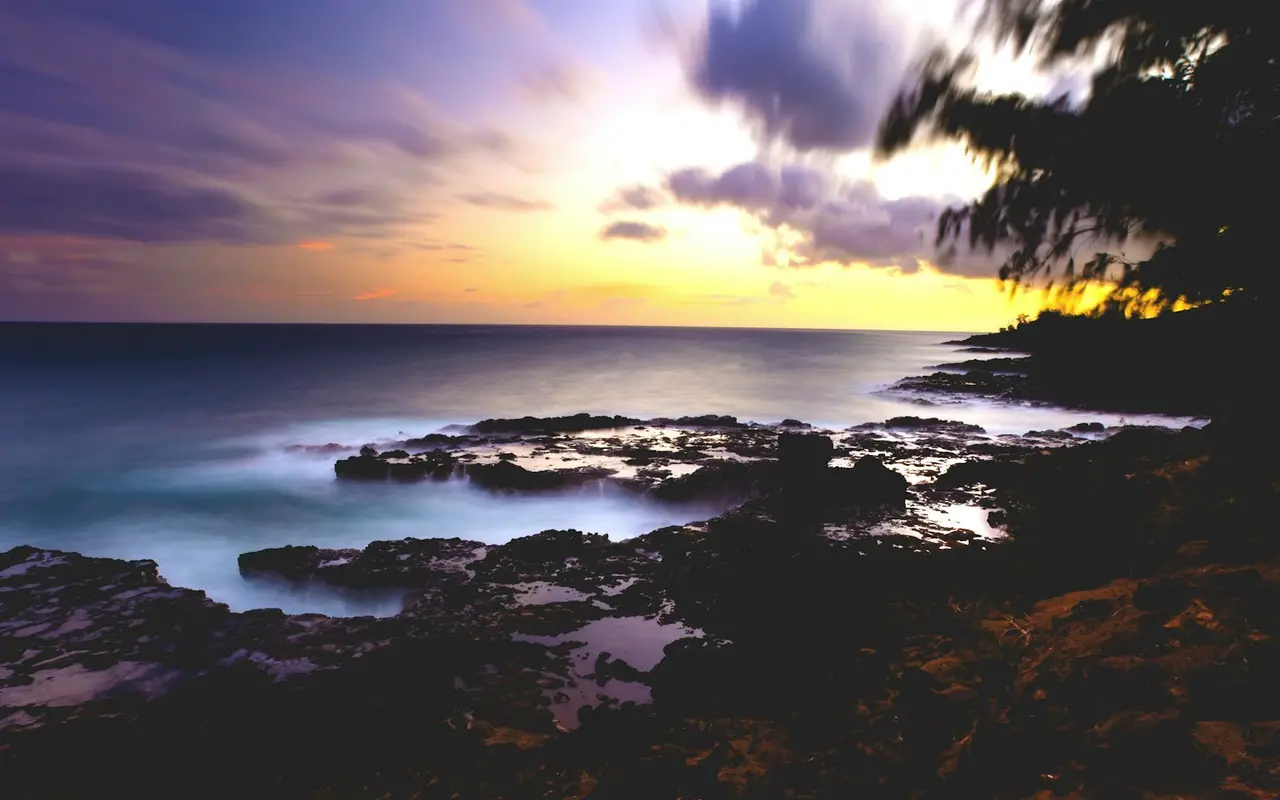
For photos, late afternoon into sunset is the move — the light goes gold behind the spray, and the crowds thin once the tour buses leave. To freeze the water mid burst, set a fast shutter around 1/1000 to catch the individual droplets. Bring a hat, water, and reef safe sunscreen either way; the lookout has almost no shade, and the south shore sun does not negotiate.
The move: aim for the hour or two around high tide, ideally a summer afternoon; watch from the rail for ten minutes to catch a full set, then drive five minutes to Poipu Beach for the actual swim.
When to catch the biggest spout
- 1Tide
Go around high tide
A rising-to-high tide forces the most water up through the lava tube.
- 2Season
Summer for south swells
Poipu faces south, so the April-to-September swells throw the tallest plumes.
- 3Light
Late afternoon to sunset
Gold light behind the spray and thinner crowds — the tour buses come midday.
- 4Camera
Shutter near 1/1000
Fast enough to freeze the individual droplets at the top of a burst.
05
Is Spouting Horn Kauai worth visiting, and how it compares to Hawaii's blowholes
Yes — but as a fifteen to thirty minute stop, not a destination you cross the island for. Most visitors spend fifteen to thirty minutes here, because Spouting Horn is exactly what Hawaii does best: free, quick, and genuinely impressive, one of the island's iconic stops handed to you for nothing. Our honest take is the one we apply to most of Kauai — the best things here cost nothing, so save your money for the few experiences you truly cannot do from shore. Do not book a tour just to see the blowhole; it is a roadside lookout, not a boat trip.
What makes it worth the detour is the company it keeps. It sits ten minutes from a stack of south shore stops, so you fold it into a day rather than building a day around it.
Nearby attractions and beaches on the south shore
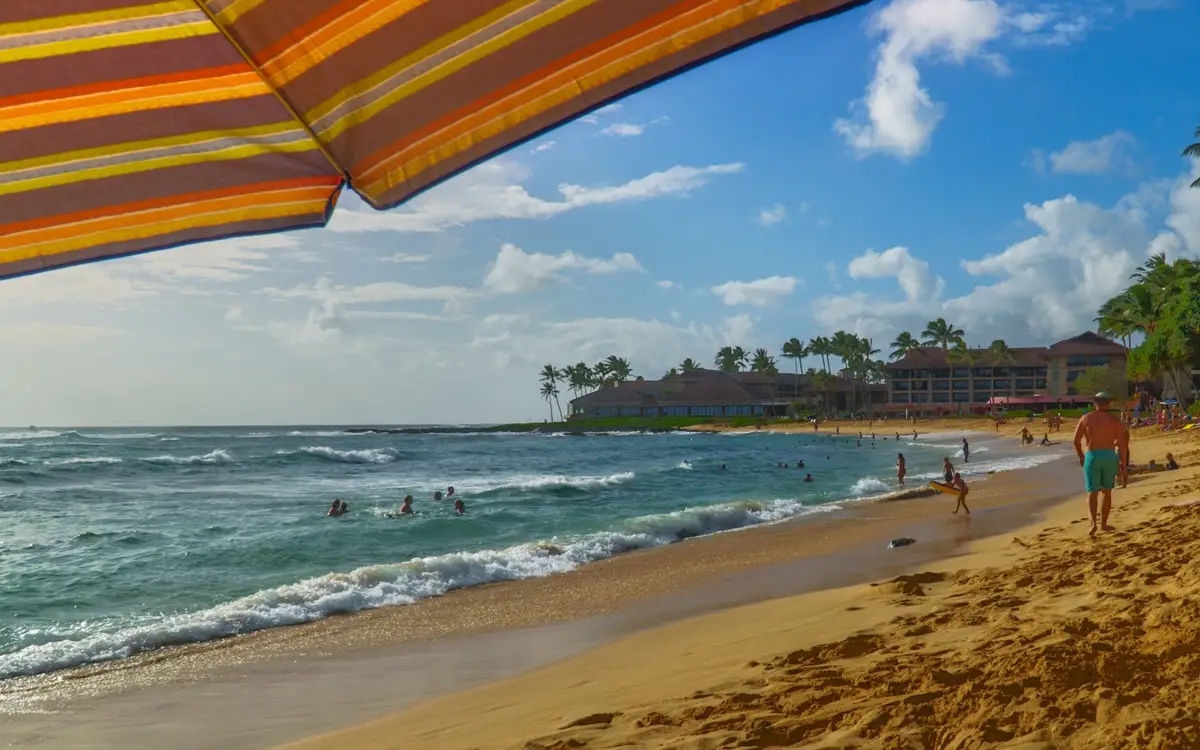
The nearby attractions make planning easy. Allerton Garden, run by the National Tropical Botanical Garden, is right next door and worth a proper visit. Poipu Beach is five minutes east for snorkeling and sea turtles, with Shipwreck Beach and historic Old Koloa Town, with its plantation era shops and restaurants, close behind. Farther out, the rest of the island — Waimea Canyon and its hiking to the west, the Na Pali Coast up the north shore — is a much longer drive, so keep Spouting Horn on a south shore itinerary.
What's near Spouting Horn
Poipu BeachSwim
Five minutes east — a lifeguarded, family-friendly swim beach with turtles and a calm keiki end.
Old Koloa TownEat
Ten minutes inland — a historic plantation town with shops, food trucks, and shave ice.
Allerton GardenTour
Next door — a National Tropical Botanical Garden estate of sculpted tropical grounds (book ahead).
Shipwreck BeachWalk
Ten minutes east — dramatic cliffs and the Mahaulepu coastal trail, best at sunrise.
It helps to know how the spout stacks up too, because each main island has a blowhole: Spouting Horn on Kauai, the Halona Blowhole on Oahu, and the Nakalele Blowhole on Maui. They work the same way — ocean waves, lava tube, vertical spray — but they ask very different things of you.
Spouting Horn vs Halona vs Nakalele
Spouting HornOur pick
Kauai - south shore
- Railed lookout, walk 30 feet
- Free lot + restrooms
- Spout up to 50 feet
- Easiest — bring anyone
Halona Blowhole
Oahu - southeast
- Roadside overlook pullout
- Eternity Beach cove below
- Smaller, less frequent spout
- Easy, quick photo stop
Nakalele Blowhole
Maui - north coast
- Rocky hike down the lava
- No railing, real hazard
- Tallest spout of the three
- People have been swept off
Spouting Horn is the one you can bring anyone to: park, walk thirty feet, watch from a rail. Halona is just as easy but smaller. Nakalele throws the tallest spout of the three and has the safety record to match — it is a rocky scramble with no railing where people have been swept off the rocks. If you only see one and you are already on Kauai, Spouting Horn wins on effort to payoff alone.
For the rest of the day, the south shore holds the experiences actually worth paying for — guided tours like a Poipu snorkel are the ones we would spend on:
★4.8(920)
Kauai’s Ultimate Guided Shore Snorkel (NO BOAT) in South Poipu
2 hours
Free cancellation
from
$120
If you are basing yourself down here, Poipu is the south shore's resort hub, and the Sheraton Kauai Resort Villas sits right on the water:
Sheraton Kauai Resort Villas
Poipu$$$
GymFree parking
Compare prices
For the full lay of the land, our where to stay in Kauai guide breaks the island down by region, and our things to do in Kauai guide maps the rest of the trip.
FAQ: Spouting Horn Kauai
Can you swim at Spouting Horn Kauai?
No — Spouting Horn is a lookout, not a swim spot. The shelf is sharp lava, the blowhole is dangerous, and the water off the rocks is rough with current. For a swim, Poipu Beach is five minutes east with a lifeguard and a calm, protected keiki end.
Does Spouting Horn always spout?
It spouts year round, but the size swings with the tide and surf. On a flat, low tide day the plume can be modest; at high tide with a south swell running it can hit 50 feet. Set expectations accordingly, and do not drive across Kauai for it alone — make it one stop on a south shore loop.
Is Spouting Horn Kauai good for kids?
Yes, with the usual caution. The lookout is railed and the paved path is short, so it is an easy stop with little ones, and the spout holds their attention for a few minutes. Keep them back from the railing — the lava shelf is slick and the spout is unpredictable — and save the actual swimming for Poipu Beach down the road.
Are there hours or a fee to see Spouting Horn?
Spouting Horn is free, and the lookout is open air, so there is no ticket and no gate. The vendor stalls and restrooms keep rough daytime hours, but the blowhole spouts day and night. Sunset is the prettiest window; after dark there is nothing lit to see, so come while there is light.
Cover photo: Lisa Blair on Unsplash. Sunset photo: Jon Tehero, Poipu Beach photo: Earl Wilcox, both on Unsplash.
Disclosure: Some links on this page are affiliate links. If you book or buy through them we may earn a small commission, at no extra cost to you. As an Amazon Associate, we earn from qualifying purchases.


