Where to See Turtles Oahu: 8 Best Honu Spots for 2026
19 min readYndira W. Tonin
Green sea turtles, honu in Hawaiian, are one of the easiest and most magical wildlife encounters on Oahu, and seeing them is free. The two most reliable places to see sea turtles on Oahu are Laniakea Beach (literally nicknamed "Turtle Beach") on the North Shore, where they haul out to bask on the sand, and Turtle Canyon, a reef off Waikiki where they gather and you snorkel above them.
All of this was last checked in 2026.
Beyond those two, honu turn up at calm reefs all around the island, Electric Beach on the west side, Haleiwa, Hanauma Bay, so a turtle sighting is less a question of if than where and when.
This guide covers exactly where to see sea turtles on Oahu, the best time of day and year, how to do it from shore or by boat, and the simple, legally required rules that keep these protected, ancient animals safe.
Table of contents
- Meet the honu, Hawaii's green sea turtles
- Where to see turtles on Oahu, the best spots
- Laniakea, the North Shore's Turtle Beach
- Turtle Canyon, snorkeling off Waikiki
- Electric Beach and the west side
- More turtle spots around Oahu
- The rules, how to watch turtles legally
- The best time to see turtles on Oahu
- How to snorkel with turtles
- Getting there and where to stay
- FAQ
01
Meet the honu: Hawaii's green sea turtles
Before the where, a quick word on the who, because knowing what you are looking at makes the encounter mean more.
The turtles you will see on Oahu are almost always Hawaiian green sea turtles, known by their Hawaiian name honu. They are big, adults reach three to four feet and hundreds of pounds, graze on algae and seagrass, and can live for decades. They are also a genuine conservation success story, once heavily hunted, they have rebounded strongly since gaining protection under state and federal law, which is exactly why they are so visible today.
Honu are deeply woven into Hawaiian culture, appearing in petroglyphs, legends, and family aumakua (ancestral guardian spirits). Seeing one is, for many locals, a small blessing, not a photo op to chase. That cultural weight is part of why the rules around them are taken seriously.
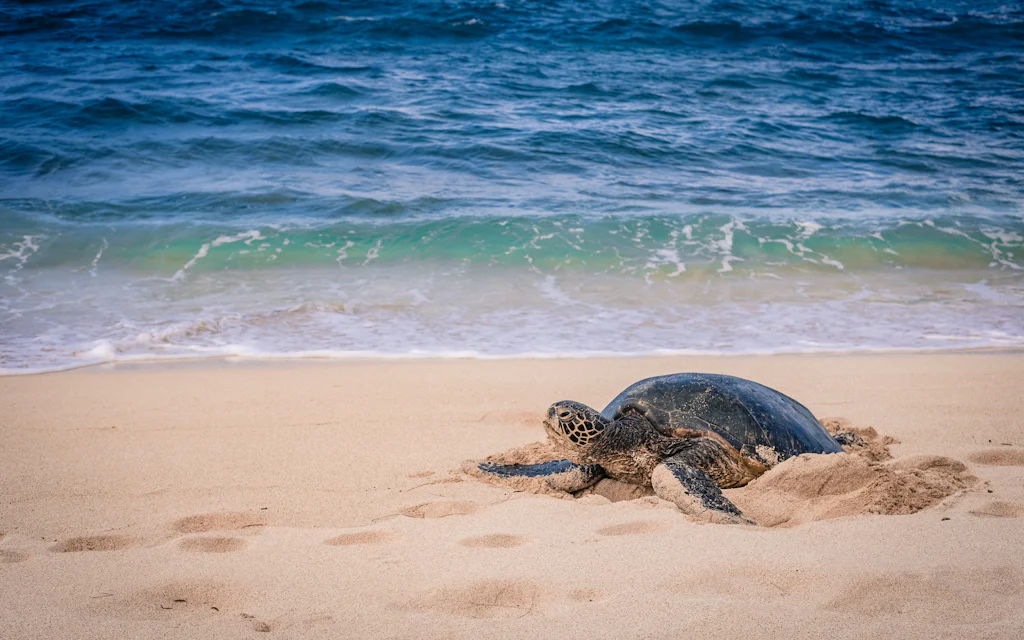
One behavior surprises visitors, green sea turtles in Hawaii famously bask on land, hauling fully out of the water to rest on the sand in the sun. Most sea turtles worldwide never do this, but Hawaii's honu do, which is what makes a place like Laniakea so special, you can stand on a beach and watch a wild turtle nap a few feet away. Just never mistake a basking turtle for one in trouble. It is completely normal. Laniakea is one stop on a longer coast, see how it fits among the best beaches on the North Shore.
You may also hear the occasional turtle called by other names. The much rarer hawksbill turtle (honuea) nests on a few Hawaiian beaches but is seldom seen by visitors. Nearly every turtle you encounter on Oahu will be a green. And you will sometimes spot turtles with patchy, lumpy growths, a tumor disease called fibropapillomatosis that affects some Hawaiian honu. There is nothing you can or should do about it except, as always, keep your distance and let the animal be.
02
Where to see turtles on Oahu: the best spots
The good news is that Oahu has turtle spots for every comfort level, from standing on dry sand to snorkeling a reef by boat. Here is how to match the spot to you.
Where should you see turtles on Oahu?
Laniakea / Turtle Beach (North Shore)Our pick
- Best for
- Watching honu haul out and bask on the sand from a few feet away — free, iconic, no swimming needed
- The catch
- Roadside parking and traffic are a circus; volunteers rope off the turtles
Turtle Canyon (off Waikiki)
- Best for
- The most reliable in-water encounter — a boat snorkel over a reef 'cleaning station' where turtles gather
- The catch
- Boat-access only; you book a tour rather than walk up
Electric Beach (west side)
- Best for
- Confident snorkelers who want a vibrant shore-entry reef with turtles and fish
- The catch
- An active swim with current — not for beginners or kids
Hanauma Bay & calm reefs
- Best for
- Beginners and families — sheltered, shallow water where honu graze close to shore
- The catch
- Hanauma needs an advance reservation and is closed Tuesdays
Broadly, your options split into land and water. For watching turtles bask on the beach with zero swimming, the North Shore's Laniakea is the icon. For getting in the water with them, you choose between an easy boat snorkel (Turtle Canyon off Waikiki), a more advanced shore snorkel (Electric Beach on the west side), or a beginner friendly reef (Hanauma Bay and other calm spots).
Your honest decision tree, if you cannot or do not want to swim, go to Laniakea and watch them on the sand. If you want to be in the water but are a nervous or first time snorkeler, book the Turtle Canyon boat. If you are a strong swimmer chasing the richest reef, brave Electric Beach. And if you have kids easing into snorkeling, the sheltered shallows of Hanauma Bay are the gentle classroom. There is a right turtle spot for every single visitor.
A quick reality check before you pick, turtle sightings in the wild are common on Oahu but never guaranteed, these are wild animals, not an aquarium exhibit. The spots below stack the odds heavily in your favor, especially in the right season and conditions, but the magic of a wild honu encounter is precisely that it is on the turtle's terms, not yours. Go with patience and an open morning, and Oahu almost always delivers.
The rest of this guide walks through each of the headline spots, what to expect, how to get there, and who each one suits, starting with the most famous turtle beach in Hawaii.

Photo by Jake Houglum on Unsplash
03
Laniakea: the North Shore's Turtle Beach
If you only do one turtle thing on Oahu, make it Laniakea, the North Shore beach so reliable for honu that everyone just calls it Turtle Beach.
Laniakea sits on the North Shore between Haleiwa and Waimea Bay, and on most days you will find green sea turtles either grazing in the shallows just offshore or hauled out basking on the sand. It is one of the most dependable places in the world to see wild honu up close, on land, without getting wet, which makes it perfect for families, nonswimmers, and anyone who wants the encounter without the snorkel.
You will often find volunteers from Honu Guardians or Malama na Honu on the beach, roping off resting turtles with red tape and a respectful buffer, answering questions, and making sure nobody crowds them. Respect their guidance completely, they are protecting both the turtles and your good time.
The one real downside is the logistics. Parking is a notorious headache, a small dirt lot fills early, roadside parking is tight and has caused real traffic problems, and crossing the busy Kamehameha Highway on foot demands care. Go early, be patient with the parking circus, and never park or cross dangerously for a photo. The turtles are worth it. A fender bender is not.
A note on expectations, Laniakea is not a secret, so on a sunny summer midday you will share the beach with a crowd and a row of phones. That is the trade for such reliable access to wild turtles. If you want a quieter version of the same thing, arrive early, visit nearby Papailoa or Haleiwa instead, or simply hang back from the scrum, the turtles do not mind the crowd, but you might, and a calmer vantage makes for a better few minutes with them.

Photo by Hoyoun Lee on Unsplash
04
Turtle Canyon: snorkeling off Waikiki
For getting in the water with honu, the easiest and most reliable option is Turtle Canyon, a reef just offshore from Waikiki.
Turtle Canyon (also called Turtle Town) is a series of reef ledges a short boat ride from Waikiki that functions as a natural turtle cleaning station, reef fish nibble algae and parasites off the turtles' shells, so the honu come here regularly and linger. That makes it one of the most dependable in water turtle encounters on the island, and because it is boat access only, the water is calm and the experience is beginner friendly.
You reach it on a snorkel tour, which is the whole appeal, gear, flotation, and a crew that knows exactly where the turtles are, all without you needing to find a reef yourself. A Turtle Canyon snorkel cruise leaves right from Waikiki and is a perfect half day for first time snorkelers and families who want a near guaranteed turtle sighting in flat water.
★4.9(3,571)
Waikiki: Turtle Canyon Snorkel Adventure on Oahu
2 hours
Free cancellation
from
$85
The bonus, even when the turtles are doing their own thing, the reef and fish make the stop worthwhile, and you get the open water Waikiki skyline view on the way out. For a calm, low stress way to snorkel with turtles, this is the one, and it pairs naturally with the rest of the best snorkeling on Oahu.
Because Turtle Canyon is reef and boat rather than a named beach, the experience varies a little by operator, some run catamarans with shade and a bar, others smaller, faster boats, and a few bundle the turtle stop with a sunset sail or a dolphin search. Read recent reviews for the words "turtles" and "calm," pick a morning departure for the best water, and you will be in good hands. It is, for many visitors, the single most reliable wildlife moment of their whole Hawaii trip.
05
Electric Beach and the west side
If you are a confident snorkeler who wants a wilder, shore entry turtle reef, head to Electric Beach on Oahu's leeward west coast.
Electric Beach, officially Kahe Point, named for the warm water outflow from the power plant across the road, draws an unusual abundance of marine life, including green sea turtles, dolphins, and clouds of tropical fish. The warm outflow and healthy reef make it one of the most vibrant snorkel spots on the island, and turtle sightings are common for those who swim out to the reef.
The honest catch is that Electric Beach is not a beginner spot. The entry is over rock, the swim out to the best reef is a real distance, and there can be current, so it suits comfortable, fit snorkelers, not nervous swimmers or young kids. If that is not you, the calm boat snorkel at Turtle Canyon or the dry sand basking at Laniakea is the better call.
For those up to it, though, Electric Beach rewards the effort with a genuinely rich underwater scene, and the west side gets the island's driest, sunniest weather. Pair it with a west side day and you have a strong, less crowded alternative to the busier turtle spots.
A safety note specific to Electric Beach, check the conditions before you swim, and skip it entirely on a high surf or windy day. The same warm outflow and open exposure that make it so lively also mean current and chop when the ocean is up, and there is no lifeguard on the reef. On a calm, flat morning it is one of Oahu's best shore snorkels. On a rough day it is a place to admire from the sand and come back another time.
06
More turtle spots around Oahu
Beyond the big three, honu show up at calm reefs and beaches all around Oahu, so keep your eyes open wherever you are.
A few worth knowing,
- Haleiwa Beach Park and Puaena Point, calm North Shore water in summer where turtles graze close to shore, a gentler alternative to the Laniakea crowds.
- Hanauma Bay, the famous protected snorkel preserve has resident honu among its reef fish. It needs an advance reservation and is closed Tuesdays, but it is great for beginners.
- Turtle Bay (Kuilima), the resort area on the North Shore's tip has turtles in its coves, fittingly.
- Papailoa Beach, the quieter "other" North Shore turtle beach near Laniakea, covered in our Papailoa Beach guide.
- Ala Moana and Waikiki reefs, even right in town, patient snorkelers spot the occasional honu cruising the reef (both are covered in our beaches in Honolulu guide).
There are also boat tours beyond Turtle Canyon that reliably find honu, many of the West Oahu snorkel and wildlife sails out of Waianae and Ko Olina include a turtle stop alongside dolphins, and the circle island and snorkel cruises often work a turtle reef into the day. If a guaranteed, gear included encounter matters more to you than a free beach stroll, a tour is the surer bet.
The pattern is simple, any calm, reef fronted beach on Oahu in good conditions is a candidate, especially in summer. Sightings are never guaranteed in the wild, but on Oahu the odds are about as good as they get anywhere on Earth, few places let you reasonably expect to meet a wild sea turtle on an ordinary morning.
07
The rules: how to watch turtles legally
This matters, so here it is plainly, Hawaiian green sea turtles are protected by law, and there are firm rules for watching them. Following them is not optional, and it is easy.
Honu are protected under the federal Endangered Species Act, and harassing, touching, or disturbing them can carry serious fines. The guidance from NOAA Fisheries is to stay at least 10 feet (about 3 meters) away from a sea turtle, in the water and on the beach, and to never touch, chase, feed, ride, or block the path of one.
Here is the one strong opinion in this guide, and it is an easy hill, the best turtle encounter is the one where you keep your distance. A honu that has to flee you is a honu that does not get to rest or eat, and a crowded, hounded turtle is a worse sight than a calm one behaving naturally. Hang back, stay quiet, let it come and go on its own terms, and you will get both the better experience and the better photo.
A few specifics, on the beach, stay behind the volunteers' ropes and give basking turtles a wide berth. In the water, float calmly and let the turtle pass. Do not swim after it or corner it against the reef. And never, ever touch one, even if it swims close, your hands carry bacteria that harm their shells, and it is illegal besides. Look, marvel, photograph from a respectful distance, and leave them be.
08
The best time to see turtles on Oahu
You can see turtles on Oahu year round, but timing the season and the time of day stacks the odds in your favor.
For the North Shore basking spots like Laniakea, summer (roughly May through September) is best, because the winter surf that pounds the North Shore calms down and the turtles come in close to rest. In winter, big swells can make the North Shore turtle beaches rough and the turtles scarcer there, though the south and west spots stay viable. The honu themselves are around all year. It is the conditions that shift.
For time of day, late morning to early afternoon is the sweet spot for basking turtles hauling out on the sand at Laniakea, locals and Honu Guardians often cite roughly 11am to 1pm as prime basking hours. For snorkeling, earlier is better, the morning brings the calmest, clearest water and the best visibility before the wind picks up, so a morning Turtle Canyon trip is ideal.
Tides matter less than you might think for turtles, but conditions matter enormously. The single biggest factor is calm water, a flat, glassy day brings turtles in close and gives you clear, long views, while a churned up, windy day pushes them out and muddies the visibility. Before any turtle outing, glance at the surf and wind forecast for that coast, and favor the calm window.
Put it together and the perfect turtle plan looks like this, a calm summer morning snorkel at Turtle Canyon, or a midday summer visit to Laniakea to watch them bask. Either way, go on a calm weather day, flat water means closer, longer, better encounters.

Photo by Randall Ruiz on Unsplash
09
How to snorkel with turtles
If you want to get in the water, a little preparation turns a hopeful swim into a great encounter.
Start with the right spot for your ability, the calm boat snorkel at Turtle Canyon for beginners and families, a shore reef like Electric Beach only if you are a strong, confident swimmer. Bring or rent a well fitting mask (a leaky mask ends a snorkel fast), and use reef safe mineral sunscreen, which is the law in Hawaii and kinder to the reefs the turtles depend on.
In the water, the technique is mostly about calm. Float quietly at the surface, breathe slowly, and let the turtle come to you rather than chasing it, honu are curious and unbothered when you are still, and skittish when you thrash. Keep your fins clear of the reef and the turtle, stay that 10 feet back, and resist every urge to reach out.
A few practical extras, a flotation vest or pool noodle helps nervous swimmers stay relaxed and buoyant, a waterproof camera or a strap for your phone saves heartbreak, and a rash guard handles the sun better than reapplying sunscreen all day. Get those basics right and the rest is just floating in warm blue water waiting for an ancient, unhurried animal to glide past, which is exactly as good as it sounds.
One more piece of etiquette that bears repeating in the water, do not free dive down to a turtle on the bottom or follow it as it descends. Honu need to surface to breathe, and getting between a turtle and the surface, or spooking one into a panicked dive, is both harmful and, technically, harassment. Stay at the surface, stay calm, and let it rise to breathe on its own schedule. The best snorkelers look like they are barely doing anything, and the turtles reward exactly that stillness with longer, closer, more relaxed visits.
10
Getting there and where to stay
Where you base depends on which turtles you are chasing, since Oahu's spots are spread across the island.
For Laniakea and the North Shore beaches, it is about a 45-to-60-minute drive from Waikiki, so most visitors day trip up. A rental car makes the basking beach circuit and the parking hunt far easier. For Turtle Canyon, you barely travel at all, the snorkel boats leave right from Waikiki. For Electric Beach, budget 45 minutes west from town.
Most people base in Waikiki and reach all of it from there, the Turtle Canyon boats are on your doorstep and the North Shore is a scenic drive. You can compare Waikiki hotels on Expedia (also on Booking.com) for a central base, or stay on the North Shore (also on Booking.com) to wake up near Laniakea's basking honu, and our guides to the North Shore and Kailua and Lanikai help you build the turtle stops into a fuller day.
If turtles are a priority, it is worth folding them into a plan rather than hoping to stumble on one, a morning Turtle Canyon snorkel from Waikiki, or a North Shore day that strings Laniakea together with Haleiwa town and the beaches, both reliably deliver. Our Oahu itinerary shows how to slot a turtle stop into a wider trip without backtracking across the island.
One last, on brand note, a morning with the honu and an afternoon doing nothing on a quiet beach is a perfect Oahu day, and since we run beach picnics here, a sunset picnic (from $349 for two) is a lovely way to cap it. That is the only pitch, the turtles, happily, are free. Keep your distance, and enjoy them.
FAQ
Where is the best place to see turtles on Oahu?
Laniakea Beach ("Turtle Beach") on the North Shore is the most famous, where green sea turtles bask on the sand, no swimming needed. For an in water encounter, Turtle Canyon off Waikiki is the most reliable, reached by a snorkel boat tour. Electric Beach (west side) and Hanauma Bay are also strong options.
Can you see turtles on Oahu without a tour?
Yes. Laniakea and other North Shore beaches let you watch turtles bask from the sand for free, no tour or swimming required. Many calm reef beaches also have honu you can snorkel with from shore. A boat tour to Turtle Canyon is the most reliable in water option, but it is not the only way.
What is the best time to see turtles on Oahu?
Year round, but summer (May, September) is best for the North Shore basking beaches, when the surf calms and turtles come in close. Late morning to early afternoon (around 11am, 1pm) is prime for basking. Mornings are best for snorkeling, when the water is calmest and clearest.
Is it legal to swim with turtles in Hawaii?
You can legally swim and snorkel near wild turtles, but Hawaiian green sea turtles are protected, so you must not touch, chase, feed, or harass them. NOAA advises staying at least 10 feet away. Observe calmly from a distance and let the turtle move freely. Touching or disturbing one can bring serious fines.
Are there sea turtles at Hanauma Bay?
Yes, the protected Hanauma Bay nature preserve has resident green sea turtles among its reef fish, and its calm, shallow water makes it beginner friendly. Note that Hanauma requires an advance reservation, charges an entry fee, and is closed on Tuesdays, so plan ahead and arrive early.
Why do Hawaiian sea turtles come up on the beach?
Hawaiian green sea turtles are unusual in that they "bask", hauling fully out of the water to rest on the sand and warm up in the sun. It is completely normal, healthy behavior, not a sign of distress, so never push a basking turtle back into the water. Just give it space and let it rest.
Do you need to snorkel to see turtles on Oahu?
No. The North Shore's Laniakea (Turtle Beach) lets you watch turtles graze in the shallows and bask on the sand right from the beach, no snorkeling required. Snorkeling, especially the boat trip to Turtle Canyon, gets you closer in the water, but plenty of visitors have a wonderful turtle encounter with dry feet.
Disclosure: Some links on this page are affiliate links. If you book or buy through them we may earn a small commission, at no extra cost to you. As an Amazon Associate, we earn from qualifying purchases.


