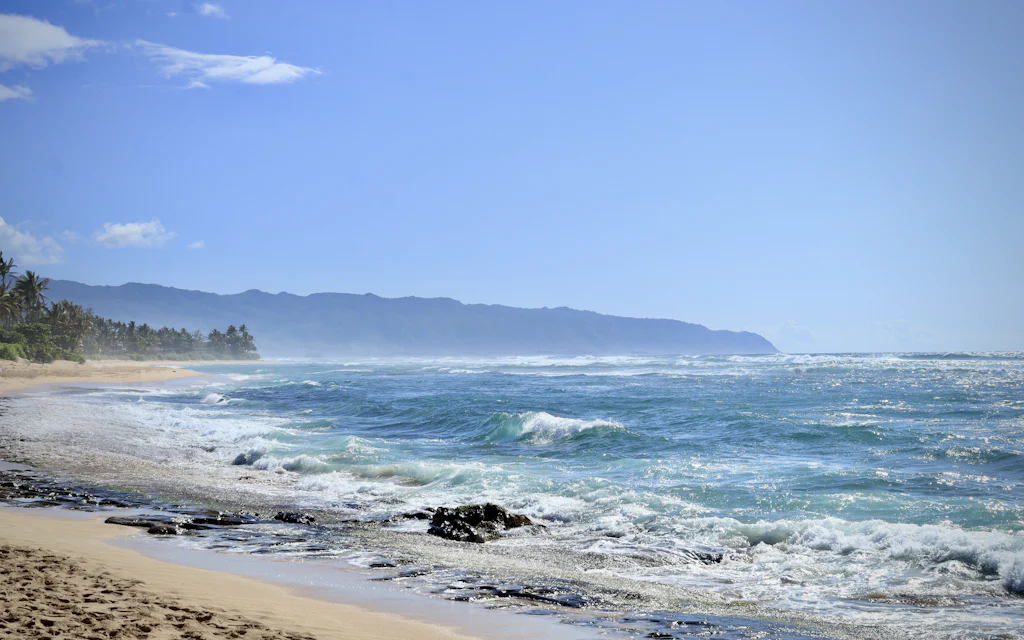
Papailoa Beach Oahu: A Hidden Gem for Spotting Sea Turtles
22 min readYndira W. Tonin
Papailoa Beach is the North Shore strand you have absolutely seen and almost certainly cannot name, a quiet ribbon of white sand near Haleiwa that millions of people stared at for six seasons without realizing it was a real place you could drive to. This is the main beach where they filmed Lost. Fans call it "Police Beach." Sea turtles call it home.
Most visitors never find it, which is the whole appeal.
There is no sign, no lifeguard, no bathroom, and roughly ten spaces at the end of a residential road. What there is, soft sand, a shallow reef, a steady cast of green sea turtles hauled out to nap, and the strange thrill of standing on the exact spot where the survivors of Oceanic 815 built their camp.
So here is the honest Papailoa Beach Oahu guide, checked for 2026, the part the drone reels skip. Where the beach actually is, why it looks so familiar, the turtles and the one rule that protects them, whether you can swim (mostly no), and how to visit a fragile residential shoreline without being the reason it gets harder to visit.
Getting there
Tap to open Google Maps with turn-by-turn directions.
Table of contents
- What (and where) is Papailoa (Papa'iloa) Beach?
- Police Beach and the 'Lost' filming location
- The turtles of Papailoa Beach
- How to get there, and the Papailoa Road parking situation
- Can you swim or snorkel at Papailoa Beach?
- Is Papailoa Beach safe? The honest version
- Best time to visit
- What to bring
- What else is nearby on the North Shore
- Where to stay nearby
- FAQ
01
What (and where) is Papailoa (Papa'iloa) Beach?
Papailoa Beach at a glance
Papailoa Beach is located on Oahu's North Shore, just west of Haleiwa town, a long, narrow stretch of white sand tucked behind a row of beachfront homes. It runs roughly between Puaena Point and the mouth of the Anahulu Stream, fronted by a shallow coral reef that keeps the water calmer than the famous bodyboarding beaches up the road, and far less swimmable than it looks.
The name is written Papa'iloa with an okina (properly ʻ) and pronounced "pah-pah-ee-LOH-ah", and like most good beaches on Oahu, Hawaii, it answers to more than one. On the map it is Papa'iloa Beach. To locals and longtime visitors it is Police Beach, in 1975 the Honolulu Police Relief Association leased this stretch as a campsite for police department members, and the name outlived the campsite. To a generation of television fans, it is simply "the Lost beach." Three names, one quiet strip of sand.
What everyone calls it
Papailoa BeachOn the map
The map name, written with an okina (Papaʻiloa), pronounced pah-pah-ee-LOH-ah.
Police BeachWhat locals say
The local name, the Honolulu Police Relief Association leased it as a campsite in 1975.
The Lost beachOn your screen
The fan name, the series filmed its survivors' camp here for most of its run.
What it is not is a developed beach park. There is no lifeguard tower, no restroom, no shower, no painted stalls, no snack truck, no shade beyond what the ironwood trees throw. It is a residential beach reached by a public right of way path squeezed between private houses, which is exactly why it stays peaceful while Waikiki packs people in like a group photo.
That same quiet is the thing to protect. Because access runs through a neighborhood and the spaces are genuinely scarce, the place rewards the considerate and punishes the oblivious. Show up early, tread lightly, keep your distance from the wildlife, and it is as close to having a beach to yourself as Oahu gets. Show up at noon expecting a beach club and you will spend your visit circling for a parking spot that was never going to exist.
Set your expectations right and you have found a small marvel, a soft sand, turtle dotted, film famous beach where the loudest sound is usually the wind in the trees. The activities menu is short on purpose, turtles, photography, a long scenic stroll, and watching the surfing on the outer reef. The main activity here is sitting still, and it is enough.
02
Police Beach and the 'Lost' filming location
If this beach looks hauntingly familiar before you have ever set foot on it, here is why, this is the primary filming location for Lost, the beach where the series built the survivors' main camp for most of its run. The fuselage, the tents made of airplane wreckage, the signal fire, the endless beach meetings about whose turn it was to make a terrible decision, all shot on this sand.
The production actually moved here for a practical reason. The pilot episode was filmed up the coast at Mokuleia Beach, but winter surf kept chewing at the set, so the crew relocated the main camp to this more sheltered stretch and stayed for years. Twenty years on, the layout is still recognizable enough that fans regularly tear up when they round the path and see it.
The "Police Beach" nickname is older than the show, and the history has nothing to do with crime, the Honolulu Police Relief Association leased this stretch of coast in 1975 as a campsite for police department members, and the name stuck to the whole strand. Locals still call it Police Beach far more often than Papailoa, so do not be confused when Google Maps and a friendly surfer use two different names for the same sand.
The old camp area sits about a quarter mile walk along the sand from the access path, an easy, scenic stroll with the reef on one side and private homes on the other. You can stand roughly where the set sat, but keep your bearings, the famous "Survivors' Beach Camp" was a temporary set, long since struck. There is no plaque, no marker, no gift shop selling Dharma Initiative mugs. What you get is the real, unmarked, slightly eerie pleasure of recognizing a place you only ever saw on a screen.
Treat it as a pilgrimage, not a photo op that blocks someone's driveway, and it is one of the most quietly rewarding film stops on Oahu, no ticket, no tour, no line.
03
The turtles of Papailoa Beach
The other reason people come looking for this sand has flippers. Hawaiian green sea turtles, honu, regularly haul out onto this sand to bask in the sun, and on a good day you might share the beach with several of them lying near the waterline like very relaxed, very ancient boulders.
This is genuinely special, and it comes with genuine rules, review them before you go, because ignorance is not a defense the fines respect. Honu are protected under federal and state law, and basking is part of how they regulate their body temperature and rest, it is not an invitation to a photo shoot. The standing guidance from NOAA Fisheries is to stay back at least 10 feet (and farther is better), never touch or feed them, and never get between a turtle and the ocean. A resting honu that flinches, lifts its head, or shuffles toward the water because you crept in for a selfie is a stressed honu, and harassment carries real fines.
The good news is that 10 feet is plenty close to enjoy them. These animals are huge, calm, and unbothered if you simply sit quietly on the dry sand and let them do their thing. Bring a little zoom and you will get a better photo than the people crowding in for a phone shot, without ever pressuring the animal.
A few practical turtle tips for this beach specifically,
- Mornings are best. Turtles often bask in the calmer early hours, and you will have the beach mostly to yourself before the trickle of fans arrives. On a banner summer day, locals count honu by the dozen along this stretch.
- They are wild, not scheduled. Some days the beach is dotted with honu. Some days there are none. The ocean and the turtles run the calendar, not the guidebook, so please do not promise the kids a guaranteed sighting.
- Give nesting and basking turtles a wide berth. If one is roped off or has a volunteer sitting nearby, respect the perimeter, that is there to protect it.
- Do not build your whole day around a guaranteed sighting. If turtles are the entire point of your trip, booking a guided snorkeling tour to a reliable turtle spot stacks the odds far better than hoping a wild animal shows up to a residential beach on your schedule.
Seeing a honu rest on a quiet beach with nobody hassling it is one of the best free things on Oahu. Keep your distance, keep it calm, and you get the memory without leaving a mark.
The turtle rules, in numbers
04
How to get there, and the Papailoa Road parking situation
The directions are simple, it is about a 50-to-60-minute drive (roughly 34 miles) from Waikiki, up the H1 and H2 freeways and out toward Haleiwa. Once you are past Haleiwa town heading toward Waimea on Kamehameha Highway, you turn makai (toward the ocean) onto Papailoa Road, a quiet residential street, and follow it almost to the end, 61 to 789 Papailoa Rd works as a Google Maps target if your first attempt sails past the turn.
Here is the honest part, there are roughly ten parking spots at the end of the road, in a small unpaved area near the beach access path. That is the entire show. There is no lot, no overflow, no attendant, just a handful of spaces shared between beachgoers, the shoreline fishing crowd, turtle watchers, and Lost pilgrims. If they are full, they are full, and the surrounding street is residential, so you cannot simply abandon the car wherever you like.
The numbers that decide your morning
From the dirt pull in, a narrow public right of way cuts between two private houses down to the sand, check for the emergency location sign (269A) marking the path. Public beach access in Hawaii is a legal right, and these paths exist specifically so everyone can reach the shoreline, but you pass within feet of people's homes, so keep it quiet, keep it tidy, and do not wander off the path into yards.
A few ground rules that keep the visit pleasant for everyone,
- Come early. Before about 9 a.m. you will usually find a spot and a near empty beach. Midday, you are rolling the dice.
- Do not block driveways or the road. It is a working neighborhood. Blocking a driveway is how shared access gets political.
- Take nothing valuable, or take it with you. Beach lots up here are a known target for break ins, leave the car empty and bring your essentials down in a dry bag.
If a 50-minute drive to fight for one of ten spots sounds like a lot of friction for one beach, the smarter play is to let someone else handle the wheel and the curb hunt. A circle island day tour runs the North Shore and hits Haleiwa, Waimea, and the famous turtle and surf beaches, so you get the whole coast without ever touching a parking space.
★4.9(3,583)
Toa Luau at Waimea Valley, Oahu
3 hours
Free cancellation
from
$133
05
Can you swim or snorkel at Papailoa Beach?
Short answer, not really, and that is the most important sentence in this guide. Papailoa Beach looks like a swimming postcard, flat ish water, white sand, a reef close in, but it is a look and wade beach far more than a swim and snorkel one, and pretending otherwise is how people get hurt.
The issue is the reef and the currents. A shallow coral shelf runs close to shore along much of the beach, so the "water" you are eyeing is often a foot of surge over sharp, uneven rock rather than an open sandy bottom. Add this coast's currents and seasonal swell and you get conditions that range from "fine for a careful knee deep cool off" to "absolutely not today," with no lifeguard on hand to tell the difference for you.
In summer, when the big wave coast generally lies down, calm mornings can offer a pleasant shallow wade, a look at the small tide pools the reef shelf traps at low water, and the occasional glimpse of fish. Even then, water shoes are not optional, that reef is unforgiving on bare feet, and so are the rocks. This is not the place for a long, relaxed snorkel session or for letting kids splash unsupervised.
In winter, the North Shore turns into the famous big wave coast, and you should treat the water here as a spectator sport. The same swells that light up the famous surf spots at Pipeline and Waimea wrap along this whole shoreline, and a beach with no lifeguard and a rocky bottom is the last place to test yourself against them. The consolation prize is genuinely good, the outer reef offshore holds a surf break called Himalayas, and on a big winter day you can sit on dry sand and watch experienced surfers work waves most people only see in films.
If you came to Oahu to actually get in the water and see turtles and fish, do it somewhere built for it. Our guide to the best snorkeling on Oahu maps the calm, sandy entry spots with lifeguards, and a beginner friendly boat snorkeling tour takes you to reliable turtle water with someone else reading the conditions. Papailoa is for the sand, the turtles on it, and the view, not for a swim you will regret.
06
Is Papailoa Beach safe? The honest version
Papailoa Beach is safe to visit and risky to misjudge, and the gap between those two is entirely about respecting what this beach is. It is a remote, unguarded, reef fronted strand, beautiful, and indifferent to your vacation plans.
Three things stack up. There is no lifeguard anywhere near this beach, so every water decision is yours alone. The bottom is shallow reef and rock, which turns a small wave into a scrape and a bigger one into a problem. And the surf up here swings from glassy to enormous depending on the season, sometimes faster than you would expect.
The single rule that keeps you safe is the oldest one in Hawaii, never turn your back on the ocean. Read the water before you commit to anything, and if there is real size or surge running, keep your feet on the dry sand and enjoy the beach for what it reliably is, a gorgeous place to sit, walk, and watch turtles.
Is today a Papailoa Beach day?
Green light, go earlyOur pick
- Best for
- A calm, low-surf summer forecast, an early arrival before the ten parking spots fill, closed-toe shoes for the rocky entry, and a plan to watch turtles from the dry sand
- The catch
- Stay at least 10 feet back from the honu — they're federally protected, and a fine ruins a free beach fast
Yellow light, beach walk only
- Best for
- Any north or west swell in the water, a full residential lot, or anyone in the group hoping to actually swim
- The catch
- The reef and currents make this a look-and-stroll beach, not a swim beach — keep your feet on the sand
Red light, pick another beach
- Best for
- A winter high-surf advisory, big shorebreak slapping the reef shelf, small kids, or fading light on the narrow access path
- The catch
- There's no lifeguard and no facilities here — a rough day is the day to drive to a lifeguarded beach park instead
Two free tools settle the question before you even leave the hotel, always check both on a winter morning. Hawaii Beach Safety maps live surf, currents, and hazards beach by beach, and the National Weather Service Honolulu posts surf forecasts and high surf advisories for this coast. If there is an advisory up or a big north swell in the forecast, make it a sand and turtle day and save the swimming for a calm, lifeguarded beach.
And here is where I will happily talk you out of the water entirely. If you have got small kids, if you are not a strong ocean swimmer, or if there is any swell at all, do not swim here, the beach is wonderful from a towel, and a lifeguarded beach park fifteen minutes away will give everyone a better, safer afternoon. The turtles and the sand are the point. The reef is just scenery.
07
Best time to visit
Two questions decide the visit, what time of day, and what season. If it is your first visit, aim for a weekday sunrise.
Time of day, go early, full stop. A sunrise or early morning arrival is the difference between a serene, turtle dotted beach with an open space and a frustrating loop around a residential road that has no room for you. The light is better, the water is calmer, the turtles are more likely to be basking, and the ten spaces are not gone yet. There is no version of "show up at 1 p.m." that beats "show up at 7."
A Papailoa morning that works
- 16:45 a.m.
Leave Waikiki
Up the H1 and H2 before traffic. About 50 minutes door to sand.
- 27:40 a.m.
Park and walk in
Grab one of the ~10 spaces, find the 269A access path between the houses.
- 38:00 a.m.
Turtles first
Calm morning honu bask near the waterline, sit back 10 feet and let them be.
- 48:30 a.m.
The Lost walk
A quarter mile stroll along the sand to the old survivors' camp stretch.
- 59:30 a.m.
Haleiwa breakfast
Back out before the parking circus starts. Shrimp trucks and shave ice await.
Season, summer for calm, winter for spectacle. From roughly May through September the coast generally settles, the water clears, and a careful shallow wade is on the table. From about October through April the big wave season rolls in, incredible to watch up and down the coast, but a hard no for swimming at an unguarded reef beach like this one. Either way, the day's actual forecast outranks the calendar. The ocean has never once read a guidebook.
One honest aside, since laying out beach spreads is literally our day job, this is a narrow, reef fronted residential beach with no facilities, scarce spaces, and protected turtles you are meant to keep your distance from, a wonderful place to sit quietly, and a poor place to stage a proper setup. If you want the blanket and board version of an Oahu beach day, we run beach picnics on the island's roomier, sandy beaches from $349. Papailoa is for the turtles and the Lost pilgrimage. A real picnic wants a different beach. Different tools, different jobs.
If you can only swing one visit, choose a calm summer sunrise. You will get the space, the soft light, the best odds on basking honu, and the rare feeling of having a film famous beach almost entirely to yourself.
08
What to bring
The beach has nothing, no restroom, no shower, no drinking water, no shade tower, no lifeguard, no snack stand. The nearest supplies are back in Haleiwa town, several minutes by car. Pack like you are heading somewhere with zero services, because that is exactly what this is.
What to bring to Papailoa Beach
Water shoesMost useful
The reef and rocky entry are sharp and the path is uneven. Bare feet lose every argument with coral.
Reef safe sunscreen and a hatSun
Shade is limited to the ironwood trees, and reef safe sunscreen is increasingly the only kind you can legally buy on island.
Binoculars or a zoomTurtles
The best way to enjoy the honu and offshore surfers while staying back 10 feet.
A dry bagValuables
Carry your phone, keys, and wallet down to the sand rather than leaving them in a car break in artists treat as a vending machine.
Water, snacks, and a towelSelf serve
Nothing to buy or rent once you are on the path, so what you carry down is what you have got.
- Water shoes. The reef and rocky entry are sharp, and the access path is uneven. A grippy pair of water shoes is the single most useful thing you can pack for this beach, bare feet lose every argument with coral.
- Reef safe sunscreen and a hat. Shade is limited to whatever the ironwood trees offer, and the reflected sun off the pale sand is brutal by late morning. A reef safe sunscreen is both the kind thing for the reef and, under Hawaii law, increasingly the only kind you can legally buy on island.
- A small pair of binoculars or a zoom. The best way to enjoy the turtles, and any surfers offshore, without crowding anything. You stay back 10 feet and still get the close up.
- A dry bag. Bring your phone, keys, and wallet down to the sand rather than leaving them in a car that North Shore break in artists treat as a vending machine.
- Water and snacks. There is nowhere to buy anything once you are on the path. Bring more water than you think you will need.
- A towel and something to sit on. No facilities means nothing to rent. What you carry down is what you have got.
A word on trash, there are no bins here, so whatever you carry in, you carry out, past someone's house, on a fragile shared access path. The fastest way to get a beloved residential beach access closed or contested is to leave it trashed. Pack it out, no exceptions.
What to leave behind, anything you would mourn losing to a wave or a car window, and the expectation of a full service beach day. Accept "quiet, beautiful, bring everything" before you arrive and the beach will reward you for it.
09
What else is nearby on the North Shore
The smart way to do it is to fold the beach into a North Shore morning, because the island's best stretch of surf, sand, and shrimp trucks is strung along this one road. The beach is a 45-to-60-minute stop, not a destination unto itself, so build a loop around Haleiwa.
- Haleiwa town, the North Shore's hub, five minutes away, with the famous shrimp trucks, shave ice, surf shops, and the harbor. This is where you fuel up before or after the beach.
- Laniakea Beach (Turtle Beach), a few minutes up Kamehameha Highway, the island's famous roadside turtle beach, complete with volunteer roped basking zones and a notorious traffic snarl. More guaranteed honu than Papailoa, far less peace, see the comparison below.
- Waimea Bay, a few minutes further, a wide sandy bay that is a gentle swim spot in calm summer and a giant wave amphitheater in winter. The cliff jump off the big rock is a summer rite of passage.
- Sharks Cove, one of the island's best snorkeling spots in summer, with a tide pool maze that is a hit with kids. Our Sharks Cove guide has the honest version, including when to stay out.
- Sunset Beach and Pipeline, the legendary winter big wave breaks, where the best surfers on earth show up to be humbled. Spectacular to watch from the sand when the surf is firing.
- Waimea Valley, a green botanical valley with a waterfall at the end of an easy stroll, plus the cultural Toa Luau on the same grounds.
Papailoa vs Laniakea for turtles
Papailoa BeachOur pick
The quiet one
- Fewer people, residential hush
- Honu on calm mornings, not guaranteed
- ~10 spaces, then it is full
- Bonus, the Lost camp pilgrimage
Laniakea (Turtle Beach)
The famous one
- Most reliable turtle sightings on Oahu
- Volunteer roped basking zones
- Roadside parking chaos and traffic
- Crowds most of the day, every day
If you are a film fan chaining together Oahu's screen locations, Papailoa pairs naturally with Kualoa Ranch on the windward side, where Jurassic Park, Lost, and a long list of blockbusters were shot, our Jurassic Park tour guide covers it. And for the big picture of how the whole coast connects, our North Shore Oahu guide, the roundup of the best beaches on Oahu, and the things to do in Hawaii hub map where each spot sits.
String two or three of these together and you have got a proper half day, turtles and the Lost camp first, a snorkel at Sharks Cove, shrimp in Haleiwa, and Waimea for the swim or the show.
A half day loop around Haleiwa
- 1Sunrise
Papailoa Beach first
Arrive early for a parking spot, the calmest water, and the best odds on basking turtles and the Lost camp walk.
- 2Mid morning
Sharks Cove snorkel
One of the island's best snorkeling spots in summer, with a tide pool maze that is a hit with kids.
- 3Late morning
Shrimp in Haleiwa
The North Shore's hub, five minutes away, with the famous shrimp trucks, shave ice, and surf shops.
- 4Midday
Waimea Bay
A wide sandy bay for a gentle summer swim, or a giant wave amphitheater to watch in winter.
10
Where to stay nearby
There is no hotel here, this is a residential stretch of coast, not a resort strip, and the whole point of the place is that it is not built up. So the real question is where to base yourself so the drive out here is manageable and the rest of your trip still works.
Most first time visitors base in Waikiki, about 50 minutes south, and day trip up for the morning. Waikiki gives you the most hotels at every price point, walkable food and beach, and an easy freeway run to Haleiwa. Browse Waikiki hotels (also on Booking.com) and you will have the whole coast within an hour's drive.
If you would rather wake up near the turtles, the coast itself has vacation rentals and the Turtle Bay resort area (also on Booking.com) up toward Kahuku, quieter, slower, and built around the surf and sand lifestyle rather than nightlife. You trade restaurant variety and convenience for the genuine North Shore morning, coffee, a near empty beach, and turtles before the day trippers arrive. It is the right swap for anyone whose ideal Oahu is rural, not urban.
A practical note on basing up here, though, it is a small, residential coast, so groceries, dining, and gas all run on country town hours and country town prices, and a single two lane highway carries everyone. That is part of the charm and part of the catch, you wake up steps from the surf, but a forgotten errand can mean a real drive. If your trip also wants Pearl Harbor, Honolulu, and Waikiki's range of restaurants, a Waikiki base and a couple of day trips north is often the more sensible split. There is no wrong answer. There is just the version of Oahu you actually want to wake up in.
For a fuller breakdown of which area fits which kind of trip, our guide to where to stay on Oahu walks through each one. Wherever you land, keep the plan simple, Papailoa is an early morning stop, so pick a base that keeps the drive painless and gets you out before the ten spaces disappear.
FAQ
Is Papailoa Beach Oahu's best turtle watching beach?
Honestly, no, that title belongs to Laniakea (Turtle Beach), a few minutes up the road. Laniakea has more reliable honu, volunteer roped basking zones, and a famous traffic jam to match. Papailoa is the quiet alternative, fewer guaranteed turtles, far more peace. Pick by mood, certainty at Laniakea, serenity here.
Is Papailoa Beach private?
No, every beach in Hawaii is public. The shoreline up to the highest wash of the waves belongs to everyone by law. Only the homes behind the sand are private. That is exactly why the public right of way on Papailoa Road exists. Use the path, stay off the lawns, and you are fully within your rights.
Can you have a bonfire or barbecue at Papailoa Beach?
No, beach fires are illegal on Oahu outside a handful of permitted spots, and this is not one. It is a residential shoreline with no facilities and no bins. Bring a picnic if you like, but pack every scrap back out, and save the grill for a beach park with pavilions.
Can you fish at Papailoa Beach?
Yes, shoreline fishing is common here. Hawaii does not require a license for recreational saltwater fishing from shore, and you will often share the access path with locals carrying poles. Mind the protected turtles, the reef, and the neighbors' quiet, and you are welcome to a line in the water.
What do the locals call Papailoa Beach?
Police Beach, almost always. The 1975 Honolulu Police Relief Association campsite lease gave the strand its everyday handle decades before Lost did. If you ask for directions using "Papailoa," expect a beat of confusion and then, "oh, Police Beach."
Is Papailoa Beach wheelchair or stroller accessible?
Not really, it is one of the harder North Shore beaches to reach. Access is through narrow sandy right of way paths between beachfront homes, with no parking lot, ramp, or facilities. Strollers bog down in the soft sand and a wheelchair will not make it. For an easy roll up beach, Haleiwa Beach Park is a far better pick.
More of the island → Oahu's best beaches, or the rest of our Hawaii travel guides.
Disclosure: Some links on this page are affiliate links. If you book or buy through them we may earn a small commission, at no extra cost to you. As an Amazon Associate, we earn from qualifying purchases.


