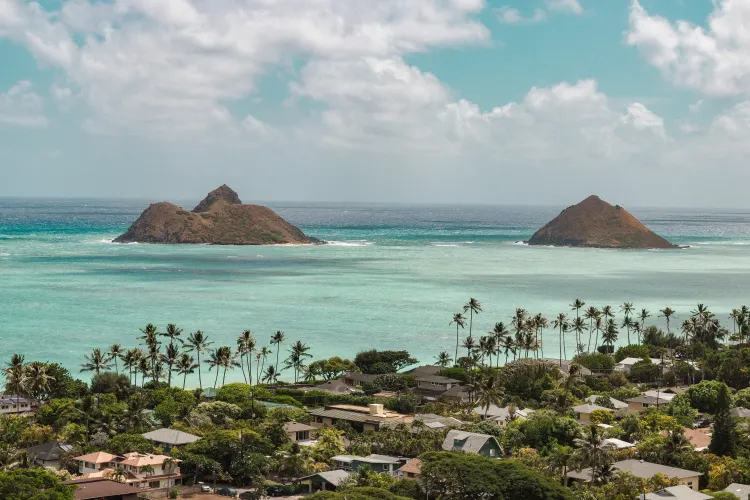
7 Best Things to Do in Waikiki: 2026 Local Guide
18 min readYndira W. Tonin
The best things to do in Waikiki are not the ones the souvenir shops want to sell you. They are learning to surf on the gentlest waves in Hawaii, hiking Diamond Head before the heat, sailing into a sunset, and standing on the beach on a Friday night while fireworks go off for free.
The information here was confirmed for 2026.
Waikiki gets a bad rap from people who want to feel like serious travelers. Too busy, too built up, too many ABC Stores. (There are, at last count, roughly one ABC Store per human being.)
Here is the honest take, Waikiki is touristy because it is genuinely good. Two miles of calm, swimmable beach, beginner surf, a volcanic crater you can hike, sunsets worth applauding, and more food than you could eat in a month, all walkable. Lean into it.
This is a guide to the things actually worth your time, most of them outdoors, several of them free, plus the handful of tourist traps you can skip with a clear conscience.
Table of Contents
01
Waikiki Beach itself
Start with the obvious, because the obvious is excellent.
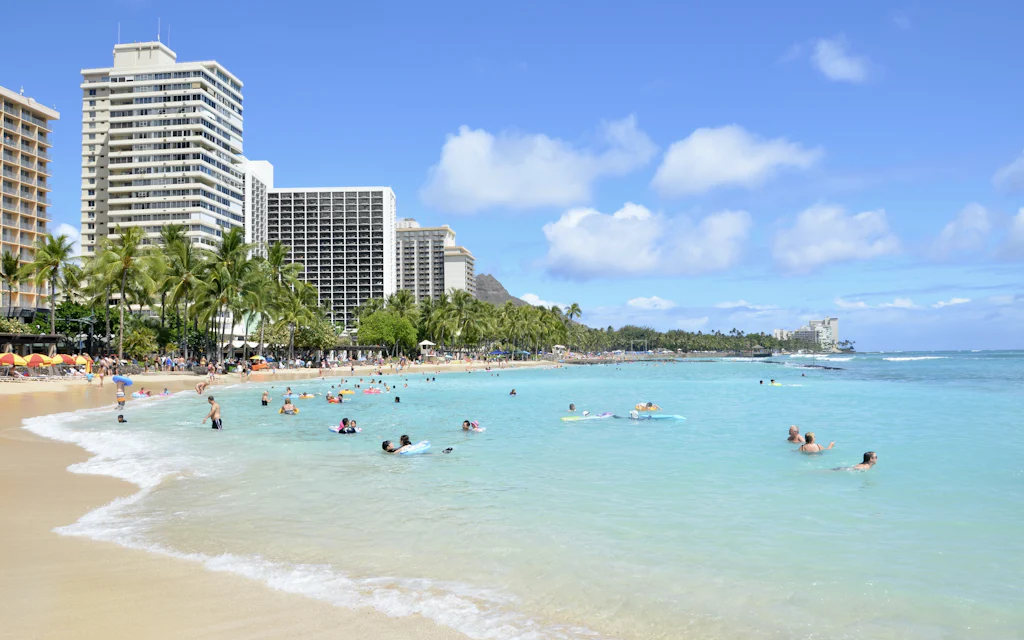
Waikiki Beach is a roughly two mile crescent of soft sand and calm, protected water on the south shore of Oahu, with Diamond Head standing guard at the far end. The reef offshore knocks the swell down, so the water is gentle, warm, and genuinely safe for casual swimmers and kids. It is one stop on our wider beaches in Honolulu guide, alongside Ala Moana and Kaimana.
You can happily spend an entire day here doing very little. Swim, float, rent a beach chair, watch the surfers, and let the afternoon dissolve. It is free, it is beautiful, and it is the reason the whole neighborhood exists.
A few things worth knowing to do it well,
- Go early for space. By midmorning the central beach fills up. The stretch toward Diamond Head (past the Natatorium) is quieter and just as pretty.
- The "wall" by the Kapahulu Groin is where locals and bodyboarders catch the longer rides, and it is great people watching.
- Sunset is a daily event. People literally clap. Stick around for it at least once.
Rent a board, grab a shave ice, or just lie there and recover from your flight. There is no wrong way to use this beach, and you do not need to spend a dollar to enjoy the best of it.
One more reason it works for everyone, the main stretches are lifeguarded, the bottom is soft sand rather than sharp reef, and the gradual slope lets you wade out a long way before it gets deep. It is about as low stress as ocean swimming gets in Hawaii.
Look for the Duke Kahanamoku statue near the center of the beach, usually draped in fresh leis. Duke was the Olympic swimmer who carried surfing to the world, and his statue is the unofficial meeting point, and the most photographed man in Waikiki, by a wide margin.
If you want a wider survey of the island's sand beyond this one strip, our best beaches in Oahu guide covers the quieter corners worth the drive.
02
Learn to surf (or paddle an outrigger)
Waikiki is where modern surfing was reborn, and it is the single best place on the planet to try it for the first time.
The waves here are slow, rolling, and forgiving, long gentle walls that give you time to actually stand up, instead of the fast, dumping beach break that humbles beginners elsewhere. This is the bunny slope of surfing, and that is a compliment.
A beginner surf lesson is genuinely worth it. A good instructor has most first timers standing and riding a wave inside one session, which is the kind of memory that sticks. You will be terrible. You will also be grinning like an idiot. Both are correct.
If surfing feels like too much, the outrigger canoe rides are the underrated move. You paddle out past the break with a steersman, then ride the swell back to shore in a traditional canoe, all the thrill of catching a wave, none of the balance required. It is a blast for families and the surfing averse alike.
Stand up paddleboarding is the third option, calmest of all. Go early, the water off Waikiki is glassiest before about 10am, and it gets choppier and more crowded as the day warms up.
A couple of practical notes before you paddle out. Wear a rash guard or an old t-shirt, an hour lying on a waxed board will sand your stomach raw otherwise, and the glare off the water doubles the sun. Put reef safe sunscreen on before you get wet, not after.
And manage your expectations on the crowd. Waikiki's breaks are popular, so you are sharing the lineup. A lesson usually steers you to the mellower, less trafficked peaks and teaches you the basic etiquette, which is one more quiet argument for booking one rather than winging it.
A small honest note, you do not need the priciest operator or the private lesson. The group lessons on the beach are cheap, fun, and perfectly good. Save the money for shave ice.

Photo by Brian Kairuz on Unsplash
03
Hike Diamond Head at dawn
That volcanic crater at the end of the beach is not just scenery. You can hike it, and you should.
Diamond Head (Leahi (Lēahi)) is a 300,000-year-old crater with a trail to the summit, and the view from the top, Waikiki, the coastline, the whole impossibly blue Pacific, is the postcard everyone comes home with. The hike is about 1.6 miles round trip with roughly 560 feet of climb, some stairs, and an old military tunnel near the top.
It is a moderate effort, not a casual stroll. There are stairs and switchbacks and a couple of points where you will question your life choices, but ordinary, reasonably fit people do it every day. Give it an hour and a half.
Two rules make or break the experience,
- Go at opening, around sunrise. It gets brutally hot and crowded by midmorning, with almost no shade on the trail.
- Reserve in advance. Out of state visitors must book an entry slot and (if driving) a parking slot online, walk-ins are turned away. Check the Diamond Head State Monument page for current rules.
A little context makes the climb more interesting. The crater was a military lookout in the early 1900s, which is why the trail threads through tunnels and concrete bunkers near the top, you finish the hike inside a piece of old fortification before stepping out to the view.
The Hawaiian name, Leahi, is usually translated as "brow of the tuna," for the ridge's profile against the sky. British sailors later named it Diamond Head after mistaking calcite crystals in the rock for gemstones. They were wrong, the rocks were worthless, and the name stuck anyway.
Bring water, wear real shoes, and start early. If you would rather have the history narrated and the logistics handled, a guided Diamond Head tour bundles it with transport from Waikiki.

Photo by AussieActive on Unsplash

Photo by Blake Wisz on Unsplash
04
Catch a sunset (and the Friday fireworks)
Waikiki faces southwest, which means it serves a sunset over the water nearly every single evening, free of charge and without reservation.
The simplest version is the best, park yourself on the sand around 6pm, watch the sky go orange and pink behind the surfers, and join the crowd that applauds when the sun finally drops. It costs nothing and it never gets old. Our best time to visit Hawaii guide has more on the seasons if you are chasing the most dramatic skies.
For something more memorable, a sunset catamaran sail leaves right off the beach. Ninety minutes on the water with a drink in hand, the Honolulu skyline glowing and Diamond Head turning gold, it is the kind of evening people remember for years. The boats are casual and fun, not stuffy.
★4.9(2,336)
Waikiki Sunset Cocktail Sail on the Moana Catamaran
2 hours
Free cancellation
from
$90
And then there is the best kept non secret in Waikiki, the Friday night fireworks. Every Friday, the Hilton Hawaiian Village fires off a fireworks show over the water around 7:45pm, and anyone on the beach can watch for free.
Stake out a spot on the sand near the Hilton end an hour early, bring a towel and a drink, and enjoy a fireworks show on a tropical beach for the price of showing up. It is genuinely one of the best free things to do in Waikiki, and half the visitors never hear about it.
If you would rather watch the sunset with a roof and a cocktail, the beachfront hotel bars all face west, and a mai tai as the sky ignites is a cliché for a reason. You are paying for the view more than the rum, but once a trip it earns its keep. For live music, sunset sails, and the rest of the after dark scene, see our Waikiki nightlife guide.
Keep an eye out for the green flash, too, the brief flare of green that can appear the instant the sun vanishes on a clean horizon. It is real, not a tall tale, and Waikiki's open western view is one of the better places anywhere to try to catch it.
05
Take a day trip to Pearl Harbor
Some things are bigger than a beach day, and this is one of them.
Pearl Harbor sits about a half hour west of Waikiki, and the World War II Valor in the Pacific National Monument is one of the most moving historical sites in the country. The USS Arizona Memorial, built over the sunken battleship that still seeps oil, is quiet, sobering, and unforgettable.
The memorial itself is free, but the boat tickets out to it are timed and famously go fast, reserve well ahead online, or you may not get a slot. There is also the Battleship Missouri, the submarine Bowfin, and the aviation museum if you want a full day of it.
Dress respectfully and budget more time than you think. This is not a quick photo stop. It is a place people leave changed.
If the logistics feel like a lot, a guided Pearl Harbor tour from Waikiki handles the tickets, the timing, and the transport, which removes the single most stressful part of the visit. It pairs well with a loop through downtown Honolulu.
A money saving tip most people miss, the USS Arizona Memorial program is free, and a small batch of timed tickets is released online the day before in addition to the advance ones. If you strike out on a reservation, those are worth setting an alarm for.
Getting there on your own is easy enough, TheBus runs from Waikiki, or it is a short rideshare, but note that bags are not allowed near the memorial, and there is a paid storage counter on site. Travel light and save yourself the detour.
One honest planning note, Pearl Harbor eats a full half day at minimum. Slot it on a day when you are not also trying to surf, hike, and sail. It deserves your undivided attention.
06
Snorkel the reef
The same reef that calms Waikiki's waves also holds fish, and you do not have to go far to meet them.
Right off Waikiki you will find tropical fish in the shallows, but the marquee snorkel spot is Hanauma Bay, a protected marine reserve in a volcanic crater about 20 minutes east, home to 400-plus species of fish, including the absurdly named Hawaii state fish. It needs a reservation and is closed Mondays and Tuesdays, so plan ahead.
A guided snorkeling tour is the easy way to reach the best reefs with gear included, which spares you the rental shop run and the guesswork about where the fish actually are. It is also reassuring if you are a nervous swimmer.
If you would rather stay close, the water by the Waikiki War Memorial Natatorium and along the reef edges holds enough fish to keep a mask and snorkel afternoon interesting. Bring reef safe sunscreen, Hawaii restricts the coral bleaching kind, and the reef thanks you.
Beyond Hanauma, a couple of easy options widen your odds. Sans Souci Beach (locals call it "Kaimana") at the Diamond Head end of Waikiki has a small reef and thinner crowds, and the offshore reef near the Natatorium rewards a patient float.
You will likely share the water with honu, the Hawaiian green sea turtles. They are protected, so admire them, give them a wide berth, and never touch or chase one. The same goes for the monk seals that occasionally haul out on the sand, beautiful, endangered, and strictly hands off.
Go in the morning for the clearest water. By afternoon the wind picks up, the visibility drops, and the fish get harder to spot. This is a recurring theme on Oahu, the ocean is best before lunch.
07
Eat your way down Kalakaua
Waikiki runs on food, and you can eat extraordinarily well here at every price point.
Kalakaua Avenue is the main drag, shops, hotels, street performers, and restaurants stacked end to end. It is busy and a little chaotic and exactly the kind of stroll that defines a Waikiki evening. Walk it at least once after dark with a shave ice in hand.
A quick hit list to eat like you know the place,
- Shave ice, the real thing, fluffy and syrup soaked, ideally with ice cream and sweet azuki beans hidden at the bottom. Non-negotiable.
- Poke, fresh cubed ahi over rice, the perfect cheap beach lunch. Skip the fancy version. A grocery store poke counter often does it best.
- A proper mai tai at sunset, touristy, yes, and worth it once, preferably somewhere with a view of the water.
- Plate lunch and food trucks, two scoops rice, mac salad, and something grilled. Cheap, huge, and deeply satisfying.
For variety in a single stop, the food halls and the revamped International Market Place put a dozen options under one roof, from ramen to local plate lunch, a lifesaver when your group cannot agree on dinner. The craft and farmers markets that pop up through the week are great grazing too.
A gentle reminder, though, some of the best food on Oahu is not in Waikiki at all. A short drive opens up local spots with no ocean view and far kinder prices. But for a stroll and snack evening with your feet near the sand, Kalakaua is genuinely hard to beat.
For a full sit down breakdown of where to eat, from beachfront splurges to local holes in the wall, our best restaurants in Waikiki guide does the heavy lifting.
And if you happen to be celebrating something, this is also the kind of evening that pairs nicely with a private beach setup at the quieter end of the sand, which, as it happens, is what we do. You can see how that works here. For a bride tribe, the bachelorette beach picnic is the same idea built for the whole group at golden hour.
08
Where to stay and how to get around
Waikiki is small, dense, and wonderfully walkable, which makes it one of the easiest places in Hawaii to base yourself.
For lodging, the Waikiki hotels (also on Booking.com) range from beachfront towers with the catamarans pulling up out front to budget friendly blocks a few streets back. A simple rule, the closer to the beach, the higher the price, and a room two blocks inland often costs far less for a three minute walk.
A few honest pointers on staying here,
- You do not need an ocean view room. You will be on the beach, not in the room. Save the money unless the view genuinely matters to you.
- "Resort fees" are real and annoying. Check the all in price before booking, not the headline rate.
- A few blocks inland is the value sweet spot, quieter, cheaper, and still walking distance to everything.
On where exactly to land, the Diamond Head (east) end of Waikiki is quieter, leafier, and more residential, while the central stretch near Kalakaua is louder and right in the action. Pick by whether you want calm or buzz, both are a short walk from the same beach.
On getting around, you genuinely may not need a car. Waikiki is walkable end to end, TheBus and the Biki bike share cover most of the island, and rideshares handle the rest. A car is only worth it if you plan to explore the North Shore or circle the island, and even then, rent it for those days only and skip the nightly hotel parking fee, which is its own small fortune.
The Biki bike share is the quiet local hack worth knowing, cheap stations dotted all over Waikiki and Honolulu, ideal for short hops to dinner or the farmers market without waiting on a ride or feeding a meter.
09
What to skip
Not everything in Waikiki earns your money. The honest list,
The pricey "luau" closest to the hotel zone. The food is often mediocre and the experience canned. If you want a luau, the better ones are a short drive out toward the North Shore or the west side, worth the trip, unlike the parking lot version.
The submarine and most "booze cruise" party boats. Overpriced for what they are. The catamaran sunset sail delivers far more for less.
Buying anything you can get cheaper elsewhere. That ABC Store sunscreen and those souvenir magnets are marked up for convenience. Stock up at a Longs or a Walmart on day one.
Renting a car for your whole stay if you are mostly beaching. It just becomes an expensive thing to park. Rent it for your road trip days only.
The timeshare touts handing out "free" luau tickets along Kalakaua. The ninety minute hard sell presentation attached is never worth the freebie. Smile, say no thanks, keep walking.
None of this means Waikiki is a trap, it means a little discernment goes a long way. Spend on the surf lesson, the sunset sail, and the food. Skip the rest with a clear conscience.
And do not let trap avoidance turn you cynical. Waikiki rewards people who show up open to it, the free fireworks, the clapping sunsets, a kid standing up on a surfboard for the first time. The genuinely good stuff here is mostly cheap or free. Spend on the experiences, not the souvenirs.
For the bigger picture beyond this neighborhood, our things to do on Oahu guide maps out the rest of the island.
FAQ: visiting Waikiki
What are the best things to do in Waikiki?
Swim and surf at Waikiki Beach, hike Diamond Head at sunrise, take a sunset catamaran sail, snorkel at Hanauma Bay, watch the free Friday night fireworks, day trip to Pearl Harbor, and eat your way down Kalakaua Avenue. Most of the best things are outdoors and many are free.
Is Waikiki worth visiting?
Yes. It is touristy precisely because it delivers, two miles of calm, swimmable beach, beginner friendly surf, a hikeable volcanic crater, nightly sunsets, and endless food, all walkable. Lean into it and skip the obvious tourist traps.
How many days do you need in Waikiki?
Three to four days covers Waikiki and its day trips comfortably, a beach and surf day, a Diamond Head sunrise, a Pearl Harbor day, and a sunset sail. Add more if you want to explore the North Shore and the rest of Oahu.
What free things can you do in Waikiki?
Swim and sunbathe on the public beach, watch the nightly sunset, catch the free Friday fireworks off the Hilton Hawaiian Village, stroll Kalakaua Avenue, and watch the surfers and outrigger canoes. The beach itself, the best thing in Waikiki, costs nothing.
Do you need a car in Waikiki?
Not for Waikiki itself, it is walkable, with TheBus, Biki bike share, and rideshares covering the rest. A rental car only pays off if you plan to circle the island or reach the North Shore, and even then it is cheaper to rent it just for those days.
When is the best time to snorkel or surf in Waikiki?
Early morning. The water off Waikiki is calmest and clearest before about 10am, which means better snorkeling visibility and glassier conditions for learning to surf. Afternoons bring wind, chop, and crowds.
Disclosure: Some links on this page are affiliate links. If you book or buy through them we may earn a small commission, at no extra cost to you. As an Amazon Associate, we earn from qualifying purchases.