Best Restaurants in Waikiki (2026): Where to Eat and What to Skip
16 min readYndira W. Tonin
You can eat badly in Waikiki. It takes some effort, there is a tourist trap every fifty feet, ready to charge you resort money for a frozen mai tai and a forgettable plate of fish, but it can absolutely be done. The good news is that the best food here is often the cheapest, and the locals know exactly where it is. So do I, and I am not going to make you guess.
This guide is current as of 2026.
The best restaurants in Waikiki sort into four honest categories, cheap local eats that punch far above their price, beachfront classics you go to for the view as much as the food, a handful of ocean view splurges that actually earn the bill, and the local move, walking a few blocks off the strip, where the same meal costs twenty percent less. Pick one from each and you will eat well all week without taking out a loan.
Table of Contents
- How to eat well in Waikiki
- The cheap eats that punch above their weight
- Breakfast worth the early alarm
- Beachfront classics, order for the view
- The ocean view splurge worth the bill
- Happy hour and sunset drinks
- The local move
- Something sweet
- Late night and quick bites
- What to skip in Waikiki
- When the best table has no roof
- Where to stay for the food
- FAQ, eating in Waikiki
01
How to eat well in Waikiki
Before the where, the how. Five rules locals follow without thinking, and tourists learn the hard way,
- Eat early or eat late. The tourist dinner crush runs from 6 to 8 p.m. Show up at 5 or after 8:30 and the same restaurant has open tables, calmer servers, and, at the beachfront spots, the actual sunset.
- Happy hour is the cheat code. Many of the ocean view places run a happy hour that gets you the same view and a discounted plate. The sunset does not charge more at 4:45 than it does at 6:30.
- Walk off the strip. Prices drop noticeably two or three blocks back from Kalakaua Avenue. Same food, smaller rent, lower check.
- Reserve the fancy ones. The five diamond rooms and the good omakase book out, especially June through August. The plate lunch counters do not take reservations and do not need to.
- The line is a feature. In Hawaii, a long local line at a no frills counter is the single most reliable restaurant review there is. Get in it.
02
The cheap eats that punch above their weight
Here is the part nobody warns you about, some of the best meals you will eat in Waikiki cost less than a cocktail.
- Marugame Udon. Hand pulled udon, cheap, fast, and there is always a line worth standing in (it moves). The tempura is the move.
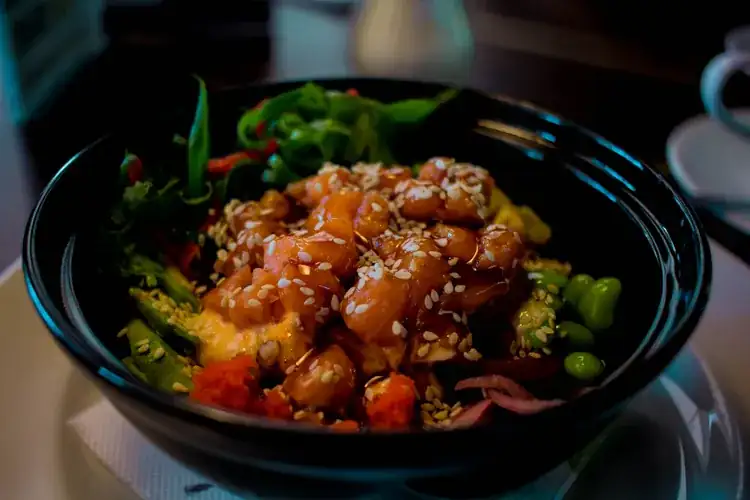
- A poke bowl from a market counter. Skip the sit down "poke restaurants" and get it where locals do, the counter at a grocery store like Foodland or a fish market. Fresher, half the price, and you eat it on the beach.
- Plate lunch. Two scoops rice, mac salad, something grilled. Rainbow Drive-In is the patron saint of the genre, a short hop from Waikiki and worth the trip.
- Spam musubi from a corner store. Do not knock it until you have eaten one warm from the ABC Store at 10 a.m. with sand on your feet.
- Malasadas. Hot Portuguese sugar doughnuts, no hole, no apology. Find the Leonard's truck and thank me later.
- Saimin. Hawaii's own noodle soup, somewhere between ramen and pure comfort food. A steaming bowl is one of the happiest cheap lunches on the island, especially on the rare gray afternoon.
- A musubi shop. The local musubi chains do a fancier, fresher version of the corner store classic, still a few dollars, still better than it has any right to be.
None of these will run you more than about fifteen dollars, and any one of them will outshine a thirty dollar plate on the main drag. That is the whole secret to eating in Waikiki, in one sentence.
Photo by Gonzalo Ruiz via Pexels
03
Breakfast worth the early alarm
Breakfast in Waikiki is its own sport, and the good spots fill up by midmorning.
- Island Vintage Coffee for acai bowls and Kona coffee, get there right at opening or wait behind half of Waikiki.
- Heavenly Island Lifestyle for a sit down local organic breakfast that is worth the short wait.
- Bogart's Cafe near the Diamond Head end, where the locals refuel before the hike.
- Kona Coffee Purveyors for the serious coffee crowd and pastries that have no business being that good.
The rule repeats itself, the earlier you go, the shorter the line and the better your morning.
A couple more worth the alarm, Bogart's Cafe near the Diamond Head end does a hearty local breakfast the regulars swear by, and any ABC Store will hand you a coffee and a musubi at dawn with zero wait if you just need fuel before a sunrise hike.
Whatever you pick, eat before nine if you can, Waikiki breakfast spots go from empty to a forty minute wait in about the length of one podcast episode.
04
Beachfront classics: order for the view
Let us be honest about these places. You are paying for the location, the toes near the sand, sun going down, live ukulele location, and the food is good, not transcendent. That is a fair trade if you order accordingly, fresh fish, a cocktail, and the view. Do not order the steak.
- Duke's Waikiki. The institution, named for Duke Kahanamoku. Touristy, yes, but the beachfront setting and the hula pie dessert earn it. Go for the Barefoot Bar at sunset.
- Hula Grill. Upstairs from Duke's, a little calmer, same view, fresh fish and live music.
- House Without a Key at the Halekulani. The classiest sunset on the strip, live Hawaiian music, a former Miss Hawaii dancing hula under a century old kiawe tree, and a mai tai that is worth its price. This is the one to dress up a notch for.
- Barefoot Beach Cafe at the Diamond Head end, for the same ocean without the white tablecloth.
One ordering tip that saves these meals from disappointment, at any beachfront spot, get the fresh local fish, mahi mahi, ono, ahi, cooked simply, a salad, and a drink. These kitchens are built for volume and a view, not for your once a decade steak. Match your order to the room and you will leave happy.

Photo by Alexandre Canteiro via Pexels
05
The ocean view splurge worth the bill
Some splurges are tourist tax. These are not, if you are going to spend, spend here, and reserve ahead.
- Roy's Waikiki. Roy Yamaguchi helped invent Hawaii Regional Cuisine, and his misoyaki butterfish and melting hot chocolate souffle are the safest big night bet on the island. Read more on Hawaii's regional cuisine if you want the backstory.
- Orchids at the Halekulani. Refined oceanfront dining and a Sunday brunch people plan trips around (reserve weeks ahead in summer).
- 53 By the Sea. A glass walled room over the water with a Diamond Head view that does half the work.
- Hy's Steak House. Old school, dark wood, tableside flambe steakhouse, the anti trend, and all the better for it.
- Sushi Sho. Omakase that local food writers and the Honolulu dining press rank with the best in the country. Book the instant you have dates.
A note on dress code, because people fret about it, Hawaii is casual, even at the top. A clean aloha shirt and closed shoes get you into nearly everything. Nobody is checking for a jacket. Save the suitcase space for sunscreen.
06
Happy hour and sunset drinks
Here is the single best value in Waikiki, and most visitors stroll right past it, happy hour at the ocean view places. The same sunset that costs a small fortune at 7 p.m. is a discounted mai tai at 4:30, and the sky does not know the difference. For what comes after the sundowner, the bars, the live music, the Friday fireworks, see our Waikiki nightlife guide.
A few that locals actually use,
- Duke's Barefoot Bar. Beachfront, loud, and the most fun you will have with a cheap drink in your hand.
- House Without a Key. The classiest sundowner on the strip, live hula thrown in, and worth dressing up a notch for.
- RumFire at the Sheraton, fire pits, an ocean rail, and a deep happy hour list.
- Sky Waikiki for rooftop views, if you would rather look down on the sunset than across it.
The move is simple, post up by 4:30, order off the happy hour menu, and let the sky do the entertaining. You will spend half what the 7 p.m. crowd pays for the exact same horizon, and you will have a table when they are still holding a buzzer.
07
The local move
Want to eat like you live here? Walk away from the beach. The pattern is simple, rent is cheaper three blocks back, and the food gets more honest. Hit the food halls (the International Market Place and Waikiki Food Hall both stack good local vendors under one roof), the grab and go counters, and the spots near the Ala Wai Canal where the staff are speaking to regulars instead of reading a script.
A few worth the short walk, the Stadium / Kapahulu edge of Waikiki, where Rainbow Drive-In, Ono Seafood, and Leonard's malasadas all sit within a few blocks. And the grocery stores themselves, the poke and prepared food counters at a Foodland are a legitimate dinner, eaten on the beach for a third of restaurant prices. For more of this thinking applied to the whole island, our things to do in Oahu guide follows the same rule, the good stuff is usually one block past where the crowd stops.
The same logic applies to timing. The closer you eat to the beach and to 7 p.m., the more you pay for the privilege. Step back a few blocks or an hour and the value quietly reappears.
Locals also lean on the grocery stores harder than visitors expect, a Foodland poke bowl eaten on the sand is a genuinely great Waikiki dinner for about a third of the sit down price.
08
Something sweet
Dessert in Hawaii is its own food group, and you should make room.
- Shave ice. Not a snow cone, fine, fluffy ice with real fruit syrups, and if you are doing it right, ice cream and sweet azuki beans hiding at the bottom. The North Shore's Matsumoto's gets the fame, but plenty of Waikiki spots do it just as well.
- Malasadas, again. I will keep bringing them up until you eat one. Hot, sugar rolled, no filling required.
- Acai and halo halo for the fruit forward crowd, one Brazilian, one Filipino, both built for the heat.
- Hula pie. The macadamia nut ice cream wedge roughly the size of a small child that Duke's built half its reputation on. Order one for the table, not for yourself, unless you are deeply committed and recently broke up with your cardiologist.
Calories do not count past the airport. House rule.
One more, the malasada trucks and local bakeries do a brisk morning trade, so if a line forms before you have even had breakfast, take it as the universe confirming that dessert is also a breakfast food on vacation.
09
Late night and quick bites
Waikiki gets sleepy earlier than a city this size should, so know your late options before you are hungry at 11 p.m. and circling.
- Marugame Udon and the ramen spots run late and cheap, a hot bowl is the perfect after drinks landing.
- The ABC Stores. There is one every block, sometimes two, and they do a respectable musubi, bento, and cold drink at nearly any hour. Do not be a snob about it at midnight.
- Food hall vendors for a fast, good, no reservation bite when the sit down places have stopped seating.
Not glamorous. Extremely useful when the kitchen at your fancy dinner spot closed an hour ago.
A small mercy, the convenience stores never close, so a musubi and cold drink run is always on the table, no matter how early the rest of Waikiki tucks itself in.
And if you are out near the water, the late happy hours at a couple of the oceanfront bars double as a cheap dinner with a view, order the pupus, not the entrees, and you have done it right.
10
What to skip in Waikiki
Somebody should say it,
- The buffet with a guy in an aloha shirt waving you in from the sidewalk. If they have to flag you down, the food is not the draw.
- The $25 main drag mai tai. Two doors down, at happy hour, it is half that and the rum is the same.
- The 90-minute pancake line, unless you genuinely have 90 minutes and a strong opinion about pancakes.
- Dinner at 7 p.m. in July with no reservation. You will spend your vacation standing in a lobby holding a buzzer. See rule one.
- The convenience store sushi as an actual dinner. Fine in a pinch. Not the meal you flew here for. (The poke from that same store, though? Absolutely yes. Hawaii is a strange and wonderful place.)
- Any "luau buffet" with a billboard on Kalakaua. A real luau is a cultural show worth doing, but it happens out of town, not via a sidewalk pitch and a wilting plastic lei.
11
When the best table has no roof
Here is a small heresy for a restaurant guide, sometimes the best dinner in Waikiki is not in a restaurant at all.
If you want the meal to be the event, put it on the water, a sunset dinner sail off Waikiki gets you food, an open bar, and the skyline turning gold, all at once. For the big cultural night out, a luau like the Toa Luau trades the white tablecloth for kalua pig and fire knives.
★4.9(3,583)
Toa Luau at Waimea Valley, Oahu
3 hours
Free cancellation
from
$133
And if it is a proposal, an anniversary, or just a night you want to keep, the best dinner in Waikiki has no roof at all. A private beach picnic at golden hour, set up on the sand at Fort DeRussy with the table facing the Pacific and dinner already waiting, starts at $349 for two and beats any reservation with a view. For a bigger crew, the bachelorette beach picnic scales it up to the whole bride tribe. We are biased, obviously. We are also right.
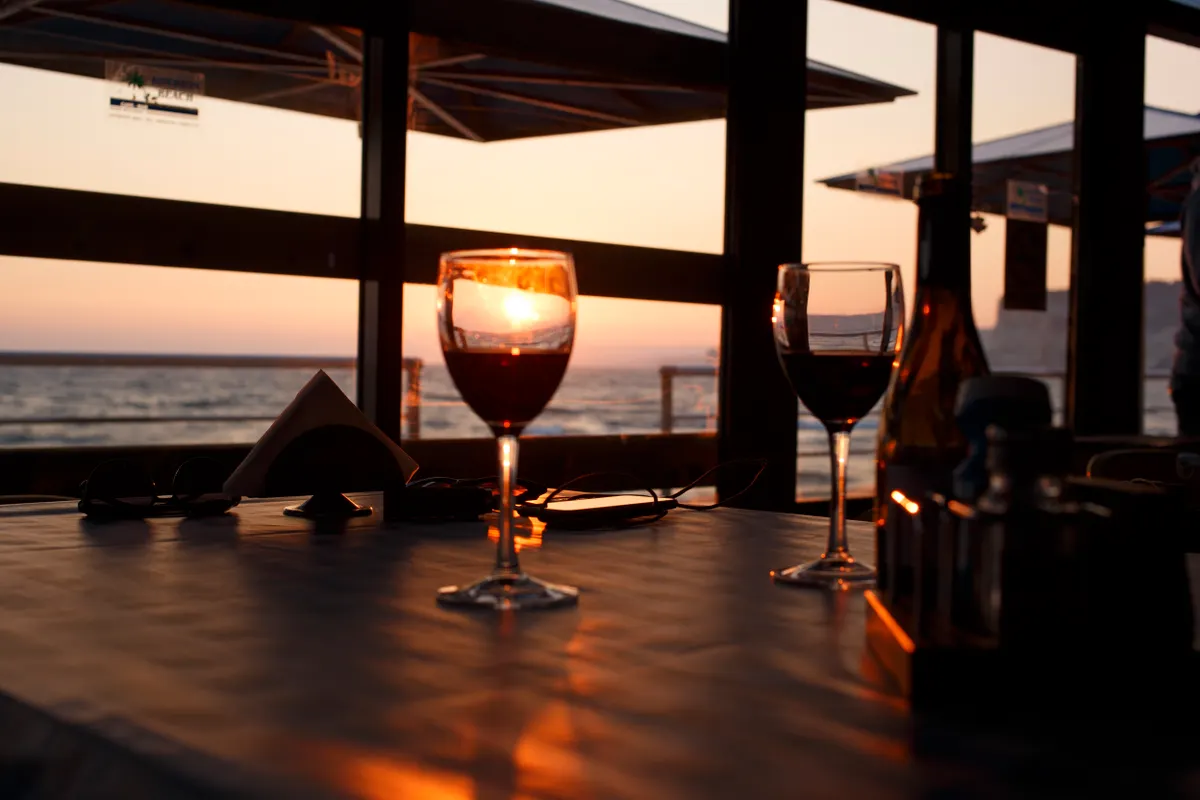
Photo by Milada Vigerova via Pexels
12
Where to stay for the food
If eating well is high on your list, where you sleep matters more than you would think. Stay near the Diamond Head end of Waikiki or a few blocks back from Kalakaua, and you trade a little beachfront strut for quieter streets, lower prices, and a shorter walk to the local spots. Browse Waikiki hotels (also on Booking.com) and you will see the rates drop noticeably the moment you step off the front row, the same trick as the restaurants.
Planning the rest of the trip around the table? Our best time to visit Hawaii guide covers when the island is calmest, and the Oahu sunset guide tells you exactly when to be holding a drink and facing west.
Eat where the locals eat, tip well, and save one dinner for the beach. Waikiki feeds you far better than its reputation suggests, you just have to walk past the first ten places trying hardest to get your attention.
FAQ: eating in Waikiki
How expensive is it to eat in Waikiki?
It is as cheap or as pricey as you want. A poke bowl or plate lunch runs around $12 to $18. A sit down dinner with a drink lands at $40 to $80 a head. And the five diamond rooms climb past $200 a person. The trick is mixing them, counter lunches, one or two nice dinners, rather than eating every meal on the beachfront strip.
Where do locals eat in Waikiki?
A few blocks off Kalakaua Avenue, at the plate lunch counters, the grocery store poke bars, the food halls, and the spots near the Ala Wai Canal. The rule of thumb, the farther from the beach the rent, the more honest the food and the lower the check.
What is the best restaurant in Waikiki with a view?
For sunset and atmosphere, House Without a Key at the Halekulani is the classic. For a glass walled fine dining room over the water, 53 By the Sea. For toes near the sand casual, Duke's Waikiki at the Barefoot Bar.
What food is Hawaii known for?
Poke, plate lunch, spam musubi, shave ice, malasadas, kalua pig, and loco moco, most of it casual, cheap, and best from a counter or a truck rather than a dining room. Hawaii Regional Cuisine is the upscale, chef driven version of the same local ingredients.
Do you need reservations for Waikiki restaurants?
For the fine dining rooms and good omakase, yes, book ahead, especially June through August. For the beachfront casual spots, a reservation helps at peak dinner time but is not essential if you eat early or late. The counters and food halls never need one.
What is the best cheap food in Waikiki?
Poke bowls from a grocery counter, plate lunch from a spot like Rainbow Drive-In, udon at Marugame, and a musubi from any ABC Store, all under about $18, and better than most of what you would pay triple for on the main drag.
What is the best time to eat dinner in Waikiki?
Before 6 p.m. or after 8:30. The tourist crush runs from 6 to 8, so eating on either side of it gets you open tables, calmer service, and, at the beachfront spots, timed right, the sunset itself.
Eating beyond the strip? The island wide best places to eat in Oahu guide runs Kapahulu to Kahuku.
Disclosure: Some links on this page are affiliate links. If you book or buy through them we may earn a small commission, at no extra cost to you. As an Amazon Associate, we earn from qualifying purchases.