Lulumahu Falls Oahu: The Bamboo-Forest Waterfall Hike Worth the Mud
21 min readYndira W. Tonin
Lulumahu Falls is a roughly 2.5-mile round trip hike through a bamboo forest and dripping jungle just off the Pali Highway, ending at a slender 50-foot waterfall that runs all year. It takes about two hours, costs $2.50 for the permit you are technically supposed to have, and it will ruin at least one pair of shoes. That last part is not a risk. It is the plan.
Everything here was checked and is current as of 2026.
Let me say the quiet part first, the Lulumahu Falls hike on Oahu is mud. Glorious, ankle deep, character building mud.
People will tell you it is "a little muddy" the way they will tell you a chihuahua is "a little anxious."
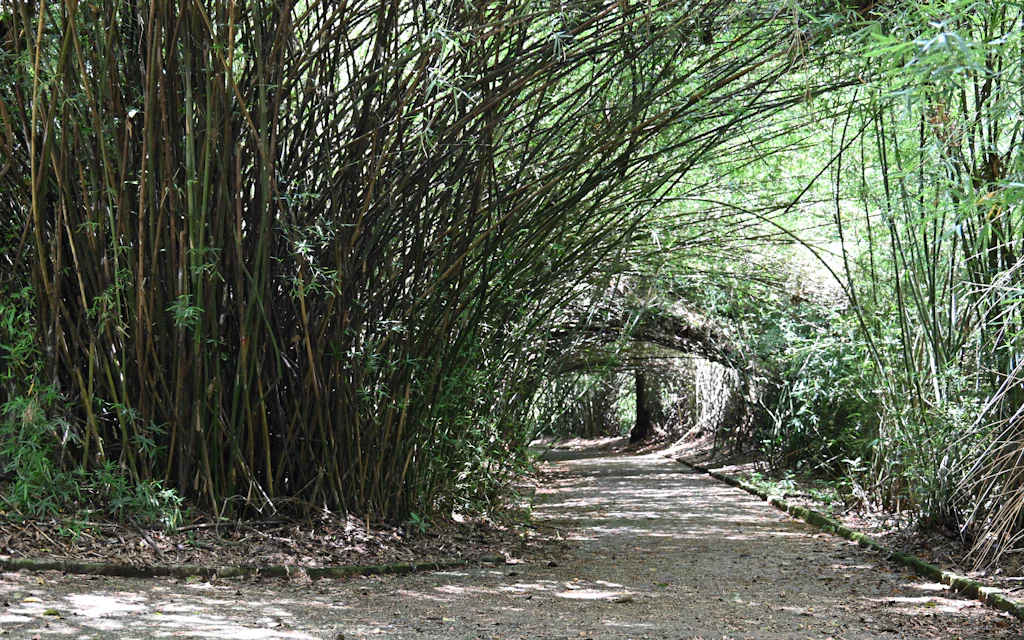
But it is also one of the prettiest short hikes near Honolulu, a hidden waterfall tucked into the back of Nuuanu (Nuʻuanu) Valley, reached through a stand of bamboo so dense it feels like a hallway. You walk past an old reservoir, cross a stream a few times, follow ribbons tied to branches by strangers, and pop out at a waterfall most tourists never find because it is not signed and is not easy.
This guide covers all of it, the permit nobody talks about, where to park (and why you should empty your car), the trail step by step, what to wear, when to go, whether you can swim, and who should honestly just skip it and do an easier waterfall instead. I will tell you that part too. It is free advice and it is the most useful thing here.
Getting to Lulumahu Falls
Tap to open Google Maps with turn-by-turn directions.
Table of contents
- What Lulumahu Falls actually is
- Do you need a permit to hike Lulumahu Falls?
- How to get there and where to park
- The Lulumahu Falls trail, step by step
- How hard is it, and how long does it take?
- What to wear and pack (the mud manifesto)
- The best time to hike Lulumahu Falls
- Can you swim? And the safety talk
- A little history under the mud
- How Lulumahu compares to Oahu's other waterfall hikes
- Where to stay and how to make a day of it
- Lulumahu Falls FAQ
01
What Lulumahu Falls actually is
Lulumahu Falls is a waterfall at the back of Nuuanu Valley, on the Honolulu side of the Koolau (Koʻolau) mountains, about 15 minutes from downtown and maybe 25 from Waikiki. On a map you will often see it listed as "Lulumahu Falls, Honolulu, HI," which is technically correct and emotionally misleading, because nothing about the trail feels like a city.
The waterfall itself is tall and thin, roughly 50 feet, falling into a shallow pool ringed by mossy black rock. It is not the biggest fall on the island. It is not even the biggest fall in this valley. What makes it special is the walk in, the bamboo, the reservoir, the stream, and the genuine little thrill of reaching something that is not on every tour bus's clipboard.
Here is the honest pitch. Lulumahu is the "I want to feel like I found something" hike.
It is not a paved nature stroll with a handrail and a snack bar. It is an unmarked, unmaintained route on watershed land where you follow your gut and other people's ribbons. That is exactly why some hikers love it and others spend two hours quietly furious about their socks.
If you want a waterfall with zero ambiguity, the Manoa Falls trail is right next door and far more straightforward. If you want a sense of adventure and do not mind looking like you lost a fight with a swamp, Lulumahu is your hike. Lulumahu Falls in Hawaii rewards the second type of person.
I am, regrettably, the second type of person.

Photo by Robert Chen on Unsplash
02
Do you need a permit to hike Lulumahu Falls?
Yes. And almost nobody gets one.
Lulumahu sits on land managed by the state and the Honolulu Board of Water Supply, it is a watershed, the kind of place where your drinking water comes from, which is why it is not a maintained public park. To hike it legally you need a Na Ala Hele trail permit, which you buy online through the state's Hawaii Trails system. It costs $2.50. The state releases a limited number of permits per day, and you can usually grab one a day or two before you go.
Two dollars and fifty cents. Less than a malasada. There is no good reason to skip it.
And yet the trailhead is full of people who did, which I mention not to wag a finger but because the permit is the single most skipped, least expensive piece of this entire hike. It takes five minutes on your phone. It keeps you on the right side of the rules. It funds the trail system. Just do it.
A few honest notes on the permit situation,
- It is cheap, not free. The $2.50 is a processing fee. You will get a confirmation to show if anyone asks.
- Rules change. Watershed access on Oahu has tightened over the years, and trails have closed before. Check the current status the week you go rather than trusting a blog from 2019 (including, eventually, this one).
- No permit, no sympathy. If access closes or you get turned around, that is the deal with hiking on land that exists to keep a city in clean water.
This is the part of the post where the brochure would get vague. I will not, get the permit, respect the watershed, and do not be the reason the gate gets locked for everyone.
03
How to get there and where to park
The trailhead is on the Pali Highway (Route 61), heading from Honolulu toward Kailua, near the turnoff for Nuuanu Pali Drive. There is a dirt pull off and a small lot by the old Nuuanu reservoir. If you are driving up from town, it comes up fast on the right, overshoot it and you are committed to a scenic detour to the windward side, which, fine, the Nuuanu Pali Lookout is five minutes further and worth a stop anyway.
Now the unglamorous truth, this is a known break in spot.
I will say it plainly, because every honest local will, treat the Lulumahu trailhead like a high crime parking lot for theft. Not because the trail is dangerous, because an empty rental car with a suitcase in the back is the easiest target in Hawaii, and thieves know exactly which lots fill with tourists.
So, the rules that actually matter,
- Leave nothing visible. Leave nothing valuable, period. Not in the trunk, not under the seat, not "hidden" in the glovebox.
- Take your passport, your laptop, your camera bag with you or leave them at the hotel.
- Do not leave the beach bag as a decoy. They will break a window to check.
No bus route gets you here cleanly, so most people drive or take a rideshare. If you would rather skip the parking gamble entirely and let someone else handle the logistics, an Oahu circle island day tour hits the big windward sights with a driver, though it will not take you down this particular muddy rabbit hole. Lulumahu is a do it yourself affair.
04
The Lulumahu Falls trail, step by step
Here is where Lulumahu earns its reputation. The trail is unmarked. There is no tidy sequence of signs counting down the distance. There is a forest, your judgment, and a confetti of pink and orange ribbons tied to branches by hikers who went before you.
Roughly, it goes like this.
The bamboo. From the pull off you slip past a barrier and into a bamboo forest almost immediately. It is the best part, tall green stalks knocking together in the wind, light coming down in slices, the whole thing looking like a screensaver that smells like wet earth. Stay right at the early splits and aim for the old service road.
The reservoir and the open field. The bamboo opens into a clearing near the Nuuanu reservoir, with the old dam and a grassy stretch. This is the easiest place to lose the trail, because open ground has no obvious path. Look for the ribbons and the worn dirt heading toward the back of the valley and the mountains.
The stream crossings. You will meet the stream and cross it a few times on rocks. After rain this is where dry feet go to die. The rocks are slick, the water moves, and the "obvious" crossing is rarely the smart one, slow down, pick your line, and use your hands on the bigger boulders.
The final scramble. The last stretch narrows, climbs over roots and rock, and gets genuinely muddy and tight before the valley walls close in and you hear it. Then the bamboo and ferns part, and there is the waterfall, thin, tall, falling into that quiet little pool.
It is the kind of payoff that makes you forget, briefly, that your shoes are now a different color than when you started.
★4.6(231)
Oahu: Manoa Falls Rainforest Self-Guided Hike
3.5 hours
Free cancellation
from
$53
If reading "unmarked" and "follow the ribbons" made your stomach drop, that is useful information about yourself. The self guided Manoa Falls option above is the low stress alternative, a clear, popular trail to a taller waterfall, with none of the navigational improv.

Photo by Peter Thomas on Unsplash
05
How hard is it, and how long does it take?
Lulumahu Falls is rated moderate, and that rating is doing some quiet, polite lying.
The numbers are gentle, about 2.5 miles round trip and a few hundred feet of elevation gain. On paper that is an easy morning. The distance is not the problem. The footing is the problem. Mud, slick stream rocks, roots, and a route you have to actually navigate add up to something harder than the mileage suggests.
Most people finish it in about two hours, give or take. Add time if,
- It is rained recently and the mud is at full strength.
- You stop a lot for photos (you will).
- Anyone in your group is uneasy on slippery rocks.
- You lose the trail in the open field and have to backtrack (also common, no shame in it).
Who'll be fine, anyone reasonably fit who is comfortable picking their way over uneven, muddy ground and does not panic when a "path" turns into a suggestion.
Who'll struggle, small kids, anyone with balance or knee trouble, and anyone hoping for a clean, casual stroll. If that is you, point yourself at an easier waterfall, there is a whole list of Oahu hikes that do not require a change of clothes, and I will happily talk you into one. Telling you when not to do something is more useful than cheerleading you into a bad morning.
This is not a death defying trail. It is a low drama hike with high drama footing, and the people who get hurt here mostly do it by rushing the wet rocks. Slow is smooth. Smooth is dry. Well, drier.
06
What to wear and pack (the mud manifesto)
Let us talk about your shoes, because they are about to make a sacrifice.
Wear closed toe shoes you genuinely do not care about. Trail runners or old sneakers with real tread, or sturdy water shoes if you have got them. Hiking boots work, but they will come home heavier and browner. Flip flops are a comedy choice, you will lose one in the mud and spend ten minutes excavating it like a tiny archaeological dig.
Here is the honest packing list for Lulumahu,
- Shoes you have made peace with. Closed toe, grippy, doomed.
- A full change of clothes in the car (in a bag, out of sight, see the break in section). Future you, caked to the knee, will weep with gratitude.
- Water. It is humid jungle. You will sweat more than the short distance suggests.
- Bug spray. The mosquitoes back here treat fresh tourists like a buffet.
- A small dry bag or zip lock for your phone, because you are crossing water and one slip ends your photo career for the trip.
- A microfiber towel and maybe sandals to change into so you do not drive back to Waikiki with mud cement drying on your legs.
Everything you would pack for a wet, warm trail lives in our broader Hawaii packing list, but the one line version for this hike is, assume you will fall at least once, and dress for the version of you that did.
Leave the cotton at home if you can. Once it is wet and muddy it stays wet and muddy, and you will feel like you are wearing a heavy, sad blanket for the back half of the hike.

Photo by Kellen Riggin on Unsplash
07
The best time to hike Lulumahu Falls
Go early, go on a weekday, and go when it has not poured for three days straight.
Mornings are best for three reasons, the small lot fills up, the heat is friendlier, and you will have the bamboo and the falls closer to yourself before the midmorning crowd arrives. A weekday morning is the sweet spot. A Saturday at 11 a.m. is the trailhead at its busiest and the trail at its most conga line.
Now, the weather, which is the whole game on a muddy hike.
The good news, unlike a lot of Oahu waterfalls, Lulumahu runs year round. It does not need a recent storm to flow, so you are not gambling on whether there will be any water when you arrive. There almost always is.
Season matters less here than it does for a beach day. Oahu's wetter months run roughly November through March, and Nuuanu Valley catches more than its share of mountain rain in any season, it is that green for a reason. So rather than picking a month, pick a window, check the forecast for the few days before your hike and look for a dry ish run, not just a single clear morning after a soggy week. The trail holds water like a sponge and drains slowly, so yesterday's storm is still underfoot today.
The catch, rain makes the trail meaner. Heavy recent rain turns the mud deeper, the stream higher and faster, and the rocks slicker, and a swollen stream in a narrow valley is exactly when you should turn around. A little drizzle is part of the rainforest charm. A few days of heavy rain is a reason to pick a different morning.
Is today a Lulumahu Falls day?
Green light, go earlyOur pick
- Best for
- A dry-ish stretch with no heavy rain the last day or two, a weekday morning before the small lot fills, closed-toe shoes you don't love, and a $2.50 permit already on your phone
- The catch
- It's still a muddy, unmarked trail — follow the ribbons, take everything valuable out of the car, and bring a friend
Yellow light, go slow or wait
- Best for
- Light drizzle, a damp trail, a crowded mid-morning lot, or anyone in the group nervous on slick stream rocks
- The catch
- The mud deepens and the crossings turn slippery fast — slow down on the rocks or save it for a drier day
Red light, pick another hike
- Best for
- Days of heavy rain, a roaring or risen stream, flash-flood weather upstream, small kids, or fading daylight
- The catch
- A swollen stream in a narrow valley is exactly when people get hurt — do Manoa Falls or Waimea Valley instead
If you are still deciding when to come to the island at all, our guide to the best time to visit Hawaii breaks down the seasons. For Lulumahu specifically, just aim for a dry ish stretch and an early start, any month of the year.
08
Can you swim? And the safety talk
Technically you can wade into the shallow pool at the base. Should you fully swim and dunk your head? I would skip it, and here is the unfun reason.
Fresh water in Hawaii can carry leptospirosis, a bacterial infection spread through water contaminated by animal urine. It gets in through cuts, your eyes, your nose, or your mouth, and it can make you genuinely, ruin your vacation sick. The state's Department of Health warns against it for exactly the kind of stream and pool you find on this hike. If you have got an open scrape, and after those rocks you might, that is an extra reason to keep your head dry.
So treat the pool as a place to cool your feet and take the photo, not a swimming hole.
A few more honest safety notes,
- Flash floods are the real hazard. Narrow valley, lots of rain higher up the mountain. If the stream is roaring or the sky upstream looks angry, do not cross, turn around.
- The rocks are the other hazard. Most Lulumahu injuries are slips on wet stone, not anything dramatic. Hands on boulders, slow on crossings.
- Do not hike it solo your first time. An unmarked trail plus nobody knowing where you are is a bad combination. Bring a friend, or at least tell someone your plan.
- Watch the light. This is a "leave plenty of daylight" hike, not a sunset hike. You do not want to be navigating ribbons in the dark.
None of this is meant to scare you off. It is the same advice I would give before Sacred Falls, which, unlike Lulumahu, is genuinely closed and has been for decades for tragic reasons. Lulumahu is doable and lovely. It just rewards respect over bravado.
09
A little history under the mud
The mud has a backstory, and it is a good one.
You are hiking through Nuuanu Valley, one of the most historically loaded patches of ground on Oahu. This is the same valley that climbs to the Pali, where the 1795 Battle of Nuuanu helped Kamehameha I unite the islands. You are walking the green, watery heart of all that.
That reservoir and dam you pass are not just scenery, either. Nuuanu's streams have been dammed and tapped for generations to help supply Honolulu with water, which is the whole reason this is protected watershed land and not a paved attraction. The "inconvenience" of the unmarked trail and the permit is the flip side of a valley that quietly keeps a city hydrated.
There are also old ruins deeper in the valley, the remains of Kaniakapupu (Kaniakapūpū), a summer retreat of King Kamehameha III from the 1840s, where Hawaiian royalty once hosted thousands at a single luau. It is a sacred, fragile site, not a photo backdrop, and it is not on the Lulumahu route proper, so do not go hunting for it. Mentioning it here mostly to underline the point, you are a guest in a place that mattered long before it had a trailhead.
Even the name carries the valley's character. Nuuanu is often translated as "cool heights," which is exactly what it is, a breezy, misty notch in the mountains that is a few degrees cooler and a lot wetter than the beach you drove up from. The bamboo, the moss, the year round trickle of the falls, none of that is an accident, it is what "cool heights" looks like in practice.
Knowing all that does not make the stream crossings any drier. But it does turn the walk from "muddy slog to a waterfall" into "muddy slog through living Hawaiian history to a waterfall," which is a meaningful upgrade for the price of one paragraph.
10
How Lulumahu compares to Oahu's other waterfall hikes
Lulumahu is one of several waterfall hikes packed into this corner of Oahu, and picking the right one for your group saves a lot of grief. Here is the honest comparison.
Lulumahu Falls, the adventurous middle child. Year round flow, gorgeous bamboo, a real sense of discovery, and enough mud and route finding to make it feel earned. Best for confident, low fuss hikers who want a tiny bit of challenge.
Manoa Falls, the easy crowd pleaser. A clear, popular, well trodden trail to a taller 150-foot fall, 15 minutes from Waikiki. Still muddy (it is a rainforest), but no navigation roulette. Best for first timers, families, and anyone who wants the waterfall without the orienteering.
Waimea Valley (North Shore), the one where you can actually swim. A paved, accessible path through botanical gardens to a waterfall with lifeguards and a designated swimming area. It is a paid attraction, not a wild hike, and it pairs beautifully with a North Shore beaches day.
Sacred Falls, do not. It is closed, and has been since a deadly 1999 rockfall. We cover why Sacred Falls is closed so you can cross it off cleanly and stop seeing it on outdated lists.
If you want a guide and a clean trail rather than ribbons and improvisation, a self guided or guided Oahu hiking tour takes the navigation off your plate, handy if it is your first Hawaii hike and you would rather not test your wayfinding instincts on day two of the trip.
The short version, Lulumahu for adventure, Manoa for ease, Waimea for swimming, Sacred Falls for never.
11
Where to stay and how to make a day of it
Most people hike Lulumahu from a base in Honolulu or Waikiki, which is the sensible move, you are 20-odd minutes away, close to coffee for before and a shower for after. If you have not booked yet, scan hotels in the Waikiki area for something walkable to the beach. You will be glad to rinse off somewhere nice after a morning in the mud.
To build a genuinely good half day around Lulumahu,
- Hike early while it is cool and the lot's open.
- Change clothes at the car (out of sight) and drive five minutes up to the Nuuanu Pali Lookout for the giant windward view while you are already up here.
- Reward yourself back in town with a plate lunch or shave ice. You earned the calories with your calves.
You can also chain it with another nearby stop without much driving. The lookout, the windward beaches over the Pali, and the Nuuanu Valley sights all sit within a short hop of each other, so a muddy 8 a.m. waterfall can become a full, satisfying half day if you plan the loop instead of driving back and forth across the island. Just save the swimming for the ocean, not the stream.
And here is the one soft plug, then I will leave you alone, if your idea of a perfect Oahu day skews more toward "clean, dry, and styled" than "knee deep in a watershed," a beach picnic setup is the exact opposite end of the spectrum, no mud, no ribbons, someone else hauls the gear. Some trips want the adventure hike. Some want the towel already laid out. Both are correct.
Either way, Lulumahu Falls will still be back there in Nuuanu Valley, quietly falling into its little pool, ready to claim your shoes whenever you are.
Bring the bug spray. Bring a friend. Bring shoes you can say goodbye to.
12
Lulumahu Falls FAQ
Do you need a permit for Lulumahu Falls?
Yes. Lulumahu is on protected watershed land, and you are supposed to buy a Na Ala Hele trail permit through the state's Hawaii Trails website before you go. It costs $2.50, the state releases a limited number per day, and it takes about five minutes on your phone. Plenty of hikers skip it, but there is no good reason to, it is cheaper than a coffee and keeps you on the right side of the rules.
How long is the Lulumahu Falls hike?
It is roughly 2.5 miles round trip with a few hundred feet of elevation gain, and most people finish in about two hours. The distance is easy. The mud, stream crossings, and unmarked route are what slow you down. Add time after recent rain or if you stop a lot for photos.
Is the Lulumahu Falls trail hard?
It is rated moderate, but the footing makes it feel harder than the short distance suggests. Expect deep mud, slick stream rocks, and an unmarked trail you navigate by following ribbons. Fit hikers comfortable on uneven ground will be fine. Small kids and anyone with knee or balance trouble should pick an easier waterfall like Manoa Falls instead.
Can you swim at Lulumahu Falls?
You can wade into the shallow pool, but full swimming is not a great idea. Hawaii's fresh water can carry leptospirosis, a bacterial infection, so the Department of Health advises against submerging, especially with any open cuts, which you might have after the rocks. Cool your feet, take the photo, and keep your head dry.
Is Lulumahu Falls worth it?
If you like a sense of adventure and do not mind getting muddy, yes, the bamboo forest and hidden waterfall are genuinely lovely and far quieter than the tour bus stops. If you want a clean, clearly marked, low effort waterfall, you will be happier at Manoa Falls or Waimea Valley. Lulumahu rewards the explorer type, not the casual stroller.
When is the best time to hike Lulumahu Falls?
Early on a weekday, during a dry ish stretch of weather. Mornings beat the small lot filling up and the midday heat, and weekdays are far less crowded. The falls flow year round, so any month works, just avoid going right after several days of heavy rain, when the mud deepens and the stream can flood.
Is the Lulumahu Falls parking lot safe?
The hike is fine. The parking is the actual risk. The dirt lot off the Pali Highway is a known spot for vehicle break ins targeting tourists. Do not leave anything visible or valuable in the car, take your passport, electronics, and camera bag with you, or leave them at your hotel. A broken window is a far worse souvenir than muddy shoes.
Disclosure: Some links on this page are affiliate links. If you book or buy through them we may earn a small commission, at no extra cost to you. As an Amazon Associate, we earn from qualifying purchases.


