Manoa Falls: Hiking the Rainforest Trail in Honolulu, Oahu
16 min readYndira W. Tonin
Manoa Falls is a 1.6-mile round trip rainforest hike to a 150-foot waterfall, tucked in a green valley about 20 minutes from Waikiki. It is the easiest jungle hike on Oahu, and the closest thing to walking onto a movie set without leaving Honolulu.
All of this was last checked in 2026.
That is not a figure of speech. The valley has stood in for the jungles of "Jurassic Park" and "Lost," and once you are under the canopy of bamboo, banyan, and dripping ferns, you understand why.
Here is the honest pitch, it is short, it is shady, it is family friendly, and it ends at a tall, thin waterfall spilling down a mossy cliff. The catch is that it is almost always muddy, often raining, and you absolutely cannot swim at the end.
This guide covers all of it, the hike itself, where to park, when to go, what to wear, the no swimming rule that surprises people, and whether it is worth your time at all.
Getting to Manoa Falls
Tap to open Google Maps with turn-by-turn directions.
Table of Contents
01
Manoa Falls at a glance
If you only read one section, read this one. Here is the whole hike in numbers.
- Distance: about 1.6 miles round trip, out and back, no loop.
- Time: roughly 1 to 2 hours, depending on how muddy it is and how long you linger.
- Elevation gain: modest, around 600 feet over the course of the walk, with no brutal climbs.
- Difficulty: easy to moderate. The challenge is mud and slick roots, not distance or steepness.
- The payoff: a 150-foot waterfall dropping down a sheer, fern covered rock face.
- Location: the back of Manoa Valley, about 20 minutes by car from Waikiki.
It is genuinely one of the most accessible "real" hikes on the island. Kids do it, grandparents do it, people in entirely the wrong shoes do it (and regret the shoes).
What it is not is a wilderness expedition. The trail is well trodden and easy to follow, you are never far from other people, and you can be back at the beach by lunch. Think of it as a rainforest stroll with a waterfall at the end, not a summit push.
To put those numbers in context, this is a fraction of the effort of Oahu's bigger name hikes. Diamond Head is hotter and more exposed, the Koko Head stairs are a brutal stairmaster, and the Lanikai pillboxes bake in full sun. Manoa is the gentle, shaded, anyone can do it option, which is exactly why it lands on so many first time itineraries.
The numbers also tell you how to budget your day. Two hours door to door from Waikiki, including the drive, is realistic, which means the hike fits comfortably into a morning with a beach afternoon to follow.
That accessibility is exactly the appeal. You get a genuine slice of Hawaiian rainforest, the real, dripping, green, prehistoric kind, for an hour of easy walking a short drive from the city.
02
What the hike is actually like
The trail starts gently and stays that way, which is half the reason it is so popular.
You begin on a wide, well marked path that climbs slowly into the valley. Almost immediately the canopy closes overhead and the temperature drops a few degrees, you have stepped out of sunny Honolulu and into a cool, green, humid world.
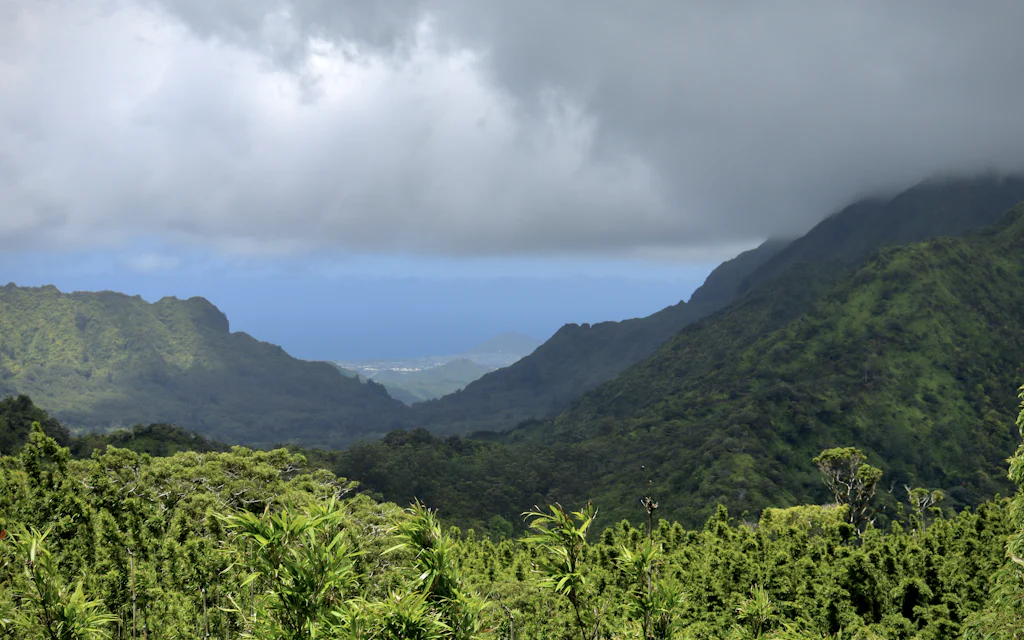
The scenery does the heavy lifting. You pass towering stands of bamboo that creak and click in the wind, enormous banyan and Albizia trees, giant elephant ear plants, and ferns the size of umbrellas. It is green to the point of feeling staged, which is precisely why film crews keep showing up.
Underfoot is the catch. Manoa Valley is one of the wettest places on Oahu, so the trail is famously, reliably muddy, slick red dirt, exposed roots, and the occasional rock hop across a trickle of stream. It is not dangerous, but it is messy, and good footing matters.
After 45 minutes or so of easy climbing, the trees open and there it is, a thin ribbon of water falling 150 feet down a dark, mossy cliff into a small pool. After heavy rain it roars. In a dry spell it can thin to a trickle, so set expectations by the recent weather.
A railing and signs keep you a short distance back from the pool, and that distance is not optional, more on why below. Take your photos, soak in the cool spray, and turn back the way you came. The walk out is the same easy path, downhill this time.

Photo by Josh Smith on Unsplash
03
Getting there and parking
Manoa Falls sits at the very back of Manoa Valley, a green residential neighborhood about 20 minutes inland from Waikiki. The drive itself is pretty, winding up past old homes and into the trees.
You have two parking options, and the choice is about money versus a short walk,
- The trailhead lot ($7 per car). There is a paid lot right at the start of the trail, open 8am to 6pm. It is the convenient option, park, and you are at the trailhead.
- Free street parking. You can park for free along lower Manoa Road or Woodlawn Drive and walk the rest of the way in (roughly 10 minutes). It saves the fee if you do not mind the stroll, but respect the residential signs and driveways.
If you do not have a car, a rideshare from Waikiki is straightforward and not expensive, and it drops you right at the trailhead, a reasonable move given the short hike and the parking fee. There is no bus that gets you all the way to the trail.
If you would rather have the transport and the logistics handled, a guided option folds the trailhead, the parking, and the route into one booking, which some visitors prefer over sorting out the drive and the lot themselves.
★4.6(231)
Oahu: Manoa Falls Rainforest Self-Guided Hike
3.5 hours
Free cancellation
from
$53
However you arrive, give yourself a little buffer. The lot fills on sunny weekend mornings, and the last thing you want is to circle for parking when you could already be under the bamboo.
04
When to go
Timing matters more here than on most easy hikes, for one reason, water, in two different forms.
Go in the morning. Early means cooler air, easier parking, fewer crowds on a narrow trail, and the best light filtering through the canopy. By midday on a weekend, the trail can feel like a slow moving line.
Mind the rain, but do not fear it. Manoa Valley is genuinely one of the wettest spots on Oahu. Brief showers are common year round, which is exactly why it is so green and why the waterfall flows at all. A little rain is part of the experience and nothing to cancel over.
That said, avoid the trail during or right after heavy rain. The mud goes from annoying to treacherous, the stream crossings swell, and flash flooding and falling rocks become real risks in a narrow valley. If a storm just dumped, give it a day.
The waterfall itself is a trade off with the weather. After good rain it is a thundering 150-foot column. In a dry stretch it can shrink to a thin trickle. There is no controlling this, but checking the recent rainfall sets your expectations honestly.
If you can swing a weekday, do. Weekend mornings draw the biggest crowds and the fullest lot, while a Tuesday at opening can feel almost private under the canopy. Either way, first thing in the morning is the sweet spot for light, parking, and quiet.
One more weather quirk, the valley runs its own little microclimate. It can be bright and dry in Waikiki and lightly misting in Manoa at the same moment, which catches a lot of visitors off guard. Pack the rain layer even on a blue sky morning.
The trail is open and hikeable year round, with no real "season." Hawaii's mild climate means the rainforest looks much the same in January as in July, green, dripping, and alive. Our best time to visit Hawaii guide covers the broader seasons if you are planning the whole trip.
05
What to wear and bring
This is a short hike, so the packing list is short too, but a couple of items genuinely make or break the experience.
The single most important choice is footwear. Wear closed toe shoes you do not mind ruining. The mud is relentless and slick, and people in flip flops or white sneakers spend the whole hike either slipping or mourning their shoes. Trail runners or old sneakers with grip are perfect.
A quick packing list for the trail,
- Mosquito repellent. The valley is damp and shaded, and the mosquitoes are enthusiastic. This is the item people most often forget and most regret forgetting.
- A light rain layer. A packable jacket handles the frequent passing showers without weighing you down.
- Water. It is short, but it is humid. A bottle each is plenty.
- A small towel. For mud, spray, and wiping off before you get back in the car.
You do not need hiking poles, a big pack, or technical gear, this is an hour in the woods, not a backcountry trek. Keep it light and keep your hands free for the muddy bits.
A note for families, the trail is doable with kids who can walk it themselves, but it is not stroller friendly, the mud, roots, and rock hops make wheels a non starter. A child carrier works far better than anything you have to push.
And plan for the aftermath. You will come out muddier than you expect, so a plastic bag for dirty shoes, a towel for the car seats, and low expectations for your socks will save you some grumbling on the drive back.
One thing worth leaving behind, anything you would hate to drop in the mud. Phones come out for photos at the falls, of course, but the trail is slippery, so a strap or a secure pocket beats juggling your camera the whole way.
06
Why you cannot swim at the falls
Here is the part that surprises people, and it is important, you cannot swim in the pool at the base of Manoa Falls. There are barriers and signs, and both are there for good reasons.
The first is leptospirosis, a bacterial infection found in many of Hawaii's freshwater streams, spread through animal urine in the water. It causes flu like symptoms and, untreated, can become genuinely serious. The Hawaii Department of Health warns against entering freshwater with cuts or for extended dips, and the Manoa pool is exactly the kind of still freshwater where the risk concentrates.
The second is falling rock. The cliff the waterfall pours over is loose and prone to rockfall and small landslides, especially after rain. The pool sits directly in the drop zone, which is why the barrier keeps you back from the base, not just out of the water.
So this is a look but do not touch waterfall. That disappoints visitors expecting a swimming hole finale, so it is worth knowing before you go, the reward here is the rainforest and the view of the falls, not a dip at the bottom.
You will, unfortunately, see people hop the barrier for a photo or a quick dip anyway. Do not be one of them. Beyond the bacteria and the rockfall, it is both prohibited and disrespectful to a place that is actively trying to protect visitors from itself.
The good news is you lose very little by following the rule. The waterfall is most photogenic from where the barrier puts you anyway, and the cool spray reaches you without wading into questionable water.
If a freshwater swim is high on your list, you will find better and safer options elsewhere on the island. But for a short, scenic, family friendly walk to a dramatic waterfall, Manoa delivers, you just admire this one from a respectful distance.

Photo by Florian GIORGIO on Unsplash
07
Make a day of it in Manoa Valley
The hike itself only takes an hour or two, so it pairs nicely with a few things right in the same green valley.
Right next to the trailhead is the Lyon Arboretum, a 200-acre University of Hawaii botanical garden threaded with gentle paths through tropical plants, with its own small waterfall. It is quieter than the main trail and a lovely, shaded add-on for plant lovers, a natural companion to our Hawaii flowers guide.
Manoa Valley also has a low key local charm worth a few minutes, old plantation era homes, the University of Hawaii campus nearby, and a couple of unfussy spots for a coffee or a plate lunch on the way back down toward town.
Because Manoa is so close to the city, it slots easily into a broader Honolulu day. Many visitors pair the morning hike with an afternoon at the beach, or with the rest of the sights in our things to do on Oahu guide and things to do in Waikiki guide.
If you want to stretch the morning further, the broader University of Hawaii area and the Manoa Marketplace have casual local eats, shave ice, poke, a plate lunch, that make an easy, unfussy lunch on the way back to the coast.
It is also a short hop from here to the museums and gardens of central Honolulu, so culture minded visitors can fold the hike into a fuller day in town rather than treating it as an out and back errand. The valley's nearness to everything is its quiet superpower.
And since a rainforest morning works up an appetite for a slow afternoon, this is the kind of day that ends well on the sand. If you are marking a special occasion, a private beach picnic is what we set up on Oahu, you can see how that works here, though the falls themselves ask nothing of you but a muddy pair of shoes.
08
Is Manoa Falls worth it?
Short answer, yes, for most people, with clear eyes about what it is.
It is worth it if you want a genuine taste of Hawaiian rainforest without a hard hike, if you are traveling with kids or mixed fitness levels, if you love green scenery and dramatic photos, or if you simply have a half day in Honolulu and want to get into the green.
It is less worth it if you are chasing a swimmable waterfall (you cannot), if you need pristine solitude (it is popular), or if you visited right after a storm turned the trail into a mud pit. On those days, adjust or wait.
And if Manoa leaves you wanting something wilder, the nearby Lulumahu Falls hike in Nuuanu (Nuʻuanu) Valley is its muddier, unmarked cousin, a bamboo forest route you navigate by ribbons, with a permit and a real sense of discovery. The famous Sacred Falls farther along the windward coast, by contrast, has been officially closed for years after a deadly rockfall, one to read about, not hike. Same island, more adventure, browner shoes.
The honest framing is this, Manoa Falls is not the most spectacular waterfall in Hawaii, and it is not a wilderness adventure. What it is, is the easiest way to stand inside a real rainforest and look up at a 150-foot waterfall, twenty minutes from your hotel.
One last bit of perspective. Part of what makes Manoa special is not the waterfall at all, it is the speed of the transition. In twenty minutes you go from a high rise beach resort to standing under a prehistoric canopy with water dripping off ferns the size of you. That you can have both in a single morning is very Oahu.
For that, accessible, close, genuinely beautiful, it earns its spot on nearly every Oahu itinerary. Bring the bug spray, wear the bad shoes, go in the morning, and enjoy the jungle.
Where to stay: compare Oahu hotels on Booking.com or on Expedia to find your base.
FAQ: hiking Manoa Falls
How long is the Manoa Falls hike?
About 1.6 miles round trip, taking most people 1 to 2 hours including time at the waterfall. It is an out and back trail with modest elevation gain, rated easy to moderate, the main challenge is mud, not distance or steepness.
Can you swim at Manoa Falls?
No. Swimming is prohibited at the pool beneath the falls, for two reasons, the risk of leptospirosis, a bacterial infection found in Hawaii's freshwater streams, and the danger of falling rock from the cliff above. Barriers and signs keep visitors back from the base.
How much does it cost to park at Manoa Falls?
The trailhead parking lot costs $7 per car and is open 8am to 6pm. You can also park free along lower Manoa Road or Woodlawn Drive and walk about 10 minutes to the trailhead, as long as you respect the residential parking signs.
Is Manoa Falls hard to hike?
No, it is one of the easiest real hikes on Oahu and suitable for families and beginners. The trail is short and not steep, but it is frequently muddy and slippery, so closed toe shoes with grip and care on the roots and rocks are important.
How do you get to Manoa Falls from Waikiki?
It is about a 20-minute drive inland into Manoa Valley. Driving or a rideshare are easiest, since no public bus reaches the trailhead. A guided tour that includes transport is another option if you would rather not arrange the drive and parking yourself.
Is Manoa Falls worth visiting?
For most people, yes. It offers an easy, close, genuinely beautiful rainforest hike to a 150-foot waterfall just 20 minutes from Waikiki. Set expectations, you cannot swim, it gets muddy, and it is popular, and it is one of the most rewarding short hikes on Oahu.
Disclosure: Some links on this page are affiliate links. If you book or buy through them we may earn a small commission, at no extra cost to you. As an Amazon Associate, we earn from qualifying purchases.


