Whale Watching Maui 2026: Season, Best Spots, and Tips
18 min readYndira W. Tonin
Maui is the whale watching capital of Hawaii, and in winter it is one of the best places on Earth to see humpback whales. Each year, thousands of humpbacks migrate from Alaska to the warm, shallow waters around Maui to mate, give birth, and raise their calves, and they gather here in greater numbers than anywhere else in the islands. From December through April you can watch them breach, slap, and spout, whether from a boat in the channel or simply from a beach.
All of this was last checked in 2026.
The reason is geography, the protected, shallow basin between Maui, Lanai, Molokai, and Kahoolawe (Kahoʻolawe), and especially the Auau (ʻAuʻau) Channel, is a perfect nursery, calm and safe for newborn calves. That concentration is why Maui, more than any other island, is synonymous with whale season. And if you visit outside those months, the Maui Ocean Center runs a 3D humpback film year round, the dry, guaranteed version when the real ones are back in Alaska.
This guide covers everything you need, when whale season runs and when it peaks, where to see whales by boat and for free from shore, what behaviors you will witness, the federal rules that protect the whales, and how to plan the best possible whale watching day. If you are still picking dates, our best time to visit Maui guide covers the whole calendar.
Table of contents
- Why Maui is the whale capital of Hawaii
- When is whale season on Maui?
- Where to see whales on Maui
- Whale watching from shore (for free)
- Whale watching boat tours
- What you will see, humpback behavior
- The 100-yard rule and protecting the whales
- Tips for the best whale watching
- Getting there and where to stay
- FAQ
01
Why Maui is the whale capital of Hawaii
Every winter, the North Pacific humpback whale population, thousands of animals, makes one of the longest migrations of any mammal, swimming roughly 3,000 miles from their summer feeding grounds in Alaska to Hawaii. And a huge share of them come to Maui.
The draw is the water itself. The shallow, sheltered basin known as Maui Nui, the waters connecting Maui, Lanai, Molokai, and Kahoolawe, is warm, calm, and protected, exactly what a humpback needs to give birth and nurse a vulnerable newborn calf. The Auau Channel, the slim stretch between Maui and Lanai, is the heart of it, holding the densest concentration of humpbacks in all of Hawaii.
These waters are so important that they are protected as the Hawaiian Islands Humpback Whale National Marine Sanctuary, headquartered on Maui. The whales do not feed much while they are here, they live off their fat reserves, so the entire season is about breeding, birthing, and raising calves before the long swim back north.
The numbers are staggering. An estimated 10,000 or more humpbacks, a large share of the entire North Pacific population, visit Hawaiian waters each season, and Maui Nui hosts the biggest gathering. At the peak, it is genuinely hard to look at the channel for long without seeing a spout or a splash somewhere on the horizon. These are not small animals, either, an adult humpback runs 40 to 50 feet long and up to 40 tons, with pectoral fins a third of its body length, so even a distant breach is visible to the naked eye.
For visitors, the upshot is simple, come to Maui in winter and you are almost guaranteed to see whales, often dozens in a single outing, and frequently without even leaving the shore.

Photo by Jonathan Gagnon on Unsplash
02
When is whale season on Maui?
Whale season on Maui runs roughly December through April, and it peaks hard in the middle of that window.
The first scouts usually appear in November, numbers build through December, and the peak is January through March, when the channel is thick with whales and the sightings, breaches, whale song, mother and calf pairs, and competitive "heat runs" of males chasing females, are at their most spectacular. Many locals and naturalists name February as the single best month, with the highest concentration of whales in Maui's waters. By April the numbers thin as the whales begin heading back to Alaska, and a few stragglers linger into May.
So if whale watching is a priority, plan your Maui trip for January, February, or March. That said, anytime from mid December through March delivers excellent odds. If you are weighing a broader trip, our guide to the best time to visit Hawaii folds whale season into the wider picture of weather, crowds, and prices.
There is a nice rhythm to the season worth knowing. December is building and already good, with the bonus of holiday season energy. January brings serious numbers. February is the crescendo, often with the most whales and the most dramatic surface activity. And March stays excellent while thinning slightly. By April you will still see whales, including late mother and calf pairs lingering before the journey north, but the crowds of both whales and tourists ease, which some people prefer. There is really no bad time within the season. It is a question of peak intensity versus a quieter, still rewarding experience.
Outside those months, roughly May through October, the humpbacks are gone, feeding in Alaska, so summer visitors will not see them. Whale watching is firmly a winter experience in Hawaii.
03
Where to see whales on Maui
The whales gather along Maui's calmer, leeward south and west coasts, which happen to be where most visitors stay, so you are rarely far from a sighting.
How should you whale watch on Maui?
Boat tour from Lahaina or MaalaeaOur pick
- Best for
- The classic up-close experience, with a naturalist, hydrophone whale song, and the best odds of a close encounter
- The catch
- Book ahead in peak season; the channel can get choppy
Sunset whale sail
- Best for
- Whales plus a Maui sunset and a drink in hand — the romantic, two-for-one option
- The catch
- Lower light for photos and a bit less prime viewing time
From shore (free)
- Best for
- Watching breaches from a beach or clifftop like Papawai Point — no boat, no cost, no seasickness
- The catch
- Whales are farther off; bring binoculars and patience
Raft or Zodiac
- Best for
- A fast, low-to-the-water small-boat ride that gets you thrillingly close to the action
- The catch
- Bumpy and wet — not for bad backs or nervous stomachs
The prime areas are the protected waters off South Maui (Kihei, Wailea, and Maalaea (Maʻalaea) Bay) and West Maui (Lahaina and Kaanapali (Kāʻanapali)), all fronting the whale rich Auau Channel. (Note that the historic town of Lahaina was badly affected by the 2023 wildfire. The harbor and whale watching operations have been part of the area's recovery, so check current details when you book.) Maalaea and Lahaina are the main harbors that whale watching boats depart from, putting you right at the channel. From land, the coastal stretches of Wailea, Kaanapali, and the pali (cliffs) along the Honoapiilani (Honoapiʻilani) Highway between Maalaea and Lahaina offer superb vantage points.
It helps to understand the lay of the water. The whales favor this side of the island precisely because it is leeward, sheltered from the trade winds by the bulk of Haleakala and the West Maui Mountains, so the channel here is calmer and clearer than the windward coasts. That same calm is why nearly all the resorts, harbors, and beaches cluster on the south and west shores, which conveniently puts visitors and whales in the same protected waters.
Wherever you are on these coasts in winter, get in the habit of scanning the horizon for a spout, the puff of misty breath a whale exhales at the surface, or the splash of a breach. Once you spot one, you will start seeing them everywhere. The next two sections break down the two main ways to watch, from shore for free, and by boat.
04
Whale watching from shore (for free)
Here is the one strong opinion in this guide, and it is good news for your wallet, you do not need to pay for a boat to see whales on Maui. In peak season, the shore viewing is genuinely excellent.
From roughly January through March, humpbacks come close enough to land that you can watch them breach, slap their fins, and spout from beaches, resorts, and clifftop pullouts, for free. The best known land spot is the Papawai Point lookout on the Honoapiilani Highway, a dedicated whale watching overlook right on the channel, but any south- or west facing perch works, the beaches of Wailea and Kaanapali, the Maalaea shoreline, even your own resort lanai.
Bring binoculars, settle in during the early morning or late afternoon when the light and the water are kindest, and give it ten or fifteen minutes, patience is rewarded with spouts, tail slaps, and, if you are lucky, a full breach. It is one of the great free experiences in Hawaii.
A simple trick makes shore watching even better, look for the knots of parked cars and people with binoculars along the highway pullouts, locals and repeat visitors know the spots, and a small crowd staring at the water is a reliable sign whales are putting on a show. Many oceanfront restaurants and resort lounges on the south and west coasts also double as effortless whale watching perches, so you can sip a coffee or a mai tai and scan the channel at the same time.
That said, a boat gets you closer and adds a naturalist and whale song, so plenty of people do both, a free shore session most days, and one splurge boat trip for the up close magic. If you are on a tight budget, though, know that the shore alone will not disappoint, some of the best breaches people see all trip happen, unannounced, while they are just standing on a beach.

Photo by Mike Doherty on Unsplash
05
Whale watching boat tours
For the closest, most immersive experience, a boat tour into the channel is hard to beat, and Maui has more of them, of every style, than anywhere in Hawaii.
Tours leave from Lahaina and Maalaea harbors and range from large, stable catamarans with naturalists and snack bars to small, fast rafts that get low and close to the water. The best ones carry a naturalist guide and a hydrophone, so you can listen to the eerie, beautiful songs the male humpbacks sing beneath you, an experience the shore cannot offer. A Maui whale watching cruise from Lahaina puts you right in the heart of the Auau Channel during peak season.
★4.9(2,754)
Maui Eco-Raft Tour: Eye-Level Whale or Dolphin Watching - Lahaina
2 hours
Free cancellation
from
$85
A few choices to consider, morning trips generally have the calmest water and best light. sunset sails trade some viewing time for a romantic two for one of whales and a Maui sunset. And small rafts get you thrillingly close but are bumpy and wet. Many operators offer a whale sighting guarantee in peak season, if you do not see a whale, you sail again free, which tells you how reliable the sightings are. Book ahead in February, when boats fill up.
A worthwhile option to look for is a trip run by or benefiting a research or conservation group, such as the Pacific Whale Foundation, where the naturalist commentary is especially good and part of your fare supports whale research. Whichever you pick, dress in layers (it is cooler and breezier on the water than on the beach), bring sun protection and a hat that will not blow off, and put your camera on a strap. And temper the expectations of anyone aboard hoping to pet a whale, this is wild animal viewing on the whales' terms, which is exactly what makes the close moments feel earned.
06
What you will see: humpback behavior
Part of what makes Maui's whales so thrilling is how active they are at the surface, these are big, dramatic animals doing big, dramatic things.
The behaviors to watch for,
- Spouts, the misty exhale at the surface, usually the first sign of a whale and visible from far off.
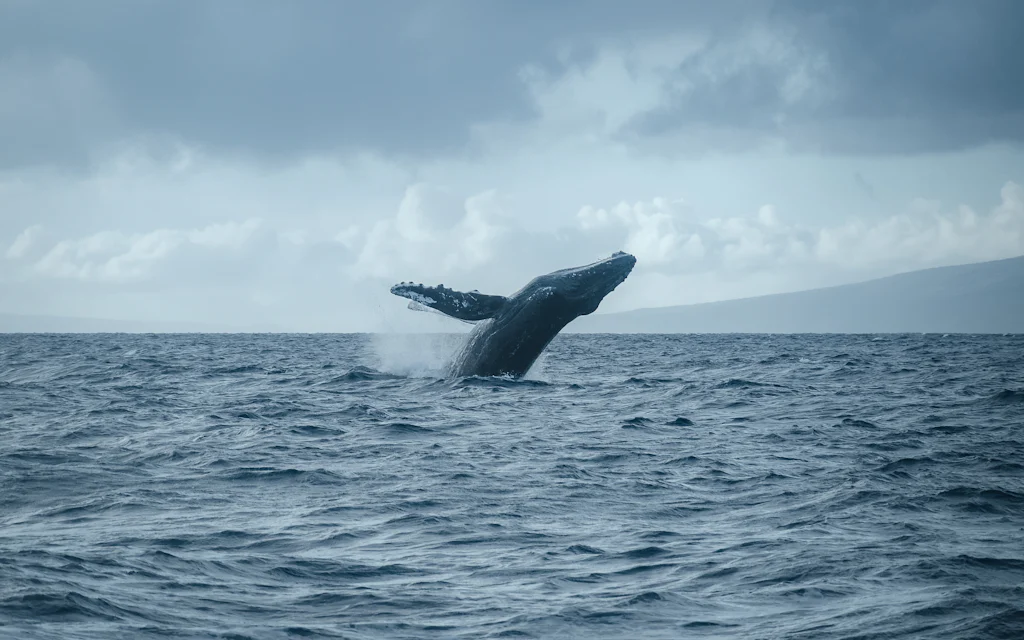
- Breaching, the showstopper, when a 40-ton whale hurls most of its body out of the water and crashes back down.
- Pec slaps and tail slaps, slapping a long pectoral fin or the tail (fluke) on the surface, possibly to communicate.
- Fluke up dives, the tail rising gracefully as a whale dives deep.
- Spy hopping, poking the head vertically out of the water to look around.
- Mother and calf pairs, a newborn calf swimming close to its mother, one of the season's most touching sights.
You may also witness a competition pod (or "heat run"), a fast, churning chase of several males jostling to escort a female, the most action packed thing you can see out there. Humpbacks are also the singers of the whale world, and from a boat with a hydrophone, hearing their song is unforgettable.
A word on whale song, because it is one of the wonders of the season, only the males sing, producing long, complex, eerily musical sequences that can last many minutes and carry for miles underwater. All the males in a region sing the same evolving "song," and exactly why they do it, courtship, competition, navigation, is still debated by scientists. On a calm day you can sometimes hear it faintly through the hull of a quiet boat even without a hydrophone. It is a humbling reminder that the channel you are floating on is alive with sound you will never fully decode.
07
The 100-yard rule and protecting the whales
The whales are federally protected, and there is one rule every visitor and boat must follow, keep your distance.
By law, you must stay at least 100 yards (about the length of a football field) away from humpback whales in Hawaiian waters, whether you are on a boat, a kayak, a paddleboard, or swimming. Boat operators know this and will cut their engines and let whales approach on the whales' terms. You should never chase, encircle, or try to swim with them. The rule exists because these waters are a protected sanctuary and the whales are here to do the vital, vulnerable work of birthing and nursing.
Curiously, the whales themselves have not read the rule, and a curious calf or adult will sometimes approach a boat well within 100 yards, which is allowed, as long as the boat stays still and lets it happen. Those unplanned close encounters, on the whale's initiative, are often the most magical moments of all. Follow the sanctuary's guidance, keep your distance, and let the whales come to you.
The distance rule applies to everyone on the water, not just tour boats, that includes kayakers, stand up paddleboarders, surfers, and swimmers, who must give whales the same 100 yards. Drones, too, have their own restrictions near whales. It is worth taking seriously, harassment of these animals carries real penalties, and beyond the law, a mother and calf resting in the shallows have crossed an ocean to be here and deserve the space to do it undisturbed. Responsible viewing is part of why the humpback population has recovered so well since commercial whaling nearly wiped it out.
08
Tips for the best whale watching
A few simple things separate a great whale watching outing from a frustrating one.
- Go in peak season. January through March, with February often the best, stacks the odds massively in your favor.
- Mornings are best on the water. The wind picks up and the channel chops up as the day goes on, so morning boat trips are calmer and clearer.
- Bring binoculars for shore viewing, and a camera with a zoom, whales are unpredictable, so keep it ready.
- Take seasickness precautions if you are prone to it. The channel can be bumpy, and medication works best taken before you board.
- Scan for spouts. Train your eye to catch the puff of mist at the surface. It is usually the first and most common sign.
- Be patient and quiet. Give it time, and let the whales surface on their own schedule.
- Bring layers and motion sickness remedies even if you "never get seasick." The open channel is a different animal from a calm harbor, and being cold or queasy can ruin an otherwise great trip.
Do those, and a Maui winter delivers some of the most reliable, spectacular whale watching anywhere on the planet.
One more reframe worth holding onto, whale watching rewards a relaxed, unhurried mindset more than a checklist mentality. The best sessions happen when you settle in, keep your eyes on the water, and let the ocean surprise you, rather than anxiously willing a breach to happen on cue. Treat it as time spent with wild animals in their world, and the spectacular moments, when they come, feel like gifts.
09
Getting there and where to stay
Whale watching shapes where a winter Maui trip is best based, and happily the prime areas are also the most popular places to stay.
South Maui (Kihei and Wailea) and West Maui (Lahaina and Kaanapali) both front the whale rich channel and host the harbors the boats leave from, so either coast puts you in the thick of the season. Wake up in a Wailea or Kaanapali resort in February and you may well spot whales from your lanai before breakfast. Maalaea, in the center, is the most central harbor for boats. You can compare Maui hotels on Expedia (also on Booking.com) across the south and west coasts to base near the channel.
A full disclosure, since we are an Oahu company, we run beach picnics on Oahu, not Maui, so we have no stake in where you stay there, but our guides to the best of Maui, the Maui map, and Maui's best beaches lay out the coasts and help you plan. Whales also visit the other islands, our whale watching on Oahu guide covers that side, but Maui is the undisputed capital.
It is worth noting that whale season overlaps with Maui's high tourist season (winter and the holidays), so flights, hotels, and rental cars are at their priciest and busiest exactly when the whales are here, book well ahead, and weigh a late March or April trip if you want strong whale activity with slightly thinner crowds and prices. The whales are the one thing winter does better than summer in Hawaii, which for many travelers is reason enough to brave the peak season rates.
However you do it, a Maui winter and a sky full of breaching humpbacks is one of Hawaii's great natural spectacles, come between December and April, keep your distance, and let the whales put on the show.
FAQ
When is the best time for whale watching on Maui?
Whale season on Maui runs from December through April, and peaks from January through March, with February often the single best month for the highest number of whales. Sightings are excellent anytime from mid December through March. Outside those months, the humpbacks are feeding in Alaska and are not in Hawaii.
Can you see whales from shore on Maui?
Yes, easily, in peak season. From January through March, humpbacks come close enough to land that you can watch them breach and spout for free from beaches and lookouts. The Papawai Point overlook on the Honoapiilani Highway is a famous spot, and the shores of Wailea, Kaanapali, and Maalaea are all excellent. Bring binoculars.
Where do whale watching boats leave from on Maui?
Most whale watching tours depart from Lahaina Harbor in West Maui and Maalaea Harbor in central/South Maui, both right on the whale rich Auau Channel. Options range from large catamarans with naturalists and hydrophones to small, fast rafts, and many offer a whale sighting guarantee during peak season.
How close can you get to whales on Maui?
By law, boats and people must stay at least 100 yards (about a football field) from humpback whales in Hawaii. Boats cut their engines and let whales approach on their own terms. The whales themselves sometimes choose to come closer to a stationary boat, which is allowed and often the most memorable part of a trip.
Why are there so many whales around Maui?
The shallow, sheltered, warm waters of Maui Nui, the basin between Maui, Lanai, Molokai, and Kahoolawe, especially the Auau Channel, are an ideal nursery for humpbacks to mate, give birth, and nurse their calves. That protected geography draws the densest concentration of humpback whales in Hawaii each winter.
Do you need a boat to see whales on Maui?
No. In peak season the shore viewing is excellent and free, you can watch breaches from beaches, resorts, and clifftop lookouts with binoculars. A boat tour gets you closer and adds a naturalist and whale song, so many visitors do both, but you can have a wonderful whale watching trip without ever leaving land.
How long is a Maui whale watching tour?
Most boat tours run about two to three hours, enough time to reach the channel and spend a good while with the whales. Sunset sails and some specialty trips vary. In peak season many operators run multiple departures a day, with calmer morning trips generally offering the best water and light.
What other marine life can you see on a Maui whale tour?
Plenty, even on a slow whale day. Spinner and spotted dolphins are common, green sea turtles surface near the boats, and you might spot pilot whales, false killer whales, or a Hawaiian monk seal. The winter channel is busy, so a whale tour is really a whale tour with a marine life bonus.
Disclosure: Some links on this page are affiliate links. If you book or buy through them we may earn a small commission, at no extra cost to you. As an Amazon Associate, we earn from qualifying purchases.


