Best Time to Visit Maui: An Honest 2026 Local's Guide
20 min readYndira W. Tonin
The best time to visit Maui is April to May or September to early October - the shoulder weeks when the weather is already summer, the water is calm, the crowds have thinned, and hotel rates fall back to something a mortal can pay. That is the short answer. The honest one comes with a catch, and the catch is the whole point of this guide: on Maui, the side of the island you pick matters more than the month you pick.
Maui runs on two gentle seasons and they are both warm, so anyone who tells you there's a wrong month to visit is quietly selling you a package. What exists is a wrong week for your trip. Show up in February hoping to snorkel glassy water, or in July expecting an empty beach, and the island will correct you politely.
This guide covers it the way a local would. The best months overall, a quick window picker for whatever you came to do, Maui month by month, the weather truth about the dry side versus the wet side, the crowds and the cheapest time to go, and how the season changes the two headliners - the Haleakala (Haleakalā) sunrise and the Road to Hana (Hāna). Prices, rules, and dates are current as of June 2026.
It's written for first timers picking dates off a calendar and for repeat visitors trying to dodge the rush. One note on us: we run beach picnics on Oahu, not Maui, so there's no tour here we're quietly steering you toward - just the straight read on when to come.
Table of Contents
- The best time to visit Maui, in one honest answer
- The best time to visit Maui for each activity
- Maui weather and ocean conditions, coast by coast
- Maui month by month
- Whale watching season: time your trip around it
- Crowds, prices, and the cheapest time to visit Maui
- Timing Haleakala sunrise and the Road to Hana
- Maui events worth planning around
- Visiting Maui responsibly in 2026
- FAQ: best time to visit Maui
01
The best time to visit Maui, in one honest answer
April through May and September through early October are the best time to visit Maui. You get summer's weather without summer's crowds or its prices: warm, mostly dry days, calm enough water on both coasts, and resort rates that drop 20 to 30 percent off the winter and midsummer peaks. If you only remember one window, remember those two.
Why those months and not the famous ones? Maui's two busy seasons are winter (whales plus the holiday crowd) and summer (families on school break). The shoulder weeks sit in the gaps - the weather has usually already turned, but the planes and the parking lots have not filled back up. September especially is the locals' quiet secret: still beach warm, suddenly empty, and the cheapest week of the year that isn't a holiday. For most visitors these are the best times to travel, the windows when a Maui vacation lands warm, calm, and affordable all at once.
The flip side is honest too. Those shoulder weeks are not whale season, so if humpbacks are the dream, you'll be trading thin crowds for a winter trip. And "best overall" still loses to "best for the one thing you came to do" - which is exactly the next section. Pick your headline experience first, then let it choose your month.
Best time to visit Maui, month by month
- Jan
- Feb
- Mar
- Apr
- May
- Jun
- Jul
- Aug
- Sep
- Oct
- Nov
- Dec
- The sweet spot (Apr-May, Sep-Oct) — Summer weather without the summer crowds or prices - the best all-round weeks to visit Maui.
- Peak season (late Dec-Feb, Jun-Aug) — Whales and holidays pack the winter; families pack the summer. Warmest water, biggest crowds, highest rates.
- Shoulder edges (Mar, Nov) — March still has whales and spring-break crowds; November is quiet and cheap as the wet season settles in.
The strip above is the whole year at a glance: green is the sweet spot, black is peak, and the two indigo edges are the shoulder months that swing either way. Build the rest of your planning around it. And if you want the wider view, our best time to visit Hawaii guide zooms out to all the islands.

Photo: Luke Scarpino on Unsplash
02
The best time to visit Maui for each activity
Here's the part most calendars skip: the best time to visit Maui depends entirely on what you came for. A honeymoon, a snorkeling trip, and a whale watching trip have three separate ideal months, and chasing all of those activities at once is how you end up underwhelmed in the middle. Pick the headliner, then the window picks itself.
The quick version: come December through March for whales, May through September for the calmest snorkeling and warmest water, and April-May or September-October for the best all round balance of weather, crowds, and price. Hikers want the drier spring and fall; budget travelers want September; honeymooners want either shoulder, minus spring break.
Which Maui window fits your trip?
WhalesDec-Mar
Mid-December through March, peak in February. The humpbacks fill the Auau Channel and you can spot them from the beach.
Snorkeling and calm waterMay-Sep
May through September. Summer flattens the north swell, so the west bays and Molokini run their clearest and warmest.
Fewest crowdsSep
September, then late April and May. School is back in, the summer families have gone home, and the beaches breathe again.
Lowest pricesCheapest
September and early December before the holiday rush. Summer-warm weather at off-peak rates - the value sweet spot.
Hiking and waterfallsSpring / Fall
April-June and September-October for dry trails. The Road to Hana waterfalls run hardest just after the winter rain.
HoneymoonApr / Oct
April-May or October: warm, calm, and not elbow-to-elbow at sunset. Dodge spring break and the December holidays.
A word on the activities that pull in opposite directions. Whale watching season and prime snorkeling barely overlap - winter brings the humpbacks but also the north swell that roughs up the west side reefs, while summer flattens the water but sends the whales back to Alaska. You can still do both on a winter trip; you just snorkel the sheltered South Maui coast - the green sea turtles at Turtle Town don't care what the swell is doing - and accept that the west bays are moody. If snorkeling is the priority, our best snorkeling in Maui guide breaks it down coast by coast.
Beaches and hiking each have their own window too. The sand is at its best in summer and early fall, when the water is warmest and the south and west beaches are calm from dawn; the trails are at their best in the drier spring and fall, when the mud has gone and the Upcountry mornings aren't freezing. Whale watchers, of course, ignore all of it and come in winter on purpose.
If you only optimize for one thing, optimize for water temperature and crowd size, because those two move together and they shape every beach day. That points straight at late spring and early fall - which is why the same two windows keep winning. The decision rule, if you want one: name your single must do, book the month it needs, and let everything else be a bonus.

Photo: Pascal Debrunner on Unsplash
03
Maui weather and ocean conditions, coast by coast
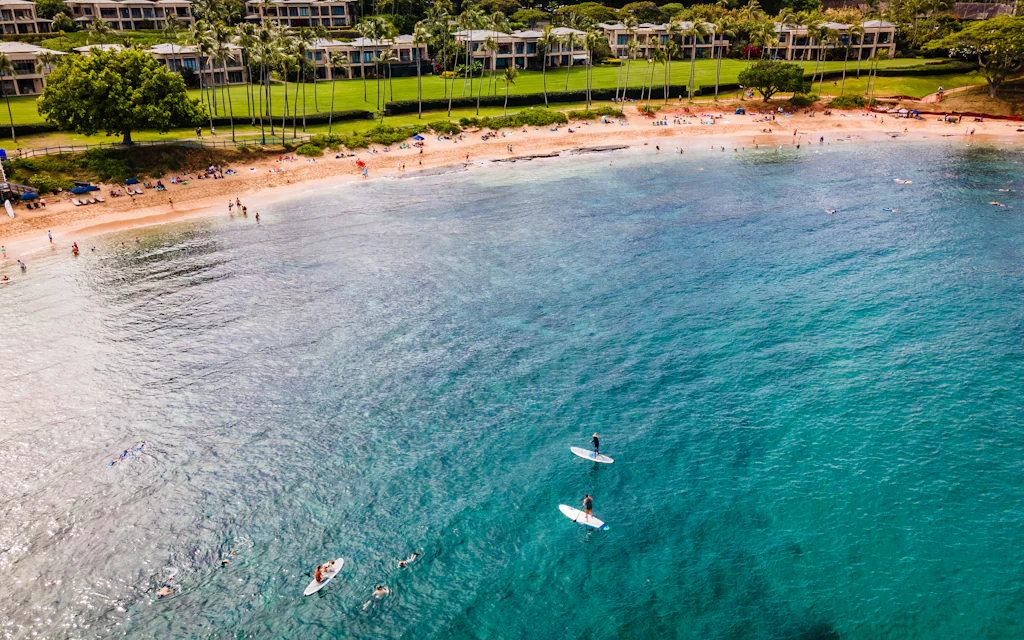
Here's the single most useful thing in this guide, and it's the one your weather app won't tell you: on Maui, your coast matters more than your month. The island makes its own weather. The leeward south and west sides - Wailea, Kihei (Kīhei), Lahaina (Lāhainā), Kaanapali (Kāʻanapali) - sit in a rain shadow and stay sunny and dry most of the year. The windward east side is a rainforest on purpose.
That's why "what's the weather in March?" is the wrong question to ask about Maui. A single March afternoon can be pouring in Hana and bone dry in Wailea, barely 30 miles apart. The trade winds dump their rain on the eastern slopes and arrive at the resorts wrung out - which is exactly why the hotels are clustered on the dry side and the waterfalls are on the wet one.
Temperatures barely budge. Daytime highs sit in the mid-70s to mid-80s at sea level all year, dropping only a few degrees in winter; the ocean runs about 75°F in the cool months and into the low 80s by late summer. The ocean conditions follow the same patterns as the sky - calmer and clearer on the leeward side, livelier where the swell and the trade wind hit. The real variable isn't heat, it's where the clouds park. The National Weather Service's Honolulu forecast office covers Maui if you want the current read on conditions before you pack.
What this means for timing is freeing: even in the wetter months, you can chase the sun by changing coasts. November rain on the east side? South Maui is probably still in shorts. The only place the calendar genuinely bites is elevation - Upcountry and the Haleakala summit are cold and can sit in the 30s and 40s at dawn, no matter the month.
Pick your coast before you pick your month
Leeward: South and WestOur pick
Wailea, Kihei, Lahaina, Kaanapali
- Sits in the island's rain shadow - mostly dry even in winter
- Daytime highs in the low-to-mid 80s most of the year
- Where the resorts, calm beaches, and reliable snorkeling are
- Afternoon trade winds are the main variable, not rain
Windward: East and Upcountry
Hana, Haiku, the Haleakala slopes
- Catches the trade-wind rain - that is why it is a rainforest
- Cooler and cloudier, especially November through March
- The waterfalls, the jungle, and the Road to Hana scenery
- Pack a layer for Upcountry; the summit can hit the 30s
So plan your base around the dry side and treat the green side as a day trip you time around the forecast. If you haven't booked yet, our where to stay in Maui guide sorts the coasts by what each one does best.

Photo: Zane Persaud on Unsplash
04
Maui month by month: what each season delivers
If you'd rather see the whole year laid out, here's Maui season by season - what the weather, the water, and the crowds actually do. The headline numbers don't swing much; what swings is the mix of rain, whales, and people.
What the Maui calendar actually does
Winter on Maui (December to February)
Winter is whale season and high season at once. The humpbacks arrive, the surf pumps on the North Shore and the west side breaks, and the holiday crowd packs the island from December 23 through early January - Hawaii's busiest, priciest stretch of the year. January and February stay busy but ease up on the wallet once the holidays clear, and they're the peak whale watching weeks of all. Expect the odd passing rain showers, more of them windward, and bring a layer for Upcountry. The water cools to about 75°F - still swimmable, just brisk on the first step in.
Weather: warm days, more rain windward · Crowds: holiday peak, then busy · Best for: whale watching, big surf
Spring on Maui (March to May)
March is the awkward middle child of the Maui calendar: still whales, still spring break crowds, still a little winter rain. Then April flips the switch. By late April and May, Maui hits its stride - the rain backs off, the water warms, the crowds thin, and the rates fall. Most locals will tell you May is the best single month of the year: summer weather, shoulder prices, and the north swell finally lying down so the west side snorkeling clears up. If you have to pick a month blind, pick May.
Weather: drying out, warming up · Crowds: spring break in March, then thinning · Best for: the best all round value (May)
Summer on Maui (June to August)
Summer is warm, dry, and crowded. June through August brings the driest weather, the warmest water (low 80s), and the calmest snorkeling on every coast - along with the summer crowds of families on break and a second price peak. July is the busiest and priciest stretch after the winter holidays. It's a fantastic time to be in the water and a frustrating one to find a quiet beach or an empty turnout on the Road to Hana. Go early everywhere and you'll beat most of it.
Weather: hot, dry, reliable · Crowds: second peak, busiest in July · Best for: snorkeling, beach days, warmest water
Fall on Maui (September to November)
September is the best kept secret on the Maui calendar: the summer weather hangs on, the families go home, and the island briefly empties out at the lowest prices of the year. October keeps most of that going. Then November tips into the rainy season as the wet months begin - cheaper still, quieter still, but the windward rain settles in and the first real winter swells return. November on the dry south side is a genuine bargain; November in Hana is a raincoat.
Weather: summer like into October, wetter by November · Crowds: the year's quietest (September) · Best for: value, fewer crowds, honeymoons

Photo: Luke Scarpino on Unsplash
05
Whale watching season: time your Maui trip around it
If there's a single reason to let the calendar pick your trip, it's this: Maui is the best whale watching spot in Hawaii, and it only happens in winter. Thousands of North Pacific humpback whales swim down from Alaska to breed and calve in the warm, shallow, sheltered Auau (ʻAuʻau) Channel between Maui, Lanai (Lānaʻi), Molokai (Molokaʻi), and Kahoolawe (Kahoʻolawe) - and from December to March you can watch them breach from a boat, from a beach, or from a barstool with a view.
The official season runs December 15 to May 15, set by the Hawaiian Islands Humpback Whale National Marine Sanctuary. The real peak is mid January through mid March, with February the loudest - sightings happen on nearly every boat trip, and the channel fills with breaches, tail slaps, and competition pods. Come in those weeks and you barely have to try; the whales find you.
You can see them free from shore - the pull offs along the Honoapiilani Highway and the lookouts at Wailea and Maalaea (Maʻalaea) all work. But a boat puts you eye level with a 40-ton animal that occasionally decides to leap, and that's a whole other experience. The eco raft and catamaran trips out of Maalaea are the classic move - and with Lahaina Harbor only partway through its phased reopening, Maalaea is where most boats are running right now. This one earns its ticket.
★4.9(2,754)
Maui Eco-Raft Tour: Eye-Level Whale or Dolphin Watching - Lahaina
2 hours
Free cancellation
from
$85
For the full breakdown of where to watch, which boat, and the shore spots that actually work, see our whale watching on Maui guide. One rule that isn't optional: federal law keeps boats 100 yards off the whales, so a good captain hangs back and lets them close the distance on their own terms. They usually do.
06
Crowds, prices, and the cheapest time to visit Maui
Three crowd seasons run the prices on Maui: peak (late December through March, and June through August), shoulder (April-May and September to mid October), and the quiet wet season weeks of November and early December. Knowing which one you're booking into matters more to your wallet than almost any other choice.
The cheapest time to visit Maui is September - summer warm weather, the smallest crowds of the year, and lower rates that fall well off the summer peak. September offers the best deals of the year outside the holidays; early December, before the rush kicks in around the 20th, and the back half of the wet season run a close second. However, the most expensive weeks are the winter holidays and mid summer, and the gap between a September room and a Christmas week room at the same resort can be brutal.
Peak, shoulder, and the cheapest time to visit Maui
Peak season
Late Dec-Mar and Jun-Aug
- Whales in winter or warm family summer
- Highest rates and the fullest flights
- Book lodging and Haleakala sunrise months ahead
- Beat it by going early everywhere
Shoulder seasonOur pick
Apr-May and Sep to mid-Oct
- Summer weather, smaller crowds
- Rates drop roughly 20-30% off peak
- The locals' answer to 'when should I come'
- September is the single best value week
Off-peak / wet
November and early December
- Lowest prices outside the holidays
- Wetter, especially on the windward side
- South Maui still delivers the sun
- Trade a little rain risk for an empty island
The booking math is simple. In peak season, lock lodging and any timed tickets months ahead and expect to pay for it. In shoulder season, you've got room to shop and compare - compare Maui stays on Expedia across the dry side resort areas and you'll see the shoulder discount for yourself. In the off weeks, you can almost wing it, as long as you're flexible about a little rain.
One honest caveat: cheap weeks are cheap for a reason. November trades crowds for cloud cover, and a true bargain hunter just accepts that the windward side will be wet and bases on the south shore. If your dates can't flex and they land in a peak week, don't fight it - book early, go early, and spend the savings somewhere else. Our Maui itinerary helps you make the most of whatever week you land on.
Whatever season you book, the play that turns dates into a good trip is the same four moves every time:
Lock in your Maui dates: a four-step play
- 1Step 1
Name your one must-do
Whales, a glassy snorkel, a quiet beach, or a summit sunrise. That single choice sets your month - everything else bends around it.
- 2Step 2
Pick the coast before the calendar
Base on the dry leeward side (Wailea, Kihei, Lahaina, Kaanapali) so a rainy windward day never sinks the trip.
- 3Step 3
Book lodging and tickets to match the season
Peak weeks need months of lead time and a Haleakala sunrise reservation; shoulder weeks give you room to shop and compare.
- 4Step 4
Start every big day early
Sunrise crowds, afternoon wind, and the Road to Hana convoy all reward an early alarm. On Maui, early is the cheat code.

Photo: Katie Rodriguez on Unsplash
07
Timing the big two: Haleakala sunrise and the Road to Hana
Two Maui experiences are worth planning your days around, and both are sensitive to timing - one to the clock, one to the weather. Get them right and they're the trip; get them wrong and they're a cold, crowded, or washed out morning.
The Haleakala (Haleakalā) sunrise needs a reservation, full stop. Entry between 3am and 7am requires a $1 timed permit booked through recreation.gov up to 60 days ahead - they vanish fast - plus the $30 park fee. The summit sits above 10,000 feet and the temperature can hit the 30s at dawn, so dress like it's a different planet, because at that elevation it nearly is. No reservation? Sunset and midday are walk up, the views nearly as big, and you keep your sleep. The National Park Service sunrise page carries the current rules.
There's a reason the mountain demands an early start. In the old story, the demigod Maui stood on this summit and lassoed the sun to slow its race across the sky, so his mother's kapa cloth would have time to dry - which is how Haleakala earned its name, "house of the sun." You're showing up for the same sunrise he wrestled; the least you can do is book ahead. For the full play, our Haleakala sunrise guide covers it.
The Road to Hana works year round, but the season changes the show. After winter rain the waterfalls run hardest; in summer they're thinner, but the swimming holes are warmer and the road is drier. Either way, start by 7am to beat the convoy. The one hard rule is weather driven: East Maui streams flood fast, and after heavy rain the road has washed out and the pools turn dangerous - if it's pouring, postpone a day. No waterfall is worth a swollen stream crossing.
Haleakala sunrise and the Road to Hana, by the clock and the weather
- 1Haleakala sunrise
Reserve the slot, then set a brutal alarm
Entry from 3am to 7am needs a $1 timed permit booked through recreation.gov up to 60 days ahead - they go fast - plus the $30 park fee. Dress for the 30s and 40s at the summit.
- 2No sunrise reservation?
Go for sunset or midday instead
Only sunrise needs the booking. Sunset and daytime are walk-up, nearly as stunning, and you keep your sleep.
- 3Road to Hana
Start at dawn, any season
Leave by 7am to beat the convoy and have the turnouts to yourself. Winter rain makes the waterfalls run hardest; summer is drier but the swimming holes are warmer.
- 4After heavy rain
Check for flash-flood closures
East Maui streams flood fast and the road has washed out before. If it is pouring, postpone a day - no waterfall is worth a swollen stream crossing.
Our full Road to Hana guide maps every worthwhile stop in order, so you're not pulling over at random.
08
Maui events worth planning a trip around
Most visitors plan around the weather; a few smart ones plan around a date on the calendar. Maui's events cluster by season, and a couple are worth bending a trip to catch - or worth knowing about so you can dodge the crowds they bring.
Whale season is the big one, and the whole island leans into it from December through March - ocean counts, festivals, and boats that all but guarantee a sighting. In early June, the long running Kapalua Wine and Food Festival turns West Maui into a weekend of tastings and chef dinners. Come fall, the Maui County Fair in Wailuku is rides, plate lunch, and a genuinely local scene that most visitors never find.
Winter brings a quieter spectacle too: when a big north swell lands, the giant wave at Peahi - the break surfers call Jaws - can turn on, and the cliff above it fills with people watching from a respectful distance. It's weather dependent and impossible to schedule, but if you're here in January or February and the surf reports light up, it's worth the drive. Shoulder season has its own slate of smaller food, film, and cultural festivals that rarely move the crowds much - the kind of thing you stumble into rather than plan around.
Maui events worth bending a trip around
Whale seasonWinter
December through March. The whole island leans in - ocean counts, festivals, and boats that all but guarantee a sighting.
Kapalua Wine and Food FestivalJune
Early June. A long-running West Maui weekend of tastings and chef dinners - book a room early.
Fourth of JulyJuly
Peak summer crowds and lit-up beaches in Lahaina, Kihei, and Wailea. Fun, but the island is at its fullest.
Maui County FairFall
Late September or October in Wailuku - rides, plate lunch, and a genuinely local scene most visitors miss.
The December holidaysAvoid
Dec 23 to early January is Hawaii's busiest, priciest stretch of the year. Book months out, or skip it.
The flip side is the dates to avoid if crowds aren't your thing. The winter holidays - December 23 to early January - are the most packed and most expensive weeks of the year, and the Fourth of July fills the beaches in Lahaina, Kihei, and Wailea. None of this should scare you off; just know what you're walking into, and book your room and your rental car early if your week overlaps a marquee date. For more on filling the days themselves, our things to do in Maui guide has the rundown.
09
Visiting Maui responsibly in 2026
One thing every visitor should understand before booking: Maui is open and the island wants you back, but West Maui is still healing from the August 2023 Lahaina wildfire, and how you visit matters. The community has been clear - tourism is the island's economic engine, it funds the recovery, and respectful visitors are genuinely welcome. Staying away "out of respect" actually hurts the families who depend on those visitor dollars.
Here's the current picture. The Kaanapali and Kapalua resort areas are fully operating, beaches and ocean activities are running normally, and Lahaina Harbor began a phased reopening in December 2025, with the first snorkel, sailing, and whale watch operators returning to the water. Several beloved Lahaina restaurants and the Old Lahaina Luau are serving guests again. You can have a full Maui trip - whales, beaches, the Road to Hana, a Haleakala sunrise - without changing your plans at all.
What's different is Front Street and the central burn zone, which remain closed and under reconstruction. It is a working recovery area and a neighborhood where people lost everything - not a sightseeing stop. Don't drive through to look, and don't photograph it. The most useful thing a visitor can do is simple: come, and spend your money in West Maui - the restaurants, the tour operators, the shops, the hotels that employ local families. Follow posted access rules, give the burn zone its privacy, and check official updates before you go; Hawaii.com's Lahaina visitor guide keeps a current rundown. Visiting with that small bit of care is the whole ask, and it's an easy one to meet.
FAQ: best time to visit Maui
How many days do you need on Maui?
Five to seven days is the sweet spot for a first Maui trip. That's enough for a few beach days on the dry side, one full Road to Hana day, a Haleakala sunrise, and a snorkel or whale trip without racing the clock. Maui is bigger than it looks and the drives eat time, so resist cramming - three days is a tease, ten is a luxury, and a week hits it just right.
What is hurricane season on Maui?
Hurricane season runs June through November, but direct hits are rare - Hawaii's geography and the cool waters around it tend to break storms up before they land. The last major one to strike was Hurricane Iniki in 1992, and that hit Kauai, not Maui. A passing system can bring a few wet, windy days; an actual hurricane landfall in your week is unlikely, not impossible.
Is the ocean warm enough to swim in Maui in winter?
Yes - the water sits around 75°F in winter, cooler than summer's low 80s but perfectly swimmable. Most people are comfortable in plain swimwear; if you run cold or you're snorkeling for an hour, a rash guard or a thin top makes a long session easy. The water is never the reason to skip a winter Maui swim.
What should I pack for Maui's weather?
Pack for the beach and for the summit, because Maui is both. Reef safe mineral sunscreen (it's the law here), a rash guard, and a light rain shell for the windward side cover most days. Add real layers - a fleece and long pants - if you're doing the Haleakala sunrise or anything Upcountry, where dawn temperatures drop into the 30s and 40s year round.
Is the Road to Hana worth it year round?
Yes, the Road to Hana is worth it in any season - it's the drive and the stops, not one single payoff, so it doesn't hinge on peak conditions. Winter and spring give you the fullest waterfalls; summer gives you drier roads and warmer swimming holes. The only time to skip it is during or right after heavy rain, when flash flooding closes pools and parts of the road.
What is the rainiest month on Maui?
The wettest stretch is December through March, and it lands hardest on the windward east side. Even then, the leeward south and west coasts stay mostly dry - that's the rain shadow at work. There's no month when the whole island is rained out; if your dates fall in winter, just base on the dry side and treat the green side as a forecast dependent day trip.
Whatever week you land on, Maui rewards a plan over a scramble. Pick your one headliner - the whales, a glassy snorkel, a quiet beach, a summit sunrise - let it choose your month, base on the dry side, and start every big day early. Do that, and there's no bad time to be here, only a wrong week for the wrong expectation. Next, turn your dates into an actual trip with our Maui itinerary.
Disclosure: Some links on this page are affiliate links. If you book or buy through them we may earn a small commission, at no extra cost to you. As an Amazon Associate, we earn from qualifying purchases.


