Oahu Vacation Rentals: Beach Houses, Condos and Legal Stays
18 min readYndira W. Tonin
You found a gorgeous three bedroom in Kailua for $190 a night, you are about to book it, and I need you to stop for ninety seconds. Most Oahu vacation rentals that look like a steal are illegal to rent for a short stay, and the city can shut yours down between booking and boarding.
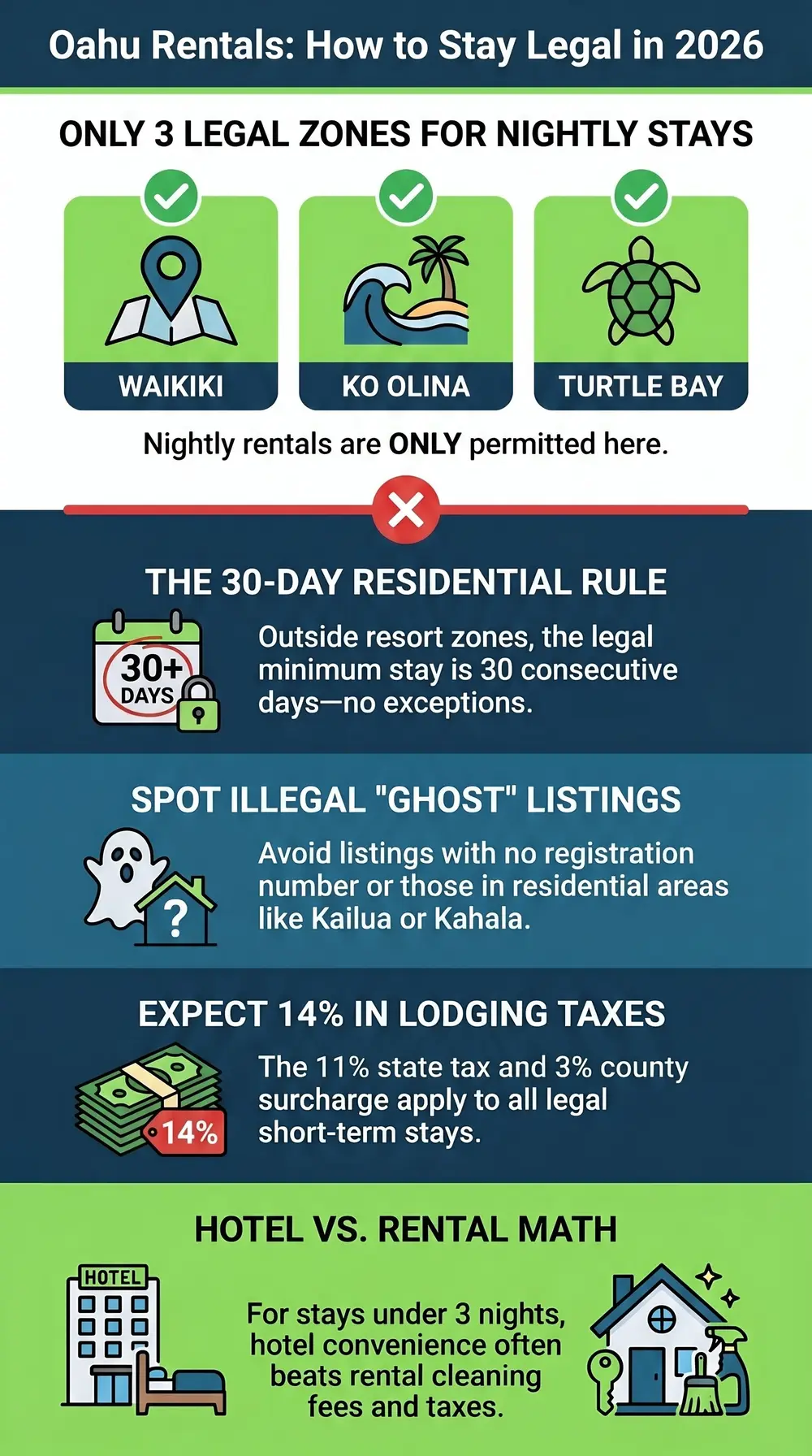
The short version, legal short term vacation rentals on Oahu now live in three resort zones, Waikiki, Ko Olina, and Turtle Bay. Everywhere else, the legal minimum stay is 30 days. Book a two night "vacation rental" in a residential neighborhood and you are rolling dice with your whole trip.
This guide is the part the listing sites quietly skip. Where Oahu vacation rentals are actually legal, what a legit one costs once the taxes pile on, how to spot a listing that will evaporate on you, and when a hotel quietly beats the rental anyway.
No real estate license required. Just do not book the ghost.
Table of contents
- What changed with Oahu short term rentals
- The three zones where Oahu vacation rentals are legal
- Condo, house, or resort room, what you are booking
- What an Oahu vacation rental really costs
- How to spot an illegal listing before you pay
- Where not to book a short stay on Oahu
- Vacation rental versus hotel on Oahu
- How to lock in a legal rental
- A lanai is half the vacation
- FAQ
01
What changed with Oahu short term rentals
For years, Oahu treated vacation rentals like a free for all. Whole neighborhoods quietly turned into hotel rows, locals got priced out of their own streets, and the city finally decided it had seen enough.
Then came Bill 41. Honolulu's ordinance pulled legal short term rentals, anything under 90 days, back into resort zoned and a few apartment zoned areas, and pushed the minimum stay everywhere else to 30 consecutive days.
That last number is the one that wrecks vacations. If a rental sits outside a resort zone, the law says you cannot book it for less than a month. Does not matter that the listing offers three nights. The listing being wrong is not your legal defense.
Enforcement used to be a wink. It is not anymore. The city hands out real fines, listing platforms get pressured to pull non compliant units, and "we will just keep it quiet" is exactly how a booking gets cancelled the week before you fly.
There is a registration layer underneath all of it. Legal operators have to carry a city issued number and keep it current, which is exactly why a legitimate listing can hand you paperwork in one message and a shady one suddenly gets very busy.
Here is the part nobody booking a trip wants to hear, the rules have also bounced through the courts, so the fine print keeps shifting. The 90-day line, the apartment zone carve outs, the enforcement budget, all of it has moved at least once. The safe move has not changed, though, book inside a resort zone and the whole question disappears.
You can read the city's own short term rental rules if you enjoy municipal code at bedtime. Most people just want to know which neighborhoods are safe to book. That is next.

Photo by UC Berkeley, Department of Geography on Unsplash
Oahu's short term rental rules at a glance, where it is legal, the 30-day rule, and the taxes.
02
The three zones where Oahu vacation rentals are legal
Three areas on the whole island let you legally book a nightly stay. Memorize them and your search gets a lot shorter.
Waikiki: the high rise condo capital
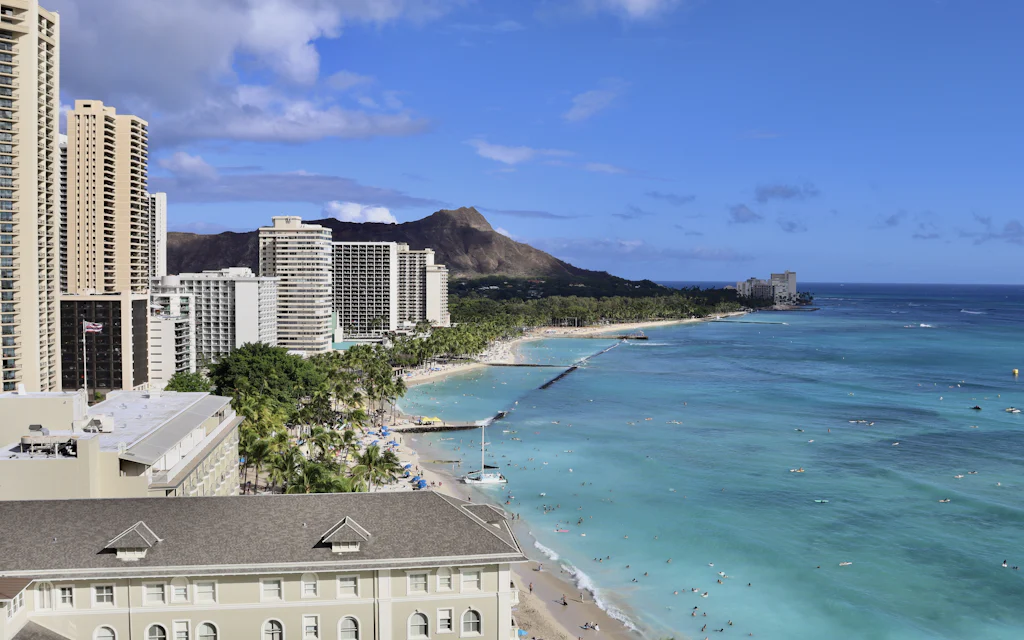
Waikiki is where roughly half of Oahu's legal short term rentals live, and it is the easy answer for first timers. It is resort zoned end to end, so a two night condo here is fully above board.
You are booking into high rises, studios and one bedrooms with a kitchenette, a lanai, and a pool downstairs, a few blocks from the sand. You trade space for location, you can walk to the beach, the food, and a hundred shops without ever touching the H-1.
It is not quiet, and it is not cheap cheap, but it is legal, central, and stacked with options. Browse Waikiki vacation rentals and condos (also on Booking.com) and you will see the range, from worn 1970s walk ups to glassy towers with a doorman.
Ko Olina: lagoons, families, and resort condos
Twenty five miles west, Ko Olina is the family pick, a manicured resort enclave wrapped around four calm, swimmable lagoons that look engineered to keep small children from drowning.
The legal rentals here are resort condos and villas around the marina and the big name resorts. You get space, a kitchen, a pool, and a lagoon that doubles as the world's gentlest babysitter. Compare Ko Olina condos and resorts (also on Booking.com) if your trip is mostly "stay put and unwind."
The catch is distance. You are 45 minutes to an hour from Waikiki, so Ko Olina rewards people who want a home base, not a daily commute across the island. For the beaches themselves, see our Ko Olina lagoons guide.
Turtle Bay: the one legal North Shore option
If you dream of waking up on the North Shore, the legal short stay supply up there is essentially one resort area, Turtle Bay (also on Booking.com) (the Kuilima resort zone). Everything else along the coast, the cute Haleiwa cottages, the Pupukea hideaways, is residential and bound by that 30-day rule.
Turtle Bay gives you condos and villas on a dramatic point, with golf, surf, and a sunrise off your lanai. It is a splurge, and it is remote, but it is the honest answer for "legal North Shore rental."

Photo, Roy Serafin / Pexels
03
Condo, house, or resort room: what you are booking
"Vacation rental" covers three very different things on Oahu, and the differences matter more here than almost anywhere else because of the zoning.
A resort zone condo is the workhorse, a privately owned unit in a Waikiki, Ko Olina, or Turtle Bay building, rented nightly, with a kitchen and a lanai. This is the legal sweet spot, and it is what most people mean when they search Oahu vacation rentals.
A standalone house, the whole home with a yard fantasy, is where people get burned. The legal beach houses are almost all in residential zones, which means the 30-day minimum. You can absolutely rent one for a month long stay. For a week? Usually not, no matter what the listing claims.
A resort condo hotel unit splits the difference, a condo inside a managed resort building (think the towers with a front desk). You get hotel style service and a kitchen, fully legal, and often easier to book through normal channels.
There is also the 30-day-plus monthly rental, which is its own world, great for remote workers and snowbirds, legal across far more of the island, but a different trip than a one week getaway. If you are staying a month anyway, this is where the residential neighborhoods quietly reopen to you, and the per night cost drops hard.
The trap is that all four of these show up in the same search results, photographed identically. A whole home beach house and a legal resort condo look like cousins in the thumbnails. Only the zoning and the minimum stay rule tell them apart, and the listing will not volunteer which one it is.
So before you fall for a photo, ask one question, is this a nightly stay in a resort zone, or am I being quietly signed up for a month I do not have? The answer decides everything.
04
What an Oahu vacation rental really costs
The nightly rate is the opening bid, not the price. Hawaii stacks taxes on short stays, and they are not small.
As of January 2026, the state's Transient Accommodations Tax sits at 11%, and Honolulu County adds a 3% surcharge on top. That is 14% in lodging tax before you count the general excise tax layered underneath. A "$200 a night" rental is closer to $230 before anyone's cleaned a towel.
Then come the rental specific extras, cleaning fees that do not care if you stay two nights or six, a service fee from the platform, sometimes a resort fee or a parking charge in the bigger buildings. The cleaning fee is the one that mugs short stays, spread $175 of cleaning across two nights and your bargain just grew a mustache.
Ballpark, a legal Waikiki condo runs a wide range depending on season and view, Ko Olina villas climb with space and proximity to the lagoons, and Turtle Bay sits at the top because remote and legal is a premium combination.
The honest math, vacation rentals win on longer stays and bigger groups, where the kitchen and the extra bedrooms earn their keep. For two people over three nights, the fees can quietly erase the savings versus a hotel.
One more line item people forget on Oahu, a car. Outside Waikiki, you will need one to get anywhere, and resort zone parking is rarely free, budget for both the rental and the spot to put it.
Run the all in total, rate times nights, plus about 18.5% tax, plus cleaning, plus fees, before you congratulate yourself on a deal. The headline number lies. The subtotal does not.
05
How to spot an illegal listing before you pay
Here is the skill that saves your trip. You can usually tell a non compliant listing in about a minute.
Check the minimum stay. If a non resort zone rental suddenly requires 30 nights, that is the law working as intended, and a tell that anything shorter in that same neighborhood is bending the rules.
Look for a registration or NUC number. Legal Oahu short term rentals are supposed to display a city registration number in the listing. No number, vague answers, "do not worry about it", that is your cue to close the tab.
Geography is the giveaway. If the address is in Kailua, Kaneohe, Hawaii Kai, Kahala, Aina Haina, or a residential North Shore street and it is offering nightly stays, treat it as a red flag, not a find.
Watch the language. Listings that say "30 day minimum but message me" or "we can be flexible on dates" are advertising the exact thing the city is fining people for. A host hinting that the official rule and the actual rule are different things is telling you which side of the law you would be sleeping on.
Cross check the platform. Reputable booking sites have been pruning non compliant Oahu units, so a rental that exists only on a personal website or a Craigslist style post, with no presence on a major platform, is worth a hard second look before any money moves.
This is the one place on an Oahu trip I would tell you to spend a little more on purpose. A cheap residential zone rental is the single worst corner to cut, because if it gets reported, the city does not fine you, it just makes the booking vanish, and you are standing at the airport at 9 p.m. paying hotel walk up rates with a kid asleep on the luggage cart.
Pay the resort zone premium. It is cheaper than a cancelled vacation.

Photo, Mikhail Nilov / Pexels
06
Where not to book a short stay on Oahu
Some of the most beautiful neighborhoods on the island are exactly where you should not try to book two nights, and saying so out loud is the most useful thing in this guide.
Kailua and Lanikai. Stunning, bright blue, and almost entirely residential. The old Airbnb supply here got hit hardest by the crackdown. For a short stay, look at the Kailua and Lanikai area as a day trip from a legal base, not a place to sleep for three nights.
Hawaii Kai, Kahala, Aina Haina. Gorgeous east side neighborhoods, 30-day minimums, full stop. Beautiful to drive through. Not your weekend rental.
Residential North Shore. Those dreamy Haleiwa and Sunset Beach cottages are the postcard, but most are legally a month or nothing proposition. If you want to wake up on the North Shore for a few nights, Turtle Bay is the legal door.
The pattern is simple, if a neighborhood feels like a real place where people live their lives, kids' bikes in the yard, a guy watering his lawn, it is probably residential zoned, and a nightly rental there is the risky bet. The legal short stay supply clusters in the resort zones precisely because that is where the law parked it.
The exception worth repeating is the monthly stay. If you are on Oahu for 30 days or more, these same neighborhoods open back up to you legally, and Kailua at a month's rate is a genuinely lovely way to live. It is the short stay the rules are built to stop.
None of this means you cannot visit these places, the official Oahu visitor guide will fill whole days. You just sleep somewhere the city says you are allowed to.
07
Vacation rental versus hotel on Oahu
The eternal travel cage match, with an Oahu specific twist, the legal vacation rentals and the hotels are now stacked in the same few zones, so you are often choosing between two units in buildings across the street from each other.
The rental wins when you have got a group or a long stay. A kitchen means you are not buying $19 resort breakfasts four mornings running. Separate bedrooms mean the kids go down without you whispering in the dark. Laundry means you pack lighter. For a family of five over a week, a Ko Olina condo usually buries a hotel on cost and sanity.
The hotel wins for short stays and convenience. Daily housekeeping, a front desk that fixes problems, no cleaning fee ambushing a two night total, and zero chance of a zoning headache. For a couple doing three nights in Waikiki, the math and the simplicity often tilt to a hotel room.
There is a hybrid worth knowing, the resort condo hotel. You book a privately owned condo with a kitchen, inside a building that runs like a hotel. It is the "kitchen and a lanai, but someone's at the desk" option, and it sidesteps most of the legality worry.
There is also the part nobody quantifies, a kitchen and a washing machine change how a trip feels. You eat a real breakfast, you do not pay $40 to do laundry, you spread out. A hotel buys you service and zero friction. A rental buys you space and a little domestic normal in the middle of a vacation. Neither is wrong, they are different trips.
My rule of thumb, two people, three nights or fewer, lean hotel. Four plus people or a week plus stay, lean rental. In the murky middle, let the all in total, taxes and cleaning included, break the tie.
08
How to lock in a legal rental
Once you have decided on a resort zone, booking a legal one is mostly about where you look and how early you commit.
Book through channels that filter for compliance. Major platforms have been pushed to drop non compliant Oahu listings, so a resort zone search on a big booking site is a safer starting point than a random link from a forum. Searching Waikiki condos and rentals (also on Booking.com) by area keeps you inside the lines.
Book early. Legal supply is, by design, smaller than it used to be. The good resort zone condos for peak weeks, winter holidays, spring break, summer, go months out. Procrastinate and you are left with the tired walk ups or the budget eating last minute rates.
Read the actual reviews, not the average. A 4.8 hides a lot. Skim for the words "construction," "noise," "parking," and "smell." On a high rise lanai, your neighbor's renovation is your alarm clock.
Confirm parking before you book. In Waikiki especially, a unit might be cheap because parking is $35 a night extra or simply does not exist. For a trip where you will want a car to reach the best beaches on Oahu, that is a real line item.
Message the host one question: the registration number. A legit operator answers in a sentence. Silence tells you everything.
Screenshot the cancellation policy. Even legal rentals cancel sometimes, owners sell, buildings renovate. Know whether you get a refund or a fight, and keep a hotel option bookmarked as a backup so a worst case is an inconvenience, not a crisis.
09
A lanai is half the vacation
Here is the underrated reason to book a rental over a hotel, the lanai. A private balcony with a coffee and an ocean, or even a parking lot and a slice of blue, is where half your best Oahu mornings will actually happen.
A kitchen means a slow breakfast instead of a lobby scramble. A lanai means you watch the light come up over the water before the island's even awake. That is the quiet luxury of a rental, and it costs nothing extra once you have booked the right one.
It is also where the trip slows down enough to count. Nobody remembers the lobby of their hotel. People remember the morning they drank coffee on a sixth floor lanai in their pajamas while the surf report played out below them. That is the thing the resort zone premium is actually buying.
And once you have got a base with a view, the island opens up, you can do a full circle island day and come home to your own kitchen instead of a minibar.
★4.8(4,263)
Oahu Circle Island Tour with Waimea Valley Waterfall
8 hours
Free cancellation
from
$154
If your rental morning ever calls for something more set up than cereal on the lanai, a beach picnic on the sand nearby is a soft landing, Hawaii Picnics & Beach Events handles the styling and the permits, starting at $349 for two, and you just show up. One light option among many. Mostly, the lanai's free and the coffee's already paid for.
The real takeaway, pick a legal zone, run the all in number, and book early. Do that and an Oahu vacation rental is one of the best ways to do the island. Skip it, and you are just hoping the city does not read your listing before you do.
FAQ
Are Airbnbs legal on Oahu?
Some are, many are not. Legal short term Airbnbs and vacation rentals on Oahu are restricted to resort zoned areas, chiefly Waikiki, Ko Olina, and Turtle Bay, plus a few apartment zoned units. Outside those zones, the legal minimum stay is 30 days, so a nightly Airbnb in a residential neighborhood is likely operating against the rules.
What is the minimum stay for a vacation rental on Oahu?
In resort zoned areas like Waikiki and Ko Olina, there is no minimum, you can book a single night. Almost everywhere else on Oahu, the legal minimum is 30 consecutive days, a rule the city tightened to pull short term rentals out of residential neighborhoods.
How much tax is added to an Oahu vacation rental?
As of 2026, expect about 14% in lodging tax, Hawaii's 11% Transient Accommodations Tax plus Honolulu County's 3% surcharge, on top of the general excise tax already baked in. Add cleaning and service fees on top of that, so always check the all in total, not the nightly rate.
Where are vacation rentals legal on Oahu?
The three reliable resort zones are Waikiki, Ko Olina, and the Turtle Bay (Kuilima) area on the North Shore. These are zoned for nightly short term stays. Most other neighborhoods, Kailua, Hawaii Kai, Kahala, residential North Shore, require 30-day-plus stays.
Is a vacation rental cheaper than a hotel on Oahu?
It depends on group size and length of stay. For larger groups or stays of a week or more, a rental's kitchen and extra bedrooms usually beat a hotel. For two people over a few nights, cleaning fees and the roughly 18.5% tax can erase the savings, and a hotel's simplicity often wins.
Can I rent a house on the beach in Kailua for a week?
Usually not legally. Most Kailua and Lanikai homes are in residential zones with a 30-day minimum stay. You can rent one for a month or longer, but for a week long trip, book a legal base in a resort zone and visit Kailua as a day trip instead.
How do you verify an Oahu vacation rental's registration number?
Check the number against the city's public registry. A legal Oahu rental must display a registration number, and Honolulu's Department of Planning and Permitting (DPP) publishes a list you can cross check it against. If a listing will not show a number, shows one that does not match, or claims it is "exempt" without proof, walk away.
Disclosure: Some links on this page are affiliate links. If you book or buy through them we may earn a small commission, at no extra cost to you. As an Amazon Associate, we earn from qualifying purchases.