Haleakala Sunrise: Times, Reservations, and Tips (2026)
18 min readYndira W. Tonin
Watching the sunrise from the summit of Haleakala is one of Maui's signature experiences, you stand at 10,023 feet, above a sea of clouds, and watch the sun ignite the sky over the rim of a vast volcanic crater. The Hawaiian name means "house of the sun," and at dawn you understand why.
This guide is current as of 2026.
But a Haleakala sunrise is not a spontaneous thing. Since 2017, the National Park Service has required an advance reservation for sunrise, the summit is genuinely freezing before dawn, and you will be setting an alarm for the small hours and driving a long, winding road in the dark.
This guide covers everything you need to plan it, how the reservation system works, what time to arrive, how cold it really is and what to wear, whether to drive yourself or take a tour, and the honest case for skipping the sunrise crowd for the easier sunset.
Table of contents
01
What is the Haleakala sunrise?
Haleakala is the massive shield volcano that forms the entire eastern half of Maui, and its summit, at 10,023 feet, is one of the most otherworldly places in Hawaii.
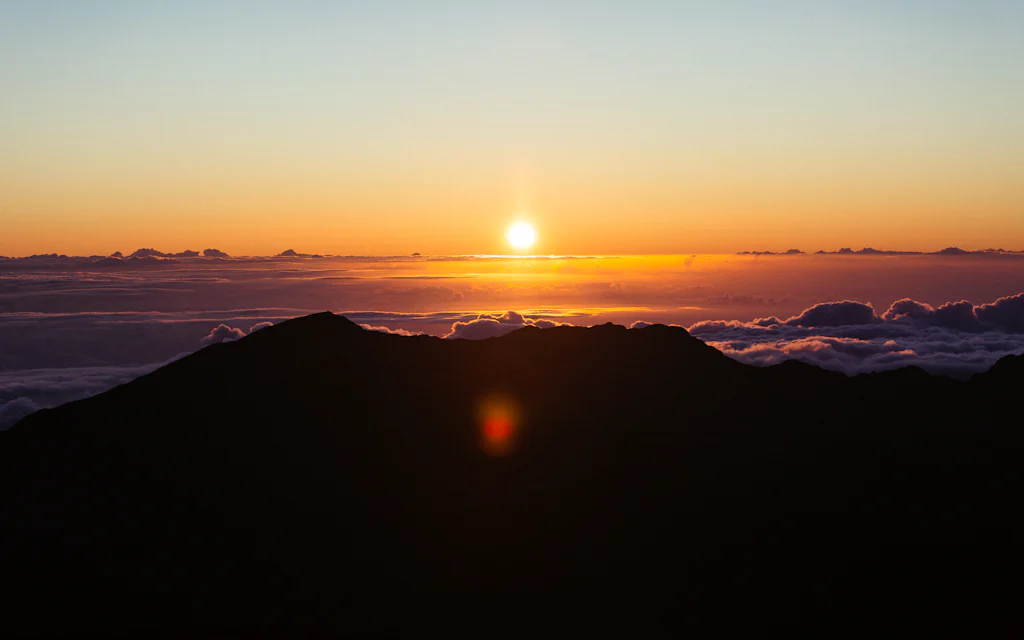
Watching sunrise here is a genuinely moving experience. In the dark before dawn you climb above the clouds, the temperature drops near freezing, and a crowd gathers in silence along the rim. Then the sky begins to glow, pink, then orange, then gold, and the sun breaks over the edge of the crater, lighting an endless sea of clouds below your feet. Mark Twain, who saw it in the 1860s, called it "the sublimest spectacle" he had ever witnessed.
Sunrise, sunset, or stars at Haleakala?
SunriseOur pick
- Best for
- The bucket-list classic — the sun breaking over a sea of clouds from 10,023 feet, the most magical hour on Maui
- The catch
- Needs a reservation, a 3am wakeup, and freezing pre-dawn cold
Sunset
- Best for
- Nearly as spectacular, with no reservation needed, warmer temperatures, and a fraction of the crowd
- The catch
- Still cold and a long drive — but far easier than sunrise
Stargazing
- Best for
- One of the darkest, clearest night skies anywhere — the Milky Way overhead after the sunset crowd leaves
- The catch
- Bitterly cold and pitch dark; bring layers and a flashlight
Daytime hike
- Best for
- The surreal, Mars-like crater on the Sliding Sands trail — no reservation, full daylight, fewer people
- The catch
- Thin air and strong sun; it's a serious high-altitude hike
The summit sits inside Haleakala National Park, and the view is of the vast, Mars like "crater" (technically an erosional valley) stretching out below, dotted with cinder cones. On a clear morning you can see the neighboring Big Island volcanoes poking through the clouds in the distance.
There is real Hawaiian significance here, too. In tradition, the demigod Maui is said to have stood on this summit and lassoed the sun, slowing its journey across the sky to lengthen the day, which is how the mountain earned its name, Haleakala, the house of the sun. Standing on the rim at dawn, watching the light return to the world from above the clouds, that old story feels a lot less like myth.
It is, deservedly, on a lot of Maui bucket lists. The catch is simply that the magic comes with logistics, a reservation, an alarm, and a coat, so the rest of this guide is about getting those right.

Photo by Alice Donovan Rouse on Unsplash
02
You need a reservation: how it works
This is the single most important thing to know, and the one that catches people out, you cannot just drive up for sunrise. You need a reservation.
Since 2017, the National Park Service requires a timed reservation for every private vehicle entering the summit area between 3 a.m. and 7 a.m. The details, as of the current season,
- The sunrise reservation costs about $1.00 per vehicle and is booked on Recreation.gov, not at the park.
- Reservations open 60 days in advance at 7:00 a.m. Hawaii time, and they sell out fast, often within minutes for popular dates.
- A secondary batch is released 48 hours before each date, which is your backup if you miss the 60-day window. Set an alarm and refresh.
- This is separate from the park entrance fee of $30 per vehicle (good for three days), which you also pay.
The reservation is tied to your name and license plate, so bring matching ID, and only the reservation holder needs to be in the car. Commercial tours are exempt from the reservation requirement, which is one reason many visitors book a guided sunrise tour instead, more on that below.
If your dates are already inside 60 days and the reservations are gone, do not panic, the 48-hour secondary release genuinely works if you are quick, and booking a commercial tour bypasses the whole system. What you should not do is drive up hoping to talk your way in. Rangers check reservations at the entrance station, and without one you will be turned around after a very long drive.
Plan this part first. The reservation, not the weather or the cold, is what most often derails a Haleakala sunrise, so lock it in the moment your 60-day window opens, at 7:00 a.m. Hawaii time sharp.
03
What time to arrive
Sunrise at altitude rewards the early, so build in more buffer than feels reasonable.
Aim to arrive at the summit 60 to 90 minutes before the actual sunrise. That sounds excessive, but the upper parking lots fill and close early, a very common occurrence, and you want time to park, walk to a viewpoint, and claim a spot along the rim before the crowd thickens. Getting there early also means catching the predawn color, which is often as beautiful as the sunrise itself.
Sunrise times shift with the season, roughly from 5:45 a.m. in summer to around 6:55 a.m. in winter, so check the exact time for your date (the park and weather sites post it). Then work backward, the drive from the park entrance to the summit takes about 30 minutes, and the drive from the main resort areas to the park entrance can be 60 to 90 minutes on top of that.
Do the math and a summer sunrise often means leaving your hotel around 3:00 to 3:30 a.m. It is brutal, and it is worth it, but go in with realistic expectations about the alarm clock, and maybe plan a slow, do nothing afternoon to recover.
A small jet lag silver lining, if you are visiting from a mainland time zone, the first day or two your body clock is running hours ahead, so a 3 a.m. Maui wakeup feels more like 6 a.m. back home. Scheduling Haleakala sunrise for early in your trip, before you fully adjust to island time, takes some of the sting out of the alarm. Caffeine and a flask of something hot for the summit help, too.
04
How cold is it? What to wear
Here is the thing nobody's tropical vacation brain is prepared for, the top of Haleakala is cold. Genuinely, bring a winter coat cold.
At 10,023 feet, summit temperatures run roughly 30 to 40°F colder than at the beach, and before dawn they hover near or below freezing, year round, yes, even in summer. Add wind chill and the damp of standing in a cloud, and a Maui sunrise can feel like a winter morning on the mainland. Every year, visitors show up in shorts and flip flops and spend the whole sunrise shivering miserably in the car.
Dress in real layers,
- A warm base layer, a fleece or sweater, and a windproof jacket on top.
- Long pants, not shorts, and closed shoes, not sandals.
- A warm hat and gloves, your extremities feel it most.
- A blanket from your rental car is a legitimate, much appreciated move.
You can always shed layers as the sun warms things up, but you cannot conjure a coat at 10,000 feet. Pack like you are going somewhere cold, because you are.
One more altitude note while you are packing, 10,023 feet is high enough that some people feel mild effects, a headache, light dizziness, or shortness of breath, especially having driven up from sea level so fast. It is usually minor, but come well hydrated, move slowly at the top, and skip the summit sunrise if you have a heart or respiratory condition without checking with a doctor first. Pregnant travelers and very young children should also weigh the cold and altitude carefully.

Photo by Elise St. Clair on Unsplash
05
Sunrise vs sunset: the honest take
Here is the one strong opinion in this guide, and it will save a lot of people a 3 a.m. alarm, for many visitors, the Haleakala sunset is the smarter choice than the sunrise.
The sunrise is the famous one, and it is genuinely spectacular, but it comes with the reservation hassle, the predawn wakeup, the coldest hour of the day, and the biggest crowd. The sunset, by contrast, is nearly as beautiful from the same summit, requires no special reservation, happens at a civilized hour, is meaningfully warmer, and draws far fewer people. You get the same sea of clouds, the same crater, the same big sky, without setting an alarm for the middle of the night.
So who should still do sunrise? Bucket listers for whom the specific magic of dawn at Haleakala is the whole point, and early risers who do not mind the cold and the logistics. It truly is special, and I am not talking anyone out of it.
But if you are on the fence, if the 3 a.m. alarm and the reservation gauntlet are giving you pause, know that the sunset delivers most of the wonder for a fraction of the effort, and stay for the stargazing afterward. It is the move a lot of locals and repeat visitors quietly make.
One practical caveat either way, the summit makes its own weather, and on a cloudy day you can end up inside the cloud rather than above it, watching gray fog instead of a golden sky. That is the real gamble of Haleakala, not sunrise versus sunset, so check the summit forecast, and if you have flexibility in your trip, keep a backup morning or evening in your pocket in case the first attempt socks in.
06
The drive up (and a warning)
The road to the summit is part of the adventure, and it demands respect, especially in the dark.
The drive climbs from sea level to 10,000 feet in about 38 miles of steep, winding switchbacks, one of the fastest paved elevation gains anywhere. It is a beautiful drive by day and a dark, twisting one before sunrise, so take it slow, use lower gears on the way down to save your brakes, and watch for cyclists, cattle, and the rare nene goose on the road.
Two practical warnings that genuinely matter,
- Gas up before you go. There are no gas stations in the park or near the summit, and you do not want to be the person who misses sunrise, or gets stranded, over an empty tank.
- Bring everything you need. No food, water, or supplies are sold at the summit, so pack snacks, water, and that cooler. Altitude can also bring mild headaches or dizziness. Come hydrated and take it easy.
It is also worth knowing the road has no services and spotty to no cell signal for long stretches, so download your directions offline and do not count on navigation or a phone call partway up. The route is well signed and hard to get lost on, but you are genuinely remote up there in the dark.
Drive carefully and prepared, and the road becomes a thrilling prologue to the summit rather than a hazard. Reckless or unprepared, it is the part of the trip most likely to go wrong, respect the mountain, and it rewards you.
07
Should you take a tour?
For a lot of visitors, a guided tour is the stress free way to do Haleakala sunrise, and it neatly sidesteps the reservation problem.
The big advantages, commercial tours are exempt from the sunrise reservation requirement, so you skip the Recreation.gov scramble entirely. Someone else does the dark, winding drive while you doze. And a guide handles the timing, the parking, and often warm jackets and breakfast. After a sleepless predawn start, not having to drive yourself down 10,000 feet of switchbacks is no small thing.
A Haleakala sunrise tour is an easy, popular way to do it, and many tours pair the summit with a downhill bike ride or an Upcountry Maui stop on the way back.
★4.7(2,318)
Maui: Haleakala Sunrise Spectacular with Local Breakfast
10 hours
Free cancellation
from
$254
A popular variation is the bike tour, vans carry you up for sunrise, then you coast back down the mountain on a bicycle, a fun (if chilly) way to descend without riding the brakes in a car. Note that the Park Service no longer allows commercial bike groups to start riding from the very summit, so these tours begin the descent just outside the park boundary, still a long, scenic downhill, just not from the tippy top.
The trade offs are the usual ones, a tour costs more than the $1.00 reservation plus gas, and you are on the group's schedule, not your own. But for the specific combination of a predawn start, a hard drive, and a sold out reservation system, a tour solves several headaches at once, which is why it is one of the most booked experiences on Maui.
08
What else to do at Haleakala
Sunrise is the headliner, but the summit and park reward a longer visit, so consider building out the trip.
The crater itself begs to be explored. The Sliding Sands (Keoneheehee (Keoneheʻeheʻe)) Trail descends from the summit into the surreal, red and ochre crater floor, a Mars like landscape of cinder cones and silversword plants found nowhere else on Earth. Even a short way down and back gives you a feel for it, just remember you are hiking at 10,000 feet, so it is slower and more tiring than it looks, and you climb back up at the end.
After dark, Haleakala is one of the best stargazing spots on the planet, the high, dry, dark summit delivers an overwhelming Milky Way and a sky thick with stars once the sunset crowd leaves. Bring every layer you own and a red filtered flashlight.
The park also has a whole separate coastal district worth knowing about. The Kipahulu area, home to the Pools of Oheo (ʻOheʻo), the "Seven Sacred Pools," and the Pipiwai Trail to a bamboo forest and waterfall, is part of Haleakala National Park, but it sits down on the coast past Hana, a world away from the summit and reached via the Road to Hana, not the summit road. Your park pass covers both, but you cannot drive between them quickly. They are effectively two different trips.
By day, the visitor centers and overlooks along the summit road each offer a different angle on the crater, and the drive through Upcountry Maui, ranch land, lavender and protea farms, the Maui Gold pineapple tour, and the town of Makawao, makes a lovely, cool climate counterpoint to the beaches below. Haleakala is a full day's worth of Maui, not just a sunrise.

Photo by Paola Galimberti on Unsplash
09
Tips for the best Haleakala sunrise
A few hard won tips separate a great Haleakala sunrise from a cold, stressful one.
- Book the reservation the moment your 60-day window opens, at 7 a.m. Hawaii time, and have a backup date ready for the 48-hour release.
- Overdress. You can always take layers off. You cannot add what you did not bring. Hat, gloves, jacket, blanket.
- Leave earlier than you think. Aim to be at the summit 60 to 90 minutes before sunrise, before the lots fill.
- Gas up and pack supplies the night before, no fuel or food at the summit.
- Check the forecast. Some mornings the summit is socked in fog. The park and weather sites post a summit forecast, and a clear sky makes all the difference.
- Bring a real camera or clear your phone storage. The light changes fast and dramatically, and you will shoot more than you expect. A dead battery or full phone at the summit is a quiet tragedy.
- Do not over schedule the day. After a 3 a.m. start, plan a beach afternoon or a nap, not the Road to Hana.
- Stay for a few minutes after the crowd leaves. Many people bolt the instant the sun clears the horizon. The light keeps getting better for a while, and the rim empties out beautifully.
- Mind the descent. Use low gears, not constant braking, on the long drive down, overheated brakes are a real risk on a 10,000-foot descent.
Get those right and you set yourself up for the version of Haleakala sunrise people talk about for years, not the shivering, scrambling one.
10
Getting there and where to stay
Haleakala National Park's summit district is in the center of Maui, and most visitors drive up from wherever they are based on the island.
From the main resort areas, Kaanapali and Lahaina in West Maui, or Kihei and Wailea in South Maui, figure 60 to 90 minutes to the park entrance, plus another 30 to the summit. That long predawn drive is exactly why some visitors stay a night Upcountry, in or near Makawao or Kula, to cut the morning drive dramatically and wake up already in the cool highlands. You can compare Maui hotels on Expedia (also on Booking.com) across the resort coasts and Upcountry.
A full disclosure, since we are an Oahu company, we run beach picnics on Oahu, not Maui, so we do not have a dog in the where to stay on Maui fight, but our guides to the best of Maui and the Maui map lay out the island's regions and drive times to help you plan, and on the way down from the summit, the green Iao Valley makes an easy central Maui add-on. If your trip also touches Oahu, our picnic packages (from $349 for two) are there for a sunset on that island.
If you are island hopping and weighing whether Maui earns a spot on your trip at all, experiences like this are part of the answer, our guide to the best island to visit in Hawaii and the best time to visit help you decide when and where, and Haleakala is one of the things that tilts the scale toward Maui.
However you base it, the Haleakala sunrise is a one of a kind Hawaii experience, just go in with the reservation booked, the alarm set, and the warm clothes packed, and the house of the sun will do the rest.
FAQ
Do you need a reservation for Haleakala sunrise?
Yes. Since 2017, the National Park Service requires a timed reservation for every private vehicle entering the summit between 3 a.m. and 7 a.m. It costs about $1.00 and is booked on Recreation.gov up to 60 days in advance (they sell out fast), separate from the $30 park entrance fee. Commercial tours are exempt from the reservation.
What time should you arrive for Haleakala sunrise?
Arrive at the summit 60 to 90 minutes before the actual sunrise, since the parking lots fill and close early. Sunrise ranges from about 5:45 a.m. in summer to 6:55 a.m. in winter, and the drive from the resort areas plus the summit road can take two plus hours, so many people leave their hotel around 3 a.m.
How cold is it at Haleakala sunrise?
Very cold. At 10,023 feet, summit temperatures run 30 to 40°F colder than the beach and hover near or below freezing before dawn, year round, even in summer, with wind chill on top. Dress in real winter layers, a warm base, fleece, windproof jacket, hat, gloves, long pants, and closed shoes.
Is Haleakala sunrise or sunset better?
Both are spectacular from the same summit. Sunrise is the famous one but requires a reservation, a 3 a.m. start, and the coldest, most crowded hour. Sunset needs no special reservation, is warmer and less crowded, and is nearly as beautiful, so for many visitors, sunset (with stargazing after) is the easier, smarter choice.
Should you take a tour to Haleakala sunrise?
A tour is a great option if you would rather not handle the reservation, the 3 a.m. drive, or the dark switchbacks yourself. Commercial tours are exempt from the sunrise reservation, include the driving and often jackets and breakfast, and frequently add a downhill bike ride. The trade off is higher cost and a fixed group schedule.
How long is the drive to Haleakala summit?
The drive climbs about 38 miles of switchbacks from sea level to 10,000 feet. From the park entrance to the summit is roughly 30 minutes, and from the main resort areas to the entrance is another 60 to 90 minutes, so plan two plus hours of driving each way. Gas up first, there are no stations in the park.
Can you see the sunrise at Haleakala without a reservation?
Not for the 3 a.m., 7 a.m. sunrise window in a private vehicle, that requires a reservation. However, you can visit the summit without a sunrise reservation outside those hours, including for sunset and stargazing, paying only the $30 park entrance fee. A commercial sunrise tour is the other reservation free way to see the dawn.
Disclosure: Some links on this page are affiliate links. If you book or buy through them we may earn a small commission, at no extra cost to you. As an Amazon Associate, we earn from qualifying purchases.


