Best Poke Oahu: 10 Spots Locals Actually Eat At (2026)
18 min readYndira W. Tonin
The best poke on Oahu is not what most mainland visitors picture. It is not a build-your-own bowl piled with mango, edamame, and a dozen sauces, that is a fast casual invention. Real Hawaiian poke is simpler and better, cubes of fresh raw ahi tuna tossed with shoyu, sweet onion, sesame, and limu, sold by the pound from hole in the wall counters, Chinatown fish markets, and, locals will tell you, the supermarket.
These details were last verified in 2026.
Oahu is the birthplace and beating heart of poke, and the island is dense with legendary spots, from Kapahulu institutions to Waikiki bowls to the grocery counter that keeps winning "Hawaii's best."
This is the honest, local leaning guide to the best poke on Oahu, where to get it in Honolulu and Waikiki, the supermarket secret nobody warns tourists about, the types and how to order, and a little history behind Hawaii's perfect food.
Table of contents
01
What poke is (and what it is not)
Poke (poh keh, never "poke ee") simply means "to slice" or "cut crosswise" in Hawaiian, and at its core it is exactly that, chunks of raw fish, seasoned and eaten. For generations it was Hawaiian fishermen's food, fresh caught reef fish cut up and tossed with sea salt, seaweed, and roasted kukui nut.
Today the classic is ahi (yellowfin tuna) poke, most often in the shoyu (soy sauce) style, deep red cubes of sashimi grade ahi glossed with shoyu, sweet Maui onion, green onion, sesame oil, and limu (seaweed). It is served by the pound or over a bowl of hot rice, and at its best it is one of the great foods on earth, clean, savory, oceanic, a little sweet.
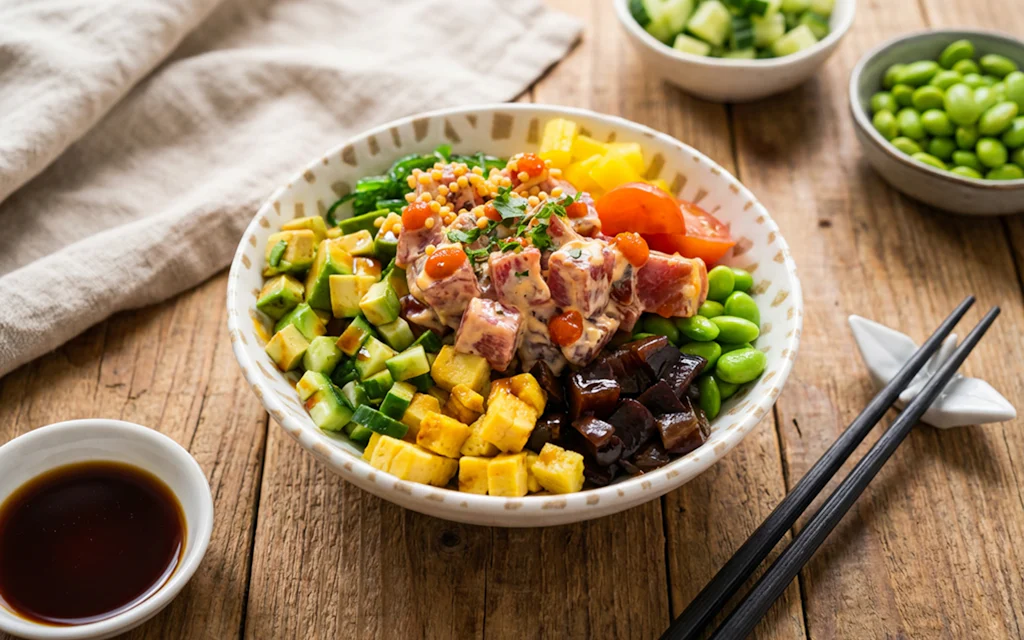
Here is what it is not, and the distinction matters, Hawaiian poke is not the mainland "poke bowl," that build-your-own salad of sushi rice, raw fish, avocado, edamame, mango, and seventeen drizzled sauces. That is a fine lunch, but it is a fast casual reinvention, not the real thing. Authentic Oahu poke is simpler, fish forward, and sold from a deli case or a fish counter, not a Chipotle style line.
Where should you get poke on Oahu?
Ono Seafood (Kapahulu)Our pick
- Best for
- The classic hole-in-the-wall — secret-recipe shoyu ahi that regulars swear by, ordered over rice
- The catch
- Cash, a line, and they close when the fish runs out (often by early afternoon)
Maguro Brothers (Chinatown)
- Best for
- Sashimi-grade freshness from a Chinatown fish counter — ahi poke and bowls at their peak
- The catch
- Tiny, busy, and tucked in the market; go early
Foodland (supermarket)
- Best for
- The locals' everyday move — a fresh, cheap tub of award-winning poke while you grab groceries
- The catch
- It's a grocery counter, not a sit-down meal; eat it on the beach
Off the Hook (Moiliili)
- Best for
- A modern twist — cold ginger ahi and inventive bowls beyond the traditional shoyu
- The catch
- Small and popular; expect a wait at lunch
Get that distinction clear and you will order, and eat, much better. On Oahu, poke is a humble, fresh, fish first food, and the best versions barely need anything beyond great ahi and a good shoyu.
It is also genuinely good for you, which is a nice bonus rather than the point, lean protein, omega-3s, no frying, no heavy sauces in the traditional styles. But nobody on Oahu eats poke because it is healthy. They eat it because a few dollars of fresh shoyu ahi over warm rice is one of the most satisfying lunches money can buy. The health halo is just the universe being generous for once. Treat poke as the everyday pleasure locals do, and you will understand it far better than any "superfood bowl" framing ever captures.

Photo by Shelley M on Unsplash
02
Types of poke and how to order
Walk up to a good poke counter and you will face a glass case of a dozen styles. Here is how to read it.
The essentials you will see almost everywhere,
- Shoyu ahi, the classic, ahi in soy sauce, onion, sesame. If you order one poke in your life, order this.
- Spicy ahi, ahi tossed with a creamy, spicy mayo (sriracha style). Crowd pleasing, rich, the gateway poke.
- Limu ahi / Hawaiian style, the most traditional, ahi with limu (seaweed), sea salt, and inamona (roasted kukui nut). Briny and old school.
- Shoyu / wasabi / furikake variations, endless house twists on the shoyu base.
Beyond ahi, look for tako (octopus) poke, chewy, garlicky, excellent, and salmon, tofu, or mussel pokes for variety. You order by the pound (a half pound feeds one hungry person well) or as a "poke bowl" over rice, which is the cheap, filling move.
A few ordering notes, most counters let you sample, so ask. Get it over hot rice if you want a meal, or by the pound if you are taking it to the beach. And do not over sauce, great poke is about the fish, and the shoyu ahi rarely needs improving. When in doubt, ask whoever is behind the counter what is freshest today. The answer is your order.
A word on the rice, because it matters more than people think. Most poke bowls come over hot white rice, and the contrast of cool, glossy fish against warm, sticky rice is half the pleasure, order it fresh and eat it before the rice cools. Some spots offer brown rice or a "no rice" option, and a few do it over salad greens, which is closer to the mainland bowl. Purists keep it simple, ahi, rice, maybe a little seaweed salad on the side. Build from the classic outward, not the other way around, and you will never wander far from what makes poke great.
03
The best poke in Honolulu
Honolulu is the poke capital of Hawaii, and a few spots are worth crossing the island for.
Ono Seafood on Kapahulu Avenue is the hole in the wall legend, a tiny, cash only counter whose secret recipe shoyu ahi has a cult following. It is busy, it can be hard to find, and it famously closes when the fish runs out, often by early afternoon, so go early and go hungry. For many locals, this is simply the best poke on the island.
Maguro Brothers in Chinatown is the freshness pick, run by two brothers out of a fish market stall since 2014, serving sashimi grade ahi poke over rice that tastes like it was swimming that morning. Off the Hook in Moiliili is the modern option, beloved for its cold ginger ahi and inventive bowls that update the tradition without losing the plot.
A few more names locals will rattle off, Fresh Catch in Kaimuki for a big, reliable selection. Ahi Assassins for serious, fisherman direct fish. And Aloha Poke and the various neighborhood markets that each have their devotees. The truth about Honolulu poke is that there is no single "best", there are a dozen excellent counters, each with a regular crowd that will argue passionately for theirs. Half the fun is trying a few and picking your own.
For a wider taste of the city's food, a Honolulu food tour often folds poke counters in alongside the other local institutions, and our things to do in Honolulu guide builds the rest of the day around the food.
04
The best poke in Waikiki
If you are staying in Waikiki, you do not have to go far for excellent poke, though the very best spots are a short hop into town.
Right in Waikiki, the Food Pantry and the convenience store and grocery poke counters serve fresh, cheap tubs perfect for a beach lunch, and several quick serve spots along the strip do solid bowls. For a step up, it is a five to ten minute drive or a short bus ride to the Kapahulu and Moiliili spots, Ono Seafood, Off the Hook, and the supermarket counters, which is genuinely worth the small effort.
The move for a Waikiki day is to grab a poke bowl and take it to the beach, where it is the perfect light, protein packed lunch between swims. Pair it with the rest of the best food near Waikiki and you will eat very well without a single fancy dinner reservation.
Do not write off the Ala Moana area just west of Waikiki, either, the Foodland Farms and the food halls there hold some of the best and most convenient poke on this side of the island, which brings us to the secret.
A quick honest note on Waikiki poke prices, the spots right on the tourist strip charge more than the same poke costs a mile inland, and a few touristy bowl shops lean toward the mainland build-your-own style. Nothing wrong with that if it is steps from your hotel and you want a quick beach lunch, but if you want the real thing at the real price, it is worth the ten minute trip to Kapahulu, Moiliili, or an Ala Moana grocery counter. The poke is better and the bill is smaller, which is a rare and happy combination in Waikiki.

Photo by Rosalind Chang on Unsplash
05
The supermarket secret
Here is the one strong opinion in this guide, and it is the thing tourists never believe until they try it, some of the best poke on Oahu is at the supermarket.
Foodland, the local grocery chain, has been voted "Hawaii's Best Poke" by readers for nine years running, and it is not a fluke. The poke counter at any Foodland or Foodland Farms is fresh, vast in selection, and cheap, a tub of excellent shoyu ahi for a few dollars, made daily, while you grab your groceries. It genuinely beats most trendy bowl shops, in Hawaii or anywhere. Tamura's and Tanioka's (the latter out in Waipahu) are the other beloved market and deli spots that locals vote to the top year after year.
The lesson is the one this whole guide keeps circling, Hawaii's best food is humble and local, not fancy and marked up. A tub of Foodland shoyu ahi eaten on a beach at sunset is, no exaggeration, one of the best cheap meals in the islands, and it is exactly the kind of move that makes a Hawaii trip on a budget so easy here.
So do not be the visitor who only eats poke at a sit down restaurant. Hit a Foodland, point at the shoyu ahi, get it over rice or by the pound, and take it to the sand. That is the local move, and it is better than the fancy version.
One practical tip for the supermarket counter, many Foodlands let you order a custom poke bowl made to order, or grab a pre packed tub from the case, the made to order bowl is fresher and lets you mix two styles, while the pre packed tub is faster if you are in a hurry. Either way, add a scoop of rice, grab a drink and some chopsticks on your way out, and you have assembled a better beach lunch than most restaurants will sell you, for a third of the price.
06
A short history of poke
Poke is not a trend. It is one of Hawaii's oldest foods, and the modern version is a perfect little snapshot of the islands' history.
In its original form, poke is ancient Hawaiian, and the official Hawaii food guide still treats it as a cultural cornerstone, fishermen would cut up their fresh catch and season it with what the land and sea provided, sea salt, limu (seaweed), and inamona (roasted, ground kukui nut). Simple, fresh, and tied directly to the ocean. That older, salt and limu style still exists as "Hawaiian style" poke.
The version most people eat today was shaped by the plantation era, when Japanese, Chinese, Korean, and Filipino immigrants brought shoyu, sesame oil, chili, and green onion to the islands. Those flavors married the Hawaiian raw fish tradition, and the now classic shoyu ahi poke was born, a dish that, like so much of local Hawaiian food, is a delicious record of everyone who came to work these islands.
Ahi became the star as commercial tuna fishing grew, and poke went from a fisherman's snack to a supermarket staple to, eventually, a mainland craze. But on Oahu it never stopped being everyday food, which is exactly why the best of it is still cheap, fresh, and everywhere.
The supermarket poke counter, oddly enough, is a big part of that history. As poke's popularity exploded in the 1990s and 2000s, Hawaii's grocery stores, Foodland chief among them, turned their fish departments into full poke bars, and the everyday food tradition simply moved into the supermarket. That is why grabbing poke with your groceries feels so natural to locals, it is not a gimmick, it is just where a lot of the islands' best poke has quietly lived for thirty years. Knowing that history is what turns a tourist into someone who orders like they belong.
07
What makes great poke
Once you have had truly great poke, the mediocre stuff is easy to spot. Three things separate the legends from the sad deli tubs.
The first is freshness of the fish, which outranks everything. Great poke uses sashimi grade ahi that is bright, deep red, and clean smelling, cut into firm cubes, never gray, mushy, or fishy. The best counters sell out daily precisely because they buy fresh and do not hold it over. This is why the spots that close when the fish runs out are usually the best ones.
The second is balance in the seasoning. The shoyu, sesame, and onion should frame the fish, not bury it, you want to taste the ahi first and the seasoning second. Over sauced, over sweet, gloopy poke is hiding something. Clean, glossy, restrained poke is confident.
The third is the right ratio and texture, generous, even cubes (not tiny scraps), enough onion and limu for crunch and brine, and just enough oil to make it glisten. Served over hot rice, the contrast of cool fish and warm rice is the whole magic. Nail those three and it barely matters whether it came from a famous counter or a grocery case, though, as established, the grocery case is doing just fine.
A simple field test for any counter, look at the ahi before you order. Great poke is a deep, even ruby red with firm, defined cubes and a clean, briny sweet smell of the ocean. If it looks dull, brownish, or watery, or if the case smells "fishy" rather than fresh, walk on, there is another excellent counter five minutes away. Trust your eyes and your nose over the sign out front. The best fish sells out fastest, so a near empty tray late in the day at a busy spot is often a better sign than a heaping one nobody has touched.
08
How to order poke like a local
A few habits separate the tourists from the regulars at the poke counter, and they will get you better fish.
Go in the morning or midday, when the poke is freshest and the selection is fullest. By late afternoon the best styles sell out, and the legendary spots may be closed entirely. Order the shoyu ahi first if you are unsure, it is the benchmark, and add a spicy ahi or a tako if you are building a spread. Get it over rice for a full, cheap meal, or by the pound (a half pound per person is plenty) to take away.
Bring cash to the hole in the wall spots, expect a line at the famous ones (it moves), and do not be shy about asking what is freshest, the counter staff will steer you right. If you are taking it to the beach, ask for it packed to go with chopsticks and grab a drink, and you have assembled the perfect Hawaii lunch for under ten dollars.
One last tip, eat poke the day you buy it, ideally within a few hours. It is raw fish, it does not keep, and it is so cheap and everywhere that there is no reason to hoard it. Buy a fresh tub each day, which, frankly, is no hardship at all.
And if you are taking it to the beach, mind the heat, poke is raw fish and the Hawaii sun is no joke, so keep it cool in a bag, eat it sooner rather than later, and do not leave a tub baking on a towel for two hours while you swim. A small soft cooler or even a bag with a frozen water bottle does the trick. Treat it with a little care and a beach poke lunch is flawless. Forget it in the sun and you have wasted both the fish and the afternoon.

09
Where to base your poke hunt
Poke is everywhere on Oahu, so the smart move is to fold it into wherever your day already is rather than making special trips.
Most visitors base in Waikiki, which keeps the convenience store and grocery poke close and the Kapahulu and Moiliili legends a five to ten minute hop away. You can compare Waikiki hotels on Expedia (also on Booking.com) to stay central to the best counters, and lean on our shave ice and malasadas guides to round out a full Oahu food crawl, savory poke, sweet shave ice, and a malasada chaser is a genuinely great day of eating.
The deeper point is that poke is the easiest great meal to work into any Oahu plan, there is a fresh counter near almost everything you will do, from the beach to the trailhead. Keep an eye out, follow the locals, and you will never be far from a perfect, cheap, cold tub of ahi.
If you want to build a proper poke day, the natural loop is to start in Honolulu with the Kapahulu and Chinatown legends, swing through an Ala Moana supermarket counter for comparison, and end with a tub on a south shore beach at sunset. Work it into a broader Oahu itinerary and you will hit a handful of the island's best counters without ever driving out of your way, which, given how good and how cheap the poke is, makes it one of the most rewarding food missions in Hawaii.
One last, on brand note, a tub of fresh poke is also the centerpiece of the perfect DIY beach picnic, the budget cousin of what we do for a living. We run styled beach picnics on Oahu (from $349) for the splurge version, but grocery poke on the sand at sunset is a beautiful thing too, and we will happily admit it. Now go find your counter.
FAQ
Where is the best poke on Oahu?
Locals point to Ono Seafood on Kapahulu (secret recipe shoyu ahi), Maguro Brothers in Chinatown (sashimi fresh), and, genuinely, the supermarket counters at Foodland, Tamura's, and Tanioka's, which win readers' "best poke" awards year after year. The best poke is usually fresh, cheap, and from a counter, not a fancy restaurant.
What is poke, exactly?
Poke (poh keh) means "to slice" in Hawaiian and is a dish of cubed raw fish, most often ahi tuna, seasoned with shoyu, sweet onion, sesame, and seaweed, eaten by the pound or over rice. It is one of Hawaii's oldest and most beloved foods, originally fishermen's food seasoned with sea salt and limu.
Is Hawaiian poke the same as a mainland poke bowl?
No. Authentic Hawaiian poke is simple, fish forward seasoned raw fish sold from a counter. The mainland "poke bowl", a build-your-own bowl of rice, fish, avocado, edamame, mango, and many sauces, is a fast casual reinvention. Both can be tasty, but they are different things. On Oahu, order the real, simpler version.
How do you order poke like a local?
Order the shoyu ahi first (the classic benchmark), get it over hot rice for a meal or by the pound to take away, and go in the morning when it is freshest. Bring cash to the hole in the wall spots, ask what is freshest, and do not over sauce it, great poke is about the fish.
Is the best poke really at the supermarket?
Yes, surprisingly. Foodland's poke counter has been voted "Hawaii's Best Poke" by readers for nine consecutive years, and Tamura's and Tanioka's also top local polls. A few dollars gets you a fresh, generous tub of excellent shoyu ahi, often better than trendy bowl shops. It is the move locals make and tourists overlook.
How much does poke cost on Oahu?
Poke is sold by the pound, typically in the rough range of $12, $20 a pound depending on the fish and spot, with a half pound feeding one person well. A poke bowl over rice is usually a cheap, filling meal of around $10, $15, making it one of the best value great meals in Hawaii.
Is poke safe to eat? How long does it keep?
Poke is raw fish, so buy it fresh from a busy, reputable counter and eat it the same day, ideally within a few hours and kept cold. The best spots sell out daily because they do not hold fish over. Do not stockpile it, it is cheap and everywhere, so buy a fresh tub each day.
More local grinds → the full Hawaiian food guide.
Disclosure: Some links on this page are affiliate links. If you book or buy through them we may earn a small commission, at no extra cost to you. As an Amazon Associate, we earn from qualifying purchases.


