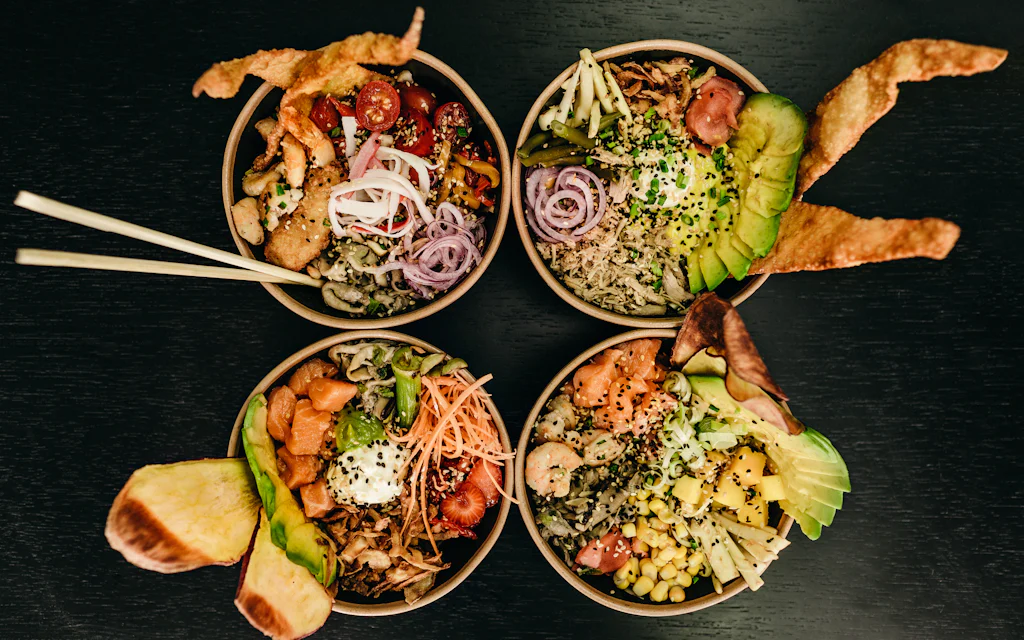
Hawaiian Food: 12 Iconic Dishes You Have to Taste
20 min readYndira W. Tonin
Eating in Hawaii is its own reason to visit. The Hawaiian dishes you will fall for range from ancient, taro and imu traditional fare to the gloriously mixed up "local food" that grew out of plantation kitchens, kalua pork, poi, laulau, poke, plate lunch, loco moco, and a shave ice to finish.
This guide is current as of 2026.
Here is the first thing to understand, because it trips people up, "Hawaiian food" is really two overlapping things. There is traditional Native Hawaiian food, the ancient dishes built on taro, fish, and the underground imu oven, and there is local food, the everyday melting pot cuisine born from Hawaii's plantation era, where Hawaiian, Japanese, Chinese, Filipino, Portuguese, and Korean flavors collided on one plate.
Both are delicious, and both belong on your trip. This guide walks through the must try dishes in each camp, what they are, why they matter, and how to eat them, then covers the best ways to actually find them, from a luau to a food tour to the unassuming plate lunch counter that locals swear by.
Come hungry. By the end you will know your poi from your poke, your laulau from your loco moco, and exactly what to order first.
Table of Contents
- What "Hawaiian food" really means
- Kalua pork, the centerpiece
- Poi, taro, and laulau
- From the sea, poke and lomi lomi salmon
- The local plate lunch
- Loco moco and the breakfast of champions
- Spam, musubi, and the plantation influence
- Huli huli chicken and the roadside grill
- Shave ice, malasadas, and sweets
- Where and how to try it all
- Tips for eating like a local
- FAQ, Hawaiian food
01
What "Hawaiian food" really means
Before the dishes, a quick bit of context that will make your whole trip tastier.
Traditional Native Hawaiian food is the original cuisine of the islands, built on what the land and sea provided, taro (kalo), sweet potato, fish, pork, seaweed, coconut, and breadfruit, often cooked in an underground oven called an imu. This is the food of poi, kalua pork, laulau, and lomi lomi salmon, the stuff of a real luau.
Local food is the everyday cuisine you will actually eat most, and it is a glorious mashup. During the plantation era, workers from Japan, China, the Philippines, Portugal, and Korea brought their home cooking, shared lunches in the fields, and over generations blended it all with Hawaiian staples. The result is plate lunch, loco moco, spam musubi, saimin, comfort food found nowhere else on earth.
The distinction matters because visitors sometimes expect every meal to be ancient and ceremonial, then feel confused when the most beloved local dish is a hamburger patty over rice. Both are authentically Hawaii. One is the islands' heritage. The other is its living, daily, delicious reality.
Traditional Hawaiian Food vs Local Food
Traditional Native Hawaiian
The islands' heritage
- Built on taro, fish, pork, seaweed, coconut, and breadfruit
- Often cooked in an underground oven called an imu
- Poi, kalua pork, laulau, and lomi lomi salmon
- The full spread of a real luau
Local Food
The everyday reality
- Born in the plantation era from many cultures
- Japan, China, the Philippines, Portugal, and Korea blended with Hawaiian staples
- Plate lunch, loco moco, spam musubi, and saimin
- Comfort food found nowhere else on earth
So order across both columns. Have the kalua pork and the poi at a luau for the tradition, and then chase plate lunch, poke, and shave ice the rest of the week for how people actually eat here. Our best restaurants in Waikiki guide covers the sit down side. This guide is about the dishes themselves.
There is also a third, newer layer worth knowing, Hawaii Regional Cuisine, the upscale farm to table movement that put island ingredients, local fish, Big Island beef, Maui produce, on white tablecloths in the 1990s. You will meet it at higher end restaurants, and it is genuinely excellent, but it is the islands' fine dining export, not its soul. The soul is still the plate lunch and the luau.
That framing, heritage, melting pot, and the modern upscale layer on top, is the single most useful thing to carry into every meal.
02
Kalua pork: the centerpiece
If one dish defines a Hawaiian feast, it is kalua pork (often called kalua pig), smoky, salty, fall apart pulled pork that is the star of any luau.
The magic is in the method. A whole pig is salted, wrapped, and slow cooked for hours in an imu, an underground oven of hot volcanic rocks layered with banana and ti leaves. The result is meat so tender it shreds at a glance, infused with a deep, earthy smokiness you cannot fake in a regular oven.
"Kalua" simply means "to cook in an underground oven," so the name describes the technique, not a seasoning. Traditionally it is just pork and Hawaiian sea salt, no sauce, no rub, no fuss. The smoke and the salt do everything.
How Kalua Pork Is Cooked in the Imu
- 1First
Salt the pig
A whole pig is rubbed with Hawaiian sea salt and nothing else, no sauce and no rub, since the smoke and the salt do everything.
- 2Next
Wrap and bury
The pig is wrapped and laid in an imu, an underground oven of hot volcanic rocks layered with banana and ti leaves.
- 3For hours
Slow cook underground
The buried pig roasts low and slow, taking on a deep, earthy smokiness you cannot fake in a regular oven.
- 4At the luau
Unearth and serve
Lifting the pig from the imu is part of the show, and the meat shreds at a glance into fall apart pulled pork.
You will most authentically encounter it at a luau, where the unearthing of the pig from the imu is part of the show. But you will also find kalua pork on plate lunches, in tacos and sandwiches, and piled next to cabbage at every local eatery, it has happily escaped the luau and gone everywhere.

Photo by Mohamed Olwy via Pexels
Order it and you will often get kalua pork and cabbage, the everyday plate lunch version where the smoky meat is simmered with shredded cabbage, humble, cheap, and beloved. However you find it, kalua pork keeps beautifully, which is why it ends up in tacos, fried rice, eggs Benedict, and nachos all over the islands. It is the gift that keeps giving long after the imu has gone cold.
Order it at least once the traditional way, at a luau, beside poi and lomi salmon, to taste it in its proper context. Then order it again in a humble plate lunch, where, honestly, it might taste even better. Our best luau on Oahu guide covers where to see the imu ceremony done right.
03
Poi, taro, and laulau
No food is more central to Native Hawaiian culture than taro (kalo), and the dishes made from it are the ones visitors most need a little context to appreciate.
Poi is the famous one, a smooth, purple gray paste made by pounding steamed taro root with water. It is the traditional staple starch, eaten alongside richer dishes, and it is genuinely sacred in Hawaiian culture, taro is considered an ancestor of the Hawaiian people, which is why poi is treated with real reverence.
Be honest with yourself about the flavor, poi is mild, a little tangy, and not sweet, it is a starch, not a dessert, and it is meant to be eaten with the salty, smoky, savory dishes around it, not on its own. Visitors who taste a lonely spoonful and make a face have simply used it wrong. Scoop it with kalua pork and it makes sense.
Laulau is taro's other gift, pork (or fish or chicken) wrapped in young taro leaves, then bundled in ti leaves and steamed for hours until everything is meltingly tender. Unwrapping a laulau is a small ceremony, and the leaves themselves cook down into something spinach like and delicious.
And for dessert, kulolo, a dense, fudgy pudding of taro and coconut that is criminally underrated. If you see it at a market or a Hawaiian plate spot, get it.
The Taro Dishes Worth a Little Context
PoiThe sacred staple
A smooth, purple gray paste made by pounding steamed taro root with water, mild and a little tangy, meant to be eaten with the salty, smoky dishes around it.
LaulauSteamed for hours
Pork, fish, or chicken wrapped in young taro leaves, bundled in ti leaves, and steamed for hours until everything is meltingly tender.
KuloloThe dessert
A dense, fudgy pudding of taro and coconut that is criminally underrated. Get it if you see it at a market or a Hawaiian plate spot.
Give the taro dishes an open mind. They are the oldest, most meaningful flavors in the islands, and once you eat poi the way it is meant to be eaten, as part of a plate, not a solo dare, you start to get it.
04
From the sea: poke and lomi lomi salmon
Hawaii is in the middle of the Pacific, so of course the seafood is extraordinary, and two dishes lead the way.
Poke (POH-keh, not "poke ee") is the islands' gift to the world, cubes of fresh raw fish, usually ahi tuna, seasoned simply and served by the pound. The classic is shoyu (soy sauce) poke, fish tossed with soy, Hawaiian sea salt, sweet Maui onion, sesame oil, and limu (seaweed), but you will find dozens of styles, from spicy mayo to furikake to limu heavy traditional versions.
The best poke is often not in a restaurant at all. Grocery stores and fish counters, the local supermarket, the corner poke shop, frequently make the freshest, cheapest, best poke on the island. A tub of poke, a scoop of rice, and a beach is one of Hawaii's perfect cheap meals.
A small piece of respect, mainland "poke bowls" have turned the dish into a build-your-own salad with mango and edamame, which is fine and tasty, but the Hawaii original is simpler and fish forward. Try the classic shoyu poke before you decide poke is a customizable bowl trend.
What to Eat From the Sea
PokeSold by the pound
Cubes of fresh raw fish, usually ahi tuna, tossed with shoyu, Hawaiian sea salt, sweet Maui onion, sesame oil, and limu. The best is often at a grocery store fish counter.
Lomi Lomi SalmonThe luau cooler
A fresh, cold side of salted salmon massaged with diced tomato and onion, bright and refreshing, the perfect cool counterpoint to smoky kalua pork.
OpihiFor the adventurous
A prized limpet harvested from wave battered rocks and served raw at celebrations, so labor intensive to gather that it is a genuine luxury.
Grilled Catch of the DayFish forward
A fresh grilled ahi or mahi mahi plate. Hawaii's seafood is as good as anywhere on earth, and a simple catch of the day rarely disappoints.
Lomi lomi salmon is the other ocean classic, a fresh, cold side dish of salted salmon "massaged" (lomi means to massage) with diced tomato and onion. It is bright, salty, and refreshing, the perfect cool counterpoint to smoky kalua pork at a luau. It is technically a dish introduced by Western contact, now woven completely into the traditional Hawaiian plate.
Beyond those two, the islands' fish rewards chasing on its own, a fresh grilled ahi or mahi mahi plate, or, for the adventurous, opihi, the prized limpet harvested from wave battered rocks and served raw at celebrations, so labor intensive to gather that it is a genuine luxury. Hawaii's seafood is as good as anywhere on earth, and a simple grilled catch of the day rarely disappoints.
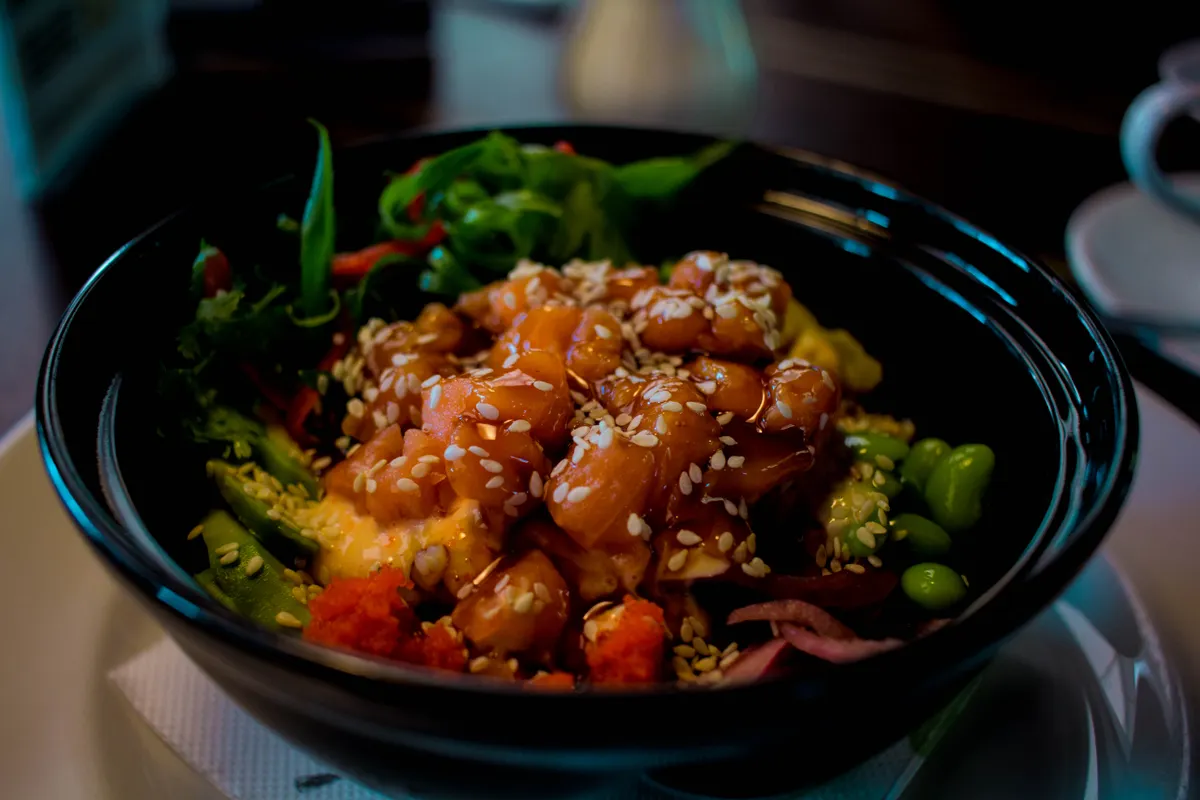
Photo by Sergey Meshkov via Pexels
05
The local plate lunch
If traditional food is Hawaii's heritage, the plate lunch is its everyday heartbeat, and the single most important "local food" thing to understand.
The formula is simple and sacred, two scoops of white rice, one scoop of macaroni salad, and a protein. That protein might be kalua pork, teriyaki chicken, chicken katsu, kalbi beef, mahi mahi, or a half dozen others, but the rice and mac foundation almost never changes.
The Plate Lunch Formula
It is a direct descendant of plantation days, when workers of every background shared big, cheap, filling lunches in the fields. The plate lunch is that history on a styrofoam plate, hearty, inexpensive, and gloriously unbothered with being fancy.
The mac salad deserves its own mention. Hawaiian macaroni salad is soft, mayo rich, a little sweet, and not trying to impress anyone, it is the mellow, cooling foil to a salty teriyaki protein, and arguing about whose is best is a local pastime.
The protein lineup is half the fun, chicken katsu (panko fried cutlet), teriyaki beef, kalbi (Korean short ribs), garlic shrimp, mochiko chicken, hamburger steak. Mix plates let you pick two. The legendary spots are drive-ins and lunch wagons with decades of history and no decor to speak of, the kind of place with a handwritten menu, a cash box, and a line of construction workers, surfers, and office staff all waiting for the same thing.
You find plate lunch everywhere, lunch wagons, drive-ins, food trucks, and counter spots with no atmosphere and a line out the door. Follow the line. The best plate lunch in any town is usually the unglamorous place packed with locals on their break, and it will cost you less than a sandwich back home.
06
Loco moco and the breakfast of champions
The loco moco is local comfort food at its most gloriously excessive, and it deserves its own moment.
The classic build, a bed of white rice, a hamburger patty, a fried egg, and a ladle of brown gravy over the top. That is it. It sounds like a dare and eats like a hug, savory, rich, and the ideal fuel before (or recovery after) a day in the ocean.
It was reportedly invented in Hilo, on the Big Island, in the 1940s by a restaurant feeding hungry teenagers who wanted something cheap, fast, and filling that was not a sandwich. Mission very much accomplished.
The Loco Moco Build
Like everything in local food, it has spun off endless variations, kalua pork loco moco, spam loco moco, teriyaki loco moco, even seafood versions, but the original burger egg gravy rice stack is still the one to try first. Order it for breakfast, eat half, and understand why nobody on the island needs lunch afterward.
You will find loco moco at virtually every local diner and drive-in, usually served all day, and the gravy is the dividing line, everyone has a favorite spot and a strong opinion about whose is best. Try the original in Hilo if you make it to the Big Island, where the dish was born. Otherwise any unpretentious local diner will set you up. Just clear your afternoon afterward, this is not a light meal.
It is the perfect emblem of local food, humble ingredients, zero pretension, deeply satisfying, and found at every diner and drive-in worth its salt. If you try one "local" dish on the trip, the plate lunch and the loco moco are tied for the title.
07
Spam, musubi, and the plantation influence
Yes, Spam. Hawaii eats more Spam per capita than anywhere else in the United States, and before you smirk, understand that here it is genuine, beloved, unironic comfort food.
The icon is spam musubi, a block of rice topped with a slice of grilled, lightly sweet soy glazed Spam, wrapped in a band of nori (seaweed). It is essentially Spam sushi, it costs a couple of dollars at any convenience store, and it is the perfect portable snack for a hike, a beach day, or a drive. Do not leave without trying one.
Spam's place here is plantation history again, shelf stable, affordable protein that got woven into local cooking during and after the war years, and never left. It turns up in fried rice, with eggs, in stews, anywhere a salty hit of meat helps.
The broader plantation influence is everywhere once you notice it. Saimin, a local noodle soup born from Japanese, Chinese, and Filipino noodle traditions, is Hawaii's ultimate comfort bowl, found even at the islands' fast food counters. Manapua, a fluffy steamed (or baked) bun stuffed with char siu pork, is the local riff on Chinese bao. Malasadas, coming up in the sweets section, are the Portuguese contribution.
To grasp how seriously Hawaii takes Spam, there is an annual Waikiki Spam Jam street festival devoted to it, and local McDonald's serve it with eggs and rice for breakfast. Grab a musubi from any convenience store, the 7-Eleven and ABC Store versions are genuinely good and absurdly cheap, and eat it warm on the way to the beach. It is the unofficial fuel of an island road trip.
This is the real flavor of everyday Hawaii, not one cuisine but a delicious, generations deep blend of all the cultures that came to work the land. Eat widely and you taste the whole history.
08
Huli huli chicken and the roadside grill
Few smells say "Hawaii weekend" like huli huli chicken drifting from a roadside grill. "Huli" means "turn," and the dish is named for the constant flipping of chicken over an open fire as it cooks.
It is whole or half chickens, marinated in a sweet savory glaze of soy, ginger, garlic, and pineapple or brown sugar, then grilled over coals until the skin is lacquered and smoky. The technique was popularized at fundraisers, and to this day you will spot huli huli setups in parking lots and on roadsides, often raising money for a school or a team.
If you see a huli huli stand, usually a cloud of fragrant smoke and a folding table, pull over. It is some of the best, most authentic eating on the islands, it is cheap, it often supports a local cause, and it is the kind of only here food experience that beats any restaurant.
The roadside grill is a whole category worth chasing, huli huli chicken, plate lunches from a truck, fresh fruit stands, garlic shrimp trucks on the North Shore. These unassuming setups serve some of Hawaii's most memorable food, and finding them is half the fun. Our things to do on Oahu guide points toward a few of the North Shore's famous shrimp trucks.
The catch is that the best huli huli is a weekend, pop up affair, you cannot reliably plan for it, you just keep your eyes open for the smoke and the hand lettered sign. When you spot one, especially a fundraiser stand, you are getting both a great meal and a little slice of community life, you are feeding a school trip as much as yourself.
Keep small bills in the car. The best roadside food is often cash only, and you do not want to drive past a smoking huli huli grill because you only had a card.
09
Shave ice, malasadas, and sweets
You have eaten your weight in pork and rice. Now dessert, and Hawaii delivers.
Shave ice is the headliner, and please do not call it a snow cone where locals can hear you. Real Hawaiian shave ice is fluffy, snow soft ice (not crunchy pellets) drenched in flavored syrups, and the good stuff comes with upgrades, a scoop of ice cream at the bottom, sweet azuki beans, a "snow cap" of condensed milk, or li hing mui powder. On a hot day, it is perfection.
Malasadas are the other essential treat, Portuguese doughnuts, fried to order, rolled in sugar, and often filled with custard, haupia, or fruit cream. Eaten warm from a bakery, they are dangerously good, and a long standing local obsession (especially around Malasada Day, the local name for Fat Tuesday).
The Hawaiian Dessert Lineup
Shave IceThe headliner
Fluffy, snow soft ice drenched in flavored syrups, best with ice cream, azuki beans, or a condensed milk snow cap.
MalasadasPortuguese
Doughnuts fried to order and rolled in sugar, often filled with custard, haupia, or fruit cream, dangerously good warm.
HaupiaLuau staple
A firm, sliceable coconut pudding, light and not too sweet.
Butter MochiChewy
A coconut rich baked treat that is impossible to stop eating.
Dole WhipPineapple
The famous pineapple soft serve that tastes best in its homeland.
A few more sweets to chase,
- Haupia, a firm, sliceable coconut pudding, light and not too sweet, a luau staple.
- Kulolo, that dense taro coconut fudge from earlier, worth repeating.
- Butter mochi, a chewy, coconut rich baked treat that is impossible to stop eating.
- Dole Whip, the famous pineapple soft serve, a theme park export that tastes best in its homeland.
The shave ice experience itself is part of it, the famous stands draw long, happy lines, and the rite of passage is choosing three syrup flavors you will immediately regret not photographing first. Ask for it "with everything", ice cream on the bottom, a snow cap of condensed milk on top, at least once. For the brave, li hing mui (salty sweet dried plum powder) on top is the local move that splits visitors right down the middle.
Wash it all down with the local drinks, POG (passion orange guava juice), fresh pressed sugarcane or pineapple, and Kona coffee from the Big Island. Save room, Hawaii's sweets are not an afterthought, they are a whole itinerary of their own.
10
Where and how to try it all
Knowing the dishes is half the battle. Here is where to actually eat them, from most traditional to most everyday.
A luau is the place for the full traditional spread, kalua pork from the imu, poi, laulau, lomi lomi salmon, and haupia, all in one sitting, with the cultural context to match. It is the most efficient way to try the ancient dishes together, as our best luau on Oahu guide lays out.
A food tour is the smartest way to eat broadly without the guesswork. A good guide walks you to the spots locals actually go, explains what you are eating, and packs a half dozen dishes into one afternoon, ideal early in a trip to calibrate your whole week of eating.
Plate lunch counters, drive-ins, and food trucks are where you eat like a local the rest of the time, cheap, fast, unpretentious, and excellent. Follow the lines, not the signs.
Grocery stores and farmers markets are the underrated heroes, the best poke is often at a supermarket fish counter, and markets like Honolulu's are a grazing paradise of poke, plate lunch, malasadas, fruit, and more, a natural pairing with our things to do in Hawaii guide.
A smart order of operations, do a food tour or a luau early in the trip to learn the lay of the land, then spend the rest of the week chasing the specific things you loved at plate lunch counters and markets. Eating well in Hawaii is genuinely cheap if you lean local, a few dollars for poke, a plate lunch, a musubi, which frees you to choose the splurges (a nice luau, an omakase, a fine dining tasting) deliberately rather than defaulting to whatever resort restaurant is closest.
A Smart Order of Operations
- 1Early in the trip
Do a food tour or a luau
A good guide packs a half dozen dishes into one afternoon and explains what you are eating, ideal for calibrating your whole week.
- 2Most days
Chase the plate lunch counters
Drive-ins, lunch wagons, and food trucks are where you eat like a local, cheap and fast. Follow the lines, not the signs.
- 3Along the way
Raid the grocery stores and markets
The best poke is often at a supermarket fish counter, and markets are a grazing paradise of poke, plate lunch, and malasadas.
- 4Deliberately
Save a splurge or two
Eating local for a few dollars frees you to choose a nice luau, an omakase, or a fine dining tasting on purpose.
And one honest, on brand aside, a lot of our beach picnics on Oahu lean into exactly these flavors, local fruit, poke, island made treats, because the food is half of what makes a day here special. If you want someone to handle the spread on the sand, you can see what we do here. Otherwise, a tub of poke and a malasada on a beach towel is a perfect, free version of the same idea.
11
Tips for eating like a local
A few things that will make you eat better and smarter across the islands.
- Follow the locals and the lines. The unglamorous spot packed with people on their lunch break beats the pretty restaurant with a view nearly every time, and costs a fraction as much.
- Hit the grocery stores. Supermarket poke, plate lunch, and bakery malasadas are cheap, fresh, and genuinely some of the best food around. Do not let the fluorescent lighting fool you.
- Carry cash. The best roadside grills, fruit stands, and small counters are often cash only.
- Pace yourself at the luau. It is a buffet of once in a trip dishes. Taste everything rather than filling up on rice.
- Say the names right (or try). It is POH-keh, not "poke ee," and a little effort to pronounce dishes correctly is appreciated.
And do not skip the malasada and coffee breakfast, the supermarket bento, or the gas station musubi just because they are humble, some of the most memorable bites in Hawaii cost under five dollars and come in a paper bag. The islands reward curiosity and humility at the table far more than a big budget.
The deeper tip, treat eating in Hawaii as part of the sightseeing, not just refueling. The food carries the islands' whole history, Native Hawaiian, Asian, Portuguese, all on one plate, and chasing it down is one of the genuine joys of a trip here.
Come with an open mind and an empty stomach, order across both the traditional and the local columns, and you will eat some of the most distinctive, satisfying food anywhere. Save room for the shave ice.
FAQ: Hawaiian food
What is traditional Hawaiian food?
Traditional Native Hawaiian food is built on taro, fish, pork, and seaweed, often cooked in an underground imu oven. The signature dishes are kalua pork, poi (pounded taro), laulau (meat wrapped in taro leaves), lomi lomi salmon, and haupia (coconut pudding), the spread you will find at a luau.
What is the difference between Hawaiian food and local food?
Traditional Hawaiian food is the ancient cuisine of the Native Hawaiian people (kalua pork, poi, laulau). "Local food" is the everyday melting pot cuisine that grew from Hawaii's plantation era, blending Hawaiian, Japanese, Chinese, Filipino, and Portuguese influences, think plate lunch, loco moco, spam musubi, and saimin.
What food is Hawaii famous for?
Hawaii is famous for poke (cubed raw fish), kalua pork, plate lunch (rice, mac salad, and a protein), loco moco (rice, burger, egg, gravy), spam musubi, shave ice, and malasadas. Poi and laulau are the most traditional, while poke and plate lunch are the everyday staples.
What is poke and how do you say it?
Poke (pronounced POH-keh) is cubed fresh raw fish, usually ahi tuna, seasoned with soy sauce, sea salt, sweet onion, sesame, and seaweed. It is sold by the pound, and some of the best and cheapest poke is found at grocery store fish counters rather than restaurants.
Where can you try traditional Hawaiian food?
The most complete way is at a luau, which serves kalua pork, poi, laulau, lomi lomi salmon, and haupia together with cultural context. Beyond that, Hawaiian plate lunch spots, food tours, farmers markets, and grocery store counters are the best places to eat both traditional and local dishes.
Is Hawaiian food spicy?
Generally no. Traditional Hawaiian food is savory, smoky, and salty rather than spicy, and local food leans comforting and mild. You will find chili pepper water and hot sauce on tables to add heat yourself, but the baseline flavors are gentle and crowd pleasing.
Disclosure: Some links on this page are affiliate links. If you book or buy through them we may earn a small commission, at no extra cost to you. As an Amazon Associate, we earn from qualifying purchases.


