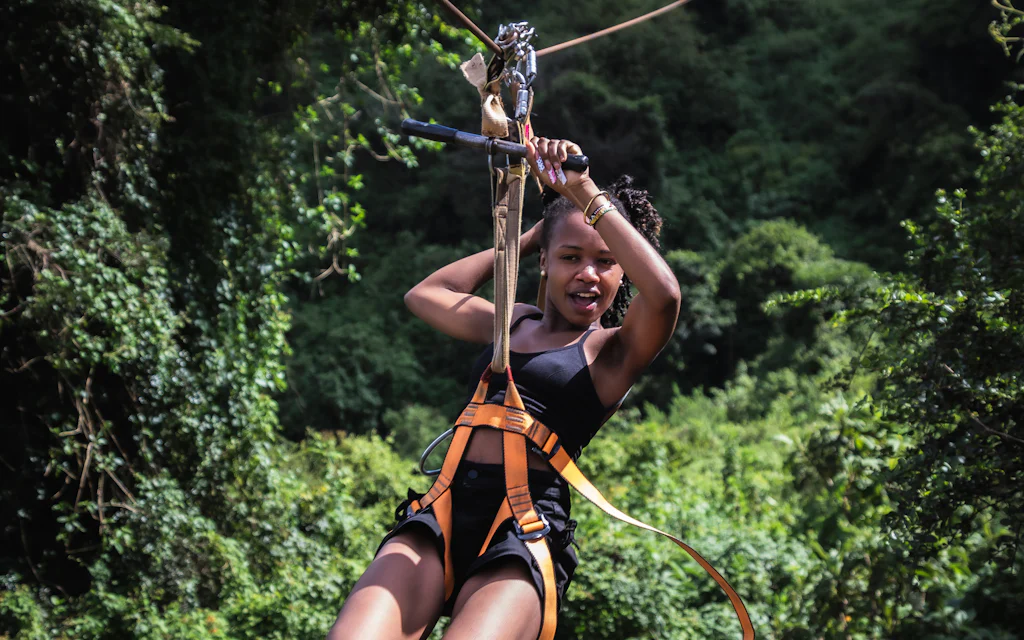
Ziplining in Hawaii 2026: The Best Course on Every Island
16 min readYndira W. Tonin
Ziplining is one of the most exhilarating things you can do in Hawaii, clipped to a steel cable, you launch off a platform and soar, over rainforest canopy, across deep valleys, above real waterfalls, with the ocean glittering in the distance. Every one of the four main islands has zipline courses, and each island offers something a little different.
The guide was reviewed and updated for 2026.
Whether you want to race a friend on side by side "dual" lines on Maui, fly through the movie famous valley at Kualoa Ranch on Oahu, soar over cascading waterfalls on the Big Island, or ride a half mile Superman style line on Kauai, there is a course for you. It is a thrill that is accessible to almost anyone reasonably fit, no experience required, and one the official Hawaii visitor sites list among the islands' top adventures.
This guide breaks down the best ziplining on each island, what it costs, what to expect on a tour, the age and weight rules to check before booking, and how to choose a course that is actually worth the money.
Table of contents
01
What is ziplining in Hawaii like?
If you have never done it, a Hawaii zipline tour is a guided, half day adventure that is far more approachable than it looks, the thrill is real, but so is the safety net.
You arrive, get fitted with a harness and helmet, watch a safety briefing, and usually do a short practice line before the real ones. Then a guide clips you onto the cable and you step off, gliding, hands free, sometimes hundreds of feet above a valley or stream, for anywhere from a few seconds to nearly a minute on the longest lines. Tours typically string together several lines connected by short walks, sky bridges, or even an ATV or UTV ride between platforms, and run about two to four hours total.
The settings are the magic. Hawaii's courses send you over thick jungle, pineapple and coffee fields, working ranches, deep gorges, and, on a few standout courses, directly over waterfalls. Guides handle all the technical clipping and braking on most tours, so you mostly just hang on and enjoy the ride.
It suits a huge range of people, it is a bucket list thrill for adventure seekers, but gentle enough that nervous first timers and families (within age and weight limits) do it all the time. If you can walk a short trail and are not afraid of heights to a paralyzing degree, you can zipline.
A quick note on the different styles you will encounter, because not all "ziplines" are the same. Canopy tours focus on the scenery, with shorter lines and sky bridges through the treetops. Adventure courses chain together long, fast lines for maximum thrill. Some are seated (you sit back in a harness and just enjoy the ride), while others are Superman style (you fly face down, head first). Most Hawaii courses are guide braked, meaning a guide controls your stop so you do not have to, which is one less thing for a first timer to worry about. Knowing which style a tour is helps you match it to whether you want gentle sightseeing or a genuine adrenaline hit.

02
Ziplining on Maui
Maui has the most zipline courses of any island and the best overall variety, which is why it is the top choice for many visitors.
Where should you zipline in Hawaii?
MauiOur pick
- Best for
- The most courses and the best variety — dual 'racing' lines, long zips, and ocean, valley, and waterfall views
- The catch
- The marquee courses book out; reserve ahead
Oahu
- Best for
- Cinematic scenery close to Waikiki — zip the 'Jurassic' valley at Kualoa Ranch or a working North Shore farm
- The catch
- Popular with everyone on Oahu; weekends fill fast
Kauai
- Best for
- thick jungle and the island's longest lines, including a half-mile zip and a Superman-style flying course
- The catch
- Kauai is wet — rain can make for a muddy, soggy ride
Big Island
- Best for
- The waterfall island — courses that send you directly over real, cascading waterfalls and deep gorges
- The catch
- The Hilo/Hamakua side is rainy; courses are far from Kona
The standouts, Kapalua Ziplines in West Maui is the island's only all dual course, meaning every line is side by side so you can race your companion, two miles of parallel zips over tropical forest, old pineapple fields, and a 50-foot waterfall. Skyline Eco-Adventures, on the slopes of Haleakala, opened the very first commercial zipline in the United States and offers sweeping upcountry and ocean views. And the Flyin' Hawaiian Zipline strings together some of the longest lines in the state across multiple valleys.
Maui's courses tend to combine genuinely thrilling lines with postcard scenery, ocean on one side, mountains on the other, and the dual racing format makes it especially fun for couples and friends. If you are building a wider trip, our things to do on Maui guide slots ziplining alongside the island's other headline adventures, and you can compare Maui hotels on Expedia (also on Booking.com) to base near the courses. Book the marquee courses ahead, as they sell out in peak season.
A practical Maui tip, the West Maui courses (like Kapalua) are an easy add-on if you are staying in Kaanapali (Kāʻanapali) or Lahaina, while the Haleakala slope courses pair naturally with an Upcountry day, you could combine a morning zip with a visit toward the volcano. Maui's variety also means there is a course for every comfort level, from gentle scenic canopy tours to long, fast, heart in your throat lines. If you are a couple deciding on one big adventure together, the side by side racing lines are hard to beat for shared, laughing the whole way fun.
03
Ziplining on Oahu
Oahu's ziplines trade sheer length for cinematic scenery and convenience, all reachable on an easy day trip from Waikiki. Kualoa Ranch on the windward side zips you through Kaaawa (Kaʻaʻawa) Valley, the green, mountain walled valley from Jurassic Park, Kong, and countless other films. On the North Shore, CLIMB Works Keana Farms runs the longest, fastest lines in the state, while Coral Crater in Kapolei is the closest to Waikiki and Bay View in Kaneohe is the cheapest, pay as you go option.
For the full breakdown of all four courses, prices, drive times, age and weight limits, and which one to book, see our dedicated zipline Oahu guide. They also make a great rainy or windy day alternative when the beach is not cooperating, and a memorable group activity for teens or a bachelor or bachelorette crew.
04
Ziplining on Kauai
Kauai, the "Garden Isle," delivers ziplining through some of the greenest jungle in Hawaii, plus the island's signature long, flying lines.
The leaders, Koloa Zipline in sunny Poipu on the south shore runs eight lines, including the half mile long Waita line, one of the longest single zips in the state, over a reservoir and rolling former plantation land. Outfitters Kauai offers a multi sport day that builds to a 4,000-foot, Superman style "FlyLine," where you ride face down like you are flying. And Princeville Ranch on the wetter north shore combines zips with a hike and a waterfall swim.
Kauai's courses lean into the island's jungle drama, and the longer, faster lines give a real sense of flight. The catch is the weather, Kauai is the wettest main island, and rain can turn a tour muddy (south shore Poipu is your driest bet). Pair it with the rest of things to do on Kauai for a full adventure day, and compare Kauai hotels on Expedia (also on Booking.com) for a sunny Poipu base.
Kauai is also a smart island for ziplining because so much of its most beautiful terrain, the Na Pali cliffs, the interior, is otherwise hard to reach. A zip course gets you up into the green, dramatic landscape on a budget far below a helicopter. The Superman style FlyLine, in particular, is a standout, riding face down and head first for thousands of feet gives a sensation much closer to actual flying than a standard seated zip. If you only zip once in your life and you are on Kauai, make it one of the long flying lines.

Photo by Nadiia Ganzhyi on Unsplash
05
Ziplining on the Big Island
The Big Island has a signature no other island can match, ziplines that send you directly over real, thundering waterfalls.
On the green, rainy Hamakua (Hāmākua) and Hilo side, Umauma Falls Zipline is the family favorite, with dual lines and views of up to 14 waterfalls, plus a course that crosses directly above the Umauma's tiered falls. Kohala Zipline, on the island's northern Kohala coast, offers a canopy tour with eight lines, six sky bridges, and a rappel, often bundled into a "zip and dip" day that ends with a waterfall swim. Both put you over genuinely dramatic, water carved terrain.
The trade off is geography, the best waterfall courses are on the green, wet windward side, a long drive from the Kona/Kohala resorts where many visitors stay (compare Big Island hotels on Expedia (also on Booking.com)), so budget the travel time. Worth it, though, soaring over a live waterfall is a Big Island experience you cannot get elsewhere. Our things to do on the Big Island guide helps you fit it into the island's big distances.
A smart way to handle the drive is to pair the zip with other Hamakua coast (Hāmākua coast) and Hilo side highlights, Akaka Falls, the Hilo farmers' market, or a botanical garden, so the long haul from Kona becomes a full, rewarding day rather than a there and back errand. The "zip and dip" tours that end with a waterfall swim are especially good value for the travel, since you get an adventure and a cooldown in one. Just pack a towel and dry clothes for the ride home.
06
How much does ziplining cost?
Ziplining is not a cheap activity, and it is worth going in with realistic numbers so the price does not sting.
Expect to pay roughly $150 to $300 per person for a zipline tour in Hawaii, depending on the course, the number and length of lines, and what is included. Shorter canopy tours sit at the lower end (around $150 to 200), while full day experiences with more lines, an ATV ride, lunch, or a waterfall swim ("zip and dip") run toward $250 to 300 and up. Most tours last two to four hours.
Here is the one strong opinion in this guide, at these prices, pick your course for the view, not just the stats. A zipline through dense trees you cannot see out of is not worth $200, no matter how many lines it has, but soaring over a Big Island waterfall, racing a friend above a Maui valley with the ocean behind you, or flying through Kualoa's movie valley absolutely is. Read recent reviews for what you will actually see, and spend on scenery. One spectacular course beats two forgettable ones.
A few ways to get more for your money, look for tours that bundle the zip with a waterfall swim, an ATV ride, or a meal, which stretch the value of a pricey morning. Book directly or via a discount activity site and watch for online or kamaaina rates. And consider a weekday or early morning slot, which can be cheaper and less crowded. Families should ask about child pricing, and bigger groups can sometimes negotiate a rate. Photos and videos are usually an expensive add-on, decide in advance whether you will buy them, or designate a friend on the ground to film, so you are not caught up selling at checkout.
07
What to know before you go
A few practical things will keep your zipline day smooth, and a couple of them can stop you being turned away at check-in.
The big ones to check when you book,
- Weight and age limits. Almost every course has a minimum and maximum weight (commonly around 70 to 270 lbs, but it varies) and a minimum age. These are strict safety rules, not suggestions, confirm them before you pay.
- What to wear. Closed toe shoes are usually required (no flip flops), with shorts or pants. Tie back long hair and leave loose jewelry behind. You will be in a harness, so dress comfortably.
- Health and pregnancy. Ziplining involves some walking, climbing, and jolts. It is generally not recommended during pregnancy or with certain back, heart, or mobility issues.
Beyond that, bring sun protection and a little cash for tips, use a strap or zip pocket for your phone (people drop them on the line), and arrive early. Tours run rain or shine in most cases, so a little mud or drizzle is normal, embrace it.
A word for the nervous, it is completely normal for the first step off the platform to feel terrifying, and equally normal to be whooping with joy by the second line. Guides are experienced at coaxing anxious first timers through it, and the practice line exists precisely to build your confidence before the big ones. If you are genuinely on the fence about heights, choose a scenic canopy course over a long, high adventure course, tell your guide you are nervous, and go near the front of the group so you do not have time to overthink it. The relief and exhilaration on the far side are a big part of why people love it.

Photo by Perry Grone on Unsplash
08
Is ziplining worth it?
For most people, yes, ziplining is a genuinely thrilling, scenic, and accessible adventure, and one of the few ways to see Hawaii's interior valleys and forests from the air without a helicopter.
It is especially worth it if you want a shot of adrenaline with a soft landing, the thrill is real, but the risk is well managed, and you do not need any skill or fitness beyond walking a short trail. Couples, families with teens, and groups of friends tend to love it, and the photos and videos (many courses sell them) are trip highlight material.
When is it not worth it? If you have a genuine, paralyzing fear of heights, a tight budget where $200+ per person is better spent elsewhere, or limited time you would rather give to Hawaii's beaches and water. It is also less magical on the less scenic courses, which loops back to the main point, choose well, and it is a highlight. Choose carelessly, and it is an expensive walk in the woods with some sliding.
It is also fair to weigh it against Hawaii's other big ticket adventures. A helicopter tour costs more but shows you far more of an island. A snorkel or dive trip gets you into the water that is arguably the islands' main event. A luau delivers culture and a meal. Ziplining's particular niche is the combination of accessible adrenaline and aerial scenery for a moderate price and no skill, if that combination appeals to you, it is well worth a half day. If your wishlist is already full of beaches, hikes, and water time, it is an easy one to skip without regret.
09
Which island has the best ziplining?
If you are choosing one island for ziplining, here is the honest breakdown, though the truth is you cannot go too wrong on any of them.
Maui is the best all rounder, with the most courses, the dual racing lines, and the widest variety of scenery, which is why it tops most "best ziplining in Hawaii" lists. The Big Island wins for sheer drama if waterfalls are your priority, nothing beats soaring over a live cascade. Oahu is the most convenient and the most cinematic (that Jurassic valley), ideal if you are not island hopping. And Kauai offers the greenest jungle and the longest, most flight like lines.
If you are trying to decide which island to visit at all, ziplining probably should not be the deciding factor, beaches, scenery, vibe, and the rest of each island's offerings matter far more, and our best island to visit in Hawaii guide weighs all of that. Ziplining is a wonderful add-on to whichever island wins on the bigger criteria, not a reason to pick one over another.
In practice, the best zipline for you is the one on whichever island you are already visiting, every island has at least one excellent course, so there is rarely a reason to island hop just to zip. Slot it into your wider plans using our island guides, and pick the course with the view. We run beach picnics on Oahu (from $349 for two), so we are partial to capping an adventure day with a sunset on the sand, but the zipline itself is the kind of memory that sticks for years.
FAQ
How much does ziplining cost in Hawaii?
Most zipline tours in Hawaii cost roughly $150 to $300 per person. Shorter canopy tours run about $150 to 200, while full day experiences with more or longer lines, an ATV ride, lunch, or a waterfall swim cost $250 to 300 or more. Tours usually last two to four hours.
Which Hawaiian island has the best ziplining?
Maui has the most courses and the best variety, including dual "racing" lines. The Big Island is best for ziplining over real waterfalls, Oahu offers the cinematic Kualoa Ranch "Jurassic" valley close to Waikiki, and Kauai has the greenest jungle and longest, Superman style lines. Every main island has at least one excellent course.
Is ziplining in Hawaii safe?
Yes, when you go with a reputable, established operator. You are fitted with a harness and helmet, given a safety briefing, and guides handle the clipping and braking on most courses. As with any adventure activity there is inherent risk, but serious incidents are rare and the courses are professionally built and inspected.
What are the weight and age limits for ziplining?
They vary by course, but most have a minimum and maximum weight (commonly around 70 to 270 pounds) and a minimum age (often around 7 to 10 years, sometimes older). These limits are strict safety requirements, so always confirm the specific course's rules before you book, especially for kids or larger guests.
What should I wear ziplining?
Wear closed toe shoes (no flip flops or sandals), comfortable shorts or pants, and clothes you do not mind getting a little dirty. Tie back long hair, secure or leave behind loose jewelry, bring sun protection, and use a strap or zip pocket for your phone so you do not drop it from the line.
Do you need experience to go ziplining?
No experience is needed. Zipline tours are designed for beginners, guides handle the technical parts, give you a briefing and a practice line, and walk you through everything. As long as you are reasonably mobile and within the weight and age limits, you can do it, even if it is your first time.
Can you zipline in the rain?
Usually, yes, most Hawaii zipline tours run rain or shine, and a little rain or mud is part of the experience, especially on wetter islands like Kauai and the Big Island's windward side. Tours are only canceled for genuinely unsafe conditions like high winds or lightning, in which case operators typically reschedule or refund.
Disclosure: Some links on this page are affiliate links. If you book or buy through them we may earn a small commission, at no extra cost to you. As an Amazon Associate, we earn from qualifying purchases.


