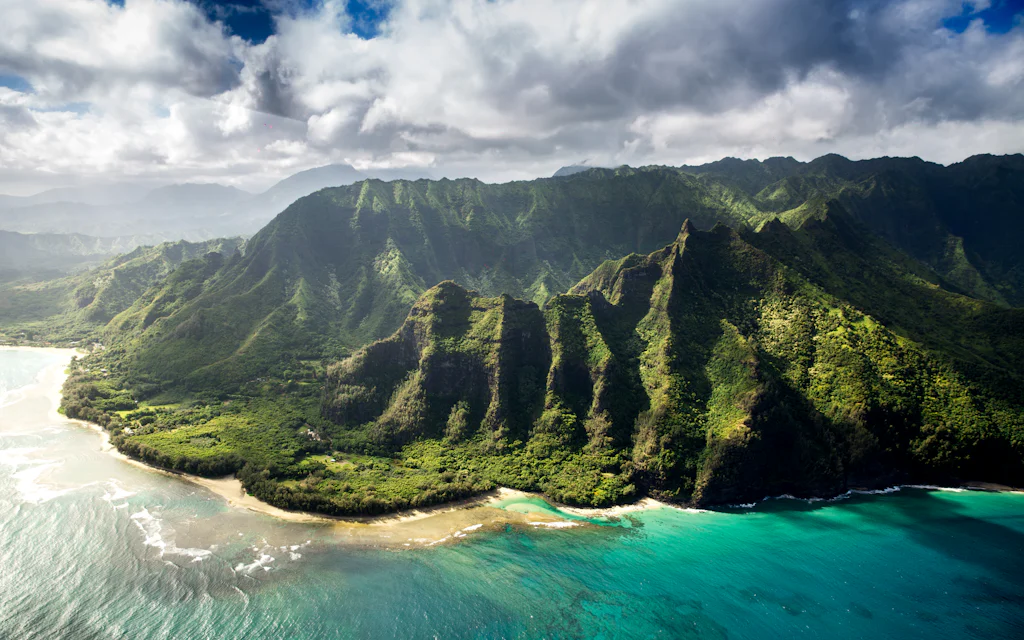
Things to Do in Kauai: The 25 Best in 2026
25 min readYndira W. Tonin
The best things to do in Kauai are the Na Pali Coast, Waimea Canyon, the Kalalau Trail, Hanalei Bay, and Poipu Beach, and in 2026 the five of them run on four different booking clocks. Kalalau permits drop 90 days out, Kilauea Lighthouse 60, Haena State Park 30, and the good boats fill weeks ahead, which makes the calendar the first attraction to master.
This guide covers the 25 stops worth your time as of July 2026, with real prices, the exact reservation windows, and the famous spot you should no longer visit at all. Kauai, Hawaii's oldest main island, rewards the traveler who books early and then refuses to hurry.
01
The Na Pali Coast, four ways
Fifteen miles of 4,000 foot sea cliffs with no road in, the Na Pali Coast is the reason most people booked the flight, and there are exactly four ways to collect it.
1. A Na Pali boat tour
Seventy percent of Kauai has no road, which is why the boat tour is the island's signature day. Catamarans out of Port Allen run $170 to $270 for 4 to 6 hours and include snorkeling and lunch. Zodiac rafts out of Kikiaola in Kekaha run $199 to $229 and enter sea caves when summer allows, and the raft ride is the one your spine remembers.
Morning departures beat the afternoon trade wind chop, a fact the forums repeat with the conviction of people who learned it the other way. The cliffs run 15 miles, the waterfalls thread down between them, and spinner dolphins usually escort at least one leg of the ride.
Sample the 2026 menu, Capt Andy's barbecue snorkel sail at $260, Makana Charters from $199 on the closest harbor to the cliffs, Holo Holo's Niihau combination at $315, and Blue Dolphin's sunset dinner cruise at $185. Summer books 3 to 4 weeks out, the Hanalei and Niihau departures 6 to 8, and the captains recommend booking the boat early in your trip so weather can reschedule you instead of robbing you.
The 2026 fleet at a glance
Capt Andy'sThe classic
Barbecue snorkel sail $260, sunset dinner sail $250, rafts from $229 out of Kekaha.
Makana ChartersValue
From $199, Native Hawaiian owned, departs the closest harbor to the cliffs.
Holo Holo ChartersRange
Niihau plus Na Pali combination $315, the only daily boat to the Forbidden Island.
Blue DolphinDinner
Sunset dinner cruise $185 with the early booking discount, biggest catamarans on island.
The Niihau addition deserves its own sentence. The Forbidden Island sits 17 miles off the west side, privately owned since 1864, closed to visitors, and Holo Holo's combination tour snorkels its waters without touching its sand, which is as close as anyone gets.
Whale season sweetens the deal too, humpbacks work these waters October through May with a December to March peak, and winter captains often pick the route an hour before departure based on the ocean's mood. If seasickness might find you, the fleet consensus is Bonine before boarding, fresh air, and eyes on the horizon, the raft is the wrong experience for a nervous stomach.
★4.9(547)
Kauai: Na Pali Coast Power Catamaran
4.5 hours
Free cancellation
from
$275
2. The Kalalau Trail to Hanakapiai
The Kalalau Trail is the most famous hiking trail in Hawaii, and the first 2 miles to Hanakapiai Beach need only your Haena State Park reservation, no separate permit. The full day version continues 2 more miles up the valley to 300 foot Hanakapiai Falls, 8 miles round trip, 6 to 8 hours, and every one of them earned. The cold pond under the falls is the payoff, and the hike back out always runs longer than the app promised.
The trail past Hanakapiai requires an overnight camping permit, $35 a person a night, 60 spots a day, released 90 days out at midnight Hawaii time, and peak dates vanish in under 90 seconds. Kauai residents can try for walk in permits at the Lihue parks office midweek, everyone else sets an alarm.
Do not swim at Hanakapiai Beach. Roughly 30 people have drowned there since 1970, many never recovered, there are no lifeguards and no cell service, and the calm days look exactly like the deadly ones. Hike, photograph, turn around.
Past Hanakapiai the trail narrows over Crawler's Ledge with real exposure, and the permit is a reservation, not a skill certificate. One 2026 note, March landslides closed the far end and the full route reopened to permitted hikers in the spring. Permits moved to the new explore.ehawaii.gov system in February, and old accounts do not carry over.
3. A helicopter over the interior
The helicopter tour is how you see the 70 percent. Waialeale's weeping walls, Manawaiopuna Falls from Jurassic Park, and the whole Na Pali ridgeline fit in one hour.
In 2026 doors on flights run roughly $275 to $350, doors off $350 to $500, Jack Harter's 60 minute doors off Hughes at $460, Safari's 45 minute tour at $244, and Island Helicopters' Jurassic Falls landing at $449 with the only legal permission to touch down at the falls. Photographers pick doors off for the glassless shots, everyone else discovers what 120 mile per hour wind does to an itinerary printout.
Helicopter tours as of 2026
Jack HarterDoors off
Doors off Hughes 500, 60 to 65 minutes, $460. Flying since 1962.
Island HelicoptersThe landing
Jurassic Falls landing $449, the only operator allowed to touch down there.
Safari HelicoptersValue
45 minutes $244, 55 minutes $309. The budget end of the real operators.
Blue HawaiianBig name
Eco Adventure from $409 out of Lihue, the big fleet operator.
Choose the helicopter tour soberly. Hawaii has the worst helicopter sightseeing safety record in the country, a fatal crash occurred off Kalalau Beach in March 2026, and the FAA now holds Hawaii air tours to a 500 foot minimum altitude. Experienced operators with long records, morning air, and a pilot who talks about weather more than scenery are the right filters, and the state's new FAA weather cameras do not come online until late 2026.
A small airplane air tour is the quieter option, $150 to $200, smoother in the wind, and the better call for anyone who wants the views without the debate. Whichever aircraft, fly early in the trip and early in the day, the same weather that cancels boats grounds rotors.
4. The Kalalau and Puu o Kila lookouts
The free way into the postcard is the top of Kokee Road, where the Kalalau Lookout and Puu o Kila stare 4,000 feet down into the valley the boats photograph from below, the best drive up views in Hawaii. Puu o Kila reopened in January 2026 after roadwork, your Waimea Canyon parking receipt covers it the same day, and the clouds win most afternoons.
Be up top before 10am and the valley usually shows. The scenic drive up doubles as the Waimea Canyon tour, so most visitors stack the lookouts and the canyon into one west side morning and thank themselves at lunch. The drive alone runs 18 winding miles from Waimea town, all of it uphill and none of it boring.
Boat vs helicopter vs trail vs lookout
On the waterOur pick
catamaran or raft
- Catamarans $170 to $270 with lunch
- Rafts $199 to $229, sea caves in summer
- Morning departures beat the wind
- Winter runs from the west side only
Air and land
the other three
- Helicopters $244 to $460, one hour
- Kalalau Trail, free with Haena entry
- Lookouts at 4,000 feet for $5 plus parking
- Clouds close the view after 10am
02
Waimea Canyon State Park and the west side
The west side is the dry side, the red side, and the early side, everything here peaks before noon.
5. The Waimea Canyon lookouts
Waimea Canyon runs 14 miles long and 3,600 feet deep, the Grand Canyon of the Pacific except red, green, and frequently rainbowed. Non residents pay $5 a person plus $10 a vehicle at credit card kiosks. One receipt covers both Waimea Canyon and Kokee State Park all day.
The main lookout reopened in January 2026 with a rebuilt viewing platform, so the guides still calling it closed are a year stale.
The canyon keeps banker's hours, meteorologically speaking. Clouds build with the afternoon heat, so shoot the lookouts by 10am and save the drive down for the socked in hours.
Work the pullouts in order, the main lookout at 3,400 feet, Puu Hinahina at 3,640, then the Kalalau pair at 4,000, an easy hour of stopping that walkers and motorcycles enter for $1. The red dirt stains everything it touches, which is why the photos pop and the rental car company sighs.
Waimea town at the bottom of the road wears its history lightly, Captain Cook first landed in Hawaii here in 1778, the statue marks it, and the plantation era shows in every storefront. Fuel up here, the canyon road has opinions about empty tanks, and JoJo's original Waimea shave ice bus handles the descent reward.
Getting to Waimea Canyon
Tap to open Google Maps with turn-by-turn directions.
6. Kokee State Park trails
Above the canyon, Kokee State Park holds the island's best day hikes, the Awaawapuhi Trail to a knife edge Na Pali overlook with 2,000 foot views, the Canyon Trail loop to Waipoo Falls, and the misty Alakai Swamp boardwalk for the adventure crowd that packs a rain layer.
The Kukui Trail is the outlier, 2.5 miles and 2,000 feet DOWN into the canyon itself, with the return trip payable in full at the bottom. The Kokee Natural History Museum staffs trail advice daily from 10:30am, runs on donations, and knows which trail is mud and which is merely muddy. Ask there before committing to Alakai, the swamp does not do second chances on footwear.
Plan around one closure, the Kokee campground is shut for improvements into spring 2027. Day hiking is unaffected, which for most visitors means nothing changed except the snoring.
7. Hanapepe on a Friday
Hanapepe calls itself Kauai's biggest little town, and on Friday Art Night, 5 to 8pm, it earns the title, galleries open, food trucks out, and the swinging bridge doing its one wobbly trick over the river. Little Fish Coffee, the coffee shop half the south side swears by, opened its bigger Hanapepe location in February 2026, and Japanese Grandma's Cafe serves sushi worth reserving ahead in a town of 2,000 that has no business having it.
Aloha spirit density peaks on that bridge around sunset. Bring cash, the trucks keep serving past the official close, and Talk Story Bookstore, the westernmost bookstore in the United States, stays open late enough to prove the town's name.
8. Kauai Coffee in Kalaheo
Kauai Coffee is the largest coffee farm in the United States, 3,100 acres and four million trees, and the visitor center pours free tastings daily from 9am to 5pm. The self guided walking tour costs nothing, the guided version runs $35, and the farm tour by open air truck is $50.
It is the rare agricultural attraction where the free version is genuinely the good version, an easy Kalaheo stop on the Poipu to Waimea drive that smells better than any museum. Time it as the canyon day's decompression, the tasting bar does not judge a third refill.
What Kauai's parks cost non residents in 2026
03
Haena State Park and the north shore
The north shore is the movie set half of the island, and in 2026 it runs on timed entry.
9. Kee Beach and the reservation drill
Kee Beach is the north shore's grand finale, a reef sheltered lagoon under Makana, the cliff Hollywood renamed Bali Hai, and the hardest parking spot in Hawaii.
On a calm summer morning the lagoon is as safe as north shore ocean gets, and at sunset the whole beach turns west and goes quiet. The reef wakes up before the crowds manage it, so the earliest slot earns the clearest water.
Pack reef shoes for the entry, water, and everything you need for the timeslot, the nearest store is a highway back toward Hanalei.
Haena State Park caps entry at 900 visitors a day. Reservations open exactly 30 days ahead at midnight Hawaii time on gohaena.com, and summer parking slots sell out by 12:01.
Parking runs $20 a car per timeslot plus $5 a person. The round trip shuttle from Hanalei is $45 with entry included, and cancellations resurface at 12:15am and again between 7 and 8am.
Miss the window twice and take the shuttle, it holds seats longer and skips the lot entirely. Cancellations refund minus 10 percent outside 48 hours and not at all inside it, and the park runs 7am to 7:45pm in summer. Morning slots are the snorkel window, winter brings surf and rip currents, and the lifeguards at Kee are the ones to believe over your itinerary.
Winning the midnight reservation
- 130 days out, 11:55pm HST
Log in and hover
Parking slots sell out by 12:01am in summer, 900 visitors a day, no walk ups
- 212:15am HST
The second release
Unreserved spaces drop 15 minutes later, the second bite at the apple
- 37 to 8am HST daily
Cancellation window
Refunded slots resurface most mornings, worth one coffee length refresh
- 4Plan B
The Hanalei shuttle
$45 with entry included, departs Waipa every 20 minutes from 6:20am
10. Hanalei Bay
Hanalei Bay is two miles of crescent sand backed by waterfall striped mountains, and the pier at golden hour is the island's most photographed 200 feet of wood. Beginners surf the gentle middle break in summer, the surf schools at the pier end teach the same wave daily, winter hands the bay to people with sponsorships, and the lifeguarded sections make it a family default year round.
The town feeds you between swims. JoJo's scoops shave ice with homemade syrups, Wishing Well has poured from its bus since 1983, Holey Grail fries taro donuts in coconut oil until 1pm, and Tahiti Nui has run the live music since 1963.
Dinner means Bar Acuda's tapas or AMA's ramen, both Tuesday through Saturday, both worth planning around. Before dropping down the hill, the Hanalei Valley Lookout across from the Princeville shops frames the taro fields that grow most of the state's poi, a two minute stop that explains the whole valley.
Around the corner in Princeville, Hideaways Beach hides down a steep path below the resorts, a pocket of sand and summer snorkel most visitors never find. The Hanalei Hill road work finished in late 2025, so the drive in is finally just a drive.
11. Kilauea Point Lighthouse
The 1913 lighthouse on Kilauea Point is the prettiest federal paperwork on the island, a national wildlife refuge on 180 foot sea cliffs where red footed boobies, tropicbirds, and winter whales share the views. Everyone 16 and older needs a $10 timed entry ticket plus a $1 fee on Recreation.gov, released 60 days out, and the refuge opens Wednesday through Saturday only.
Each ticket window runs 45 minutes, which is exactly enough for the point, the birds, and the gift shop's honor system level of temptation. From the rail the whole north coastline unrolls toward Na Pali, and in winter the whales perform without a reservation. Kilauea Fish Market by the turnoff handles lunch afterward, closed Sundays like half the island's best counters.
12. Anini Beach
Anini hides behind the longest fringing reef in Hawaii, which flattens the north shore's winter violence into a wading pool. It is the calm water answer when Kee has no slots, with one honest caveat, no lifeguard, and a current that runs toward the reef channel.
Families camp the grass under the ironwoods, windsurfers commute the lagoon, and the reef does the security work while the open ocean argues pointlessly on the far side. It is the least crowded calm water on the north shore, which is a sentence real estate agents retired on.
13. Tunnels and Haena Beach Park
Tunnels Beach is the island's best shore snorkel when summer flattens the sea, a horseshoe reef under Makana ridge where sea turtles commute the outer edge. Access is the catch, the tiny roadside pullouts fill by 7am, so most people walk from Haena Beach Park next door. Winter converts the whole stretch into a spectator sport, which is the polite name for surf you should not enter.
Just before the state park gate, Limahuli Garden and Preserve grows the north shore's answer to a museum, ancient taro terraces and native Hawaiian plants climbing a valley the NTBG calls a garden preserve because botany got poetic. It is the quiet hour the reservation day needs, timed neatly against an afternoon Kee slot.
04
The east side rivers and falls
The east side trades beaches for rivers, the only navigable ones in Hawaii, and keeps the rainy day plans.
14. Kayak the Wailua River
The Wailua is Hawaii's only truly navigable river. The kayak and hike combination to 120 foot Secret Falls is the east side's best half day. Rent from a permitted operator, guided trips run about $130 and help with the river mouth crossing, and know the 2026 change, Wailua River State Park started charging in February, $5 a person entry plus $10 parking for non residents, the same formula as every other Kauai state park.
The paddle runs 2 flat miles before the trail takes over, a 1 mile rainforest walk with two stream crossings, and the falls pool at the end swims cold and earns it. A dry bag for the phone and shoes that accept their fate are the whole packing list. Sunday is the wrinkle, rental kayaks stay off the river, so guided tours own the day.
15. The Fern Grotto by riverboat
Smith's has run flat bottom boats to the Fern Grotto since 1946, $35 adults, $17.50 kids, four departures a day, 80 minutes round trip with hula on the way. The forums call the grotto itself underwhelming and the ride the actual product, which is honest and also misses the point, you came for the singing. Budget the state park fees on top, the marina sits inside Wailua River State Park, so the $5 and $10 formula applies before Smith's sells you a ticket.
16. Wailua Falls and Opaekaa Falls
Two of the island's best waterfalls charge nothing and require zero hiking.
Wailua Falls drops its double stream 80 feet beside the road north of Lihue, famous from the Fantasy Island credits, best before 9am when the light angles in. Opaekaa Falls, 151 feet, pairs with the Wailua River overlook across the street and a picnic table that oversells nothing. Morning light makes both falls throw rainbows, which is the cheapest special effect on the island.
17. Mountain tubing the old canals
Kauai Backcountry floats you 2.5 miles through the hand dug irrigation canals and five tunnels of the old Lihue Plantation, headlamps on, $169 a person, ages 5 and up with a 43 inch height minimum. Wear the swimsuit, surrender the hairstyle, and let the century old engineering do the paddling. It is the only activity on this list invented by 1870s sugar engineers, it sells out weeks ahead with a waitlist worth joining, and it is the best rainy day card the east side holds, since the water was always going to win anyway.
18. The Sleeping Giant and the coastal path
The Sleeping Giant trail, Nounou to the maps, climbs 3.5 miles round trip to a summit with views down both coasts, the east side's sunrise hike of record and an easy grade until the last scramble.
Down at sea level, the Ke Ala Hele Makalae coastal path rolls 8 flat miles past lifeguarded Kealia Beach, and the beach cruiser rented in Kapaa is the correct vehicle for it. Ride north at sunrise and the whole path faces the light. Whales breach off this coast in winter, and the path never charges admission for the show.
Lydgate Beach Park south of the river is the east side's guaranteed swim, two boulder ringed ocean pools, lifeguards, and a playground built by seven thousand volunteers. It is where east side families learn to snorkel before graduating to the real reef.
One east side landmark stays a landmark only. The ruined Coco Palms resort, Elvis's Blue Hawaii backdrop, is demolished but unbuilt, financed at $431 million with a Kimpton flag and a 2028 target, and the community opposition has outlasted three developers. Drive past, hum accordingly, keep going.
Four clocks run your Kauai trip
Kalalau permitsFastest
90 days out, midnight HST on explore.ehawaii.gov. $35 a person a night, gone in about 90 seconds in summer.
Kilauea LighthouseTimed entry
60 days out on Recreation.gov. $10 plus $1 fee, ages 16 and up, open Wed to Sat.
Haena and KeeThe big one
30 days out, midnight HST on gohaena.com. $20 a car plus $5 a person, or the $45 shuttle.
Boats and helicoptersWeeks
3 to 8 weeks out in summer. Book early in the trip so weather can reschedule you.
05
Poipu and the south shore
The south shore is where the sun clocks in daily, the resorts know it, and winter swims survive it.
19. Poipu Beach
Poipu Beach is the south shore's sure thing, lifeguards, a toddler pool behind the tombolo, sea turtles grazing the reef, and Hawaiian monk seals napping like beached philosophy majors.
The wildlife rules are numbers, not suggestions, 10 feet from sea turtles, 50 feet from monk seals, and volunteers rope off the nappers while you experience the rare thrill of being managed by a seal's staff. Fewer than 1,700 Hawaiian monk seals exist, so the nap you are watching is a conservation event.
Winter is the south shore's calm season, which makes Poipu the island's most reliable swim from November to March, the exact months the north shore goes feral. Brennecke's corner next door serves the bodyboarders, and the lawn behind the beach hosts the island's most competitive shade economy.
20. The Mahaulepu Heritage Trail
The Mahaulepu Heritage Trail runs 2 unpaved miles from Shipwreck Beach along cliffs the developers never got, past sinkholes, sand dunes, and the Makauwahi Cave, the largest limestone cave in Hawaii. It is the standard local answer to Poipu crowds, ten minutes away and a century apart, free, exposed, shadeless for two miles, and best before the sun means it. The short detour into Makauwahi's sinkhole entrance requires a crouch and rewards it.
21. Spouting Horn
Spouting Horn fires seawater 50 feet out of a lava tube and groans between blasts, a five minute stop the forums rate surprisingly worth it. Go at high surf, stand behind the rail, and let the legend about the trapped lizard do the explaining.
Late afternoon backlights the spray for the photos, and the parking lot craft market covers the souvenir obligation. Ten minutes is plenty, which is exactly what a good roadside stop should ask of you.
22. The Allerton and McBryde Gardens
The National Tropical Botanical Garden runs its Allerton estate tours at $65, the combined best of both worlds at $70, the self guided McBryde at $30 with the shuttle included, and a sunset Allerton at $95 for anniversaries with a botanical streak. The Allerton is where Jurassic Park hid its raptor eggs under the Moreton Bay figs, and the 2.5 hour guided version, Tuesday through Saturday in closed toe shoes, is the one that explains why a Chicago heiress built garden rooms in a lava valley.
Old Koloa Town nearby covers lunch, Koloa Fish Market builds a dozen poke styles until 3pm, Puka Dog stuffs Polish sausage into pierced sweetbread for $12.50, and Porky's crowns everything with kalua pork. The Koloa Heritage Trail threads 14 historic stops through the same few miles for anyone who likes their beach day footnoted.
The south and west hold the island's other sure things. Salt Pond Beach Park in Hanapepe is the west side's lifeguarded family bay with a natural kiddie pool, Shipwreck Beach anchors the Mahaulepu end of Poipu with its cliff jumping theater you should watch rather than join, and Glass Beach in Port Allen glitters with a century of tumbled bottle glass beside the harbor your boat leaves from.
Five institutions, 2026 prices
Hamura SaiminThe shrine
Lihue counter since 1952, saimin from $7.50, lilikoi pie $4.50 a slice. Cash only.
Puka DogOne of one
Polish sausage in pierced sweetbread, $12.50, tropical relishes. Poipu daily.
Koloa Fish MarketPoke
A dozen poke styles until 3pm, closed Thursday and Sunday.
JoJo's Shave IceShave ice
Homemade syrups, profits fund free youth camps. Hanalei and Waimea.
Holey GrailDonuts
Taro donuts fried in coconut oil, Hanalei truck daily until 1pm.
06
The classics, priced
Every island has its institutions, and Kauai's take cash, close early, and outlast every trend that was supposed to replace them.
23. Smith's Family Garden Luau
Smith's Family Garden Luau in Wailua is the island's institutional luau, $150 adults, $45 juniors, $35 children, imu ceremony around 6pm, four generations of the same family running it.
Dinner covers the canon, kalua pig from the underground oven, teriyaki beef, mahi, and enough haupia to negotiate bedtime with. The tram tour of the 30 acre garden comes free with dinner, show only tickets run $30, and the nights vary by season, so check the calendar before promising anyone a Tuesday. The show closes with a fire number the kids will reenact in the hotel room.
24. Hamura Saimin and the plate lunch canon
Hamura Saimin has served noodles from the same Lihue counter since 1952, cash only, daily until 9:30pm. Saimin runs from about $7.50 up to the Sumo Bowl for the ambitious, barbecue sticks ride along, and the lilikoi chiffon pie outranks most fine dining desserts at $4.50 a slice.
Round out the canon with Mark's Place plate lunch in Puhi, weekdays and takeout only, Pono Market poke in Kapaa from 6am for the surf crowd, and the Fish Express in Lihue building custom poke bowls that highly justify the airport detour. The whole lilikoi pie travels at $22, and yes, it counts as a carry on.
One 2026 closure to know, Kauai Beer Company shut its Rice Street restaurant in September 2025, so the brewery pilgrimage is now a store shelf pilgrimage.
25. The farmers market circuit
Kauai runs a market somewhere almost every day, Monday at Kukui Grove, Tuesday and Thursday at Coconut Marketplace, Wednesday at Kapaa and the Kukuiula Culinary Market in Poipu, Friday in Hanapepe with the art walk attached. It is the cheapest way to eat the island, and the fastest way to learn that apple bananas ruin regular bananas permanently.
Between market days, Warehouse 3540 in Lawai parks food trucks beside maker stalls Tuesday through Saturday, the island's only food court with a resident coffee roaster. The Wednesday Kukuiula edition brings 25 plus farm vendors to Poipu, the polished end of the same idea.
A market a day, all week
- 1Monday
Kukui Grove, Lihue
Pau Hana Market, 3 to 5:30pm
- 2Tuesday + Thursday
Coconut Marketplace, Kapaa
9am to 1pm, the biggest midweek spread
- 3Wednesday
Kapaa Beach Park + Kukuiula
Sunshine Market east side, Culinary Market 3:30 to 6pm in Poipu
- 4Friday
Hanapepe Art Night
5 to 8pm, galleries plus food trucks that outlast the schedule
07
What to skip in Kauai
Skip Queen's Bath entirely, and this is the paragraph to forward to whoever suggested it. The county locked the access gate in September 2025 after a visitor went missing there, more than 30 people have died at the site over two decades, and as of July 2026 no reopening has been announced.
The gate carries citation warnings and rescue cost liability, and the tide pools are not worth any of it. The full story is here, shared so you can skip it informed.
Social media keeps the spot famous, the locked gate and the citation warnings say otherwise, and the county can bill trespassers for their own rescue.
Skip Hoopii Falls too, the trail crosses private property with no legal public trailhead and the residential street has logged repeated break ins. Treat unguarded north shore beaches like Larsen's with winter respect, the surf there is genuinely dangerous in season, the warning signs exist because people ignored them, and safebeachday.com posts current conditions for every risky spot on the island. And leave nothing visible in a rental car anywhere, Wailua and trailhead lots most of all, the thieves work faster than the tour boats.
Worth it vs closed and dangerous
Worth the stopOur pick
verified July 2026
- Spouting Horn, five loud minutes
- Mahaulepu Trail, the crowd escape
- Kalalau Lookout, the free Na Pali
- Anini Beach, the calm water fallback
Skip in 2026
closures and hard truths
- Queens Bath, gate locked since Sept 2025
- Hoopii Falls, private land and break ins
- Kokee campground, closed to spring 2027
- Anything left visible in a parked car
08
Getting around, and the booking calendar
Kauai is small on the map and slow on the road. One coastal highway, no bypass, and summer traffic can stretch Princeville to Poipu past two hours. The hotels cluster in Poipu, Kapaa, and Princeville, so stay on the side holding most of your plans, the where to stay breakdown is here, and check the state's lane closure page before any north shore run.
Leave early for anything with a timeslot, the road does not respect reservations. Gas runs sparse past Waimea and north of Princeville, so fuel in Lihue or Kapaa on principle, the island's one highway is shaped like a C and forgives nothing in the gaps.
The booking calendar is the real itinerary, and advance planning is the whole trick. Kalalau camping permits drop 90 days out, Kilauea Lighthouse 60, Haena and Kee 30, boats and a helicopter tour want 3 to 8 weeks in summer, and tubing sells out weeks ahead with a waitlist option.
Book the immovable things first and let the beaches fill the gaps, the beaches take walk ins. Every price and window in this guide is as of 2026, checked in July.
A week that books itself
- 1Day 1
South shore landing
Poipu swim, Spouting Horn, Koloa eats, the easy start
- 2Day 2
Na Pali by boat
Morning departure, calmer seas, afternoon recovery
- 3Day 3
Waimea Canyon + Kokee
Lookouts before 10am, Kokee trails after, Hanapepe if Friday
- 4Day 4
North shore reservation day
Kee timeslot, Hanalei Bay, lighthouse if booked
- 5Day 5
East side rivers
Wailua kayak or tubing, waterfalls, Hamura Saimin finale
Travel between coasts eats more of the day than the map admits, so cluster each day on one side and let the resort side of the trip claim the leftovers.
The weather works in postcodes. Mount Waialeale is among the wettest places on earth, yet Poipu and Waimea sit in its rain shadow and stay dry while Hanalei pours, so a rained out morning is usually a wrong coast problem, not a wrong island problem. Pack for both climates and believe the radar over the sky above you.
And yes, the chickens are everywhere, roughly 450,000 feral chickens against 75,000 residents, six per person. Two hurricanes freed the coops decades ago and the roosters have been announcing their independence at 4am ever since.
FAQ: things to do in Kauai
How many days do you need in Kauai?
Five full days covers the island, seven lets it breathe. One day each for the Na Pali boat, Waimea Canyon and the west side, the north shore reservation day, the east side rivers, and Poipu, then the second pass at whatever the weather stole on the first attempt. Shorter trips work if you pick two regions and forgive yourself the rest, the island is compact on paper, stubborn in practice, and kindest to whoever planned the fewest miles.
When is the best time to visit Kauai?
April, May, September, and early October. The shoulder seasons give the seas calm enough for the full Na Pali run, thinner crowds, and hotel prices that drop between the summer and holiday peaks. Winter trades the raft tours for whales, December through March, peak January to March, and summer trades calm seas for the midnight reservation scramble.
Do you need a car in Kauai?
Yes, for all but the most stubborn. There is no rail, the public bus skips the resorts and trailheads, and the island's best things scatter across 50 road miles. The one carless play is basing in Poipu or Kapaa and booking operators that offer hotel pickup, but budget the car anyway if the canyon and the north shore both made your list, no tour stitches those together in one day.
Can you swim in Kauai in winter?
On the south shore, usually. Poipu stays calm and lifeguarded November through March while the north shore closes out, the island's coasts trade seasons like shift workers on opposite schedules, and kids get the Lydgate rock pools in any season. Any day, any coast, the rule is the same, swim where a lifeguard tower stands, Poipu, Lydgate, Salt Pond, Kealia, or the guarded stretches of Hanalei Bay.
Is the Fern Grotto worth it?
As a boat ride with singing, yes, as a grotto, manage expectations. The $35 Smith's cruise is 80 minutes of river, hula, and family history, and the fern draped cave at the end is the intermission, not the show. Pair it with the luau on the same property and the afternoon books itself.
We run beach picnics on Oahu, not Kauai, no stake in your itinerary, just a professional respect for islands that make people slow down. Kauai rewards the planner who books the four clocks and then slows all the way down, the island refuses to be rushed, and the chickens will remind you of that at dawn, for free, indefinitely.
Read this next: The best hikes in Kauai, ranked honestly.
Cover photo, Braden Jarvis on Unsplash.
Disclosure: Some links on this page are affiliate links. If you book or buy through them we may earn a small commission, at no extra cost to you. As an Amazon Associate, we earn from qualifying purchases.


