Queens Bath Kauai: How to Visit Safely (And When to Skip It)
20 min readYndira W. Tonin
Queen's Bath in Kauai is one of the most beautiful places you can stand on the island, and one of the few where the view comes with a body count. It is a tide pool the size of a backyard swimming pool, carved into a lava shelf on the north shore at Princeville, fed by the sea, full of little fish, occasionally visited by a sea turtle who has clearly decided he owns the place.
It has also killed at least ten people.
So this guide is going to do the unromantic thing and lead with the rule that keeps you alive, then tell you everything else, the trail, the parking, the season, what to bring, and the calmer north shore spots to go instead when the ocean says no. We run beach picnics on Oahu, not Kauai, so we have no tour to sell you here and no reason to talk you into anything, just the honest version.
The short answer, go in summer, on a morning when the north shore surf forecast is under four feet, and never turn your back on the ocean. Any other day, admire the photos from your hotel lanai.
Table of contents
- What Queen's Bath actually is
- The one rule that keeps you alive
- How dangerous is Queen's Bath, really
- How to get to Queen's Bath
- Parking, the twelve spot problem
- The trail, what the hike is actually like
- Best time to visit Queen's Bath
- What to bring
- Safer north shore spots when the ocean says no
- Where to stay near Queen's Bath
- FAQ

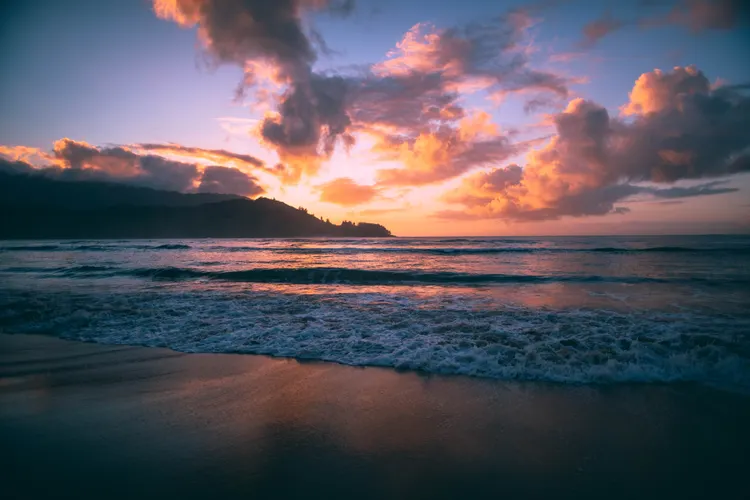
Photo, Jess Loiterton / Pexels
01
What Queen's Bath actually is
Queen's Bath is a sinkhole in the lava rock that the ocean refills through underground channels and over the edge when the surf is up. At low summer surf it behaves like a tide pool, clear, cool, maybe chest to head deep, with small reef fish darting around your ankles and a green sea turtle drifting through often enough that locals stopped being impressed decades ago.
The name comes from Queen Emma, consort to King Kamehameha IV, who is said to have bathed here in the mid-1800s. There is a second, smaller pool nearby that gets called the King's Bath, which tells you the royal family had the same instinct everyone since has had, this is an extraordinary place to get in the water.
On a calm day the main pool is roughly swimming pool size and deep enough to float in, clear to the bottom, fed and refreshed by the sea seeping through the porous lava. That same porous rock is why it never stagnates and why the little fish keep showing up, it is a living tide pool, not a puddle. The turtles are wild and protected, so the rule is the same as everywhere in Hawaii, look, do not touch, give them a wide berth.
It sits below a low cliff on the Princeville coastline, reached by a short, muddy trail and a scramble across the rock shelf. A freshwater stream spills over the cliff partway along, which is genuinely lovely and also the reason the rocks are coated in the exact slipperiness of a freshly mopped supermarket floor. There is no railing, no sign pointing the way, and nobody collecting a fee, which is part of the appeal and the entire problem at once.
The pool is the destination. The lava shelf around it, wide, flat, deceptively walkable, is the part that hurts people. Hold that thought. It is the whole post.
02
The one rule that keeps you alive
Here is the rule, and it is the only non-negotiable thing in this guide, if the north shore surf forecast is over four feet, you do not go. Not to swim, not to look, not "just for a photo from the edge." The deaths here are not people doing backflips into the pool. They are people standing on the flat rock, watching the big surf, with their backs to an ocean that does not announce itself.
A four foot Hawaiian swell does not look like four feet. It arrives in sets, and the seventh wave is not the size of the first six. It washes the entire shelf, knocks you flat, and pulls you off the rock into open water with no easy way back in. There is no lifeguard. There is no railing. There is, on a bad day, a fire department helicopter.
So before you go, you check the actual forecast, not the weather app's cheerful sun icon, the National Weather Service surf forecast for Kauai's north shore. Under four feet and falling, green light. Anything bigger, anything building, any high surf advisory, red light, full stop. And "falling" matters as much as the number, a swell that is forecast to build through the afternoon can be calm when you arrive and lethal by the time you climb out.
The other trap is the gap between the report and the reality. A four foot reading is an average. The biggest sets run noticeably larger, and they come in clusters with long lulls in between. So even on a green light morning, stand back and watch a full ten minutes before you commit. If a set reaches higher up the rock than you expected, that is your answer, the ocean just showed you the line it is willing to cross, and you want to be standing above it.
Is today a Queen's Bath day?
Green light, goOur pick
- Best for
- Summer (roughly May–September), north-shore surf forecast under 4 feet, a calm sunny morning, and you arrive early
- The catch
- Still never turn your back on the water, and still check the forecast yourself the morning of
Yellow light, look, do not swim
- Best for
- Small but lingering swell, gusty trades, or a forecast you can't quite read
- The catch
- Stay high on the rock, take the photo, skip getting in — the pool isn't going anywhere
Red light, do not even drive over
- Best for
- Winter (October–April), any surf over 4 feet, a high-surf advisory, rain, or dusk
- The catch
- This is when people die here — the calm pool and the 30-foot wave share the same rock shelf
And when you are there, the rule has a second half, never turn your back on the water, and never go alone. The ocean here is not out to get you. It is just indifferent, which on a rock shelf is functionally the same thing.
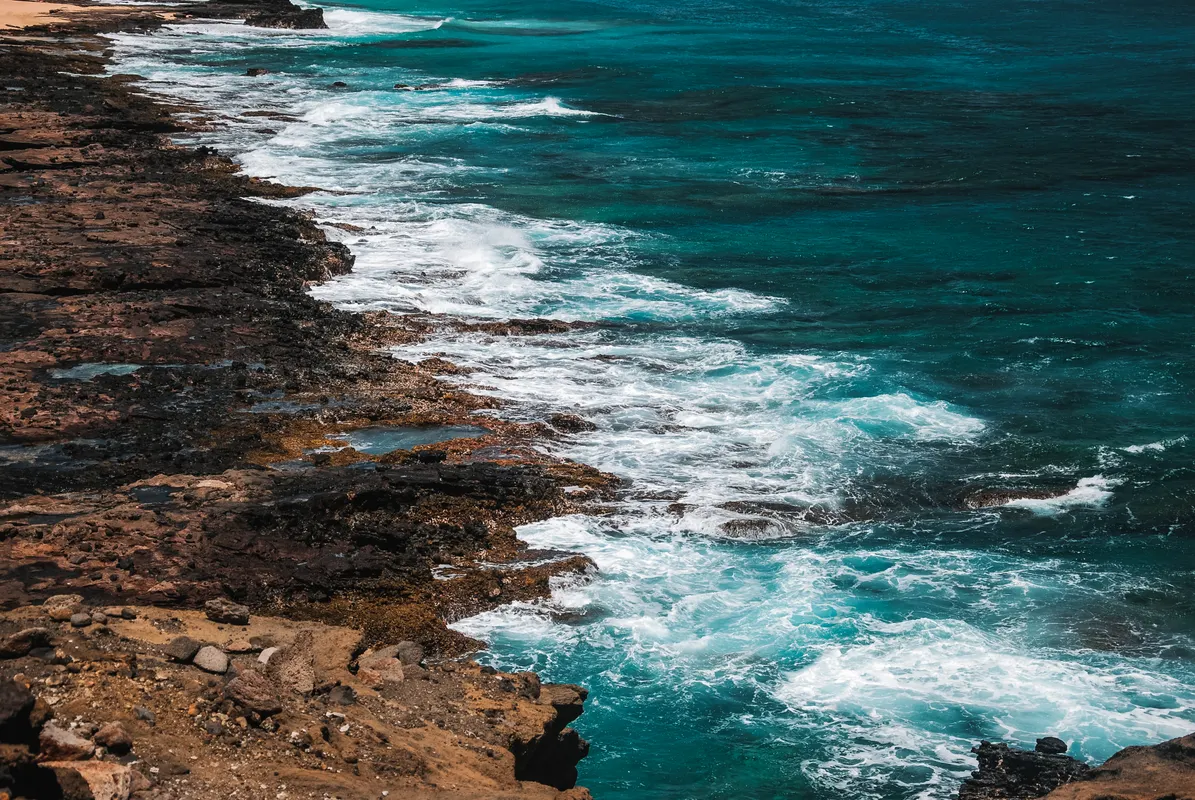
Photo, Damien Schnorhk / Pexels
03
How dangerous is Queen's Bath, really
Honestly? Dangerous enough that the Princeville at Hanalei Community Association has spent years actively trying to keep visitors out, fencing, warning signs, the works, which is not the energy a neighborhood brings to a place it considers a charming local swimming hole.
At least ten people have died at Queen's Bath, according to the site's record as of 2024, most swept off the rocks by surf and drowned in winter conditions. Rescues are routine. Beat of Hawaii documented six separate rescues here in a single day, which is the kind of statistic that should reframe how you think about the place.
I want to be careful here, because the danger is real and people's families are part of that number. So the joke is not the ocean. The joke is us, the visitors, myself absolutely included, who see a bright blue pool online and somehow file "ten deaths" under "will not happen to me, I am a strong swimmer." Strong swimming is not the variable. Being on the rock when the set comes is the variable.
The cruel part is the timing. People do not get into trouble in obviously violent surf, they stay out of that. They get caught on the in between days, the ones that look fine, where the pool is glassy and forty people are taking photos and one sneaker set arrives every fifteen minutes. That is the gap the rock exploits, calm enough to lower your guard, big enough to take someone off the shelf.
None of this means you cannot go. Plenty of people swim at Queen's Bath every calm summer morning and have the best hour of their trip. It means the place demands one honest question, is the ocean small today, yes or no, and punishes anyone who skips it. Ask the question. Respect the answer. Then it is just a beautiful pool, and a genuinely special one.
04
How to get to Queen's Bath
The trailhead is in the Princeville resort community on the north shore, at the end of Punahele Road. From Lihue and the airport it is about a 40-minute drive north and west on the Kuhio Highway, past Kapaa and over the one lane bridges into the green, rainy, ridiculously scenic top of the island. You turn into Princeville, wind through the neighborhood, and the small trail entrance sits down a slope near the corner of Punahele and Kapiolani Loop. There is a stream and a little waterfall right at the start, so you will know you are in the right place when your shoes get wet in the first thirty seconds.
It is genuinely close to the road, this is not a backcountry expedition. The whole walk to the water is under a mile. The trouble is never distance. It is traction and timing. Plug "Queen's Bath trailhead" into your map app before you lose signal, because the north shore drops to one bar with the enthusiasm of a place that would rather keep to itself.
A note that trips people up, Queen's Bath now has a county run access gate that closes through the entire winter season and whenever the surf turns hazardous, Kauai County announced a full winter closure in 2025 and has locked the gate for the season in back to back years. So from fall into spring you may not get in at all, which is exactly the point, not a glitch. With at least ten deaths here, glance at Hawaii's ocean safety service for the surf outlook before you go, check the gate and signage when you arrive, and never hop a barrier, a closed gate is the ocean's lawyer telling you today is a red light day.
If you are building a wider north shore day, this pairs naturally with the rest of the coast, see our guide to things to do in Kauai for how to string Hanalei, Ke'e, and the overlooks into one loop.
05
Parking: the twelve spot problem
There are about a dozen parking spots at the trailhead. A dozen. For one of the most searched attractions on the entire island. The math does not work, and it is not supposed to, the neighborhood would rather you did not come at all.
So the lot is full by midmorning and stays full. The surrounding streets are a Princeville residential community with aggressively enforced no parking zones, and they will ticket you with the quiet satisfaction of people who have wanted to ticket you for years. Do not block driveways. Do not invent a spot. The signage is not a bluff, and a towed rental car on a remote Kauai morning is the single fastest way to turn a free attraction into the most expensive swim of your life.
There is also a courtesy angle here that is easy to forget when you are circling for the fourth time. These are people's homes. The residents did not ask to live at the trailhead of a viral tide pool, and the difference between a welcome guest and the reason they push for another closure is whether you park legally, keep your voice down, and take your trash with you.
This is one more reason the summer morning rule does double duty. The same early hour that gives you the calmest, safest ocean also gives you the only realistic shot at a legal parking space. Show up at 7 or 8 a.m. and you solve two problems with one alarm clock.
If the lot's full and the streets are posted, the honest move is to leave and come back at the tail end of the day, or pick one of the safer north shore spots below. There is no secret overflow lot. There is no shuttle. There is just the dozen spots and your willingness to be early.
06
The trail: what the hike is actually like
The trail to Queen's Bath is about 0.8 miles round trip and rated easy to moderate, which is technically true and slightly misleading. The grade is easy. The surface is where it earns the asterisk.
You drop down a muddy path, past that pretty little waterfall, to the lava coastline, and "muddy" on the wet north shore of Kauai means a red clay slip and slide that has separated many a tourist from their dignity and occasionally their ankle. Then you cross the rock shelf, which is uneven, sharp in places, and slick where the water reaches it.
Going down takes most people 15 to 20 minutes. It feels easy. The climb back up, in the heat, on the same mud, with a wet swimsuit and the smug confidence of someone who already did it once, is where the actual cardio lives.
The route along the coast is not always obvious, either, you reach the shelf and then pick your way north toward the bigger pools, over rock that is pocked with holes and edged with the kind of barnacle that files a complaint against your shin. Watch your footing more than your phone. Most of the injuries here are not dramatic ocean rescues. They are an ankle rolled on dry rock, a long, sweaty hobble from the car.
Wear real shoes with grip, this is the single most ignored piece of advice about the place, and it is the difference between a great morning and a clinic visit. Flip flops are how the mud wins.
Take it slowly, watch every step on the shelf, and remember that the same rock that is a fun scramble on a calm day is a launch ramp on a rough one. The trail is not the danger. The trail just delivers you to it.

Photo, Jess Loiterton / Pexels
07
Best time to visit Queen's Bath
Summer. The answer is summer.
Hawaii's big surf hits north facing shores in winter, roughly October through April, and Queen's Bath faces directly into it. Those are the months it is effectively a no go, when the swell turns the gentle pool into a place the fire department knows by name. Many locals will tell you flatly that the pool is a summer only spot, and they are right.
In summer, roughly May through September, the north shore goes calm and the pool does its tide pool impression, glassy, clear, swimmable. That is your window. Within it, go in the morning, winds are lightest, surf reports are freshest, the light on the water is best, and you might actually park.
There is a tide layer on top of the season layer, too. A lower tide exposes more of the shelf and calms the pool. A higher tide brings the water closer to where you are standing. You do not need to obsess over a tide chart the way you would for a sea cave, but pairing a low ish tide with small summer surf is the combination that turns a good Queen's Bath morning into a perfect one.
But "summer" is the season, not the permission slip. Even in July, a south or wrap around swell can put the shelf underwater. The forecast is the boss. The calendar is just advice. If you want the bigger picture on Hawaii's swell seasons and crowd timing, we break it down in the best time to visit Hawaii.
So, summer for the season, a sub four foot morning for the day, and your own eyes for the final call. Three filters, in that order. Pass all three and you have earned the swim.
08
What to bring
Pack light, because you are scrambling over rock and you want your hands free. The non negotiables,
- Shoes with real grip. Trail shoes or sturdy water shoes that you can hike in and swim in. This is the item people skip and regret. Mud plus lava plus flip flops equals physics you will lose.
- Reef safe sunscreen. It is the law in Hawaii and the polite thing to do to a living reef. Reapply, the north shore sun is sneaky behind the breeze.
- A dry bag for phone, keys, and wallet. There is nowhere safe to leave things, and the rock is not a coat check.
- A waterproof phone pouch if you want photos in the pool without gambling your phone against saltwater.
- Water and a snack, because there is nothing out there, no shop, no fountain, no bathroom, and the climb back is hotter than you think.
- A small first aid kit or at least a few bandages. The rock takes its tax in scraped shins and stubbed toes, and a blister patch beats a mile of regret.
There is no shade down on the shelf, so a rash guard or a light long sleeve does more good than another inch of towel. And whatever you carry, carry it on your back, not in your hands, the moment you need both palms on the rock is the moment you will be glad nothing's dangling from a wrist.
Leave the cooler, the speaker, and the elaborate beach setup at the rental. This is a scramble, not a lounge. If a full styled spread on the sand is more your speed, that is a different kind of day in a different place, and on Oahu, frankly, it is what we do for a living. On Kauai's north shore, travel light and keep both hands for the rock.
For a full Hawaii trip rundown, our Hawaii packing list covers the rest of the suitcase.
09
Safer north shore spots when the ocean says no
Here is the thing nobody tells you, most days, the ocean will say no, and that is fine, because Kauai's north shore is stacked with places that are gorgeous and will not try to drown you.
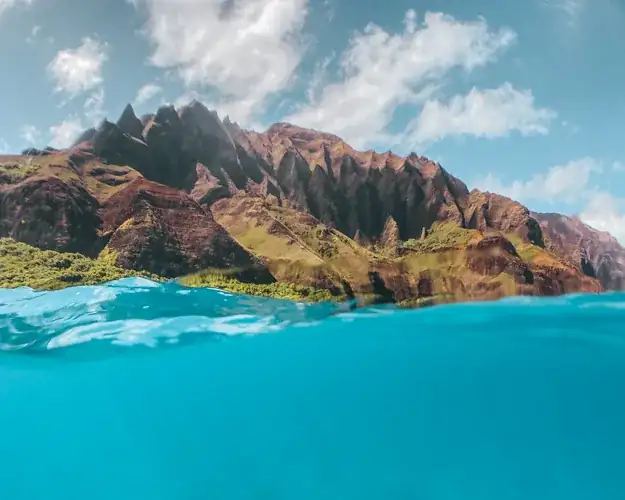
The best safe way to actually see this coastline, the cliffs, the sea caves, the green Na Pali wall that no road reaches, is from the water, on a boat with a captain who reads the swell for a living instead of guessing from a rock. A north shore catamaran cruise gets you the dramatic version of the view with none of the rock shelf roulette.
★4.9(547)
Kauai: Na Pali Coast Power Catamaran
4.5 hours
Free cancellation
from
$275
A few land options for a red light day,
- Hanalei Bay, the postcard. Two miles of sand, a pier, mountains behind it, and lifeguards. Calm and swimmable in summer, famous for a reason.
- Hideaways Beach, a steep little path down from Princeville to a pretty cove. Good snorkeling on a calm day, and just down the road from Queen's Bath.
- Anini Beach, protected by one of the longest reefs in Hawaii, which makes it one of the calmest, most family friendly beaches on the island.
- Ke'e Beach, the literal end of the road, where the highway gives up and the Na Pali coast begins. Reef protected lagoon, big sunsets.
If you would rather book the water than read it, a guided Na Pali Coast boat cruise covers the same coastline safely, and on a clear day, a helicopter tour shows you the parts of this island that have no trail at all. For more swimmable sand, our roundup of the best beaches in Kauai and the wider best beaches in Hawaii guide both rank the calm ones.
10
Where to stay near Queen's Bath
Queen's Bath sits inside Princeville, which is the easiest base for the whole north shore. It is a resort community up on the bluff, condos, a couple of resorts, ocean view everything, and it puts you within minutes of the trailhead, Hanalei, and the overlooks. Staying here is how you pull off the early morning arrival without a predawn cross island drive.
Hanalei town, just down the hill, trades the resort polish for a low slung surf town feel, a handful of inns and vacation rentals, taro fields, and the bay out front. It is walkable, charming, and books up early.
If you would rather have the calmer, sunnier weather, the south shore around Poipu stays drier when the north shore is socked in, but it is about an hour's drive from Queen's Bath, so it is a better base if the pool is a single stop rather than your main event. The honest trade off, the north shore is greener, wetter, and more dramatic. The south shore is sunnier, calmer, and easier. Neither is wrong, and on a week long trip plenty of people split the difference and stay a few nights on each.
One weather note worth internalizing before you book, the north shore gets its greenery the old fashioned way, by raining on it. A passing morning shower up here is normal and usually clears, so do not let a gray forecast cancel your plans, just let it move your swim to the brighter half of the day.
Wherever you land, book the north shore early. There is not much lodging up here, demand is high, and "we will figure it out when we land" is how people end up an hour away in Lihue. Plan the bed before you plan the swim.
Where to stay: compare Kauai hotels on Booking.com or on Expedia to find your base.
FAQ
Is Queen's Bath Kauai safe to swim in?
It can be, on the right day. Queen's Bath is safe to swim when the north shore surf is small, generally under four feet, which mostly means calm summer mornings. When the surf is up, especially in winter, it is genuinely deadly. At least ten people have died here. There is no lifeguard, so the call is entirely yours. Check the forecast, never turn your back on the ocean, and when in doubt, do not get in.
How many people have died at Queen's Bath?
At least ten people have died at Queen's Bath as of 2024, most swept off the lava shelf by surf and drowned. Rescues are common, the Kauai fire department has pulled multiple people out in a single day. Nearly all incidents happen in rough or winter conditions, which is exactly why the season and surf rules matter so much.
What is the best time to visit Queen's Bath?
Summer (roughly May through September), early in the morning, on a day when the north shore surf forecast is under four feet. Mornings give you the calmest ocean, the freshest forecast, the best light, and the only realistic shot at parking. Winter, October through April, is when the surf makes it dangerous, treat the pool as a summer only spot.
How long is the Queen's Bath trail?
About 0.8 miles round trip, rated easy to moderate. The grade is gentle, but the path is muddy and the lava shelf at the bottom is slippery and uneven, so wear real shoes with grip. Most people get down in 15 to 20 minutes. The muddy climb back up is the harder half.
Where do you park for Queen's Bath?
At the small trailhead lot at the end of Punahele Road in Princeville, which holds only about a dozen cars and fills early. Surrounding streets are residential with strictly enforced no parking zones. Arrive at 7 or 8 a.m., the same early window that gives you the safest ocean.
Is Queen's Bath closed?
It has been closed at various times, and some trail listings flag it as closed, because access depends on conditions and on the Princeville community association's ongoing efforts to limit visitors. Always follow current signage at the trailhead, and never cross a barrier, a closure is usually a sign the ocean is in no mood for company.
Are there safer alternatives to Queen's Bath?
Yes, plenty. Hanalei Bay, Anini Beach, Ke'e Beach, and Hideaways are all calmer, lifeguarded or reef protected north shore spots. To see the dramatic Na Pali coastline safely, a north shore boat cruise or a helicopter tour beats standing on a wet rock shelf every time.
Disclosure: Some links on this page are affiliate links. If you book or buy through them we may earn a small commission, at no extra cost to you. As an Amazon Associate, we earn from qualifying purchases.