Swim With Dolphins Oahu: Best Wild and Lagoon Tours (2026)
21 min readYndira W. Tonin
The honest answer to the swim with dolphins Oahu question, yes, you can, but the good version means booking a wild dolphin boat tour off the West Coast, not chasing a pod from shore. Swimming up to wild spinner dolphins has actually been illegal since 2021, and the captive "encounter" in a lagoon is a different thing entirely. Every law, fine, and 2026 price here was rechecked against NOAA and the operators, current as of 2026.
So before you start planning, it helps to know that three completely different experiences all get sold under the same five words.
This guide to swim with dolphins Oahu sorts them out, where the dolphins really are, the law nobody mentions on the booking page, the best tours, and the honest case for which one to pick, plus the free viewing activity most guides skip. The whole thing takes about half a day and one early alarm.
Table of contents
- Can you actually swim with dolphins on Oahu?
- The three things people mean by "swim with dolphins"
- Where the spinner dolphins actually are
- The spinner dolphin law nobody tells you about
- The best wild dolphin tours on Oahu
- What about Sea Life Park and Dolphin Quest?
- The marine life beyond dolphins, turtles and whales
- The best time of day and year to go
- What to bring (and what to leave on the boat)
- How to get there and where to stay
- FAQ
01
Can you actually swim with dolphins on Oahu?
Yes, with one big asterisk that the glossy booking photos skip right over.
The legal way to swim with dolphins Oahu visitors want is a licensed West Coast boat tour, where you get in the water near wild dolphins, where the captain reads the ocean, keeps a respectful distance, and lets the animals decide how close they want to come. You cannot legally swim up to a pod of wild spinner dolphins resting in a bay, kick toward them, or "intercept" them in your rental snorkel gear. That stopped being a gray area in 2021.
The distinction matters because the most photographed "swim with dolphins on Oahu" fantasy, you, alone, treading water as a spinner dolphin pirouettes past, is exactly the thing federal law now prohibits. The good news is that the legal version is also the better version, and it is not close.
On a real tour you trade the fantasy of grabbing a dolphin for the reality of watching a wild pod travel, feed, and surf the bow wake on their terms. You get a knowledgeable crew, a boat that can actually reach the deep water where the animals are, and, almost always, a turtle filled snorkel stop, with reef fish and honu, as the consolation prize that quietly becomes the highlight.
"Licensed" is doing real work in that sentence, too. A permitted operator knows the protected species, the legal distances, and the harbor rules cold, which means the only thing you have to manage is your own snorkel mask. A guy with a jet ski and a Craigslist ad knows none of that, and the fine for getting it wrong is yours, not his.
So the honest answer to whether you can swim with dolphins on Oahu is yes, beautifully, if you book the right thing. Let us make sure you book the right thing.
Wild boat tour versus the lagoon
Wild boat tourOur pick
~$140 to 215
- Real ocean, real pods
- Legal offshore, non spinner species
- No guarantee, weather dependent
- The richer memory
Captive lagoon
$90 to 300+
- Sea Life Park or Dolphin Quest
- Guaranteed, weatherproof, hands on
- Great for small kids
- A pen, and it costs more
02
The three things people mean by "swim with dolphins"
When someone types "swim with dolphins Oahu" into a search bar at 11pm three weeks before their trip, they could mean any of three wildly different days. Sorting out which one you want saves you a refund request later.
Which 'swim with dolphins' do you actually want?
Wild boat tour (West Coast)Our pick
- Best for
- Seeing dolphins in the open ocean where they live, then snorkeling with turtles — the honest, legal version
- The catch
- Half a day, an early alarm, and zero guarantees the pod shows up
Captive encounter (Sea Life Park)
- Best for
- Families who want a guaranteed, hands-on photo in a controlled lagoon, weather no object
- The catch
- Costs more than the boat, and it's a pen — not the ocean
Swimming up to them yourself
- Best for
- Nobody, anymore
- The catch
- Approaching wild spinner dolphins within 50 yards has been illegal since 2021
Snorkel with turtles instead
- Best for
- Anyone who wants a near-guaranteed, calm, close encounter without driving an hour west
- The catch
- Honu, not dolphins — but you'll see them from Waikiki on a half-day
Option one is the wild boat tour. You drive out to the West Coast, board a catamaran or a Zodiac raft, motor out to where the dolphins live, and get in the water nearby when conditions and the animals allow. It is the experience this whole guide steers you toward, wild, real, and with no guarantees, which is precisely why it feels like something when it works.
Option two is the captive encounter. Sea Life Park runs a dolphin lagoon where you stand on a submerged platform and a trained bottlenose dolphin comes over for a dorsal fin tow and a photo. It is guaranteed, weatherproof, hands on, and great for small kids, and also a pen that costs more than the boat, more on that honestly below.
Option three is the DIY version, where you find a pod from shore or a kayak and swim toward it. Please do not plan your trip around this one. It is the option that is now illegal, and it is also the one most likely to leave you with a story that starts "so the enforcement officer said..."
Pick option one. Keep option two in your back pocket for a rainy day with toddlers. Forget option three exists.
03
Where the spinner dolphins actually are
Here is the single most useful sentence in this guide, the dolphins are on the west side, not in Waikiki.
Spinner dolphins versus bottlenose dolphins
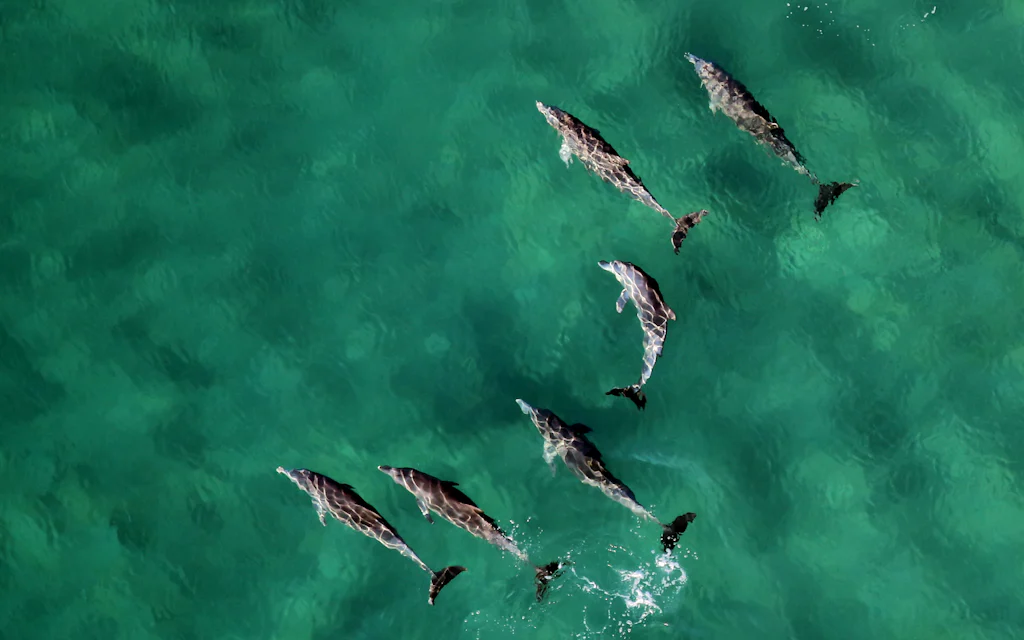
Not all dolphins here are the same, and the difference is the whole legal story. The Hawaiian spinner dolphins are the protected resident pods, and a Hawaiian spinner dolphin is small and acrobatic, spinning up to six times on a single leap, and they rest in the shallow bays by day. The bottlenose dolphins and pantropical spotted dolphins are bigger and live farther offshore, awake and foraging in the daytime, which is exactly why the legal swim tours target them and not the resting spinners.
Oahu's resident pods, spinner dolphins, plus bottlenose, spotted, and rough toothed dolphins farther out, favor the leeward Waianae Coast, the long sunny stretch from Ko Olina up past Makaha, the calmest areas along the coast. The water there is calmer and clearer for more of the year, the coastline drops off into deep water quickly, and the spinner dolphins come in close to rest during the day after hunting all night.
That is why nearly every legitimate dolphin tour launches from the Waianae Small Boat Harbor or from Ko Olina, not from Waikiki. If a listing promises wild dolphins on a one hour sunset cruise off Waikiki, read it again, that is a sunset sail that occasionally gets lucky, not a dolphin trip.
The drive west is part of the deal. From Waikiki you are looking at roughly 45 minutes to an hour to reach Ko Olina or Waianae, which is exactly why the good tours leave early and ask you to arrive before most visitors have found coffee.
It also explains a quirk first timers find baffling, you can spend a week on Oahu, snorkel every day, and never see a dolphin, simply because you stayed on the wrong side of the island. The honu, green sea turtles, are everywhere, including off Waikiki and the best snorkeling spots on Oahu. The dolphins keep their own address, and it is out west.
Within the west side, the two launch points play differently, Ko Olina the polished end with manmade lagoons, resorts, easy parking, and a short run down to the pods. The Waianae Small Boat Harbor is rougher around the edges and a touch closer to the action, which is why the small fast boat safaris tend to leave from there. Either way, the dolphins are the same, only your coffee stop changes.
04
The spinner dolphin law nobody tells you about
In 2021 the rules changed, and most booking pages still have not caught up.
Under a federal rule from NOAA Fisheries, published September 2021 and in effect since October 28, 2021, it is illegal to swim with, approach, or remain within 50 yards of the Hawaiian spinner dolphins within two nautical miles of the main Hawaiian Islands. That includes approaching by boat, kayak, paddleboard, drone, or your own two arms, and it includes "leapfrogging," the sneaky move of parking yourself in a pod's path so they technically swim up to you.
Read that carefully, because it has a loophole the good operators use. The ban covers only the nearshore spinner dolphins. Swimming offshore with the other species, bottlenose and spotted dolphins out in the deep water beyond the two mile line, is still perfectly legal, which is why the honest west coast tours motor a few miles out rather than crowding a resting bay.
The law, in numbers (2026)
Why the Hawaii spinner dolphins rule exists
The reason is not bureaucratic killjoyery. Spinner dolphins feed in deep water all night and come into shallow, sandy bays during the day to rest, socialize, and avoid sharks. For years, well meaning swimmers turned the Hawaiian spinner dolphins' rest stops into a dawn to dusk meet and greet, and exhausted dolphins do worse over time.
The state's Division of Boating and Ocean Recreation backs the same message. A rested dolphin is a healthy dolphin.
And the fines are real, not theoretical. The civil penalty tops out around $36,536 a violation, and a knowing violation can run to $100,000 and a year in jail.
It is enforced across the main Hawaiian islands, and the same rule protects the spinner dolphins around Maui, Kauai, and the Big Island. NOAA has logged more than 600 patrols since the rule took effect, and in 2024 alone officers issued 47 citations, with Big Island ocean users cited as the state's worst offenders.
In one 2023 case, three snorkelers were fined for a filmed fifteen minute pursuit of a pod off Makua Beach on this very coast. A separate proposed rule that would close specific resting bays during the day is still working through the process, so expect the protections to tighten, not loosen.
Here is the strong opinion this guide is willing to die on, and it is backed by a real number, the legal wild tour, which starts around $139.95, is a better day than the captive swim that costs more, and chasing wild spinner dolphins yourself is both illegal and the worst way to see them. Distance is not the catch, it is the whole point. The dolphins behave naturally when they are not being mobbed, and natural behavior, a pod spinning, calves tucked against mothers, a bow wake escort, is the thing you actually came for.
Reputable operators know the rule cold, work mostly with the legal to approach offshore species, and keep their distance from resting spinners. Booking one is how you stay on the right side of the law without thinking about it.
05
The best wild dolphin tours on Oahu
The west side fleet is genuinely good, and the differences between boats come down to size, speed, and how much you want to be handed a mai tai afterward.
The big calm water catamarans are the easy default, stable, family friendly, shaded, and built for snorkeling. The high speed Zodiac rafts are the adventurous pick, smaller groups, faster runs to find the pods, more spray in your face and more ocean in your morning. Both work, so choose based on your stomach and your crew.
A few honest pointers before you book. Look for small group sizes, an early departure, and a listing that talks about turtles and snorkeling as well as dolphins, because the dolphins are the wild card and the turtles are the sure thing. Read the recent reviews for the word "respectful," and skip anything that promises you will touch or feed a wild dolphin, a promise no honest captain makes.
★4.8(1,164)
Oahu: Swim with Dolphins on the West Coast
4 hours
Free cancellation
from
$187
If you want the most adventurous version, the Wild Dolphin Watching and Snorkel Safari off the West Coast runs the small boat safari model and rates among the highest on the coast. For a semiprivate morning built around both animals, Swim With Dolphins and Turtles in West Oahu keeps the group small. And if you are watching the budget, the West Oahu Dolphin Watch and Snorkel Sail with lunch is the value pick at $139.95 and still feeds you. Whichever you choose, the boat decides the day, so pick a crew with a long, recent track record of reading the ocean well.
What the boats cost (2026)
Dolphin watchfrom $119.95
boat based viewing, holds the 50-yard line
Swim + turtle snorkel~$179 to 215
offshore non spinner swim plus a reef stop
Speedboat safari~$199
small fast Zodiac, more ocean in your morning
Value sail with lunch~$139
big calm catamaran, family friendly
06
What about Sea Life Park and Dolphin Quest?
Let us talk about the captive option without the sanctimony, because it is a fair question with a real answer.
Sea Life Park on the windward side and Dolphin Quest at the Kahala Resort both offer hands on encounters with captive bottlenose dolphins, a platform, a trainer, a fin tow, a guaranteed photo. They are weatherproof, they are close, and for a family with a five year old who has wanted to touch a dolphin since birth, they deliver exactly that, on schedule, rain or shine.
Sea Life Park runs a poolside Dolphin Aloha around $99, a shallow Dolphin Encounter at $229.95, and a deep water Dolphin Exploration at $299.95, all including park admission. Dolphin Quest, in a natural ocean water lagoon at the Kahala, starts around $195 for the toddler dockside program and $295 for its most popular Encounter Deluxe.
Sea Life Park and Dolphin Quest (2026)
Dolphin Aloha~$99
Sea Life Park, poolside and dry, ages one and up
Dolphin Encounter$229.99
Sea Life Park, shallow platform, age four and up
Dolphin Exploration$299.99
Sea Life Park, the deep water swim, age eight and up
Encounter Deluxe$295
Dolphin Quest at the Kahala, ocean lagoon, groups of six
They also cost more than the wild boat tour, and the trade is honest, you swap the real ocean for certainty and proximity.
Some travelers are completely at peace with a well run, accredited facility that frames itself around education and conservation. Others side with the animal welfare groups who argue captive dolphins live stressed, medicated lives performing unnatural tricks, and note that Canada has banned cetacean captivity outright. Both reactions are valid, and you know which type you are.
Our take, for whatever a beach picnic company's opinion is worth, if your travelers can handle an early start and the chance of an empty handed morning, the wild tour is the richer memory. If you are traveling with very small kids, a tight schedule, or a low tolerance for "the dolphins did not show," the captive encounter is a defensible call and nobody should make you feel bad about it.
One practical note if you do choose the captive route, book directly with the facility and read exactly what your ticket includes, because "encounter," "swim," and "trainer for a day" are three different price tiers and the photos are often sold separately. Go in knowing the number so the only surprise is your kid's face.
What we would gently steer you away from is the worst of both worlds, paying premium money to chase wild dolphins from shore. That one is illegal, exhausting, and disappointing all at once. Quite the hat trick.
07
The marine life beyond dolphins: turtles and whales
Here is the part nobody warns you about, you will board a dolphin tour, cruise along the reef, and fall in love with the turtles.
Almost every West Coast dolphin trip includes a snorkel stop over a reef where Hawaiian green sea turtles, honu, graze on algae in water shallow enough to see every barnacle on their shells. The dolphins are the wild card. The honu are the near sure thing, and they are unbothered, ancient, and close.
The rules are the same in spirit as the dolphin rules, look, do not touch, and keep a respectful distance. NOAA recommends staying at least 10 feet from a green sea turtle and never chasing or riding one, which should go without saying and yet, every summer, does not. A turtle that has to flee you is a turtle that does not get to eat.
If turtles are your real priority and the dolphins would be a bonus, you do not even need the long drive west. A short snorkel run off the Waikiki beaches gets you reliably over honu, the Turtle Canyon snorkel is the classic close in option, and it is a fraction of the time commitment.
You may also spot turtles hauled out and basking on the west side and North Shore beaches, looking for all the world like they have washed up dead. They have not. Basking is normal turtle behavior, the law still asks for that same respectful buffer, and the rule of thumb is simple, if your presence changes what the animal is doing, you are too close.
But if you are already out on the Waianae Coast hoping for dolphins, treat the turtle stop as the day's insurance policy. Even on the rare morning the pods stay deep and invisible, you will come home with a memory card full of honu and a salt crusted grin.
Who is out there
Spinner dolphins50-yd rule
the protected resident pods, spin up to six times a leap
Bottlenose dolphins
bigger, gray, the offshore swim species
Spotted dolphins
pantropical, spotted with age, also offshore
Green sea turtlesView 10 ft back
honu, the sure thing on any snorkel stop
Humpback whales
a winter bonus, roughly November to April
08
The best time of day and year to go
Morning is the answer to when to swim with dolphins on Oahu, and it is not a close vote.
Go as early as the tour offers, when the Waianae Coast is calmest and clearest in the first few hours after sunrise, before the trade winds get organized and chop up the surface. Early light is better for viewing dorsal fins, the water is glassier for snorkeling, and the dolphins are still doing their daytime rest and socialize routine close to shore. By early afternoon the wind is usually up and the visibility is down.
Season matters less than time of day, because Oahu is a genuine year round destination, but there are nuances. The leeward side stays calm along the coast in the summer months, especially in the resting areas, which is also when the water is warmest and the snorkeling is best.
Winter brings bigger swells to parts of the island, though the west side is more sheltered than the famous North Shore breaks, and winter has a bonus, humpback whales pass through from roughly December to March, and many dolphin boats double as accidental whale watching trips. For a bigger jolt on the same waters, cage shark diving runs off the North Shore.
Shoulder seasons, late spring and fall, are the quiet sweet spot, warm water, smaller crowds, and boats that are not booked out a week ahead.
If you would rather skip the boat entirely, the leeward Waianae coast is nicknamed the Dolphin Coast for a reason. Pull off Farrington Highway anywhere between Pokai Bay and Makua early in the morning, and resident spinner pods are often visible from the beaches, resting inside the reef line, free, legal, and from dry land, the lowest impact viewing there is.
Watching from shore
- 1Where
The Dolphin Coast
leeward Waianae, the Farrington Highway pull offs from Pokai Bay to Makua
- 2When
7 to 8 in the morning
pods rest inside the reef line, and the water is flattest
- 3How
Stay back and quiet
binoculars, patience, no chasing, let them rest
- 4Bonus
Turtles and winter whales
honu year round, humpbacks November to April
A quick word on the weather you cannot control, the west side gets occasional "Kona winds" that swing the swell onto the leeward coast and turn a glassy morning lumpy. It is uncommon, but it is the main thing that scrubs a sail. Trust the operator's call here, a captain who postpones a marginal day is protecting your experience, not stealing it.
One planning truth applies in every season, book a dolphin tour for early in your trip, not the last morning. That way, if the ocean cancels your sail, and sometimes it will, you have another day to rebook instead of flying home dolphin less and bitter.
09
What to bring (and what to leave on the boat)
Pack like someone who will be wet, sunny, and possibly a little green around the gills for four hours.
- Reef safe mineral sunscreen. Hawaii law and the reef both require it. Apply it before you board so it has time to bind, and so you are not greasing up the deck.
- Your own mask, if you have one. Loaner gear is fine, but a mask that actually seals to your face is the difference between watching turtles and clearing fog every nine seconds.
- Motion sickness tablets or bands, taken before you leave the dock. The open water past the harbor mouth is not the place to discover you needed them. Take them earlier than you think.
- A towel, a dry layer, and water. Mornings on the water are cooler and windier than the beach, and the boat ride back is breezy.
- A waterproof phone pouch or a floating strap. More phones die on dolphin tours than on any of the beaches, especially in the exact instant a pod surfaces along the bow.
What to leave behind, anything you would mourn if it sank, hard soled shoes, and the expectation that you will pet a dolphin. Bring binoculars if you have compact ones, since a lot of the viewing happens 60 yards off the bow, exactly where the law wants the dolphins to stay.
If you tend to get seasick, the big catamaran is your friend over the fast raft, and a spot mid deck beats the bow, and both beat sitting out the activities below. Eat a light breakfast, not no breakfast, not a loco moco. Somewhere in between.
What to bring
Reef safe sunscreenLaw
required by law, no shade on the water
Motion sickness pills
take them before, the offshore run is bumpy
A towel and dry layer
the Zodiacs spray, the wind is cool at speed
An underwater camera
a phone pouch or a GoPro for the snorkel stop
10
How to get there and where to stay
Every good dolphin morning starts with a drive west, so when planning, treat the tour like the appointment it is.
From Waikiki, budget 45 to 60 minutes to reach Ko Olina or the Waianae Small Boat Harbor, more if you hit morning town bound traffic on the H-1. A rental car is the simplest way to make a 7am check-in, and rideshares run out west but can be slow and pricey to summon for the trip home. Give yourself a buffer, a missed boat does not wait, and the next one is tomorrow.
If dolphins are a real priority, consider basing yourself out west for a night or two instead of driving over before dawn. Ko Olina is the obvious home base, calm swimming lagoons, resorts and condos, and a ten minute hop to the harbors.
You can search Ko Olina stays on Expedia (also on Booking.com) to compare the lagoon side resorts against the quieter condos. For the full west side rundown, our guide to where to stay on Oahu breaks down the trade offs by zone, which is worth a look while planning the beaches around your dolphin morning.
Ko Olina also happens to be our home turf. We run beach picnics out here, and a sunrise dolphin sail followed by a sunset picnic on the same coast is, objectively, a very good day, if you want the evening half handled, our picnic packages start at $349 for two. That is the only sales pitch in this entire guide, and it is over now.
Back to the dolphins. Once you have sorted the drive and the bed, the hard part is done, the ocean does the rest, and it is very good at its job. When you are back on dry land, our best snorkeling on Oahu guide maps out where to put the mask back on.
FAQ
Can you swim with dolphins in the wild on Oahu?
Yes, on a licensed West Coast boat tour that keeps a legal, respectful distance and lets the dolphins approach on their own terms. What you cannot legally do is swim up to wild spinner dolphins yourself, since 2021 it is illegal to approach them within 50 yards within two nautical miles of shore.
Is it illegal to swim with dolphins in Hawaii?
Swimming with wild spinner dolphins is illegal under a 2021 NOAA Fisheries rule, which bars approaching or remaining within 50 yards of them, because they rest in nearshore waters during the day. Reputable boat tours operate within the law by keeping their distance and focusing on offshore species, so booking a licensed tour keeps you compliant without any guesswork.
Where is the best place to swim with dolphins on Oahu?
The leeward West Coast, the Waianae Coast from Ko Olina up to Makaha. Oahu's dolphin pods favor that calmer, deeper, sunnier side, which is why nearly every wild dolphin tour launches from the Waianae Small Boat Harbor or Ko Olina rather than Waikiki.
How much does it cost to swim with dolphins on Oahu?
Wild West Coast dolphin and snorkel tours generally run about $139.95 to $215 per person, depending on boat size, group size, and whether lunch is included. Captive encounters at Sea Life Park or Dolphin Quest typically cost more than the boat tours.
What is the best time to swim with dolphins on Oahu?
Early morning, year round. The Waianae Coast is calmest and clearest in the first hours after sunrise, the visibility is best for snorkeling, and the dolphins are resting close to shore. Summer brings the warmest water, winter a chance of passing humpback whales.
Will I definitely see dolphins on a tour?
No honest operator guarantees wild dolphins, they are wild animals on their own schedule. Sightings are common but not certain, which is why most tours pair the dolphin search with a turtle snorkel stop so you come home with an encounter either way. Book early in your trip so you can rebook if the ocean cancels.
Can you swim with dolphins at Sea Life Park?
Yes, at Sea Life Park. It offers captive dolphin encounters in a controlled lagoon, guaranteed, hands on, and weatherproof, which makes it popular with families and small children. The trade off is that it is a managed facility rather than the open ocean, and it generally costs more than a wild boat tour.
Disclosure: Some links on this page are affiliate links. If you book or buy through them we may earn a small commission, at no extra cost to you. As an Amazon Associate, we earn from qualifying purchases.


