Shark Diving Oahu: Cage or Cage-Free, and What's Actually Safe
20 min readYndira W. Tonin
Shark diving on Oahu is real, it is legal, and it is a lot calmer than the movie in your head. About three miles off the North Shore town of Haleiwa, boats drop you into clear open ocean with sandbar and Galapagos sharks, from inside a cage if you want the bars, or cage free in the open blue if you do not.
This guide is current as of 2026.
It is one of Oahu's signature adventures, it starts around $99, and the sharks out there are nothing like the ones Hollywood sold you.
This is the honest guide, what shark diving on Oahu actually is, the real difference between cage and cage free, which sharks you will see, whether it is safe, whether it is ethical, and which tour to book. No chum the water hype, just what you are signing up for.
Table of contents
- What shark diving on Oahu actually is
- Cage vs. cage free, which to pick
- What sharks will you see?
- Is shark diving on Oahu safe?
- The best shark diving tours on Oahu
- Is shark cage diving ethical?
- Will you actually see sharks?
- The best time to go
- What to bring (and the seasickness talk)
- Who should skip it
- Getting there and where to stay
- FAQ
01
What shark diving on Oahu actually is
Forget the cage being lowered off a fishing trawler into gray, churning water. The Oahu version is sunnier and stranger than that.
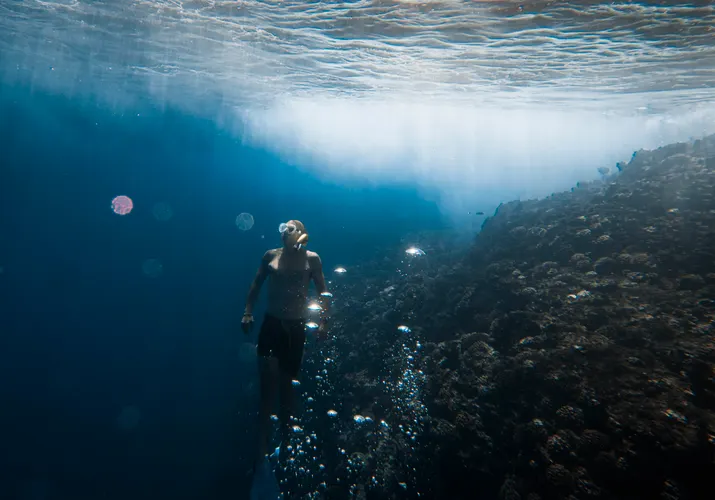
Tours leave from Haleiwa Small Boat Harbor on the North Shore and run about three miles offshore, out past the old crab fishing grounds where the boats have long attracted curious pelagic sharks. The water out there is deep, clear, and a startling shade of blue, with the green spine of the Waianae mountains shrinking behind you. There is no land, no reef, and no bottom in sight, just open ocean and the animals that live in it.
You go in one of two ways. The cage option puts you in a floating aluminum cage at the surface, mask on, watching sharks glide around and under you. The cage free option puts you straight into the open water with a guide, snorkeling above the sharks with the freedom to free dive down if you can.
Either way, this is a snorkel and surface experience for most people, not a scuba dive, you are at or near the surface, breathing through a snorkel, not strapping on tanks. Trips usually run two to three hours door to door, with 30 to 45 minutes actually in the water.
It is less an adrenaline stunt than a strange, quiet privilege, floating in the open Pacific while large, ancient, indifferent animals decide you are not worth the effort.
A useful expectation setter before you book, this is a wildlife encounter, not a theme park ride. There is no music, no thrill drop, and no narration over a loudspeaker once you are in the water, just you, the blue, and the sharks moving through it. People who go in expecting an amusement park come back surprised by how meditative it is. People who go in expecting terror come back a little embarrassed by how calm it was.

Photo by Jakob Owens on Unsplash
02
Cage vs. cage free: which to pick
This is the only real decision you have to make, and it comes down to one honest question, how comfortable are you floating in deep open water?
Cage or cage free, which shark dive is you?
Cage dive
- Best for
- Nervous first-timers and non-swimmers who want the bars between them and the fins
- The catch
- Around $99–$100; you watch from a floating cage rather than swim free
Cage free surface swimOur pick
- Best for
- Confident snorkelers who want the open-water, face-to-face version — Oahu's signature shark experience
- The catch
- About $150, and you need to be calm and comfortable floating in deep blue water
Cage free freedive
- Best for
- Strong swimmers and freedivers who want to drop down into the sharks' depth on a breath
- The catch
- The most demanding option — fitness and comfort underwater are non-negotiable
Educational / conservation dive
- Best for
- Travelers who want the marine-biology version with researchers and guaranteed sightings
- The catch
- Usually the priciest, around $165 and up; less thrill-ride, more classroom-on-the-water
The cage dive is the gentler entry point. You are in a floating cage at the surface, you do not need to be a strong swimmer, and there are literal bars between you and the fins. It is the right call for nervous first timers, kids, and anyone who wants the experience without the exposure. It is also usually the cheaper option, starting around $99.
The cage free swim is the one people fly to Oahu for. You are in the open blue with a guide and a small group, snorkeling above the sharks with nothing between you and them. It costs a bit more, around $150, and it asks more of you, you need to be a calm, confident swimmer who will not panic when a sandbar shark cruises six feet below your fins. In return you get the real thing, the unfiltered version.
Here is the honest take, and it is the one strong opinion in this guide, choose between cage and cage free based on your comfort in open water, not on your fear of sharks. The cage protects your nerves far more than your body, these are not the sharks that make the news. If you can snorkel calmly in deep water, cage free is the better experience by a wide margin. If the open blue makes your chest tight, take the cage and enjoy it guilt free.
03
What sharks will you see?
The sharks you meet on an Oahu dive are not the ones from the poster, and that is the whole point.
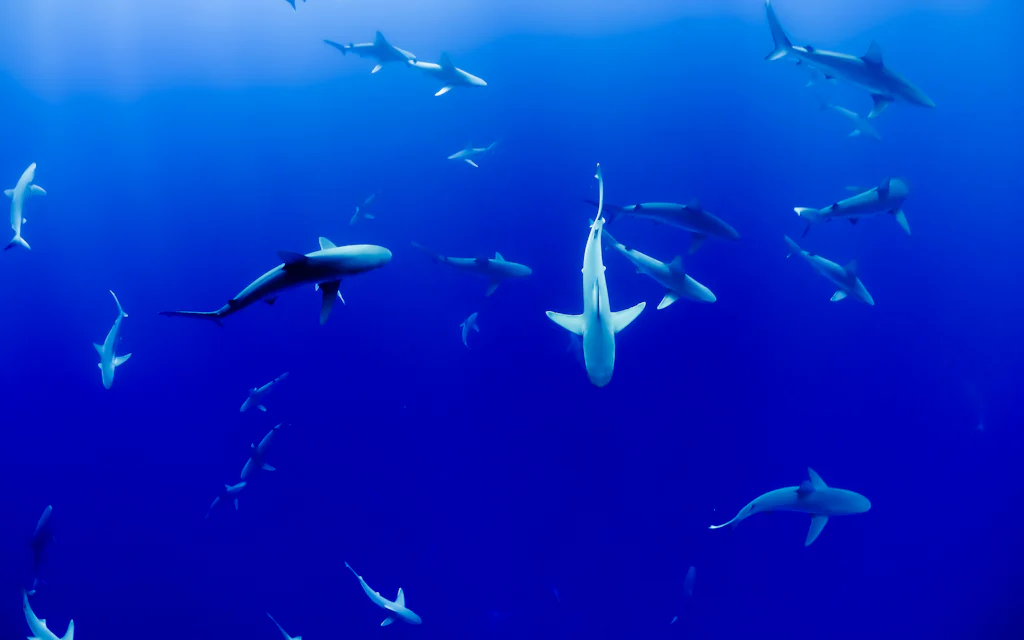
The two species you will almost always see are sandbar sharks and Galapagos sharks. Both are large, handsome, open ocean sharks that have been hanging around these boats for decades, and both are famously indifferent to humans. Sandbar sharks in particular are about as mellow as a big shark gets. NOAA Fisheries describes the sandbar shark as a coastal species not considered a threat to people.
Depending on the season and luck, you might also glimpse the occasional larger visitor, a hammerhead, a tiger shark passing through, or a Galapagos bigger than the rest. These are rarer, and the guides keep a careful eye when they show up, but they too are generally just cruising, not hunting.
What you will not see, in any normal sense, is anything behaving aggressively. These animals are habituated to the boats and entirely uninterested in the snorkelers above them. The drama is all in your nervous system, not in the water.
Knowing the species ahead of time genuinely changes the experience. Once you understand that a sandbar shark is closer to a large, aloof dog than a missile, the fear melts into fascination, which is exactly where the good part starts.
It also helps to know what these sharks are doing down there, which is mostly nothing. They patrol slow, wide circles, conserving energy, occasionally rising for a closer look before losing interest. They are not coiled to strike. They are commuting. The guides can usually name individual sharks they have seen for years, which tells you everything about how settled and un dramatic the scene really is. The Hollywood shark is a feeding machine in a panic. The Oahu shark is a long haul trucker who has seen this rest stop a thousand times.

Photo by David Clode on Unsplash
04
Is shark diving on Oahu safe?
Safer than the drive to Haleiwa, and that is not a joke.
Commercial shark dives have run out of Haleiwa for well over a decade, across multiple operators, with an essentially spotless safety record and no serious incidents. The reasons are structural, not lucky, the species are non aggressive, the sharks are habituated to the boats, the groups are small, and trained safety guides are in the water watching both the sharks and the humans the entire time. Many operators run tight guest to guide ratios for exactly this reason.
It helps to keep the real numbers in perspective. Unprovoked shark bites are vanishingly rare worldwide, the Florida Museum's International Shark Attack File logs only a few dozen globally in a typical year, against billions of hours people spend in the ocean. A guided dive with calm, well fed, habituated sharks is not where that tiny risk lives.
That said, "safe" is not "do whatever you want." Listen to your guides, do not touch or chase the animals, do not free dive beyond your ability, and stay calm, a thrashing, panicking swimmer is the one variable that makes any ocean activity worse. The state's Division of Aquatic Resources is the authority on Hawaii's sharks if you want to read up on the animals themselves.
The honest summary, the ocean always deserves respect, but a North Shore shark dive is one of the more controlled ways to spend time in big water with big animals.
If you want a gut check, watch the guides. They do this several times a day, every day, and they are relaxed, chatting, pointing, completely unbothered, because they know these animals and these conditions intimately. Their calm is not bravado. It is data. When the people who understand the risk best are this at ease, that tells you more than any review.
05
The best shark diving tours on Oahu
There are several good operators out of Haleiwa, and the differences come down to cage versus cage free, group size, and how much marine biology depth you want with your adrenaline.
The most booked option is the classic North Shore boat dive, well reviewed, affordable, and a clean introduction to the whole experience. It is the one most first timers should start with.
★4.8(3,056)
Oahu Shark Dive on the North Shore
1.5 hours
Free cancellation
from
$99
If you specifically want the bars, the North Shore Shark Cage Diving tour is the straightforward cage option from about $100. If you want the open water version, the Cage-Free Shark Swim on the North Shore puts you in the blue with the sharks and a guide. And if you want the science with your swim, the Educational Shark Dive from Haleiwa leans into conservation and guaranteed sightings.
When you compare operators, look past the headline price at three things, the group size, the guest to guide ratio in the water, and whether the outfit leans educational or purely thrill focused. A smaller group with more guides means more personal attention and a calmer, safer scene, and on a shark dive, calm is the entire product. Reviews that mention the crew by name are a good sign. It usually means the operator is small, consistent, and proud of the people running the boat.
Price wise, the cage boat dives anchor the low end around $99, the cage free swims sit near $150, and the research led educational trips run higher. None of these is a rip off for what it is, a couple of hours offshore with a trained crew and a near guarantee of sharks is a lot of experience per dollar.
Whichever you pick, book a morning slot early in your trip, the water is calmest in the morning, and a weather cancellation will not torpedo your whole vacation if you have a spare day to rebook.
06
Is shark cage diving ethical?
This is the fair question, and it deserves a straight answer rather than a sales pitch.
The case against, most Oahu shark tours use some bait or chum to bring the sharks to the boat, and critics worry that this conditions sharks to associate boats and people with food. It is a legitimate concern, and it is why the practice is debated and regulated.
The case for, these operators have also done more to change how people see sharks than a hundred nature documentaries. Fear drives shark culls and finning. A tourist who floats next to a calm sandbar shark for 30 minutes comes home an advocate, not a hater. Many Oahu outfits are run by marine researchers who fold education and conservation directly into the trip, and the sharks here are open ocean animals already loosely associated with the long gone crab boats, not reef sharks being newly trained.
Our honest read, if it matters to you, choose an operator that emphasizes education and minimal bait or bait free practices, and ask before you book. The conservation focused dives exist precisely for travelers who want the encounter without the queasiness about it.
There is no perfectly clean version of getting close to a wild animal. But a well run Oahu shark dive sits near the better end of that spectrum, and it turns a lot of scared people into people who care.
It is also worth remembering the bigger picture, sharks are killed by the tens of millions a year, mostly for fins, while the number harmed by Oahu's tourism is effectively zero. A regulated dive industry that gives sharks economic value alive is, on balance, on the sharks' side, and the people who staff these boats tend to be among the loudest voices for protecting them. That does not erase the bait debate, but it is the context the debate lives in.
07
Will you actually see sharks?
Yes. This is the rare wildlife tour where sightings are close to a sure thing.
Because the same offshore spots have drawn sharks for decades, and because some operators bait lightly to bring them in, the sharks are reliably present in a way that wild dolphin or whale tours simply cannot promise. Several Haleiwa operators even advertise guaranteed sightings, and they can stand behind it because the animals are genuinely, dependably there.
You will typically see several sharks at once, often a handful of sandbar sharks lazily circling under the boat, sometimes a dozen or more on a good day, with Galapagos sharks mixed in. They come and go on their own rhythm, but an empty water shark dive off Haleiwa is the exception, not the norm.
That reliability is a big part of why this tour is worth the money where some wildlife trips are a gamble. You are not hoping for a lucky glimpse on the horizon. You are floating in the middle of the action. For a first time wildlife encounter, that near certainty is a gift, nobody flies home from a shark dive saying the sharks did not show.
If you have been burned by a dolphin or whale tour that promised magic and delivered a distant fin once, the shark dive is the antidote. The contrast is stark, a wild dolphin trip is a hopeful search, while a shark dive is a near appointment. That is partly the bait and partly the geography, but the practical upshot for your vacation budget is the same, this is the rare ocean tour where you can plan around actually seeing the headliner. Manage your expectations on numbers, not on whether they appear at all.
08
The best time to go
Morning, and the calmer half of the year if you can swing it.
The North Shore is famous for monstrous winter surf, but the shark boats launch from the protected Haleiwa harbor and run offshore, so trips operate year round in most conditions. Still, mornings bring the calmest seas and the clearest water before the trades pick up, which matters a lot for both visibility and your stomach. Book the earliest slot you can stand to wake up for.
Summer and the shoulder seasons (roughly April through October) tend to bring the flattest water and the most reliable conditions. Winter still runs, but bigger swells mean a bumpier ride out and a higher chance of a weather call, another reason to leave a backup day.
The sharks themselves are present year round, so season is about comfort and sea state, not whether the animals show. If you are prone to seasickness, a calm summer morning is your best friend. A choppy winter afternoon out past the harbor mouth is where good intentions go to die.
Weekday trips are quieter and easier to book than weekends, when locals and visitors both pile onto the North Shore.
There is also a nice winter bonus if you do brave the cooler months, humpback whales migrate through Hawaiian waters from roughly December to March, and the run out to the shark grounds occasionally turns up a breach or a spout on the way. It is never guaranteed, but a shark dive with a whale cameo is a strong contender for best two hours of a trip. Just respect that winter is also when the North Shore earns its reputation, and a borderline rough morning is the operator's call to make, not yours.

Photo by Nick Fewings on Unsplash
09
What to bring (and the seasickness talk)
You are going three miles offshore on a small boat, so pack for open water, not for the beach.
- Motion sickness tablets or bands, taken before you leave the dock. The ride out past the harbor mouth is where queasiness is born. Take them earlier than you think you need to, once you are green, it is too late.
- Reef safe mineral sunscreen. It is the law in Hawaii, and there is zero shade offshore. Apply before you board.
- A swimsuit under your clothes and a towel. You will be in and out of the water fast. Changing on a rocking boat is nobody's idea of fun.
- A rash guard. Sun protection and a little warmth, since the open ocean water is cooler than the lagoon you have been swimming in.
- A waterproof phone pouch or a mounted action camera. This is a once in a lifetime photo and the worst possible place to drop a loose phone.
Leave behind anything you would mourn losing overboard, and eat a light, sensible breakfast, not nothing, not a giant greasy plate. Something steady to settle your stomach for the ride.
If you know you get seasick, say so when you book, sit mid boat where the motion is gentlest, and keep your eyes on the horizon during the run out. The sharks are worth a little churn, but you will enjoy them more if you prepared for the boat.
One more small thing that matters more than it should, leave the GoPro on a wrist strap or chest mount, not in your hand. The single most common way this trip goes wrong is not a shark, it is a $400 camera sinking three miles offshore while its owner watches, helpless, from a cage. Secure your gear before you are distracted by the actual sharks, because you will be very distracted by the actual sharks.
10
Who should skip it
In the spirit of telling you when not to do something, here is who should sit this one out.
Skip the cage free version if you are not a genuinely confident open water swimmer. Panicking in deep blue water with sharks present is bad for you and bad for the group, and there is no shame in taking the cage instead, or skipping it entirely. Be honest with yourself about your comfort, not your ego.
Skip the whole thing if you get violently seasick and the forecast is rough. A small boat three miles out in winter chop is a long way from a bathroom and a steady horizon. Reschedule for a calm morning or let it go.
And skip it if the ethics genuinely bother you after reading the section above. There are plenty of other ways to get on the water on Oahu, a North Shore surf lesson, a calm reef snorkel at the best snorkeling spots, or a whale watching trip in winter, that scratch the ocean adventure itch without the part you are unsure about. Following your gut here is the right call, not a failure of nerve.
Very young kids are another honest no for the cage free version, though many cage operators welcome them, check the minimum age before you build a family plan around it. And if someone in your group is along purely to please everyone else and is quietly dreading it, let them stay on the boat or skip the day. A reluctant, frightened person in open water helps no one and remembers none of it fondly.
For everyone else, curious, reasonably water comfortable, and a little brave, it is one of the most memorable mornings Oahu offers.
11
Getting there and where to stay
Shark dives leave from Haleiwa Small Boat Harbor on the North Shore, about an hour's drive from Waikiki up the H-2 and through the pineapple fields, or a bit longer if you hug the windward coast.
A rental car is the simplest way to make an early Haleiwa check-in. Rideshare reaches the North Shore but is slow and expensive to summon for the trip back to town. Give yourself a generous buffer, the boat leaves on time whether you are aboard or not, and North Shore traffic is real on weekends.
If you would rather not drive an hour before sunrise, basing yourself on the North Shore for a night turns the dive into a relaxed local morning instead of a predawn commute. Turtle Bay and the Haleiwa area rentals put you minutes from the harbor. Most visitors still base in town, so you can search Oahu stays on Expedia (also on Booking.com) and day trip up. Make a day of it, Haleiwa town, a shave ice, and the North Shore's beaches and food are right there once you are back on land.
One honest aside, since we run beach picnics on Oahu, including up on the North Shore, a shark dive is the high adrenaline opposite of what we do, which is the point. After a salty morning offshore, a calm sunset picnic on a Haleiwa beach is a very good way to let your heart rate come back down, our picnic packages start at $349 for two. That is the only pitch here. Back to the sharks.
The hard part is honestly just the early alarm and the boat ride. Clear those two and you are floating in open ocean with animals most people only ever see through aquarium glass. Few mornings on Oahu deliver a story this good.
FAQ
Can you go shark diving on Oahu?
Yes. Multiple operators run shark diving tours out of Haleiwa Small Boat Harbor on the North Shore, about three miles offshore, with both cage and cage free options. Trips run year round, take two to three hours, and start around $99 for a cage dive.
Is shark diving on Oahu safe?
It has an excellent safety record. Commercial dives have run out of Haleiwa for over a decade with no serious incidents, thanks to non aggressive shark species, small groups, and trained in water guides. Unprovoked shark bites are extremely rare worldwide, and a guided dive with habituated sharks is among the more controlled ways to be in big water.
What kind of sharks will I see shark diving on Oahu?
Mostly sandbar sharks and Galapagos sharks, large, open ocean species that are famously indifferent to humans and have frequented these waters for decades. You might occasionally glimpse a hammerhead or a passing tiger shark, but aggressive behavior is essentially never part of the experience.
How much does shark diving on Oahu cost?
Cage dives generally start around $99 to $100 per person, while cage free open water swims run closer to $150, and education- or conservation focused dives can be around $165 and up. Prices vary by operator, group size, and what is included.
Should I do cage or cage free shark diving?
Choose based on your comfort in deep open water, not your fear of sharks. The cage is great for nervous first timers, kids, and nonswimmers. Cage free is the richer experience for calm, confident snorkelers who will not panic with sharks nearby.
Is shark cage diving ethical?
It is debated. Most tours use some bait to attract sharks, which critics say can condition them, but many operators are run by researchers who fold conservation and education into the trip and turn fearful tourists into shark advocates. If it matters to you, pick an operator that emphasizes education and minimal bait practices, and ask before booking.
Where do Oahu shark diving tours leave from?
From Haleiwa Small Boat Harbor on Oahu's North Shore, about an hour's drive from Waikiki. Tours run roughly three miles offshore into open water, so there is no land or reef around you, just deep blue ocean and the sharks.
Disclosure: Some links on this page are affiliate links. If you book or buy through them we may earn a small commission, at no extra cost to you. As an Amazon Associate, we earn from qualifying purchases.