Surfing Oahu: A Guide to Surf Spots, Lessons & Best Time
19 min readYndira W. Tonin
Surfing on Oahu splits cleanly into two worlds, the gentle, rolling waves of Waikiki where nearly everyone learns, and the heavy, world famous breaks of the North Shore where the best surfers on earth come to prove it. Knowing which world you belong in is the whole game.
The information here was confirmed for 2026.
For the overwhelming majority of visitors, the answer is Waikiki, a lesson, a soft top board, warm shallow water, and waves that forgive your mistakes. The North Shore in winter is a spectator sport, one of the greatest shows in surfing, and no place for a beginner.
This is the honest guide to surfing on Oahu, where to learn, where to watch, the seasons that flip the island's coasts, how lessons work, and the etiquette and safety that keep a fun session from becoming a bad story.
Table of contents
- Can a beginner surf on Oahu?
- Waikiki, where everyone learns
- The North Shore, surfing's proving ground
- North Shore beginner spots
- Other Oahu surf spots worth knowing
- Surf seasons, when the coasts switch
- Surf lessons, what to expect
- Surf etiquette and safety
- What to bring and which board
- Where to base for a surf trip
- FAQ
01
Can a beginner surf on Oahu?
Yes, Oahu is one of the best places in the world to learn to surf, as long as you start in the right spot and on the right wave.
Oahu is the birthplace of modern surfing, and that heritage cuts both ways. It means the island has a deep culture of teaching, with surf schools and gentle learner waves at Waikiki that have been turning first timers into stand up surfers for over a century. It also means Oahu has the heaviest, most dangerous waves on the planet on the North Shore, which is exactly where a beginner must not go.
Where should you surf on Oahu?
Waikiki & the South ShoreOur pick
- Best for
- First-timers and beginners — long, slow, rolling waves over sand, lessons everywhere, best in summer
- The catch
- Crowded and gentle; you are here to learn, not to charge
North Shore beginner breaks
- Best for
- Improvers ready for a reef break — Chun's Reef and Pua'ena Point stay manageable year-round
- The catch
- Still the North Shore; check conditions and never assume it's small
North Shore winter giants
- Best for
- Experts only — Pipeline, Sunset, Waimea, the world's heaviest waves from November to February
- The catch
- Deadly, shallow reef, thick crowds — a spectator sport for 99% of visitors
White Plains & the west
- Best for
- Beginners and longboarders who want forgiving waves with a fraction of the Waikiki crowd
- The catch
- A drive from town; west-side spots reward a little effort to reach
Here is the one strong opinion in this guide, and it is a safety one, learn on Waikiki's gentle rollers, and watch the North Shore from the sand. Do not paddle out at Pipeline because you took a few lessons and watched some YouTube. The North Shore in winter breaks over shallow, sharp reef in front of thick, territorial crowds, and it injures and kills experienced surfers every season. The honest move for 99% of visitors is a lesson on the south shore.
Get that one decision right and Oahu is a dream to learn on. Get it wrong and it is the most unforgiving classroom on earth. Almost everyone reading this belongs at Waikiki, and there is zero shame in that, it is where the legends started too.
Fitness wise, the bar is lower than people fear. You do not need to be an athlete to learn. You need to be comfortable in the ocean, able to swim, and willing to fall a lot. Surfing is mostly paddling, and paddling is a skill you build in an afternoon. Kids as young as five or six surf Waikiki with an instructor, and plenty of first timers in their sixties stand up on day one. If you can swim and you can laugh at yourself, Oahu will teach you to surf.

Photo by Andrew Davie on Unsplash
02
Waikiki: where everyone learns
If you are going to surf once on Oahu, you are going to do it at Waikiki, and that is the right call.
Waikiki's waves are the friendliest learner waves imaginable, long, slow, rolling swells that peel for a hundred yards or more over a sand and reef bottom, in warm, shallow, lifeguarded water. The breaks have gentle names to match, Canoes, Queens, Populars, and on a typical summer day they are full of beginners catching their first green wave and grinning like idiots. It is genuinely one of the great experiences in travel.
The easiest way in is a lesson, and Waikiki is wall to wall with surf schools and beach boy instructors. A two hour group lesson gets most reasonably fit people standing up and riding a wave to shore by the end, the soft, slow Waikiki wave does half the work. Book a beginner surf lesson at Waikiki and you will be handed a soft top board, a rash guard, and a patient instructor who has done this ten thousand times.
If you would rather go it alone, you can rent a board right on the beach. But for a true first timer, the lesson is worth every dollar, the instructor reads the sets, pushes you into the right waves, and keeps you out of the canoe traffic and the few spots where the reef gets shallow. Surfing Waikiki is on every good Waikiki day plan for a reason.
There is real history under those waves, too. Waikiki is where Duke Kahanamoku, Olympic swimmer, Hawaiian, the father of modern surfing, shared the sport with the world a century ago, and the beach boy tradition of teaching visitors to surf runs straight back to him. Catching your first wave at Waikiki is not just a tourist activity. It is a small piece of living surf history, which is a surprisingly moving thing to realize while you are soaking wet and grinning.
03
The North Shore: surfing's proving ground
The seven mile stretch of Oahu's North Shore is the most famous surf coast on earth, and in winter it is a cathedral of consequence.
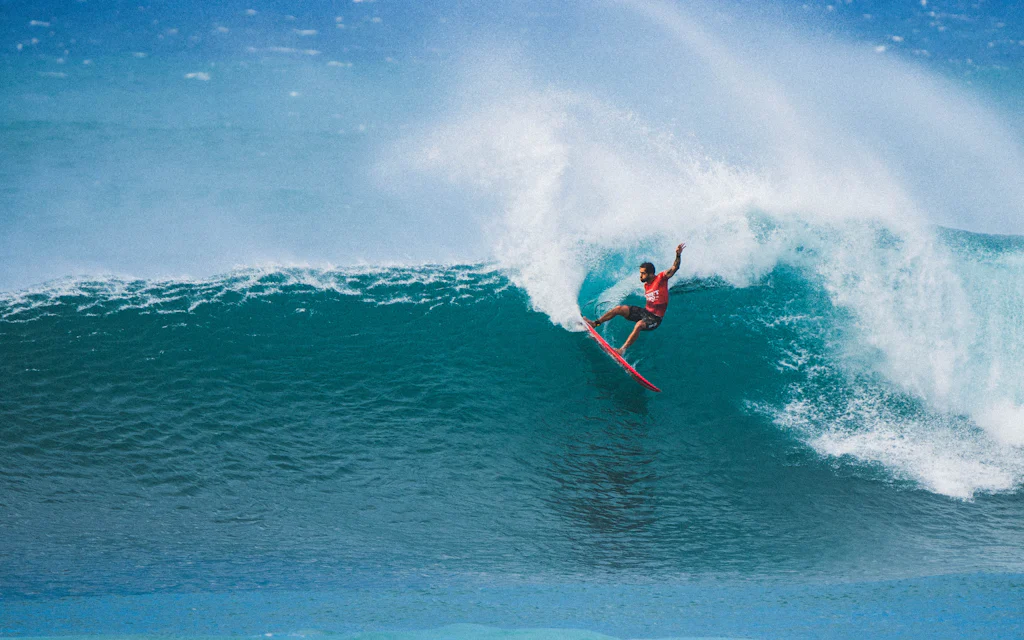
This is where the giants live. Pipeline (and its right breaking twin, Backdoor) at Ehukai Beach Park is the most famous wave in the world, a perfect, terrifying barrel that breaks in shallow water over a razor reef, and the stage for surfing's biggest contests. Sunset Beach and Waimea Bay round out the holy trinity, Waimea being the original big wave spot where the legendary Eddie Aikau contest runs only when the waves top 20 feet. You can read more about that history in our Waimea Bay guide.
In winter, from roughly November to February, North Pacific storms send massive swells here, and the world's best surfers and biggest crowds follow. Watching from the sand at Pipeline or Sunset on a big day is one of the most thrilling free shows in sports, the waves are loud enough to feel in your chest.
But understand what you are watching. These waves are lethal to the unprepared, shallow reef, brutal hold downs, strong currents, and a localized crowd with zero patience for tourists paddling into the lineup. In winter, the North Shore is a place for beginners to spectate, photograph, and respect, never to surf. Even standing on the shoreline, never turn your back on the ocean here.
The spectating, to be clear, is a bucket list spectacle in its own right. On a big swell, the beach parks at Pipeline and Sunset fill with photographers, fans, and pros, and the energy is electric, closer to a stadium event than a day at the beach. Time your trip to a winter contest holding period, like the Eddie at Waimea or the Pipeline events, and you may witness surfing history from the sand for free. Bring a zoom lens, get there early for parking, stay well back from the shore break, and let the experts have the water.

Photo by Matt Paul Catalano on Unsplash
04
North Shore beginner spots
The North Shore is not only for experts, it has a couple of genuinely beginner friendly breaks, with one big caveat about timing.
Pua'ena Point, just outside Haleiwa, and Chun's Reef, a little further up the coast, are the two learner friendly North Shore spots. They offer long, manageable, rolling waves that break in a way forgiving enough for improvers, and in the calm summer months they are a lovely place to surf away from the Waikiki crowds. Chun's in particular is a mellow, longboard friendly wave that locals learn on.
The caveat is the season. These spots are gentle in summer, but when the big winter swells hit the North Shore, even the "beginner" breaks can jump to dangerous sizes. A spot that is waist high and friendly in July can be overhead and serious in January. So the rule on the North Shore is absolute, never judge a break by its reputation, judge it by the conditions that day, and when in doubt, ask a local or a lifeguard or simply paddle back in.
Parking and access add another wrinkle. The North Shore beginner spots have small lots that fill early, the roadside parking gets tight, and break ins are not unheard of, so go early, leave nothing visible in the car, and treat the logistics with the same respect as the waves. Haleiwa town is the hub for boards, food, and a post surf shave ice, which makes it a natural base for a North Shore surf morning.
For a first timer, though, the honest advice stands, learn at Waikiki first. Come to the North Shore beginner spots once you can already catch and ride a wave on your own, ideally with someone who knows the coast. It is a step up, not a starting line.
05
Other Oahu surf spots worth knowing
Beyond the two famous coasts, Oahu has a scattering of spots worth knowing for different skill levels and crowds.
White Plains Beach on the southwest shore is the under the radar learner's gem, gentle, slow waves with a fraction of the Waikiki crowd, and multiple peaks that spread surfers out. It is a bit of a drive from town, but worth it for a calmer first session.
Ala Moana Bowls, near the Ala Wai harbor, is a high performance south shore wave that fires in summer, strictly an intermediate to advanced spot, and crowded, but a classic. Diamond Head and Tonggs on the south shore offer more south swell options for surfers who have progressed past Waikiki and want a slightly more challenging wave with a view.
For improvers chasing the famous turtles and waves combo, Laniakea ("Turtle Beach") on the North Shore is a fun intermediate right hander with a wide paddle out channel, just expect company, both human and honu. Makaha, far out on the west side, is a storied longboard wave and the birthplace of big wave contests, with a strong, proud local scene, a spot to surf respectfully once you have the skill and ideally a local connection.
The broader point is that Oahu has a wave for every level, but they are sorted by skill, crowd, and season. The art is matching the spot to your honest ability, not your aspiration. A wave you are not ready for is not a challenge to rise to, it is a hospital trip waiting to happen. Our North Shore guide and best beaches roundup map the coast in more detail.

Photo by Jeremy Bishop on Unsplash
06
Surf seasons: when the coasts switch
Oahu's surf runs on a simple, beautiful rhythm, and understanding it tells you exactly where to go and when.
In winter (roughly November to March), North Pacific storms drive big swells onto the North Shore and the west side. This is when Pipeline and Sunset roar, the contests run, and the experts come out, and when the south shore goes flat and calm. If you are visiting in winter and want to surf as a beginner, you head to Waikiki, which is small and mellow precisely when the North Shore is huge.
In summer (roughly May to September), the pattern flips. Southern Hemisphere storms send swells to the South Shore, so Waikiki, Ala Moana, and Diamond Head come alive with fun, surfable waves, while the North Shore goes quiet, calm, and turns into a snorkeling paradise. Summer is the best time for a beginner to surf, because the learner waves at Waikiki are at their most consistent.
Spring and fall are transition seasons, when either coast can turn on or go flat depending on the week, a bit of a gamble for chasing a specific swell, but often a sweet spot for beginners, with smaller crowds and mellow conditions at Waikiki either way.
The neat takeaway, Oahu has rideable waves somewhere every day of the year, but the island's two coasts trade off. Winter equals North Shore power and Waikiki calm. Summer equals South Shore fun and North Shore flat. Match your trip and your skill to the season and you will always find the right wave, and if you are a beginner, the reassuring truth is that Waikiki is gentle and surfable in every season, so your trip dates never rule out a first lesson.
07
Surf lessons: what to expect
If you have never surfed, book a lesson. It is the single best decision you can make, and here is how it goes.
A standard beginner lesson runs about two hours, usually in a small group, occasionally private. It starts on the sand with the basics, how to lie on the board, paddle, pop up to your feet, and stay safe. Then you are in the water, where the instructor pushes you into the gentle whitewash waves and steadies the board while you practice popping up. Most reasonably fit people stand and ride a wave to shore within the first session. The soft, slow Waikiki wave is forgiving, and the instructors are experts at setting you up to succeed.
You do not need to bring anything. The lesson includes a soft top beginner board (stable and safe, nothing like the sharp shortboards the pros ride), a rash guard, and reef safe sun protection if you forgot yours. Wear a swimsuit, bring a towel, and leave the watch and sunglasses on the beach.
A few tips, book a morning lesson, when the wind is lightest and the water glassiest. Tell your instructor honestly that you are a total beginner so they pitch it right. And manage your shoulders' expectations, paddling uses muscles you forgot you had, and you will be pleasantly wrecked by lunch. It is, for most people, an instant highlight of the whole trip.
On choosing a school, look for small group sizes (fewer students per instructor means more pushes into waves and more personal attention), in water instructors rather than someone shouting from the beach, and reviews that mention patience and safety. Group lessons are the affordable, social default. A private or semiprivate lesson costs more but gets you standing up faster, which is worth it if you only have one shot. Either way, the gentle Waikiki wave and a good instructor make success close to guaranteed, this is not the kind of lesson where most people fail.
08
Surf etiquette and safety
Surfing has unwritten rules, and breaking them, out of ignorance or arrogance, is how visitors get hurt or get yelled at. A little respect goes a long way.
The core etiquette is about right of way, the surfer closest to the breaking part of the wave (the peak) has priority, and "dropping in" on someone already riding is the cardinal sin of surfing. Do not paddle straight through the lineup where people are surfing. Paddle out wide through the channel. Wait your turn, do not be a wave hog, and apologize if you mess up. At any local break, especially on the North Shore, humility is mandatory, these are people's home waters.
On pure safety, respect the ocean's power even at gentle spots,
- Check conditions and lifeguard flags before you paddle out, and ask the lifeguard if you are unsure. The state's Hawaii Beach Safety site posts current hazards.
- Never surf alone, and never turn your back on the ocean, especially on the North Shore where rogue sets sweep people off the rocks.
- Mind the reef. Most Oahu breaks are over shallow, sharp coral, fall flat, not headfirst, and consider reef booties at rocky spots.
- Know your limits and paddle in early. The ocean is always stronger than you. The smartest surfers are the ones who call it before they are exhausted.
Get the etiquette and the safety right, and the surf community is welcoming. Get them wrong, and the ocean and the locals will both teach you the hard way.
09
What to bring and which board
Gear matters less than you think for learning, and more than you think for comfort.
If you are taking a lesson or renting, the board is handled, and for a beginner, the right board is a big, thick, stable soft top (foamie) longboard. It floats well, catches waves easily, paddles stably, and will not slice you open when it hits you, which it will. Resist any ego that says you should be on a smaller, "cooler" board. Even the pros learned on big foam, and a beginner on a shortboard just flails and drinks seawater.
For your own kit, keep it simple, a swimsuit that stays on in the wash (a rash guard or surf top helps both with sun and chafe), reef safe mineral sunscreen (it is the law here), and water shoes or reef booties if you are surfing a rocky or reef break. A leash keeps your board attached to you and away from other people's heads, non-negotiable.
Leave behind anything you would not want lost to the ocean, watches, sunglasses, jewelry, loose phones. If you want photos, a wrist strapped waterproof camera or a hired surf photographer is the move, because your own phone has no business in the lineup. Pack light, protect against the sun, and let the rented foamie do the heavy lifting.
If you catch the bug and want to keep surfing after your trip, the natural progression is from the soft top to a longer "funboard" or longboard before you ever touch a shortboard, most people rush this and regret it. But that is a problem for future you. For your Oahu trip, the rented foamie is genuinely the correct board, not a compromise, and renting beats flying with a board bag and the airline fees that come with it. Travel light and rent on the island. Your shoulders and your wallet will both thank you.
10
Where to base for a surf trip
Where you stay shapes your surf trip, and it depends entirely on which version of Oahu surfing you are chasing.
For learning and south shore surf, base in Waikiki. You can roll out of bed and onto a beginner wave, lessons and rentals are everywhere, and the calm summer south swell is right there. It is the obvious, correct base for the vast majority of surf visitors, compare Waikiki hotels on Expedia (also on Booking.com) and you are steps from Canoes and Queens.
If you are an experienced surfer coming specifically for the winter North Shore, basing up in the Haleiwa or Turtle Bay area puts you on the seven mile miracle at dawn, before the crowds and the wind, compare North Shore stays on Expedia (also on Booking.com) to be steps from the breaks. It is a long drive from town, so committed North Shore surfers stay up there. Everyone else day trips up from Waikiki for the show. Our North Shore guide and the Oahu itinerary both cover how to work the drive.
A rental car helps enormously for any surf trip beyond Waikiki, boards, early starts, and chasing whichever coast is working all but require one. Within Waikiki, though, you can happily get by on foot, with rentals and lessons right on the sand and the waves a two minute walk from most hotels. So the calculus is simple, a Waikiki only learning trip needs no car, while a surf the whole island trip wants one. Decide which surfer you are, and base and budget accordingly.
One last, on brand note, after a session, salt crusted and pleasantly destroyed, the perfect reward is doing absolutely nothing on a quiet beach at sunset, and since we run beach picnics on Oahu, a styled picnic from $349 for two is one very good way to end a surf day. That is the only pitch here. Now go get wet.
FAQ
Can you surf in Oahu as a beginner?
Yes, Waikiki is one of the best beginner surf spots in the world, with long, slow, rolling waves in warm, shallow, lifeguarded water and surf schools everywhere. Most people stand up and ride a wave in their first two hour lesson. Beginners should stick to Waikiki and avoid the dangerous North Shore breaks.
Where is the best place to learn to surf on Oahu?
Waikiki Beach, by a wide margin, its gentle, forgiving waves and abundance of surf lessons make it the classic learner's spot. White Plains Beach on the southwest shore is a quieter alternative, and the North Shore's Pua'ena Point and Chun's Reef suit improvers in the calm summer months.
Is the North Shore good for beginners?
Not in winter. From November to February the North Shore has some of the heaviest, most dangerous waves on earth and is strictly for experts. Beginners should watch from the sand. In calm summer, gentle North Shore spots like Pua'ena Point and Chun's Reef are fine for surfers who can already catch and ride a wave.
When is the best time to surf on Oahu?
It depends where. The North Shore fires in winter (November, March) for experts. The South Shore, including Waikiki, is best in summer (May, September), which is also the ideal season for beginners. Oahu has rideable waves year round, the two coasts simply trade off by season.
How much is a surf lesson on Oahu?
Group beginner lessons in Waikiki typically run a couple of hours and include the board, rash guard, and instruction. Private lessons cost more. Booking a reputable beginner lesson is the fastest, safest way to stand up on your first day, since the instructor reads the waves and sets you up.
Is surfing on Oahu dangerous?
It can be, depending entirely on the spot. Waikiki's gentle waves are very safe for supervised beginners. The North Shore's winter breaks are genuinely dangerous, with shallow reef and powerful currents that injure even experts. Match the spot to your skill, check conditions, never surf alone, and respect the ocean and the local lineup.
Do you need to bring your own surfboard to Oahu?
No. Surf schools provide beginner soft top boards with every lesson, and board rentals are widely available at Waikiki and the North Shore. For learning, a rented soft top longboard is actually the ideal board, stable, safe, and easy to catch waves on, so there is no reason to travel with your own.
Disclosure: Some links on this page are affiliate links. If you book or buy through them we may earn a small commission, at no extra cost to you. As an Amazon Associate, we earn from qualifying purchases.