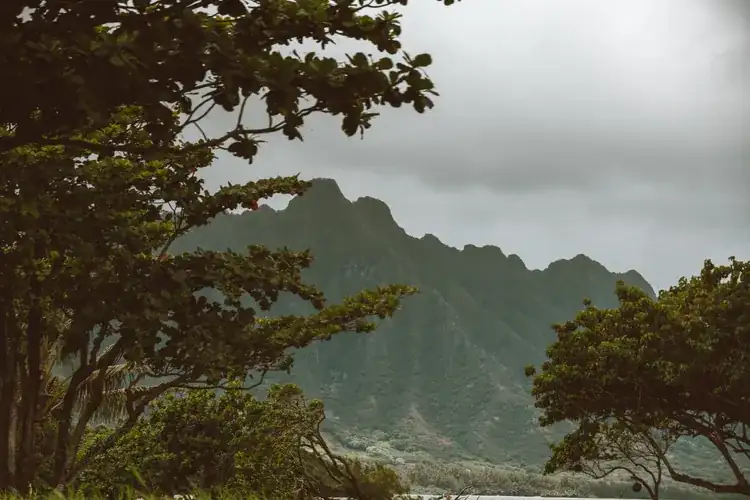
Stairway to Heaven Oahu: Haiku Stairs Hike Guide (2026)
20 min readYndira W. Tonin
Here is the short, slightly heartbreaking answer, no, you cannot legally hike the Stairway to Heaven on Oahu. Not from the front. Not from the back. Not at 3 a.m. dressed like a cat burglar who watched one YouTube video.
The Haiku Stairs, those 3,922 steps bolted up a knife edge of the Koolau Range, have been closed to the public since 1987. The fine runs about $1,000. And there is a security guard stationed at the bottom whose entire career is meeting your optimism with a clipboard.
I know. You saw the photo. Everyone saw the photo. A staircase floating into the clouds, somebody in a windbreaker looking heroic, 40,000 likes. It is the single most seductive hike in Hawaii, and it has launched a thousand "but how do I actually get up there" searches.
So let us do this honestly. This is the real 2026 status of the Stairway to Heaven hike on Oahu, the law, the demolition saga that refuses to end, and (the part nobody puts in the headline) the legal Oahu hikes that hand you the same jaw dropping windward view without a court date.
Table of contents
- Can you still hike the Stairway to Heaven on Oahu?
- A quick history, from WWII antenna to bucket list
- Why the Haiku Stairs are closed
- What happens if you get caught
- The demolition fight, will the stairs survive?
- What about the legal back way through Moanalua Valley?
- Legal Oahu hikes with the same jaw dropping view
- Want the endless staircase burn? Climb Koko Crater
- What to bring on an Oahu ridge hike
- How to see the Haiku Stairs without hiking them
- Where to stay and how to get around
- FAQ
01
Can you still hike the Stairway to Heaven on Oahu?
No. As of 2026, climbing the Haiku Stairs is illegal from every access point, and "every access point" is doing a lot of heavy lifting in that sentence.
The stairs themselves sit on government land that is fenced, posted, and watched. There is a paid security guard at the trailhead in the Haiku Valley neighborhood, present around the clock, and Honolulu police treat the area as an enforcement priority because the residents, understandably, got tired of strangers tiptoeing past their bedroom windows before dawn.
The moment you step past a fence or a sign, you are trespassing. That is true whether you arrive at the official base, sneak through a drainage tunnel (yes, people do this, no, you should not), or come down the ridge from behind.
The Stairway to Heaven by the numbers
Here is the part the highlight reels skip, getting to the stairs is the actual hike, and it is a wet, muddy, ankle rolling slog through a residential area and protected watershed. The dreamy floating staircase shot is maybe ten percent of the experience. The other ninety percent is mud, guilt, and the low hum of "I really hope nobody's home."
I am going to do the thing the brochures never do and tell you not to attempt it. Not because I am your dad (though I am about to sound like him), but because the math is bad, roughly a $1,000 downside, a real chance of a citation, and the genuine possibility of needing a rescue off a 2,800-foot ridge, all for a photo you can get, legally and gorgeously, somewhere else on this island. Stick with me. The alternatives are the good part.
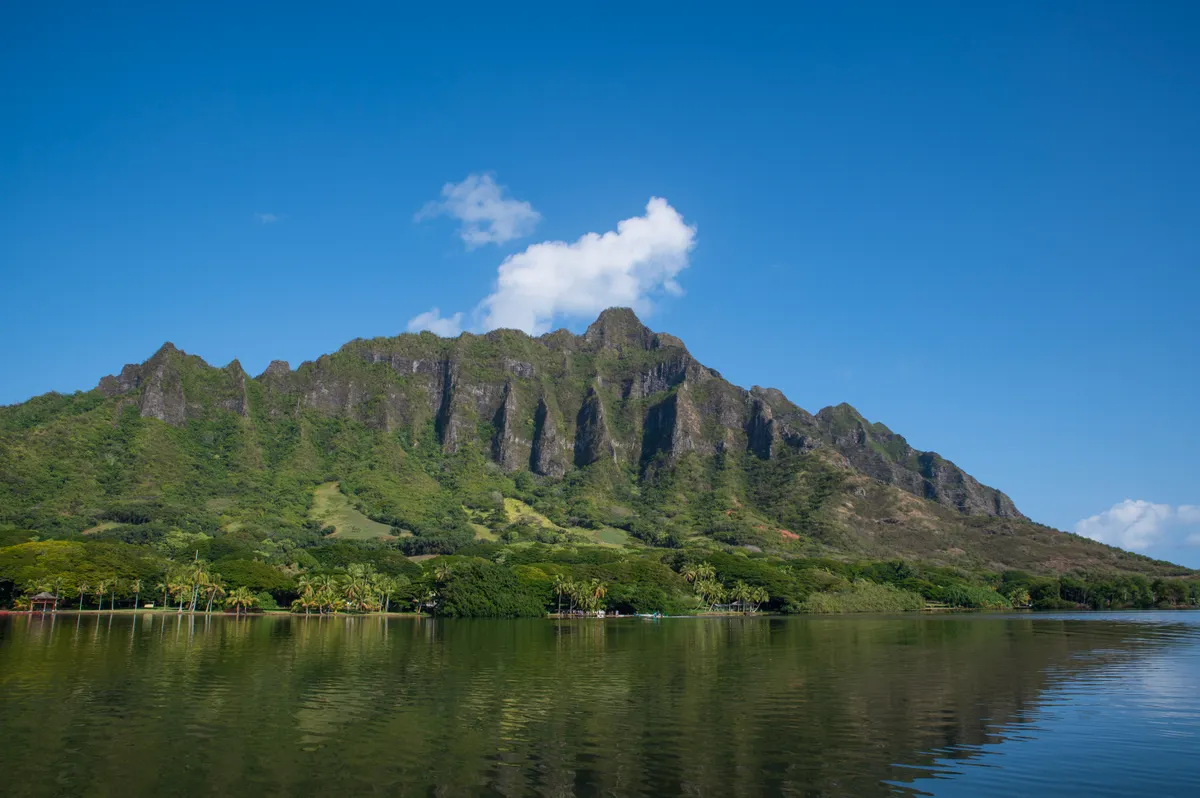
Photo, Trac Vu / Pexels
02
A quick history: from WWII antenna to bucket list
The Stairway to Heaven was never built for you, your camera, or your sunrise plans. It was built for radio.
During World War II, the U.S. Navy strung a massive antenna across Haiku Valley to transmit to submarines across the Pacific. To reach the equipment near the summit of the Koolau Range, workers first installed a wooden ladder up the cliff face in 1942, later replaced with the metal and concrete steps people now risk misdemeanors to climb.
How a wartime radio site became a forbidden hike
- 11942
A wooden ladder up the cliff
The Navy needs to reach a massive antenna built to transmit to submarines across the Pacific.
- 2Mid century
Metal and concrete steps
The ladder is replaced, and the site serves the Navy and later a Coast Guard Omega navigation station.
- 3Decommissioning
A strange limbo
Too famous to forget, too dangerous and too tangled in liability to officially reopen.
- 41987
Closed to the public
The state shuts the stairs, and the word forbidden only makes them more appealing.
- 52010s
Social media stampede
The photo of 3,922 steps vanishing into mist goes worldwide, and Haiku Valley becomes an unwilling parking lot.
For decades it was a military installation, then a Coast Guard Omega navigation station. The public mostly stayed off. When the station was decommissioned, the stairs slid into a strange limbo, too famous to forget, too dangerous (and too tangled in liability) to officially reopen.
The state closed the stairs to the public in 1987. That did not stop anyone. If anything, "closed" became part of the appeal, because nothing sells a hike to a 24-year-old like the word "forbidden."
By the 2010s, social media turned a quiet trespass into a stampede. The image of those 3,922 steps vanishing into the mist became one of the most shared travel photos on the planet, and Haiku Valley, a normal neighborhood where normal people are trying to sleep, became the unwilling parking lot for a worldwide bucket list.
That tension, between a genuinely spectacular piece of history and a community that never signed up to host it, is the whole story. Everything that follows, the guard, the fines, the bulldozers, the lawsuits, flows from a 1940s antenna that got way, way too photogenic.
03
Why the Haiku Stairs are closed
The official reasons are liability and safety. The real reason, in plain English, is that a famous illegal hike running through someone's front yard is a problem that compounds daily.
Start with liability. The stairs are old, they are exposed, and a chunk of them was damaged in a 2015 storm. The city and state have looked at the cost and risk of bringing them up to a standard where they could legally invite the public, and they have repeatedly decided the answer is "absolutely not."
Then there is the neighborhood. To reach the base, hikers cut through Haiku Valley, a residential community, often before sunrise, often in groups, often with the spatial awareness of a golden retriever. Residents have dealt with trespassing, parking chaos, trash, and the occasional predawn hiker peering into a kitchen window. After years of it, the community pushed hard for the stairs to come down entirely.
Add the rescues. Fog rolls in, the wind picks up, someone freezes halfway, and Honolulu Fire Department crews, sometimes by helicopter, get pulled off other work to bring people back down. Every rescue is dangerous for the rescuers and expensive for everyone.
So the closure is not bureaucratic spite. It is a city looking at a 2,800-foot staircase with a body count of zero (more on that myth below) but a liability profile of approximately Mount Doom, sitting in a neighborhood that wants its mornings back, and deciding it is not worth it.
You can disagree with the decision. Plenty of people do, loudly, in court. But "the rules are dumb" has never once worked as a legal defense at the bottom of those steps.
04
What happens if you get caught
You get a citation, a fine in the neighborhood of $1,000, and a memorably bad start to your vacation.
Four ways the day goes sideways if you get caught
The fineAbout $1,000
Around $1,000, payable by you, the person who drove past three No Trespassing signs and called it a hike.
The guard and the policeRoutinely present
Both are routinely present at the access routes. The element of surprise is not on your side. It is on theirs.
The rescue bill and the dangerReal danger
If you get stuck or hurt, you put fire crews at risk on a knife edge ridge, and a chartered helicopter rescue is not a budget line you want.
The karmaHurts the cause
Every viral trespass makes it worse for the neighborhood and hands the tear them down side more ammunition.
Trespassing on the Haiku Stairs is a real offense with real enforcement behind it. The guard at the base is not decorative. Police actively patrol the access routes. People get cited, recently and regularly, and a thousand dollars is a lot of poke bowls to trade for one photo you could have taken legally up the road.
A short, non exhaustive list of ways the day can go sideways,
- The fine. Around $1,000, payable by you, the person who drove past three "No Trespassing" signs and called it a hike.
- The guard and the police. Both are routinely present. The element of surprise is not on your side. It is on theirs.
- The rescue bill and the danger. If you get stuck or hurt, you are putting fire crews at risk on a knife edge ridge, and a chartered helicopter rescue is not a budget line you want.
- The karma. You are also making it worse for the neighborhood and for the long shot campaign to ever reopen the stairs legally. Every viral trespass hands the "tear them down" side more ammunition.
If your travel plan hinges on doing something that comes with a guard, a fine, and a decent chance of a televised rescue, it is not a plan. It is a dare. Save the adrenaline for an actual cliff you are allowed to stand on.
And if the worst happens and you do get hurt up there, the people coming to get you are first responders risking a helicopter long line over a fog soaked ridge for a hike you were not supposed to be on. That is the part that should actually stop you, not the fine, the people.
05
The demolition fight: will the stairs survive?
As of 2026, the Haiku Stairs are still standing, but only because the lawyers are faster than the bulldozers.
The demolition fight by the numbers
Here is the situation, untangled. Honolulu's city government voted to remove the stairs and awarded a multi million dollar contract to dismantle them. Demolition was supposed to start, and then it ran headfirst into a nonprofit called the Friends of Haiku Stairs, which has spent years arguing the stairs are a historic resource that should be preserved and managed, not scrapped.
The result is a legal traffic jam. By late 2025, the fight was spread across three separate Hawaii courts at once, a 2023 case in the Intermediate Court of Appeals, a 2024 case in Circuit Court, and a newer suit challenging the State Historic Preservation Division's sign off on demolition. Local outlet Honolulu Civil Beat has covered every twist, and it is genuinely hard to keep straight without a flowchart.
The crucial piece for a 2026 traveler, an injunction from the appeals court blocks any demolition until that 2023 appeal is resolved. Translation, nothing can legally come down yet, and nothing legally goes up for the public either. The stairs are frozen in place, fenced and guarded, while the grown ups argue.
This matters for your trip in exactly one way. People hear "they are tearing it down" and treat it as a now or never excuse to sneak up. Do not. "It might be demolished someday" is not a hall pass. The fence, the guard, the fine, and the law are all fully operational while the case grinds on.
Could the stairs reopen legally someday under a managed access plan? Maybe. The Friends group is fighting for exactly that. But "maybe, eventually, pending litigation" is not a hike you can book for next Tuesday.
06
What about the legal back way through Moanalua Valley?
This is the loophole everyone whispers about, so let us be precise, because the internet is sloppy on it.
There is a legal trail in the area, the Moanalua Valley Trail, which connects to the Kulanaahane Trail and climbs toward the Koolau summit ridge. The trail itself, on its own, is a legitimate, permitted hike. People do refer to reaching the back of the stairs this way as "the legal back way."
Here is the catch that gets lost, hiking the legal valley trail is fine. The second you continue onto the actual Haiku Stairs structure, or cross onto the fenced, posted stairway property at the top, you are trespassing again, exactly as if you would walked up the front. The legal part ends where the famous part begins.
And it is not a casual stroll. The Moanalua route is roughly a 9-to-10-mile out and back with serious elevation, mud, stream crossings, and stretches that are genuinely sketchy in bad weather. This is an all day effort for experienced, fit hikers, not a sunrise sneak with a coffee in hand. People get lost and stuck on this side too.
So the honest verdict, the Moanalua Valley Trail is a real, legal, beautiful hike you are welcome to do. Treating it as a backdoor onto the stairs is not legal, and it is not the easy hack the comment sections pretend it is.
My genuine opinion, after sorting through all of this, the most famous hike on the island is not the best hike on the island. The Stairway to Heaven is iconic precisely because it is forbidden, the scarcity is half the appeal. But there are a dozen legal Oahu ridge hikes that deliver the same lungs on fire, top of the world payoff, and you can post those photos without also posting bail. Let us get into them.
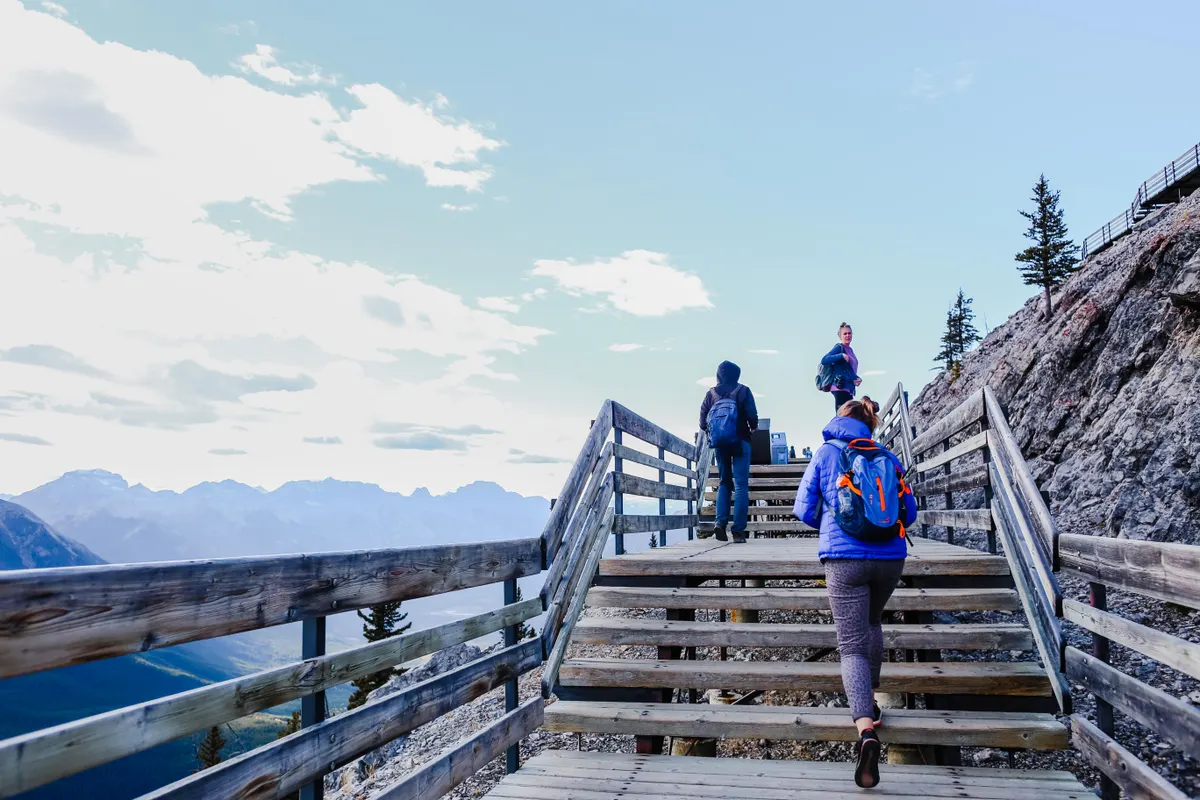
Photo, Rachel Claire / Pexels
07
Legal Oahu hikes with the same jaw dropping view
The whole reason people want the Stairway to Heaven is the view, ocean on both sides, green ridges falling away beneath your feet, that "I am standing on the spine of the island" feeling. Good news, Oahu hands that out legally in several places.
Here are the strongest legal substitutes, each with its own personality,
Legal Oahu ridge hikes worth the climb
Lanikai Pillbox (Kaiwa Ridge)Best payoff
A short, steep climb above Kailua delivers Lanikai Beach and the Mokulua islands in under an hour. The best effort to payoff ratio on the island.
Crouching Lion (Manamana)Fewer crowds
A windward ridge scramble with huge coastline views. Steeper and more exposed than it looks, so save it for dry days.
Makapuu Lighthouse TrailFamily friendly
Paved and still spectacular, with sweeping southeast coast views, whales in winter, and zero chance of a citation.
Diamond HeadMost famous legal hike
Short, busy, and worth it, ending at a crater rim over Waikiki.
Manoa FallsRainforest payoff
Not a ridge view but a thick rainforest walk to a 150 foot waterfall, ten minutes from the city.
- Lanikai Pillbox (Kaiwa Ridge). The crowd favorite, and for good reason. A short, steep climb above Kailua delivers a postcard of Lanikai Beach and the Mokulua islands in under an hour. It is the best effort to payoff ratio on the island, full stop. Our Kailua and Lanikai guide covers parking and timing.
- Crouching Lion (Manamana). A windward ridge scramble with huge coastline views and a fraction of the crowds. Steeper and more exposed than it looks from the road, so save it for dry days.
- Makapuu Lighthouse Trail. Paved, family friendly, and still spectacular, sweeping southeast coast views, whales in winter, and zero chance of a citation.
- Diamond Head. The most famous legal hike on Oahu, ending at a crater rim over Waikiki. Short, busy, and worth it. Read our full Diamond Head from Waikiki guide before you go.
- Manoa Falls. Not a ridge view but a thick rainforest payoff to a 150-foot waterfall, ten minutes from the city. Our Manoa Falls guide has the muddy details.
If you want the summit view experience handed to you with a guide, parking, and zero logistics, the easiest on ramp is the crater itself. A guided Diamond Head crater tour gets you there from Waikiki without the rental car and parking puzzle.
For the bigger picture of which trail fits your legs and your schedule, our roundup of the best hikes on Oahu ranks them by difficulty, crowds, and that all important view per step ratio.
08
Want the endless staircase burn? Climb Koko Crater
Maybe it is not the view you are chasing. Maybe you specifically want to climb a punishing, never ending staircase until your legs file a formal complaint. I respect that. There is a legal place for that exact brand of suffering, the Koko Crater Railway Trail.
Koko Crater is an old wartime railway incline on the southeast corner of Oahu, and the "trail" is the railway ties themselves, roughly 1,000 of them, running straight up the side of a cinder cone. No switchbacks. No mercy. Just up.
It scratches the same itch as the Haiku Stairs, relentless steps, a real cardio gut punch, and a genuinely big view at the top across Hanauma Bay and the windward coast. The difference is that nobody is going to fine you, no guard is waiting at the bottom, and you are not creeping through anyone's neighborhood at 4 a.m.
Haiku Stairs versus Koko Crater Railway Trail
Haiku Stairs
Illegal
- 3,922 steps up a Koolau knife edge
- Closed to the public since 1987
- Fine around $1,000 plus a guard at the base
- Trespasses through a residential neighborhood
- Real chance of a citation or a rescue
Koko Crater Railway Trail
Legal
- Roughly 1,000 railway ties straight up a cinder cone
- Open and completely legal
- No guard, no fine, no neighborhood to sneak past
- Big summit view over Hanauma Bay and the windward coast
- Almost no shade, so go early and bring extra water
A few honest notes. There is a gap section partway up where the ties cross a small ravine and you can see straight through to the ground, fine for most people, briefly terrifying for anyone who dislikes heights. Go early. There is almost no shade, and by midmorning the dark rock turns the whole climb into a convection oven.
Bring more water than you think you need, then bring a little more. I have watched perfectly fit people get humbled halfway up Koko Crater because they treated "it is just stairs" as a reason to skip the water bottle. It is just stairs the way a marathon is just jogging.
Do this one instead, and you get the staircase story, the burning quads, the summit photo, and a completely clear conscience. That is a better trade than a $1,000 fine, every single time.
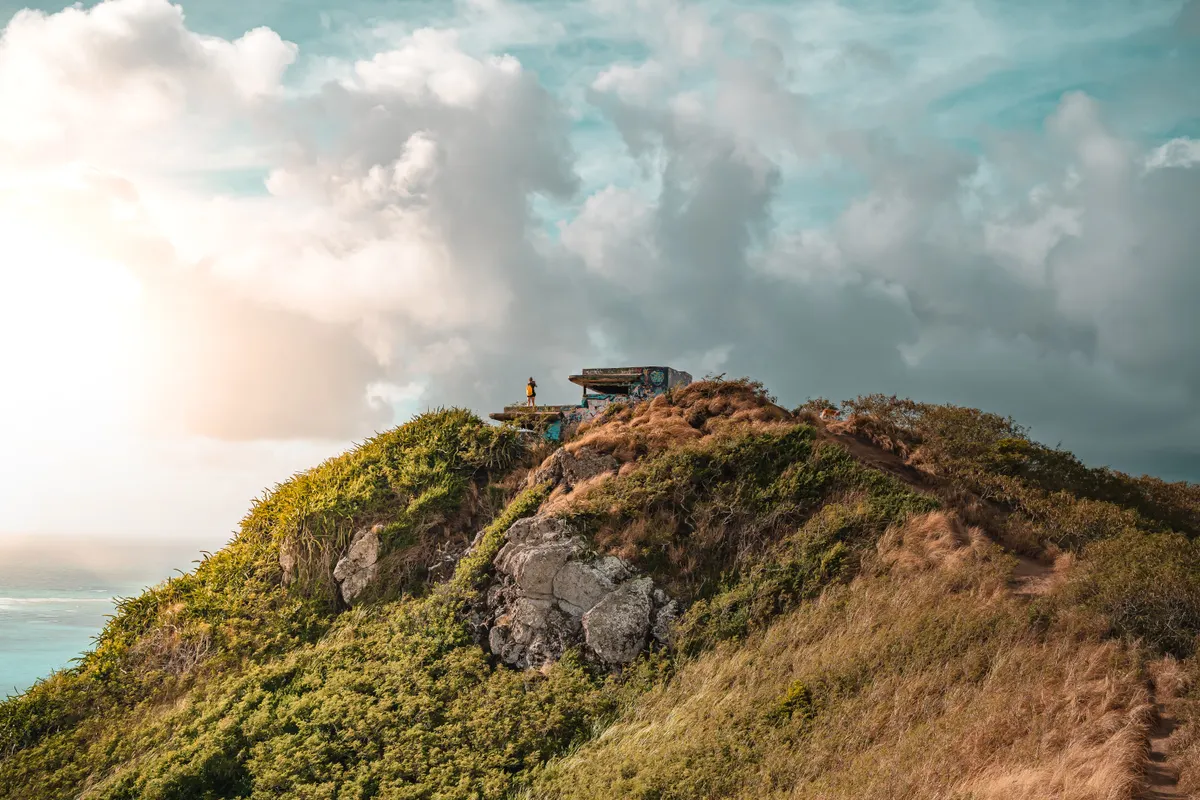
Photo, KEHN HERMANO / Pexels
09
What to bring on an Oahu ridge hike
Oahu trails punish the underprepared in slow, sweaty, sunburned ways. None of these are exotic. They are the difference between a great morning and a miserable one.
- Real footwear. Trails here are mud, wet roots, and loose rock, and flip flops are how people end up scooting down on their backsides. A pair of grippy trail shoes is the single best upgrade you can make.
- More water than feels reasonable. Exposed ridges and lava rock are brutally hot. A hydration daypack keeps your hands free for scrambling and your water close.
- Reef safe sunscreen. There is rarely shade up top, and Hawaii law restricts certain sunscreen chemicals anyway. Grab a reef safe sunscreen before you go.
- A headlamp for early starts. If you are chasing a sunrise on a legal ridge, a headlamp beats waving your phone flashlight around in the dark like a lost firefly.
- Bug spray for the valleys. The green, shaded trails, Manoa, Moanalua, come with mosquitoes that consider you a buffet. A little insect repellent saves the next three itchy days.
Two more free tips that cost nothing, check the weather before any ridge hike (wet rock plus wind plus exposure is the actual danger on Oahu, not sharks or lava), and tell someone your plan. Trails close fast when the clouds drop.
One last thing the photos never warn you about, Oahu trails stay muddy long after the rain stops, because the windward side catches showers nearly every day. Wear quick dry clothes you do not mind retiring, not the nice vacation outfit you wanted to photograph at the top. The mountain does not care about your color palette.
10
How to see the Haiku Stairs without hiking them
You can still get the Stairway to Heaven into your trip, just not under your own feet on the steps.
From the air or from the ground
From the air
The legal showstopper
- Helicopter and small plane tours over the windward side
- You see the stairs threading up the Koolau ridge
- A vantage no hiker ever gets
- Expensive, but zero trespassing involved
- The one way to see the whole staircase in context
From the ground
Drive the windward side
- The H-3 freeway slices through the Koolau Range
- Pull offs and viewpoints around Kaneohe
- The towering green wall the stairs climb
- You will not pick out individual steps
- Free, and you understand why this ridge stops people
From the air is the legal showstopper. Several helicopter and small plane tours over Oahu's windward side pass the Koolau Range, and on a clear day you will see the stairs threading up the ridge from a vantage no hiker ever gets. It is expensive, but it is also the one way to see the whole staircase in context, with zero trespassing involved.
From the ground, drive the windward side. The H-3 freeway slices dramatically through the Koolau Range near Haiku Valley, and the pull offs and viewpoints around Kaneohe give you the towering green wall the stairs climb. You will not pick out individual steps, but you will finally understand why this ridge stops people in their tracks. Our map of Oahu shows how the windward side fits together for a drive like this.
And honestly? Some things are better as a legend you respected than a photo you risked a misdemeanor for. The Stairway to Heaven has become a kind of test, not "can you climb it," but "can you want something badly and still not take it." Pass that test and the island rewards you with a dozen views you are actually allowed to keep.
One soft aside, since sunsets and slow Oahu mornings are our actual day job, after a brutal legal ridge hike, the opposite kind of day has its place. We set up beach picnics on Oahu's sand from $349, no elevation gain, no guard, no fine, just a styled spread and the ocean. Earn it on Koko Crater in the morning, then do nothing beautifully in the afternoon.
11
Where to stay and how to get around
Most visitors base themselves in Waikiki and day trip out to the trails, which works well because Oahu is small and the windward hikes are a manageable drive away.
Waikiki gives you the most lodging at every price point, easy food and rentals, and a central launch pad for Diamond Head (right there), Koko Crater and Makapuu (southeast, 30 minutes), and the windward hikes near Kaneohe and Kailua (over the pali, 30 to 45 minutes). You can compare Waikiki hotels (also on Booking.com) to find a base that fits.
A few logistics that make the hiking days smoother,
A logistics plan for an Oahu trail day
- 1Before you book
Rent a car for trail days
Most of these trailheads are poorly served by transit, and the good lots fill early. Wheels plus an early start is the winning combo.
- 2At sunrise
Start early
Not for the gram, for the parking, the cooler temperatures, and the lower odds of an afternoon downpour turning the trail to soup.
- 3In town
Fuel up before you go
Trailheads rarely have so much as a vending machine. Grab water, snacks, and coffee in town first.
- 4At the trailhead
Respect the neighborhoods
Lanikai and Haiku Valley are residential. Park legally, keep the noise down, and do not be the reason another trailhead gets gated.
- Rent a car for trail days. Most of these trailheads are poorly served by transit, and the good ones fill their tiny lots early. Wheels plus an early start is the winning combo.
- Start at sunrise. Not for the gram, for the parking, the cooler temperatures, and the lower odds of an afternoon downpour turning the trail to soup.
- Fuel up before you go. Trailheads rarely have so much as a vending machine. Grab water, snacks, and coffee in town, because the nearest cafe to a trailhead is usually a 20-minute backtrack you will resent at 6 a.m.
- Respect the neighborhoods. Lanikai and Haiku Valley are residential. Park legally, keep the noise down, and do not be the reason another trailhead gets gated.
If you would rather string the windward coast together without driving at all, a circle island day tour hits the big Koolau views and lookouts with someone else at the wheel, a low effort way to see the country the stairs climb through.
FAQ
Can you still hike the Stairway to Heaven on Oahu in 2026?
No. The Haiku Stairs are closed to the public and have been since 1987. Hiking them is illegal from every access point, there is a security guard at the base, police actively enforce the closure, and the fine is around $1,000. Despite recurring "they are tearing it down" headlines, the stairs are still standing in 2026, and still illegal to climb.
How much is the fine for hiking the Haiku Stairs?
Trespassing citations run about $1,000. On top of that, you risk the cost and danger of a rescue if you get stuck on the ridge, since Honolulu Fire Department crews, sometimes by helicopter, are the ones who have to come get you.
Is the Moanalua Valley "back way" to the Stairway to Heaven legal?
Partly. The Moanalua Valley Trail itself is a legal, permitted hike. But continuing onto the actual Haiku Stairs structure or the fenced stairway property at the top is still trespassing. The legal trail does not make the stairs legal. It is also a long, strenuous 9-to-10-mile route best left to experienced hikers.
Are the Haiku Stairs being demolished?
The city voted to remove them and awarded a demolition contract, but as of 2026 a court injunction blocks any demolition while lawsuits from the Friends of Haiku Stairs work through three separate Hawaii courts. Nothing has come down, and nothing has reopened to the public. The outcome is genuinely unresolved.
What is the best legal alternative to the Stairway to Heaven?
For the same ocean and ridge view with a fraction of the effort, the Lanikai Pillbox hike is the top pick. For the endless staircase workout the Haiku Stairs are famous for, climb the Koko Crater Railway Trail instead, about 1,000 steps straight up, completely legal, with a big summit view over the southeast coast.
How many people have died on the Stairway to Heaven?
Contrary to the hike's spooky reputation, there are no confirmed deaths from falling off the stairs themselves. The closure is driven by liability, the residential neighborhood at the base, and the cost and danger of rescues, not a list of fatalities. That does not make trespassing legal or smart. It just means the danger is more "expensive citation and possible rescue" than "haunted death trap."
Disclosure: Some links on this page are affiliate links. If you book or buy through them we may earn a small commission, at no extra cost to you. As an Amazon Associate, we earn from qualifying purchases.


