Kee Beach Kauai: A Complete Guide to Snorkeling and Reservations
20 min readYndira W. Tonin
Ke'e Beach is the golden, reef ringed cove at the very end of the road on Kauai's north shore, and these days you cannot just show up. You need a reservation, booked in advance, the way you would book a restaurant that has opinions about your footwear.
That one fact is the thing most people learn far too late, usually while sitting in a rental car at a gate, watching a very kind park ranger say the word "no."
So let us fix that first, then get to the good part. And the good part is genuinely worth the paperwork, Ke'e Beach sits at the end of Highway 560, the start of the Na Pali Coast and the Kalalau Trail, with a reef that turns the cove into a giant calm water aquarium and a sunset view that has ended more than one person's plans to ever leave Kauai.
Getting to Ke'e Beach
Tap to open Google Maps with turn-by-turn directions.
On this page
- Quick answer, what Ke'e Beach is
- The reservation system, explained without rage
- Getting there, the drive to the end of the road
- Snorkeling at Ke'e Beach
- The Na Pali Coast and the Kalalau Trail
- Sunset, stars, and the after hours question
- When the ocean says no, winter and safety
- Facilities and what to bring
- Should you even go? An honest take
- Where to stay near Ke'e Beach
- FAQ, Ke'e Beach, Kauai
01
Quick answer: what Ke'e Beach is
Ke'e Beach (say it "keh-EH," two soft syllables, not "key") is the last beach on Kauai's north shore before the road simply gives up and the Na Pali cliffs take over. It lives inside Haena State Park, at the literal end of Highway 560.
Three things make it special, and all three are doing the heavy lifting on those Instagram posts you have been saving.
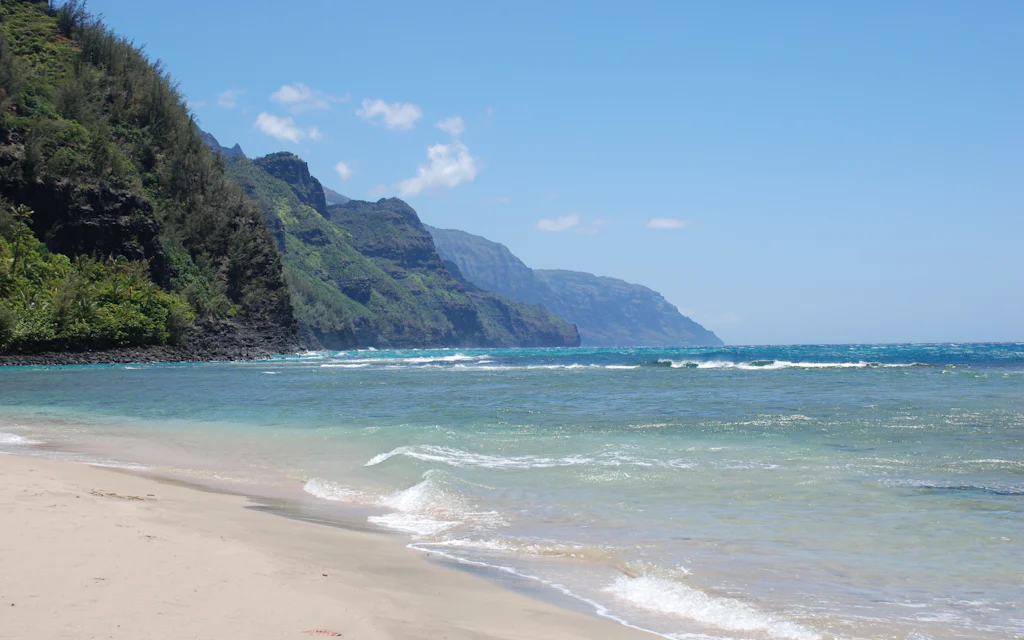
First, it is protected by a long fringing reef, so for much of the year the cove is calm, shallow, and shockingly clear, the closest thing Hawaii has to a natural kiddie pool with a mountain behind it.
Second, it is the trailhead. The Kalalau Trail along the Na Pali Coast starts right here, which means the same parking lot serves sunbathers, snorkelers, and hikers carrying enough gear to summit something.
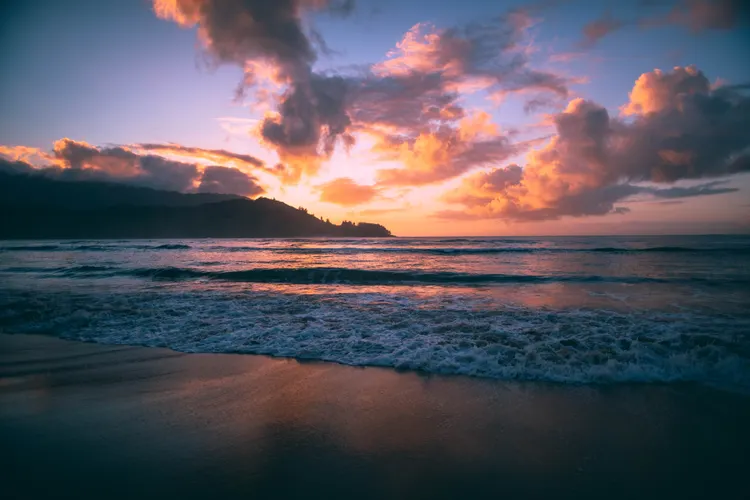
Third, it faces just the right way for a north shore sunset, with the green spires of Na Pali catching the last light. People cry. It is fine. We do not judge.
There are also lifeguards here, restrooms, and outdoor showers, which for a beach this remote feels almost suspicious, a little pocket of civilization at the exact spot where the map runs out of road. That mix of genuinely wild scenery and basic creature comforts is a big part of why Ke'e tops so many Kauai lists instead of staying a locals only secret.
The figures that decide your day at the end of the road
The not so special part, since 2019, the whole park has run on a reservation system, with a hard cap on how many humans get in per day. It was a fix for a real problem, the road and the tiny lot were being loved to death, but it does mean Ke'e now asks for more planning than any other beach on the island. Which brings us to the part nobody enjoys but everybody needs.
02
The reservation system, explained without rage
Here is the single most important sentence in this entire guide, you must reserve your entry to Haena State Park in advance, before you drive out there. No reservation, no entry. The ranger at the gate is not negotiable, and honestly, good for them.
You book through the official site, gohaena.com, which is run for the Hawaii State Parks division (DLNR). Reservations open up to 30 days ahead and close the day before your visit. There is no same day, walk up and wing it option, which is the thing that traps roughly every visitor who planned the trip around vibes.
The park caps entry at 900 visitors a day. That sounds like a lot until you remember the entire planet wants to see this beach, at which point 900 starts to feel like the guest list for a very exclusive sandcastle.
You are choosing between two doors, and picking the right one saves you a lot of grief.
How should you get into Ke'e Beach?
Shuttle + entry passOur pick
- Best for
- Most visitors, families, and anyone who would rather not fight for one of the handful of parking spots — you park down the road in Hanalei or Waipa and ride in
- The catch
- Book the time slot on gohaena.com early; popular morning shuttles sell out days ahead
Parking + entry pass
- Best for
- Self-drivers who want their car at the trailhead for the Kalalau hike or a flexible departure
- The catch
- Only about 100 stalls exist for the whole park, per timeslot — these vanish the fastest of any reservation
Walk in (the backup)
- Best for
- You struck out on reservations and don't mind a 15–20 minute walk from Haena Beach Park up the coast
- The catch
- An entry pass is officially still required for walk-ins, and the county lot fills early too — treat it as a plan B, not a loophole
Shuttle + entry pass. You park down the coast (Hanalei or Waipa) and ride a shuttle in. This is the easiest path for most people, no fighting for a stall, no circling. Out of state adult fares run about $45 as of mid-2026 (kids 4 to 15 around $25, ages 0 to 3 free) and include park entry. Rates change, so check the current pricing on gohaena.com when you book.
Parking + entry pass. You drive your own car to the trailhead lot. The catch is brutal, there are only about 100 parking stalls for the entire park per timeslot, and they are the single most competitive reservation in the whole system. If you want the car at the trailhead, say, for an early Kalalau hike, book the instant your 30-day window opens.
Walk in. The widely shared "locals trick" is to park at Haena Beach Park (the county beach just before the state park) and walk 15 to 20 minutes up the coast. It can work. But be straight with yourself, an entry pass is officially still required for walk-ins, the county lot also fills early, and "I read about a workaround" is not a great opening line for a ranger. Treat it as a genuine plan B.
Hawaii residents enter free with ID, which is the small mercy locals have earned after watching their beach turn into a turnstile.
The price of getting through the gate at Ke'e Beach
03
Getting there: the drive to the end of the road
From the main resort areas, getting to Ke'e is a commitment, and the drive is half the experience. From Princeville or Hanalei you are looking at roughly 25 to 40 minutes. From Poipu on the south shore, budget a solid two hours each way.
The road past Hanalei narrows into a series of one lane bridges, where the local etiquette is simple and civilized, a few cars cross, then they yield to the few cars waiting on the other side. Do not be the person who tries to sneak across as the eighth car. The whole island will know.
You will pass taro fields, the Wet and Dry Caves, and Limahuli Garden, part of the National Tropical Botanical Garden and a worthy stop if you have got a slow morning and a love of plants you cannot pronounce.
Then the pavement ends. That is Ke'e. There is nowhere further to drive on this side of the island, which is exactly why it feels like arriving somewhere.
Fill the gas tank in Hanalei before you commit to the final stretch. There are no services past town, no fuel, no store, no rescue from your own optimism, and running low on the one lane road at dusk is a special kind of stress nobody books a vacation for.
A word on timing the drive, morning is calmer water and easier parking. Late afternoon is sunset but heavier traffic out. You cannot have both in one visit, so pick your priority before you book your timeslot. (Choosing is the hardest part of any Kauai day, narrowly beating "reapplying sunscreen.")
Morning visit or late afternoon, you cannot have both
Morning
Best for swimmers and snorkelers
- Calmer, clearer water on the reef
- Easier parking and thinner crowds
- Softer light for the cove
- An early start on the Kalalau Trail
Late afternoon
Best for the view
- The famous Na Pali sunset
- Heavier traffic on the way out
- A winding one lane drive home in the dark
- Dinner that runs late or comes from the car
Build in more time than the map suggests, too. Between the bridge etiquette, the slow scenery, and the inevitable "let us just pull over for this view" stops, the drive out always takes longer than the estimate, and that is before you factor in a rental car full of people who keep gasping.

Photo by Jason Weingardt on Unsplash
04
Snorkeling at Ke'e Beach
When the ocean cooperates, which, on the north shore, means summer, Ke'e is one of the best beginner snorkel spots on Kauai. The reef wraps the cove like a breakwater, so the inside stays calm and clear while the open ocean does its thing on the far side of the coral.
The best snorkeling is on the right side of the beach as you face the water, where the reef and the fish congregate. You will see the usual technicolor cast, yellow tangs, parrotfish doing their coral crunching thing, the occasional sea turtle gliding by like it owns the lease (it does).
One hard rule, and it is the rule, avoid the reef channel at the far west end of the beach. That gap in the reef is where water funnels back out to sea, and the current there can pull a strong swimmer out fast. Stay in the calm middle and right, keep one eye on the channel, and you will have a wonderful, uneventful swim, which is the only kind of swim worth having.
Pack your own gear, because there is no rental shack at the end of the road. A basic mask and snorkel set and reef safe sunscreen are the two non negotiables. You can grab a snorkel set and reef safe mineral sunscreen before you fly. Hawaii law requires mineral sunscreen for a reason, the reef you are admiring is the reef the chemical stuff kills.
If you are building a wider snorkel itinerary, our guide to the best beaches in Kauai covers the south shore spots (Poipu, Tunnels) that stay calmer when the north shore turns rowdy in winter.

Photo by Braden Jarvis on Unsplash
05
The Na Pali Coast and the Kalalau Trail
Ke'e is not just a beach. It is the front door to the Na Pali Coast, those impossibly green, fluted cliffs that show up on every Kauai postcard, the ones helicopters and boats spend all day circling.
The famous Kalalau Trail starts right at the beach. The full thing is 11 miles to Kalalau Beach and a serious, permit only backcountry undertaking. But you do not have to do all of it.
The day hikeable piece is the first two miles to Hanakapiai Beach. It is steep, often muddy, frequently a conga line of other visitors, and the payoff is a wild, gorgeous beach with a stream crossing and a warning sign that has, sadly, earned every word. Do not swim at Hanakapiai, the currents there are deadly and the sign keeps a tally. Anything beyond Hanakapiai (to the falls, or onward to Kalalau) needs a separate permit.
How far you can go from the Ke'e trailhead
- 1Mile 0
The trailhead at Ke'e Beach
The Kalalau Trail starts right at the beach, covered by your park entry reservation.
- 2Mile 2
Hanakapiai Beach
The day hikeable piece. Steep and often muddy, with a stream crossing. Do not swim, the currents are deadly.
- 3Beyond Hanakapiai
The falls or onward to Kalalau
Anything past Hanakapiai, including the falls, needs a separate permit.
- 4Mile 11
Kalalau Beach
The full route. A serious, permit only backcountry undertaking.
If hiking through mud in a crowd is not your idea of paradise, here is the honest upgrade, see the coast from the water. A boat tour reveals the sea caves, waterfalls, and the parts of Na Pali no trail reaches, and a half day Na Pali Coast boat cruise will show you more coastline in an afternoon than a brutal hike does in a day.
★4.9(547)
Kauai: Na Pali Coast Power Catamaran
4.5 hours
Free cancellation
from
$275
The catamaran is the gentlest way to do it. For a faster, splashier ride that ducks into the sea caves, a raft tour is the move. And if you really want your jaw on the floor, the helicopter tour is the one that makes grown adults forget how to form sentences. All three are in the booking block at the bottom of this guide.
For more ways to fill a Kauai itinerary around the north shore, our things to do in Kauai roundup pairs nicely with a Ke'e day.
06
Sunset, stars, and the after hours question
Ke'e faces west northwest, straight down the Na Pali Coast, which makes it one of the great sunset seats in the islands. The cliffs go gold, then pink, then a kind of bruised purple, and the whole beach goes quiet in the way beaches do when everyone is simultaneously taking the same photo.
Here is the practical wrinkle, and it is a real one, the park's gates and reservation timeslots have hours, and the parking situation after dark is its own adventure. If sunset is your goal, build it into your reservation timing and know exactly when you need to be back at your car or shuttle.
Stargazing here is spectacular, no town, no light pollution, just the Na Pali silhouette and an absurd amount of sky. But getting out safely in the dark, on that winding one lane road, is the part to plan soberly. Headlamp, full gas tank, and zero heroics on the bridges.
The other thing worth saying plainly, a sunset visit eats your whole evening, and that is the trade. You will be driving back to Princeville or Hanalei well after dark, hungry, with most kitchens closing, so either eat early or accept that dinner is now a bag of whatever's in the car. It is a glorious way to end a day, just do not pretend you will also make an 8 p.m. reservation somewhere fancy. You will not, and you will not care.
For trip wide timing, which months bring the calm water and the clearest light, our best time to visit Hawaii guide breaks the seasons down island by island.

07
When the ocean says no: winter and safety
The single biggest mistake visitors make at Ke'e, bigger even than the reservation thing, is assuming the calm summer cove they saw online is the same beach that exists in January.
It is not. From roughly October through April, the north shore takes the brunt of the Pacific's winter swells. The same protected cove can turn into a churning mess with high surf, strong currents, and waves breaking over the reef that looked so friendly in July.
When the surf is up, the reef channel becomes genuinely dangerous, and even standing in shallow water near it is a bad bet. The waves do not have to be huge to be a problem, either, a moderate winter swell pushing through a narrow reef gap moves more water than it looks like from the sand. There are lifeguards at Ke'e, which is a blessing, but the smartest move is to read the ocean before you read the reviews, if it looks angry, it is, and the beach will still be there tomorrow.
A few rules that have kept people alive on this coast,
- Never turn your back on the ocean. Rogue sets arrive without an RSVP.
- If you cannot see the sandy bottom, do not snorkel. Cloudy water means churned up, moving water.
- Obey the lifeguards and the signs. They are not suggestions, and they are not there to ruin your vacation, they are there because someone already learned the hard way.
This is the same hard truth we wrote about at Queen's Bath on Kauai, the north shore is breathtaking and unforgiving in exactly the same months, and the calm photo and the deadly day share the same address.
08
Facilities and what to bring
For a beach at the end of the world, Ke'e is reasonably civilized. There are restrooms, outdoor showers, and lifeguards on duty. What there is not, shops, food, rentals, or any way to fix the thing you forgot. The nearest supplies are back in Hanalei, a winding drive away.
So pack like the road ends, because it does. The short list,
Six things to bring to the end of the road
Reef safe sunscreenNon negotiable
Required by Hawaii law, and the north shore sun is no joke.
Water and snacksNo services on site
There is no snack bar, and dehydration sneaks up fast.
Snorkel gearBring your own
No rentals at the end of the road, so bring your own mask and fins.
Water shoesFor the reef edges
Handy for the reef edges and the rockier entries, and they save a lot of wincing.
A dry bagSaltwater proof
Phones, reservations, and rental keys do not love saltwater. Keep the important stuff important.
A towel and a light layerFor the trade winds
Afternoon trades pick up, especially near sunset.
- Reef safe sunscreen, required by Hawaii law, and the north shore sun is no joke.
- Water and snacks, there is no snack bar, and dehydration sneaks up fast.
- Snorkel gear, no rentals on site. Bring your own mask and fins.
- Water shoes, handy for the reef edges and the rockier entries. A pair of water shoes saves a lot of wincing.
- A dry bag, phones and reservations and rental keys do not love saltwater. A dry bag keeps the important stuff important.
- A towel and a light layer, afternoon trades pick up, especially near sunset.
If you want the full island wide version, our Hawaii packing list covers everything from the carry on down to the reef safe fine print.
A small cooler is worth the effort if you are staying for sunset, because there is a real difference between a beach picnic of cold fruit and one of warm, sad, half melted snacks you regret. Pack it the night before so the morning of scramble does not end with you forgetting the one thing, usually the snorkel, occasionally a child.
One thing to leave behind, anything you would be heartbroken to lug back up the trail. This is a haul it in, haul it out beach with no lockers and no babysitting your gear, and the lighter you travel, the more you will actually enjoy it. Leave the drone at home too, Haena State Park does not allow them, and the only thing more annoying than a buzzing beach is the conversation you will have with the ranger about it.
09
Should you even go? An honest take
Now the part most guides skip, because we would rather you have a good day than just clicks, Ke'e is not automatically worth it for everyone, and if you cannot get a reservation, do not burn your trip chasing it.
Here is the math. The park caps entry at 900 people a day and the booking window is just 30 days. That means Ke'e rewards planners and punishes spontaneity, hard. If you are the kind of traveler who decides this morning what to do today, Ke'e will break your heart, and a perfectly wonderful beach day is sitting elsewhere.
For a casual swim and snorkel day with zero bureaucracy, Tunnels Beach (Makua) sits just down the road with a bigger reef and no reservation gate, and Hanalei Bay is a two mile crescent that asks nothing of you but your presence. Both are gorgeous. Neither requires a 30-day countdown.
Go to Ke'e if, you have planned ahead, you want the Kalalau trailhead, or you specifically want that end of the road, start of Na Pali feeling that no other beach delivers. Skip it if, you are winging it, it is mid winter with big surf, or the only reservation left is a timeslot that wrecks the rest of your day.
Go to Ke'e Beach, or skip it and save the day
Go to Ke'e
When the planning pays off
- You have planned ahead and booked your reservation
- You want the Kalalau trailhead at the start of the trail
- You want that end of the road, start of Na Pali feeling no other beach delivers
Skip it
When a better beach day is elsewhere
- You are winging it with no reservation
- It is mid winter with big surf on the north shore
- The only timeslot left wrecks the rest of your day
That is the kind of call we make on our own turf too. We run beach picnics on Oahu, not Kauai, and we will happily tell an Oahu couple that a windy, high surf afternoon is a bad day for a beachfront picnic and to rebook. Telling you when not to do the thing is the whole point of being useful.
10
Where to stay near Ke'e Beach
There is no lodging at Ke'e itself, the park closes, everyone leaves, and the road goes dark. To be close enough for an easy morning, you want to base on the north shore.
Three base camps for an easy Ke'e morning
PrincevillePolished and upscale
Resorts, condos, golf, and clifftop views, about 30 to 40 minutes from Ke'e. The comfortable north shore home base.
HanaleiLaid back surf town
Closer to the end of the road and walkable, with the famous bay right there. Vacation rentals and inns book out early in summer.
Kapaa and the east sideCheaper and central
More central to the whole island at the cost of a longer drive north each day. Fine if Ke'e is one stop on a packed itinerary.
Princeville is the polished option, resorts, condos, golf, and clifftop views, about 30 to 40 minutes from Ke'e. It is the comfortable, slightly upscale north shore home base.
Hanalei is the laid back surf town option, closer to the end of the road, walkable, with the famous bay right there. Vacation rentals and a handful of inns dominate. It books out early in summer, so plan ahead the same way you would the park reservation. Compare Kauai hotels on Expedia (also on Booking.com) for the north shore options near Kee (Keʻe).
Kapaa and the east side are cheaper and more central to the whole island, at the cost of a longer drive north each day, fine if Ke'e is one stop on a packed itinerary rather than the centerpiece.
One more reason to sleep close, the morning parking and shuttle slots are the good ones, calm water, soft light, thin crowds, and you do not want to be racing the clock from the south shore to make a 7 a.m. timeslot. A north shore base turns that frantic two hour dash into a relaxed coffee and a short drive.
Wherever you land, two bookings drive a north shore trip, your park reservation and your bed. Lock both early, north shore Kauai in summer is a seller's market, and the people who plan win. Treat the lodging like the park pass, the longer you wait, the worse and pricier the options get, until you are "staying near Kauai" in the way an airport hotel is "near" a city. For where each area shines across the island, our things to do in Kauai guide maps it out.
FAQ: Ke'e Beach, Kauai
Do you need a reservation for Ke'e Beach?
Yes. Ke'e Beach is inside Haena State Park, which requires an advance reservation for all out of state visitors, whether you drive, ride the shuttle, or walk in. Book at gohaena.com up to 30 days ahead and no later than the day before. There is no same day option, and the park caps entry at 900 people per day, so popular slots sell out. Hawaii residents enter free with ID.
How much does it cost to visit Ke'e Beach?
It depends on how you enter. The parking option runs about $20 per timeslot plus a $5 per person entry fee. The shuttle option is around $45 for out of state adults (reduced rates for kids). Prices change, so confirm the current rates on gohaena.com when you book. Hawaii residents are free.
Is Ke'e Beach good for snorkeling?
In summer, yes, it is one of the best beginner snorkel spots on Kauai. The fringing reef keeps the cove calm and clear, with reef fish and turtles. The best area is the right side of the beach. Avoid the reef channel at the far west end, where currents are strong. In winter (October, April), high surf often makes snorkeling unsafe.
Can you drive to Ke'e Beach?
Yes, but only with a parking reservation. Ke'e is at the very end of Highway 560 on Kauai's north shore, the road literally ends there. There are only about 100 parking stalls per timeslot for the whole park, and they are the most competitive reservation in the system, so book the moment your 30-day window opens or take the shuttle instead.
Where does the Kalalau Trail start?
The Kalalau Trail begins right at Ke'e Beach. The first two miles to Hanakapiai Beach are day hikeable with your park entry reservation. The full 11-mile route to Kalalau Beach, and anything beyond Hanakapiai, requires a separate camping permit. Do not swim at Hanakapiai, its currents are deadly.
When is the best time to visit Ke'e Beach?
Late spring through early fall (roughly May, September) brings the calmest, clearest water and the safest snorkeling. Mornings mean easier parking and flatter seas. Late afternoon means sunset but heavier traffic out. Winter delivers dramatic surf and scenery but frequently unsafe swimming. Whenever you go, book your reservation 30 days out.
Is Ke'e Beach worth it?
If you plan ahead and want the end of the road, start of Na Pali experience or the Kalalau trailhead, absolutely. If you cannot get a reservation or it is big surf winter, do not burn your trip on it, Tunnels Beach and Hanalei Bay nearby are gorgeous and need no reservation. Ke'e rewards planners and punishes spontaneity.
Disclosure: Some links on this page are affiliate links. If you book or buy through them we may earn a small commission, at no extra cost to you. As an Amazon Associate, we earn from qualifying purchases.