Dole Plantation Oahu (2026): Maze, Train, Hours & Tips
21 min readYndira W. Tonin
Dole Plantation Oahu is a free to enter pineapple stop in Wahiawa, about 45 minutes north of Waikiki on the way to the North Shore, built around a hedge maze, a little train, and a frozen pineapple dessert with a cult following. It is what happens when a fruit company builds a tourist attraction around a pineapple and somehow it works. Most visitors pull in on the way up, spend an hour, and leave mildly sticky and weirdly satisfied.
Here is the short version. A Dole Plantation tour is a half hour to half day visit built around three paid activities, the Pineapple Garden Maze, the Pineapple Express train tour, and the Plantation Garden Tour, plus the famous Dole Whip. Entry to the grounds and gift shop is free. The activities cost extra.
This guide gives you the honest version, current as of 2026, which attractions are worth the money, which to skip, how to time it so you are not trapped behind four tour buses, the truth about the Dole Whip line, and how to fold the whole thing into a proper North Shore day.
(Yes, I am about to spend several hundred words analyzing a pineapple maze with the seriousness of a man reviewing a national monument. This is who I am now.)
Getting to the Dole Plantation
Tap to open Google Maps with turn-by-turn directions.
A deep dive on Dole Plantation Oahu: what's free, which of the three activities is worth it, the Dole Whip, the combo-ticket trap, beating the tour buses, the pineapple history, and how to pair it with a North Shore day.
Show transcript
Maya: Today we're settling a debate that every Oahu first-timer has in the rental car: do you actually stop at the Dole Plantation, or is it a tourist trap? Sam, one sentence, what is it?
Sam: Dole Plantation Oahu is a free-to-enter pineapple stop in Wahiawa, about 45 minutes north of Waikiki, right on the way to the North Shore. It's a hedge maze, a little train, a gift shop the size of a small airport, and a frozen pineapple dessert with a genuine cult following. It's what happens when a fruit company builds an attraction around a pineapple and it somehow works.
Maya: Free to enter is the part people get wrong. So you don't pay anything to walk in?
Sam: Right. The grounds, the gift shop, and the Dole Whip line cost nothing. Only three things are ticketed: the Pineapple Garden Maze, the Pineapple Express train tour, and the Plantation Garden Tour. Plenty of people pull in, grab a Dole Whip, take the photo by the pineapple-shaped sign, and leave twenty minutes later perfectly happy, having spent the price of a frozen dessert.
Maya: Okay, the three paid activities. If someone only does one, which is it?
Sam: The train tour, every time. It's a twenty-minute narrated ride, shaded, sit-down, and genuinely informative, and it's easy for little kids and grandparents. The maze is the headline, it was named the world's largest maze by Guinness back in 2008, three-plus acres and about fourteen thousand plants, but it's a blast in the cool morning and a sweaty forced march at noon. The garden tour is the quiet, skippable one unless you're really into plants.
Maya: And the trap is the combo ticket, right?
Sam: It is. As of 2026 the all-three combo runs about twenty-eight dollars for adults, a little less for kids and Hawaii residents. But the combo sets a sunk-cost trap: you paid for all three, so now you're doing the maze at noon out of obligation instead of joy. My honest advice for a typical couple just breaking up the drive: ride the train, get a Dole Whip, browse the shop, skip the maze and garden tour. That's a delightful 45-minute stop for one ticket and a dessert.
Maya: Let's talk about the actual star, because we both know what it is.
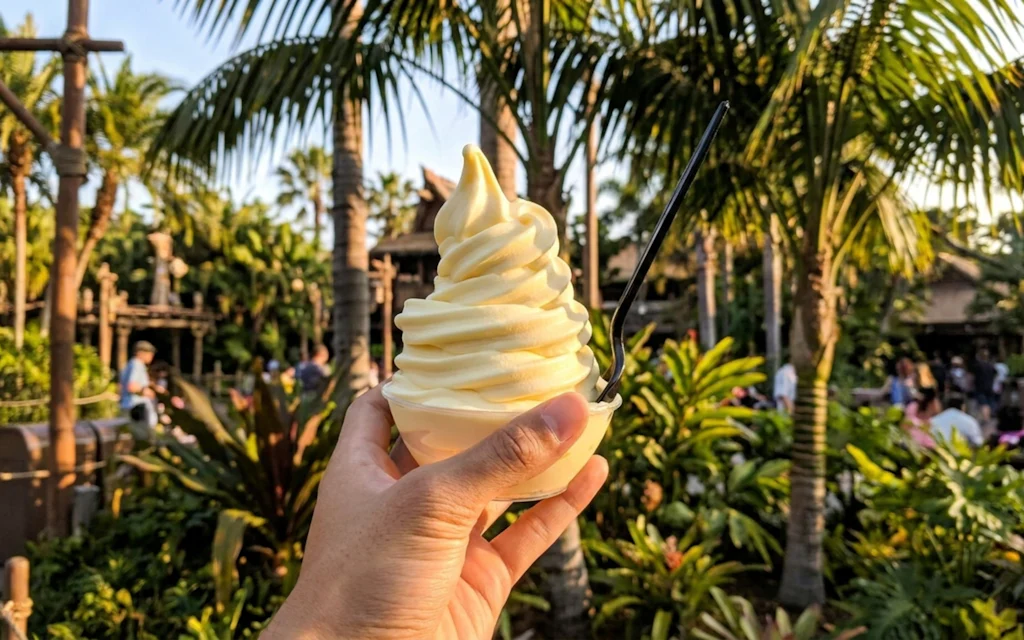
Sam: The Dole Whip. It's the soft-serve pineapple swirl, tangy and frozen and a little magical, and you don't need any ticket for it. Is it a religious experience? It's frozen pineapple, friends. But it's excellent frozen pineapple, and it might be the most reliable few dollars you spend on the property. Eat it fast, though, because the central plateau sun treats a Dole Whip the way the ocean treats a sandcastle.
Maya: You keep mentioning crowds. What's the single most important timing tip?
Sam: Beat the buses. The plantation opens at 9:30am, and midmorning the tour buses arrive in waves, lines for the train and the Dole Whip balloon, and an easy 45-minute stop becomes an hour of queuing. Get there at or just before opening, beat the buses by even half an hour, and you'll do everything you want with almost no wait. Weekday mornings are the calmest; the weather barely changes by season, so crowds are the only real variable.
Maya: There's real history under all the pineapple kitsch, too. Give me the short version.
Sam: Here's the fun fact to annoy your car with: the pineapple isn't even from Hawaii. It's native to South America. James Dole arrived on Oahu in 1899, bought a 64-acre homestead in the central plains, and bet everything on pineapple. At the peak, the Hawaiian islands grew over 90% of the world's pineapple. The fruit stand opened in 1950, the attraction in 1989, and today it pulls over a million visitors a year. Knowing that shifts the whole place from tourist trap to the last visible chapter of an industry that shaped this island.
Maya: So the bottom line on whether it's worth it?
Sam: It's worth it as a pit stop with personality, not as a destination. The move is to treat it as the warm-up act: open it early, do the train and a Dole Whip before the buses, then drive 20 minutes down to Haleiwa, Waimea Bay, and the North Shore beaches. Time it against the buses and it's a genuinely fun chapter of the day. Treat it as a midday destination and you'll spend your visit in lines, which is a sad way to experience a pineapple.
Maya: Pineapple early, beach after, beat the buses. That's the whole guide.
Sam: That's it. Buy only the train, eat the Dole Whip, skip the noon maze, and you'll leave mildly sticky and weirdly satisfied. Which, honestly, is the correct way to leave the Dole Plantation.
Table of contents
- What is the Dole Plantation?
- Getting there from Waikiki
- The Pineapple Garden Maze
- The Pineapple Express train tour
- The Plantation Garden Tour
- The Dole Whip, the real reason you are here
- Tickets, cost, and is the combo worth it?
- Best time to visit (and beating the bus rush)
- A short history of the Dole pineapple plantation
- Combine it with a North Shore day
- FAQ
01
What is the Dole Plantation?
The Dole Plantation is a pineapple themed visitor attraction in Wahiawa, in the cool central uplands of Oahu, roughly halfway between Honolulu and the North Shore. It started as a fruit stand in 1950, grew into a full blown attraction in 1989, and now pulls in over a million visitors a year, which makes a humble fruit stand the most successful career pivot on the island.
It is not a working plantation you tour, and it is not a theme park. Think of it as a large, well kept garden complex with three paid activities, a cafe, and a gift shop that has turned pineapple merchandise into an art form. You can wander the grounds, smell the flowers, and buy a Dole Whip without paying admission, the money only starts when you board the train, enter the maze, or take the garden tour.
That free entry detail matters, because it shapes how you should treat the place. Plenty of people pull in, grab a Dole Whip, take a photo by the pineapple shaped sign, browse the shop, and leave twenty minutes later perfectly happy, having spent the price of a frozen dessert. Others make a half day of it with kids and all three activities. Both are valid Dole Plantation visits.
What it is, more than anything, is a pit stop with a personality. It is air conditioned bathrooms, a snack, and a leg stretch at the exact midpoint of the drive to the North Shore, dressed up in enough pineapple kitsch to be genuinely fun. Set your expectations to "charming roadside stop," not "must see wonder," and the Dole Plantation delivers exactly what it promises.
The pineapple stop at a glance
02
Getting there from Waikiki
The Dole Plantation sits on Kamehameha Highway in Wahiawa, about a 45-minute drive from Waikiki when traffic cooperates and closer to an hour when it does not. You take the H1 to the H2 north, come down into the central plateau, and the big pineapple-logo'd complex appears on your right. It is hard to miss. It is, after all, shaped like its own brand.
The smart way to plan it is not as a destination but as a stop on the way to somewhere better. Dole sits almost exactly between Honolulu and the North Shore, so the natural play is to travel through in the morning on your way up to Haleiwa, Waimea Bay, and the beaches, turning a 45-minute drive into a two stop adventure instead of a slog. Try to roll through early, before the day heats up.
If you would rather not drive at all, this is genuinely good tour country. A circle island day tour loops from Waikiki up through the central plateau and along the North Shore, and most of them either stop at Dole or pass close enough to fold it in, so you get the pineapple stop, the beaches, and the famous turtle and surf spots without ever reading a parking sign. For other guided options across the island, snorkel sails, luaus, and the rest, our curated Oahu tours collects the ones worth booking.
★4.8(4,263)
Oahu Circle Island Tour with Waimea Valley Waterfall
8 hours
Free cancellation
from
$154
Parking at Dole itself is free and plentiful, which after a week of fighting for beach spots feels like a small miracle. The lot is large, the spaces are real, and nobody is circling like a shark. Savor it, it does not last once you point the car back toward the coast.
The drive and parking, at a glance
03
The Pineapple Garden Maze: the world's largest maze
The headline attraction is the Pineapple Garden Maze, and it has a genuine claim to fame, the Guinness Book of World Records named it the world's largest maze back in 2008, and it still sprawls across more than three acres, with some 14,000 Hawaiian plants forming the walls and over two miles of path inside. It is a lot of maze. It is, frankly, more maze than any reasonable person ordered.
The world's largest maze by the numbers
The goal is to find eight hidden stations scattered through the paths and then locate the exit, ideally before your group fractures into rival factions. The average run takes about 40 minutes, though plenty of people spend anywhere from 30 minutes to an hour, depending on how competitive they are and how badly they refuse to ask for directions. The paths are paved and flat, so it is stroller- and grandparent friendly underfoot.
Here is the honest catch, the maze is hot. There is very little shade among the hedges, the central plateau sun is no joke by late morning, and what sounds like a charming garden stroll can turn into a sweaty, slightly cranky forced march if you hit it at midday. Kids with energy to burn love it. Adults in the noon heat tend to discover their love of mazes is more theoretical than they realized.
There is also a time trial angle if you are competitive, a board near the entrance tracks the fastest completion times, and finding all eight stations in record time is a genuine challenge that turns the maze from a stroll into a game. Families split into teams. Couples discover new and exciting things about each other's navigation skills. Bring a hat, because the one thing the maze does not hand out is shade.
If you are going to do the maze, do it first thing, while it is cooler and emptier, and bring water. Treated as a morning game with kids, it is a real highlight. Treated as a midday obligation because you already paid for the combo ticket, it is how vacations develop a villain.
04
The Pineapple Express train tour
The Pineapple Express is a narrated train tour that loops about two miles around the property over roughly 20 minutes, trundling past pineapple fields, koi ponds, and assorted tropical plantings while a recorded narration walks you through James Dole's story and a surprising amount of pineapple agriculture. It is gentle, shaded, and sit down, which after the maze is its own reward.
This is the activity I would point most people to if they only do one. The train ride is short, easy, and genuinely informative in a "huh, I did not know that" way, and best of all it involves sitting in the shade while something else does the moving, with gentle views of the fields rolling past. For a family with little kids, grandparents, and anyone wilting in the heat, it is the clear winner of the three.
The one thing to know is that the train is the most popular activity, so the line for it balloons the moment the tour buses arrive midmorning. Ride it first, before the maze, before the Dole Whip, before anything, get there near opening, walk straight to the train, and you will be done before the queue becomes a geological feature.
The train itself is a cheerful open sided affair done up in Dole red, and the route runs past actual growing crops, pineapple, of course, but also banana, papaya, and coffee, so you come away with a vague but satisfying sense of how the stuff in the gift shop actually grows. It is the rare attraction where the kids, the grandparents, and the one person in your group who "does not really do tourist things" all quietly enjoy themselves.
It will not change your life, and the narration leans more "pleasant" than "riveting." But for a 20-minute, low effort, high shade activity that the whole group can do together, the Pineapple Express earns its ticket more reliably than anything else on the property.
05
The Plantation Garden Tour
The Plantation Garden Tour is the quiet one. It is a self guided walk through a series of themed garden plots showing the crops that have shaped Hawaii, pineapple, of course, but also cacao, coffee, banana, and a spread of tropical flowers and fruits, with signage explaining what you are looking at as you stroll.
For plant people, gardeners, and anyone who finds a well labeled botanical walk genuinely relaxing, it is a lovely, low key half hour. You learn what a cacao pod actually looks like on the tree, you see a coffee plant in the flesh, and you get a calm green breather away from the maze crowds and the gift shop crush.
For everyone else, especially kids, it is the most skippable of the three. There is nothing wrong with it. It is just gentle, and "gentle botanical signage" is a hard sell to a seven year old who can hear a train and smell ice cream. If your time or budget is tight, this is the activity to cut without guilt.
It is also the most weather flexible of the three. The maze bakes in full sun and the train fills up with bus crowds, but the garden plots stay pleasant in light cloud or even a passing shower, and they are rarely busy, so if you arrive to a packed property, the garden tour is where you will find a bit of breathing room while you wait for the train line to die down.
The good news is the grounds themselves are pretty enough that you can get a taste of the garden vibe for free, just by wandering the public areas around the plaza. If the themed plots call to you, the tour adds depth. If they do not, you are not missing the headline act.
So which of the three is worth it? Here is the honest ranking of the maze, the train tour, and the garden tour, side by side, to help you decide.
Maze vs train tour vs garden tour
Pineapple Express train tourDo this one
Twenty minutes, shaded, narrated, sit down. The one to do if you only do one, and easy for little kids and grandparents. Ride it first, before the buses turn the line into a geological feature.
Pineapple Garden MazeKids / mornings
The world's largest maze, three plus acres of hedges and eight hidden stations. A blast for kids with energy in the cool morning, a sweaty forced march at noon. Bring water and a hat.
Plantation Garden TourSkippable
A quiet self guided walk past cacao, coffee, banana, and pineapple plots with signage. Lovely for plant people, the most skippable for everyone else, and the most weather flexible of the three.
06
The Dole Whip: the real reason you are here
Let us be honest with each other. For a large share of visitors, the maze and the train are the supporting cast, and the Dole Whip is the star. This is the soft serve pineapple dessert, tangy, frozen, vaguely magical, that has achieved the kind of cult status most desserts can only dream of, and you buy it right here at the source.
You do not need a ticket for the Dole Whip. It is sold at the snack windows, you queue up, you hand over a few dollars, you receive your frozen pineapple swirl, and you ascend briefly to a higher plane. Get the classic whip, or the float if you want to commit, and eat it fast, the central plateau sun treats a Dole Whip the way the ocean treats a sandcastle.
The catch, predictably, is the line. When the tour buses land, the Dole Whip queue can stretch to genuinely unreasonable lengths for what is, when it comes down to it, soft serve. The fix is the same as everything else here, get it early, or get it during a lull when a bus has just pulled out and the next has not arrived. Patience or timing, pick one.
Is it worth the hype? It is very good, it is refreshing on a hot day, and there is a real charm to having it at the actual Dole Plantation. Is it a religious experience? It is frozen pineapple, friends. But it is excellent frozen pineapple, and it might be the most reliable few dollars you spend on the whole property.
07
Dole Plantation Oahu tickets, cost, and is the combo worth it?
Entry to the Dole Plantation grounds and gift shop is free. The three activities, maze, train, and garden tour, are each ticketed separately, with combo tickets that bundle all three at a small discount. As of 2026 the all three combo runs about $28 for adults, a couple of dollars less for kids and Hawaii residents, but prices change, so confirm the current rates on the official Dole Plantation site before you go rather than trusting a number you read in a blog. There is no reservation system and no advance online sales, tickets are available first come, first served at the train and maze booths when you arrive, which is one more reason to beat the buses. Group tour rates kick in for parties of at least 25 people, and the official site keeps the most current ticket information if you want to plan to the dollar.
Here is where I will save you some money, because this is the single most useful thing in this guide, most visitors should not buy the all three combo. The combo only pays off if you are genuinely going to do all three with enthusiasm, which usually means families with kids and a half day to fill. For everyone else, it is a bundle of things you will half use.
Which Dole Plantation ticket is worth it?
Pineapple Express TrainOur pick
- Best for
- Everyone, especially first-timers and little kids — a shady, narrated 20-minute sit-down
- The catch
- Lines build fast once the tour buses land; ride it first thing
Pineapple Garden Maze
- Best for
- Families with energy to burn and anyone who likes a challenge — the world's largest hedge maze
- The catch
- Hot, shadeless, and 30–60 minutes of walking; brutal at midday
Plantation Garden Tour
- Best for
- Plant lovers wanting a calm self-guided stroll through themed garden plots
- The catch
- The least thrilling for kids; the easiest of the three to skip
All three combo
- Best for
- A rainy-day backup or a half-day with restless kids to tire out
- The catch
- Adds up fast for a stop most people finish in under an hour — often not worth it
My honest recommendation for a typical adult or couple just breaking up the drive, ride the train, grab a Dole Whip, browse the shop, take the photo, and skip the maze and garden tour entirely. That is a delightful 45-minute stop for the price of one ticket and a dessert. With kids who need to run off energy, add the maze in the morning. The garden tour is a "only if it is your thing" extra.
The trap the combo sets is the sunk cost march, you paid for all three, so now you are doing the maze at noon out of obligation rather than joy. Buy only what you will actually enjoy, spend the savings on a bigger Dole Whip, and you will leave happier. Telling you to spend less is exactly the kind of advice the gift shop would prefer I skip.
08
Best time to visit (and beating the bus rush)
The Dole Plantation is open daily, generally from midmorning to late afternoon, but the hours and last activity times shift seasonally, so confirm them on the official site the day before. The single most important timing fact is not the hours, though, it is the buses.
Midmorning, the tour buses arrive in waves, and the whole property transforms. Lines for the train and the Dole Whip balloon, the maze fills with people, and the easy 45-minute stop becomes an hour of queuing. The fix is gloriously simple, get there at or just before opening. The plantation opens at 9:30am and activities close around 5pm, so beat the buses by even half an hour and you will do everything you want with almost no wait.
Time budget and beating the buses
A few more practical notes for a smooth stop,
- Go early, then head to the beach. Hit Dole right at opening, then drive on to the North Shore, you will have done the pineapple stop before the crowds and you will reach the beaches with the day still ahead of you.
- Bring water and sun protection. The central plateau is hot and exposed, especially in the maze. There is shade at the train and the plaza, not much in the hedges.
- Mind the red dirt. Central Oahu's soil is the famous rust red kind that stains shoes and clothes with enthusiasm. Do not wear your pristine white sneakers into the maze unless you have made peace with their fate.
- Budget your time honestly. Just the whip and the shop is 20 to 30 minutes. Add the train and you are at an hour. All three with kids is a half day.
Treat Dole as the warm up act, not the headliner, and time it against the buses, and it is a painless, pleasant stop. Treat it as a midday destination and you will spend your visit in lines, which is a sad way to experience a pineapple.
09
A short history of the Dole pineapple plantation
The pineapple is so bound up with Hawaii's image that it is genuinely surprising to learn the fruit is not from here at all, it is native to South America and arrived in the islands only a couple of centuries ago. The thing on every Hawaiian shirt and hotel welcome plate is, botanically, an immigrant.
The man who turned it into an empire was James Dole, who arrived on Oahu in 1899, bought a 64-acre homestead in the central plains, and planted pineapples in Wahiawa, right around where the Dole pineapple plantation stands today. Through aggressive farming and even more aggressive marketing, he helped make Hawaii the pineapple capital of the world, at the peak the islands grew over 90% of the planet's pineapple, and "Dole" became shorthand for the fruit itself.
That era has largely faded over the years, most commercial pineapple growing has moved overseas where it is cheaper, and the vast plantations that once carpeted central Oahu are mostly gone. What is left here is part working farm, part living museum, part very effective gift shop, keeping the story (and the souvenir trade) alive on the original ground.
That history also explains the landscape on your drive up. The wide open red dirt fields across central Oahu, the grid of plantation roads, the little town of Wahiawa itself, all of it grew up around pineapple and the workers who farmed it. The plantation did not just sell fruit. It shaped how this whole stretch of the island looks and who settled here.
Knowing the backstory genuinely improves the visit. The little train narration lands better, the garden plots make more sense, and the whole pineapple kitsch experience shifts from "tourist trap" to "the last visible chapter of an industry that shaped this island." Also, you get to be the person in the car who announces that pineapples are not actually Hawaiian. Everyone loves that person.
A short history of the Dole pineapple plantation
- 11899
James Dole arrives
A young Massachusetts native lands on Oahu, buys a 64-acre homestead in the central plains, and bets the whole thing on pineapple.
- 2Early 1900s
The pineapple capital of the world
Aggressive farming and even more aggressive marketing pay off, at the peak, the Hawaiian islands grow over 90% of the planet's pineapple.
- 31950
The fruit stand opens
A small roadside stand goes up in Wahiawa so passing travelers can taste the plantation's fruit at the source.
- 41989
The attraction is born
A plantation style visitor complex opens as a living museum to James Dole's work. Today it draws over a million visitors a year.
10
Combine it with a North Shore day
The Dole Plantation makes a poor destination and a great pit stop, so the move is always to pair it with the North Shore. It sits right on the route, so a morning at Dole flows naturally into an afternoon of beaches, shrimp trucks, and surf, the best version of a central and north Oahu day.
Here is the loop that works, open the Dole Plantation early, do the train and a Dole Whip before the buses, then drive 20-odd minutes down to Haleiwa town and the coast. From there the whole North Shore is yours.
The loop that actually works
- 1Right at opening
Hit Dole early
Ride the Pineapple Express train and grab a Dole Whip before the tour buses arrive midmorning.
- 220 minutes later
Drive to Haleiwa town
The North Shore hub, with garlic shrimp trucks, shave ice, and surf shops. The natural lunch stop after Dole.
- 3Afternoon
Waimea Bay
A wide, gorgeous bay, a calm swim spot in summer and a giant wave amphitheater in winter.
- 4A few minutes up the coast
Sharks Cove
One of the island's best summer snorkel spots. Check the honest timing before you go.
- Waimea Bay, a wide, gorgeous bay that is a calm swim spot in summer and a giant wave amphitheater in winter. Our Waimea Bay guide has the seasons, the jump rock, and the waterfall valley across the road.
- Haleiwa town, the North Shore hub, with the famous garlic shrimp trucks, shave ice, and surf shops. The natural lunch stop after Dole.
- Sharks Cove, one of the island's best summer snorkel spots, a few minutes up the coast. Our Sharks Cove guide has the honest timing.
- The wider coast, for the full run of beaches and how to drive it, our North Shore Oahu guide maps the whole route, and things to do in Oahu puts it in the context of the rest of the island.
One honest aside, since beach setups are our actual job, Dole is an inland pineapple stop with no beach in sight, so it is a "do it then go find sand" kind of place. If you would rather have the beach half of the day handled for you, we run beach picnics on the North Shore's roomier beaches from $349, a fitting reward after a morning of mazes and frozen pineapple. Different stops, different jobs, one good day.
For where to base yourself so the drive up is painless, our guide to where to stay on Oahu breaks down each area. Wherever you land, the formula holds, Dole early, North Shore after, beat the buses, and the pineapple stop becomes a genuinely fun chapter instead of a queue.
Where to stay: compare Oahu hotels on Booking.com or on Expedia to find your base.
FAQ
Is the Dole Plantation worth visiting?
Yes, with the right expectations. It is a charming, free to enter pit stop on the way to the North Shore, best for a quick Dole Whip, the gift shop, and the Pineapple Express train. It is not a must see wonder or a working plantation tour, so treat it as a fun 45-minute-to-half-day stop rather than a destination, and you will enjoy it.
How much does the Dole Plantation cost?
Free to enter. The grounds and gift shop cost nothing. The three activities, the Pineapple Garden Maze, the Pineapple Express train, and the Plantation Garden Tour, are each ticketed separately, with a discounted combo for all three at about $28 for adults. Prices change, so check the official Dole Plantation website for current rates. Most visitors do best buying just the train (and a Dole Whip) rather than the full combo.
How far is the Dole Plantation from Waikiki?
About 45 minutes by car, sometimes closer to an hour in traffic. It is in Wahiawa in central Oahu, roughly halfway between Honolulu and the North Shore via the H1 and H2 freeways, which makes it a natural stop on the way to Haleiwa and the beaches.
How long do you need at the Dole Plantation?
Anywhere from 20 minutes to half a day. A quick Dole Whip, photo, and gift shop browse is 20 to 30 minutes. Adding the Pineapple Express train brings it to about an hour. Doing all three activities with kids can fill a half day. For most visitors, an hour is plenty.
What is a Dole Whip?
A Dole Whip is a soft serve pineapple dessert, tangy, refreshing, and a little cult famous. You can buy it at the Dole Plantation's snack windows without any activity ticket. It is one of the most popular reasons people stop here, so grab it early before the tour bus lines build.
When is the best time to visit the Dole Plantation?
Right at opening, before the tour buses arrive midmorning. Beating the buses by even half an hour means short lines for the train and the Dole Whip and a cooler, emptier maze. Going early also lets you continue on to the North Shore beaches with the rest of the day still ahead of you.
Is there a best time of year to visit the Dole Plantation?
Any month works. It is open all year and central Oahu's weather stays steady, so the real variable is crowds, not season. Weekday mornings are the calmest. Weekends, holidays, and midday bring local families and tour buses alike. Whenever you go, the move is the same, arrive right at opening and beat the buses.
Can you visit the Dole Plantation for free?
Yes. Entry to the grounds, plaza, and gift shop is free, and you can buy a Dole Whip and wander the public areas without paying for anything. You only pay if you want to do the maze, ride the train, or take the garden tour. Many visitors have a perfectly good time on the free portion alone.
Do Dole early, then point the car at the coast and read this next, our North Shore Oahu guide maps the whole coast 20 minutes down the road.
More local grinds → the full Hawaiian food guide.
Cover photo, Enchanted Insider on Unsplash.
Disclosure: Some links on this page are affiliate links. If you book or buy through them we may earn a small commission, at no extra cost to you. As an Amazon Associate, we earn from qualifying purchases.


