Crouching Lion Hike Oahu: All You Need to Know (2026)
22 min readYndira W. Tonin
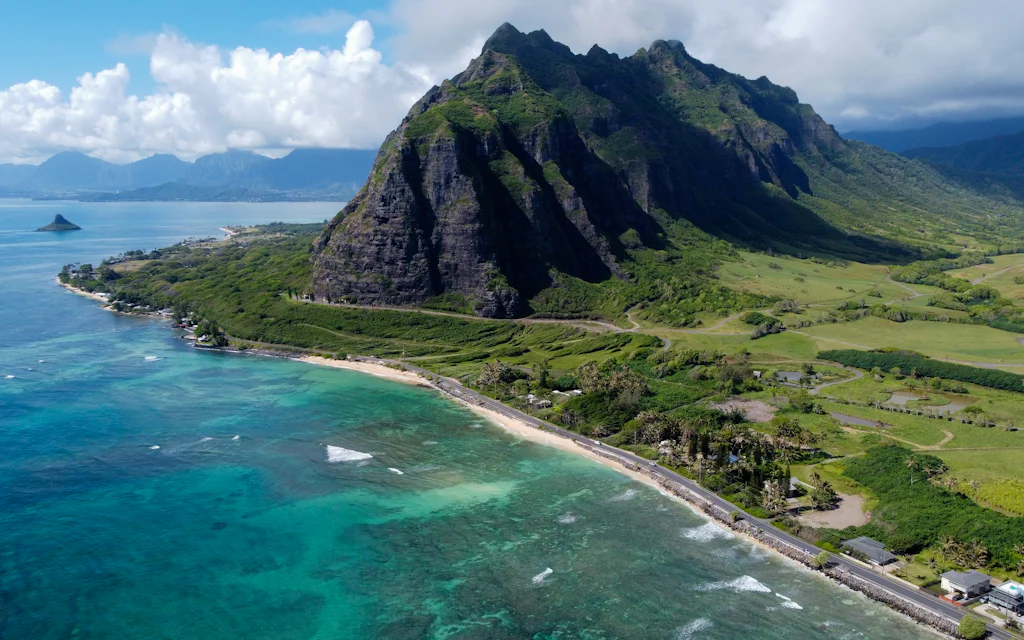
The Crouching Lion hike is half a mile long, takes about twenty minutes to climb, and has somehow generated more drama than a trail that short has any business generating. Closure signs. A rope you actually need. A parking lot with a reputation. And a view over Kahana Bay that, on the right morning, makes you forget all of it.
This guide is current as of 2026.
Here is the honest version up front. The Crouching Lion hike on Oahu is a short, steep, rope assisted scramble on the windward coast in Kaaawa, roughly an hour from Waikiki, ending at a ridge with a wide open view of the bay and the Ko'olau range. It is also signed closed, technically off limits, and it sits on land that means a great deal to Native Hawaiians, so this guide tells you the truth about all of it, not just the parts that photograph well.
(If you came here for a breezy "10 secret Insta spots" listicle, I have some bad news about my personality.)
This is the honest, useful version, where it is, how to get there, where to park without donating your rental car's window to the cause, how hard the climb actually is, the legal and cultural reality nobody mentions, and a few legal windward views that may be the better call.
Getting to the Crouching Lion Hike
Tap to open Google Maps with turn-by-turn directions.
01
What is in this guide
- The Crouching Lion hike, by the numbers
- Is the Crouching Lion hike even legal?
- Where it is and how to get there from Waikiki
- Parking, and the smashed window tax
- The hike itself, ropes, mud, and twenty minutes of honesty
- The view, and whether it is worth it
- When to go, and when to absolutely not
- What to bring
- Why it is called the Crouching Lion
- Legal hikes with a similar windward payoff
- The honest verdict
- Crouching Lion hike FAQ
02
The Crouching Lion hike, by the numbers
Let us get the stats out of the way, because half of you are here to find out whether your knees will survive.
- Distance: about 0.5 miles (0.8 km) round trip
- Elevation gain: roughly 300 feet (90 m), and it earns every one of them
- Time: 20 to 30 minutes up, 1 to 2 hours round trip with photos
- Difficulty: short but steep, a genuine rope assisted scramble, not a stroll
- Trailhead: Kamehameha Highway in Kaaawa, near Kahana Bay on Oahu's windward side
The headline number is that ratio. Three hundred feet of gain packed into a quarter mile of climbing means the trail goes more or less straight up a dirt spine, with knotted ropes bolted in where the dirt gives up on being a path.
It is the hiking equivalent of a short, intense workout video, the kind where the instructor is suspiciously cheerful about how brief it will be, and forty seconds in your legs are filing a formal complaint.
Most people reach the main viewpoint in about 20 to 30 minutes. Fit hikers do it faster. Anyone who stops to question their life choices on the rope sections does it slower.
For context, this is far shorter than something like Manoa Falls or the long ridge slogs on the island. The Crouching Lion gives you a big payoff for a small distance, which is exactly why it became so popular, and exactly why the small dirt lot at the bottom is the real bottleneck. More on that disaster shortly.
03
Is the Crouching Lion hike even legal?
Short answer, it is complicated, and the honest answer is "no, not really."
There are closure signs at the trailhead. The land behind the famous rock formation runs up into terrain that includes the genuinely dangerous Puu Manamana ridge, and the broader Kahana area is a state park, Ahupuaa (Ahupuaʻa) O (ʻO) Kahana, that is culturally significant to Native Hawaiians who still live in the valley.
So let us be grown ups about this. The trail is hiked daily by locals and visitors, enforcement is rare, and you will find a hundred blog posts cheerfully ignoring the signs. That does not change what the signs say, and it does not change whose land you are standing on.
Here is my one strong opinion for this post, and I will back it with the only numbers that matter here. A 0.5-mile hike with 300 feet of gain is not worth a fine, a rescue, or stepping past a closure sign onto land that is sacred to the people whose ancestors are buried in that valley. That is the honest math.
I am not going to wag a finger and pretend nobody hikes it. I am going to tell you what almost no listicle will, if you do go, go quietly, take nothing, leave nothing, stay off the deadly Puu Manamana ridge beyond the first viewpoint, and treat the place with the respect a centuries old legend and a living community deserve.
If that feels like a lot of caveats for a half mile hike, it is. Welcome to the honest guide. You can read more about Oahu's complicated relationship with "is this trail legal" hikes in our take on the Stairway to Heaven, which is a whole saga of its own.
For the official picture of which Oahu trails are sanctioned and open, the state's Na Ala Hele trail system is the source of truth, and the Ahupuaa O Kahana State Park page explains why the valley matters.

Photo by Peter Thomas on Unsplash
04
Where it is and how to get there from Waikiki
The Crouching Lion sits on the windward (northeast) coast of Oahu in Kaaawa, right on Kamehameha Highway, across the road from Kahana Bay. It is between Kaneohe and the North Shore, on the slow, beautiful stretch of coast where the Ko'olau cliffs press right up against the water.
From Waikiki, budget 50 to 60 minutes of driving. You have two scenic options, over the Pali or Likelike Highway through the mountains to Kaneohe and then up the coast, or the long way around past Kualoa. Both are gorgeous. Neither is fast, and that is the point of this side of the island.
You really do want a car here. There is a bus that runs Kamehameha Highway, but pairing TheBus with a 50-minute coastal route and a steep scramble is a commitment most visitors do not enjoy. Renting wheels for a windward day is the move, and yes, a rental car link is a gap I keep flagging, because half my drafts hinge on "you will want a car."
The good news, the drive is the kind you would take even without the hike. You roll past Kualoa, the little island of Mokoli'i, Kahana Bay, and a wall of fluted green cliffs that look computer generated.
If you would rather not drive the coast yourself, or you want to see the Crouching Lion rock formation legally, from the road, with someone else at the wheel, a circle island day tour covers this exact stretch. The Oahu circle island tour drives right past the formation and stacks it with the rest of the windward and North Shore highlights.
★4.8(4,263)
Oahu Circle Island Tour with Waimea Valley Waterfall
8 hours
Free cancellation
from
$154
If you are basing yourself in town and day tripping out (most people do), our guide to the best hikes on Oahu and the full map of Oahu will help you string the windward coast into a sensible loop instead of crisscrossing the island like a confused GPS. Waikiki stays the comfortable home base, you can compare Waikiki hotels (also on Booking.com) and just drive over for the day.
05
Parking, and the smashed window tax
Now for the part that ruins more Crouching Lion mornings than the climb ever does.
Parking is a small dirt pullout on the mountain side of Kamehameha Highway, near Kahana Bay. Coming from Kaneohe it is on your right, just before the beach park. Coming from the North Shore it is on your left, just after. It holds maybe a handful of cars, and by midmorning it is a game of automotive musical chairs.
Here is the warning every honest local will give you, this lot has a reputation for break ins. Petty theft, smashed windows, the whole sad routine. Rental cars with bags visible on the seat are basically a vending machine for opportunists.
So treat the lot like an airport security line for your belongings. Take everything with you. Not "hide it in the trunk", take it. A thief watching from the trees saw you put it there.
The smashed window tax is the real cost of this hike, and it is a stupid one to pay for a half mile walk. A replacement window and a ruined afternoon at the rental counter is a brutal trade for a view you could have gotten elsewhere with a normal parking lot.
If the pullout is full, do not invent a new parking spot on the highway shoulder. This is a fast, blind stretch of Kamehameha Highway, and a car parked where it should not be is how a beautiful morning turns into a police report. Either wait for a space, come back at sunrise, or take the hint and go somewhere with a real lot.
Genuinely, the parking situation is the strongest argument for either going at first light or booking a tour that handles the driving. (I never thought a dirt pullout would be the villain of a blog post, yet here we are.)
06
The hike itself: ropes, mud, and twenty minutes of honesty
The trailhead is unmarked and a little sneaky, tucked between highway signs near the pullout. Once you find the dirt path, the trail does exactly one thing, go up.
There is no warm up. No gentle switchbacks easing you into it. The Crouching Lion trail climbs a steep dirt spine almost immediately, and within a few minutes you hit the first of the knotted ropes bolted into the slope to help you scramble the steepest pitches.
The ropes are not decorative. On the steep, root laced sections you will genuinely use them to haul yourself up and to control your way back down, which is the harder direction. Going up, gravity is your problem. Coming down, gravity is your enemy with a personal grudge.
The surface is loose, red, and slick, packed dirt and roots that behave themselves when bone dry and turn into a Slip 'N Slide the instant they are damp. This is the single most important thing to understand about the trail, so I will repeat it later in capital letter spirit, wet plus steep plus drop-off is the bad day formula here.
There are real drop-offs near the top. Not constant, not the whole way, but enough that this is not a hike for small kids, flip flops, or anyone who treats edges as suggestions. Stay back from the ledge, get your photo from solid ground, and resist the urge to inch out for a marginally better angle.
Most people reach the main viewpoint in 20 to 30 minutes of honest effort. Beyond it, the terrain continues onto the Puu Manamana ridge, a long, exposed, genuinely dangerous route that has earned its scary reputation and is absolutely not part of a casual visit. The first viewpoint is the assignment. Take it and turn around.
This is a short trail that asks for real shoes, real attention, and a little humility. Give it those three things and it is a quick, rewarding climb. Skip them and it bites.

Photo by Jay Kudva on Unsplash
07
The view, and whether it is worth it
So you survived the ropes, your palms are red, and you have arrived. Is it worth it?
On a clear morning, yes, honestly. The viewpoint opens onto Kahana Bay curving below you, the deep green of the valley behind, and the Pacific stretching out in that ridiculous shade of blue the brochures keep promising and the windward coast keeps delivering.
For 300 feet of climbing, the payoff to effort ratio is excellent. You get a sweeping, you earned this panorama in the time it takes to listen to a few songs, and on a weekday at sunrise you might have it nearly to yourself.
The catch is the same catch as every viewpoint on Earth, it is only as good as the weather and the light. A gray, hazy day flattens the whole thing into "yeah, that is a bay, I guess." A clear morning makes it one of the better short hike views on the island.
Midday tends to give the bluest water, but it also gives you the fullest parking lot and the strongest sun on an exposed climb. Early morning gives you softer light, cooler air, an emptier trail, and a much better shot at a parking space. You can probably tell which one I am steering you toward.
Will it change your life? No. It is a great twenty minute view, not a religious experience. But for the effort involved, it is one of the more honest paybacks in Oahu hiking, provided you have squared away the legal, parking, and weather questions first, which, you will notice, is most of this article.
Manage your expectations and pick your morning, and the Crouching Lion delivers. Show up at noon in the rain expecting magic, and you will get a muddy scramble and a flat gray photo for your trouble.
08
When to go, and when to absolutely not
This is the most important section in the guide, so I have saved it for the part where you are already invested.
Go when it is dry. Not "it is not raining right now" dry, "it has not really rained in a day or two" dry. The windward coast catches a lot of passing showers, and this trail's dirt holds water like a grudge. A slick, steep slope with drop-offs is the recipe behind most of the injuries here.
Is today a Crouching Lion day?
Green light, go earlyOur pick
- Best for
- Dry trail, a rain-free forecast for the last day or two, closed-toe shoes, and you're there soon after sunrise before the lot fills
- The catch
- Take everything valuable with you — the dirt lot is the real hazard, not the climb
Yellow light, reconsider
- Best for
- Showers in the forecast, a crowded mid-morning lot, or anyone in your group nervous about a steep rope scramble
- The catch
- The dirt turns to a slip-and-slide and the drop-offs don't forgive — see the rock from the road instead
Red light, skip it
- Best for
- Any real rain, mud underfoot, flip-flops, small kids, or fading light
- The catch
- This is a short, steep, slick, closure-signed scramble — a wet day here is how people get hurt or fined
Go early. Sunrise to midmorning solves three problems at once, the parking lot is more likely to have a space, the trail is cooler and quieter, and you are hiking the exposed dirt before the sun turns it into a rotisserie.
Do not go in the rain, full stop. If there is water on the trail, the smart move is to admire the Crouching Lion rock from the road, take your photo, and go find a beach. The mountain is not going anywhere, and neither is your ability to come back on a better day.
Do not go at dusk without a plan. People chase sunset up here, and the view is lovely, but coming down a steep, rope assisted dirt slope in fading light is how a good evening goes sideways. If you do it, bring a real headlamp and start down with daylight to spare.
Do not bring anyone who should not be on a scramble. Small kids, anyone shaky on steep ground, anyone in slick shoes, this is not the trail for a "we will just see how it goes." There are plenty of windward views that do not require ropes.
In short, dry, early, sober about the conditions. Get those three right and the Crouching Lion is a quick win. Get them wrong and it is the cautionary tale your travel insurance company quietly bookmarks.
09
What to bring
This is a short hike, which fools people into bringing nothing. Do not be those people. The list is small but it matters.
- Closed toe shoes with real grip. This is non-negotiable on the rope sections. A pair of trail running shoes is plenty, leave the flip flops in the car (with nothing else, remember).
- Water. It is short, but it is steep, sun exposed, and humid. Half a liter minimum. More if you linger at the top.
- Reef safe sunscreen. The climb is fully exposed and so is the windward coast in general. Reef safe sunscreen is the law in Hawaii and the right call anyway.
- Insect repellent. The trailhead and valley edge are leafy and damp, which mosquitoes consider a five star resort. A little insect repellent saves the descent from becoming an itchy regret.
- A dry bag or small daypack. Somewhere to stash your phone and keys hands free for the ropes. A compact dry bag or a light packable daypack does the job and tucks away after.
What not to bring, anything you would hate to leave in the car, because you are not leaving it in the car. Anything bulky that fights you on the ropes. And a false sense of security about the weather, check the forecast one more time before you commit to the drive.
The whole kit fits in a small pack and weighs nothing. The difference between a smooth scramble and a sketchy one out here is almost always footwear and timing, not fitness.
One more honest note on shoes, because it is the thing people get wrong, the brand of trail runner barely matters, but the tread does. A worn flat sole on wet red dirt is basically a banana peel with laces. If your only shoes are smooth bottomed sneakers and the trail's even a little damp, that is your sign to admire the rock from the road and save the climb for a dry day.
10
Why it is called the Crouching Lion
Quick detour into the good stuff, because the name has a better story than the hike.
Lions have never lived in Hawaii. So "Crouching Lion" is a Western nickname, slapped on a rock that, if you squint from the highway, resembles a big cat hunched on its haunches. (It also resembles, depending on your imagination and how long you have been driving, a sleeping dog, a loaf of bread, or nothing in particular.)
The Hawaiian story is older and far more interesting. The formation is tied to the legend of Kauhi, a demigod said to have come from the homeland of the gods and become locked in the stone of this ridge, frozen mid struggle, trying and failing to rise. The "crouch," in other words, is not a lion preparing to pounce. It is a figure caught forever in the act of standing up.
That is the kind of detail that reframes the whole place. You drive up expecting a quirky rock named after an animal that is never set foot on the island, and you find a story about being bound to the land. It is a good reminder that the windward coast is layered with meaning that long predates the parking lot and the closure signs.
You do not need to climb anything to appreciate this part. The rock is fully visible from Kamehameha Highway, and the legend is just as good from a pullout with your feet on flat ground. Frankly, the name and its story might be the most rewarding thing about the whole stop, and it is the part you can enjoy without a single rope.
11
Legal hikes with a similar windward payoff
Maybe you have read this far and thought, "a closure signed scramble over a sketchy parking lot is not my idea of a vacation." Reasonable. Excellent instincts, in fact. Here are sanctioned ways to get a similar windward coast high without the asterisks.
Makapuu Lighthouse Trail. A fully legal, paved, family friendly climb to a clifftop lookout over the southeast coast, with whales in winter and a real parking lot. It is the easy win view the Crouching Lion wishes it could be, full details in our Makapuu Lighthouse Trail guide.
Diamond Head. Iconic, ticketed, and properly managed, with a crater rim view over Waikiki and the south shore. You reserve a slot, you park in an actual lot, and nobody breaks your window. A guided Diamond Head crater tour handles the logistics if you would rather just show up and climb.
Kualoa, right next door. The land just south of Kahana is the legendary Kualoa Ranch, where you can legally ride, hike, and gawk at the same Jurassic green ridgelines on sanctioned tours. It is the windward scenery you came for, on land that wants you there, see our Kualoa and Jurassic Park tour guide.
A circle island drive. Honestly the best way to experience this whole coast, Crouching Lion rock included, is to drive (or be driven) the length of it and stop where it is safe and welcome. You see more, risk nothing, and the rock formation is right there from the road.
None of these will make you feel like an intrepid trailblazer who beat the system. All of them will give you a gorgeous windward view, a legal parking spot, and a clear conscience. After watching plenty of visitors learn the parking lot lesson the hard way, I think that is a trade worth making.

Photo by Jeremy Bishop on Unsplash
12
The honest verdict
The Crouching Lion is a genuinely good short hike trapped inside a genuinely complicated situation. The view is worth the climb. The climb is worth the half mile. But the closure signs are real, the cultural weight is real, the parking lot break ins are real, and a wet day up there is a real way to get hurt.
So here is my honest, no finger wagging take. If you go, go dry, go early, take everything with you, stay off the Puu Manamana ridge, and move through the place quietly and respectfully. If any of that feels like too much for a twenty minute view, and it is a perfectly fair thing to feel, the windward coast has a dozen legal lookouts that will hand you the same blue water and green cliffs without a single caveat.
And when your legs are done with cliffs for the day, the windward side is where we actually work. We run beach picnics on Oahu, Kailua, Waimanalo, the calm windward sand a world away from a muddy rope, and a Sunset Picnic for Two starts at $349. The Crouching Lion is a scramble, not a picnic spot. The beach at the bottom of the mountain, on the other hand, is exactly our thing.
Whatever you decide, decide it with the full picture, not just the filtered one. That is the entire reason this guide exists.
Now go check the forecast one more time. The mountain will keep, and it crouches better in the dry season anyway.
13
Crouching Lion hike FAQ
Is the Crouching Lion hike legal?
Not really. There are closure signs at the trailhead, and the surrounding Kahana valley is a state park that is culturally significant to Native Hawaiians. The trail is hiked daily and enforcement is rare, but "popular" is not the same as "permitted." If you go, go respectfully, take nothing, and stay off the dangerous Puu Manamana ridge beyond the first viewpoint.
How long and how hard is the Crouching Lion hike?
It is about 0.5 miles (0.8 km) round trip with roughly 300 feet of elevation gain, and it takes most people 20 to 30 minutes up, 1 to 2 hours round trip with photos. It is short but steep, with knotted ropes on the steepest sections, so it rates as moderate, harder than the distance suggests, especially on the way down.
Where do you park for the Crouching Lion hike?
There is a small dirt pullout on the mountain side of Kamehameha Highway near Kahana Bay, on your right coming from Kaneohe, on your left coming from the North Shore. It holds only a few cars and fills early. It also has a reputation for break ins, so take every valuable with you and never leave bags visible in the car.
How do you get to the Crouching Lion from Waikiki?
Drive. It is about 50 to 60 minutes from Waikiki to Kaaawa on the windward coast, either over the Pali/Likelike to Kaneohe and up the coast, or the long way past Kualoa. A rental car is the practical choice. A circle island tour is the easy alternative if you would rather see the rock formation from the road without driving.
Is the Crouching Lion hike safe?
It is safe enough when it is dry, you wear grippy closed toe shoes, and you stay back from the drop-offs near the top. It becomes genuinely dangerous when wet, the steep dirt turns slick fast, and the ridge beyond the first viewpoint (Puu Manamana) is a serious, exposed route that should not be attempted casually. Skip it in the rain or low light.
Why is it called the Crouching Lion?
The rock resembles a crouching big cat when seen from the highway, and since lions never lived in Hawaii, the name is a Western nickname. The Hawaiian story is older, the formation is tied to the legend of Kauhi, a demigod said to be locked in the stone mid struggle, frozen trying to rise.
What is a good legal alternative to the Crouching Lion hike?
For a similar windward payoff without the closure signs, try the fully legal Makapuu Lighthouse Trail, reserve a slot for Diamond Head, or take a sanctioned tour at Kualoa Ranch next door. A circle island drive also lets you see the Crouching Lion rock legally from the road, with a real parking lot at every stop.
Disclosure: Some links on this page are affiliate links. If you book or buy through them we may earn a small commission, at no extra cost to you. As an Amazon Associate, we earn from qualifying purchases.


