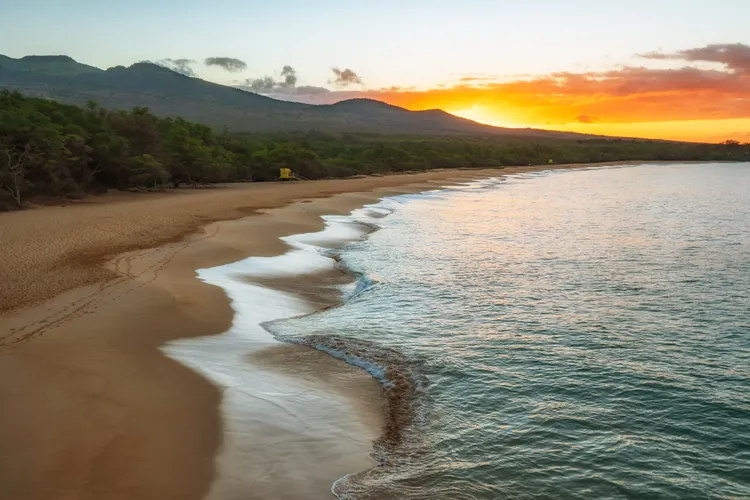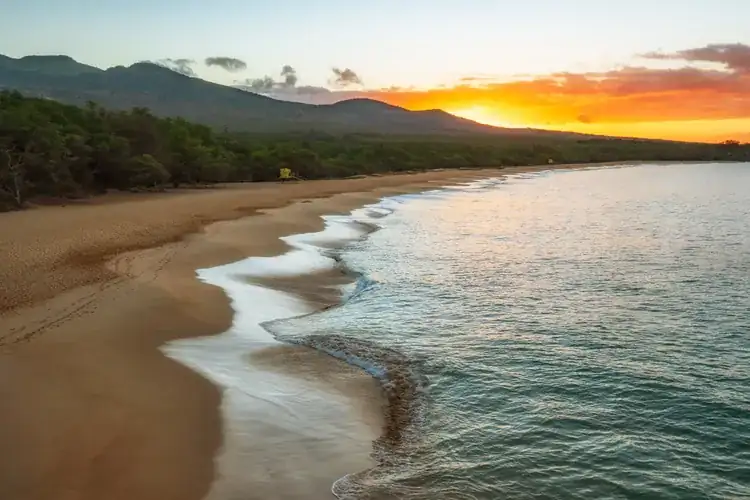
Maui Sunset: Best Spots and Times to Watch the Sky Glow
23 min readYndira W. Tonin
The Maui sunset is the one part of your trip that costs nothing, runs every single night, and still makes grown adults go silent and hold up their phones like they are filming the moon landing.
Everything here was checked and is current as of 2026.
Here is the short version. The best sunset in Maui is on the west and south coasts, Ka'anapali, Kapalua, Wailea, Makena, because that is where the sun drops straight into the ocean instead of behind a mountain. For a sunset with altitude, the Haleakala summit puts you above the clouds at 10,000 feet. For the kind that comes with dinner and a mai tai, you book a sunset sail out of Lahaina or Ma'alaea.
That is the whole answer. You could stop reading right now and go claim a beach chair.
But if you want to actually nail it, the right spot for your side of the island, the exact minute the sun goes down in the month you are visiting, and the rookie mistakes that turn a perfect evening into a parking lot standoff, stick around. We will do this properly.
Table of contents
- When is sunset on Maui?
- West Maui, the golden hour coast
- South Maui, Wailea, Kihei, and the Makena secret spots
- Haleakala summit, sunset above the clouds
- Sunset from the water, the Maui sunset sail
- The off script spots locals actually use
- Which Maui sunset is right for you?
- Where to stay for sunset views
- How to photograph the Maui sunset
- The green flash and other myths
- A few honest tips before you go
- FAQ
01
When is sunset on Maui?
Sunset on Maui lands between roughly 5:45 p.m. in mid winter and 7:15 p.m. in mid summer. That is a 90-minute swing across the year, and getting it wrong by even half an hour is the difference between a front row seat and sprinting across hot sand while the good part happens without you.
The pattern is simple. December and January give you the earliest sunsets, around 5:45 to 6:00 p.m. By June and July the sun hangs on until 7:10 or 7:15. Spring and fall sit comfortably in between, somewhere near 6:30.
Plan to arrive 45 minutes early. This is the single most ignored piece of sunset advice on the island. The light show starts well before the sun touches the water and keeps going for 20 minutes after it vanishes, that afterglow, when the clouds light up pink and orange, is often better than the main event.
So the move is, get there early, claim your spot, and treat the actual sunset as the middle of the show, not the start.
A quick reality check on the official times, the U.S. Naval Observatory and a sunset table for Kahului will give you the exact minute for your specific date. Screenshot it before you go, because cell service on the west side has the reliability of a chocolate teapot.
Maui sunset times by month
- Jan
- Feb
- Mar
- Apr
- May
- Jun
- Jul
- Aug
- Sep
- Oct
- Nov
- Dec
- Early (~5:45 to 6:15 p.m.) — Nov, Feb, shortest days, earliest sunsets
- Shoulder (~6:15 to 6:45 p.m.) — Spring & fall, the easy middle of the year
- Late (~6:45 to 7:15 p.m.) — May, Aug, longest days and golden hours
And do not bolt the second the sun's gone. The 20 minutes after sunset, photographers call it the blue hour, is when the whole sky shifts to deep violet, the first stars show up over the water, and most of the crowd has already left to go fight over dinner tables. It is quieter, cooler, and frequently prettier than the main event. Some of the most striking Maui sky photos are taken well after the sun has technically set.
One more timing note. Maui's trade winds usually ease in the evening, which is why sunset is also when the ocean goes glassy and the air finally stops trying to relocate your hat. The island seems to exhale right around golden hour. Lean into it.
02
West Maui: the golden hour coast
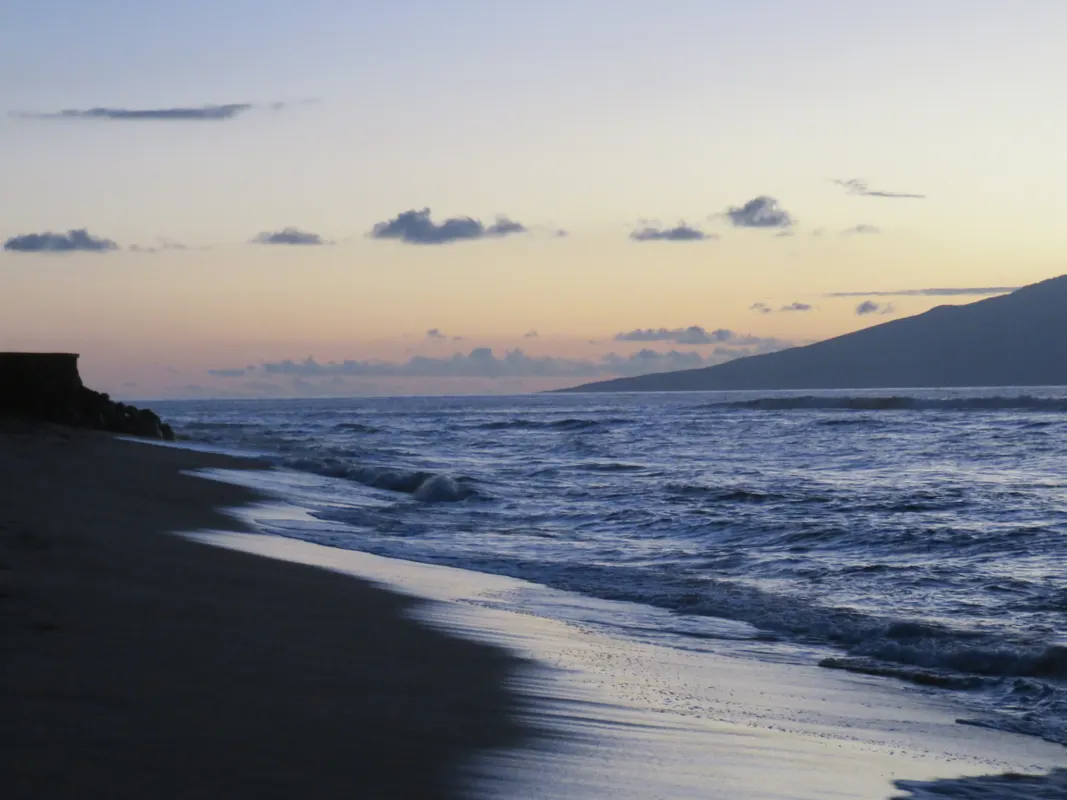
Photo, Karen Hammond / Pexels
If you only get one sunset on Maui, make it the west side. This whole coast faces the open Pacific with the islands of Lanai and Molokai sitting on the horizon, and the sun drops right between them like the geography was arranged by a wedding planner.
Ka'anapali Beach is the headline act. Three miles of gold sand, the cliff diving torch lighting ceremony off Black Rock (Pu'u Keka'a) every evening, and enough beachfront bars that you are never more than a short walk from a drink to hold while you stare at the sky. It is busy. It is also genuinely spectacular, and busy but spectacular beats empty and mediocre every time.
Kapalua Bay, a little farther north, is the calmer cousin. The bay is cradled by two rocky points, the water stays gentle, and the framing makes it one of the most photographed sunset spots on the island. Couples love it for a reason.
Napili Bay splits the difference, a perfect crescent of sand, mellow surf, and a fraction of Ka'anapali's crowd. If your idea of a great evening is a beach towel, a cooler, and not a single timeshare presentation in sight, this is your bay.
And then there is Lahaina. The historic town took a devastating hit in the 2023 wildfire, and the recovery is ongoing. Visit with respect, support the local businesses that have reopened, and check current conditions before you plan your evening around it.
Pack reef safe sunscreen for the afternoon beach time before the show, Hawaii law requires it, and a good reef safe sunscreen means you are not the person leaving an oil slick on a coral reef. For the full rundown of which sand to plant your chair in, our guide to the best beaches in Maui maps the whole coast.
03
South Maui: Wailea, Kihei, and the Makena secret spots
South Maui is the west side's quieter, slightly more grown up sibling. Less torch lighting spectacle, more "wine, soft sand, and the sun melting into the water while you pretend you live here."
Wailea Beach is the postcard. Manicured, resort lined, and backed by a paved beach path that is perfect for a pre sunset stroll past some of the most expensive real estate in the state. The sand is soft, the water is calm, and the sunset framing, open ocean with Kaho'olawe and Molokini on the horizon, is hard to beat.
Keawakapu Beach, just up the coast, is the locals' pick. A long, surprisingly uncrowded half mile of sand that sits at an angle giving it a clean, unobstructed view of the sun going down. Fewer resorts looming behind you, more space to breathe.
Then come the Makena spots, which is where the best sunset in Maui arguments usually start.
- Makena Cove (Secret Beach): a tiny, lava rimmed pocket of sand framed by palm trees. It is no longer a secret, it is a wedding photo and engagement shoot magnet, but the framing is genuinely stunning. Arrive early. It holds maybe a dozen people comfortably.
- Big Beach (Oneloa) at Makena State Park: wide, wild, and backed by no development at all. The park gate closes in the evening, so confirm the current closing time and do not get your rental towed.
- Po'olenalena Beach: a long, mellow local favorite with easy parking and almost none of the crowd. A quiet sleeper pick.
Kihei itself deserves a mention for the budget minded. The town strings together a run of west facing beach parks, Kamaole I, II, and III, that all have free parking that actually exists, and all fill up with locals, coolers, and the occasional impromptu ukulele the moment the light goes gold. It is less polished than Wailea next door, which is exactly why some people prefer it.
South Maui's other advantage is that it is drier and sunnier than the rest of the island, so your odds of a clear sunset are simply better here than almost anywhere else on Maui.
04
Haleakala summit: sunset above the clouds
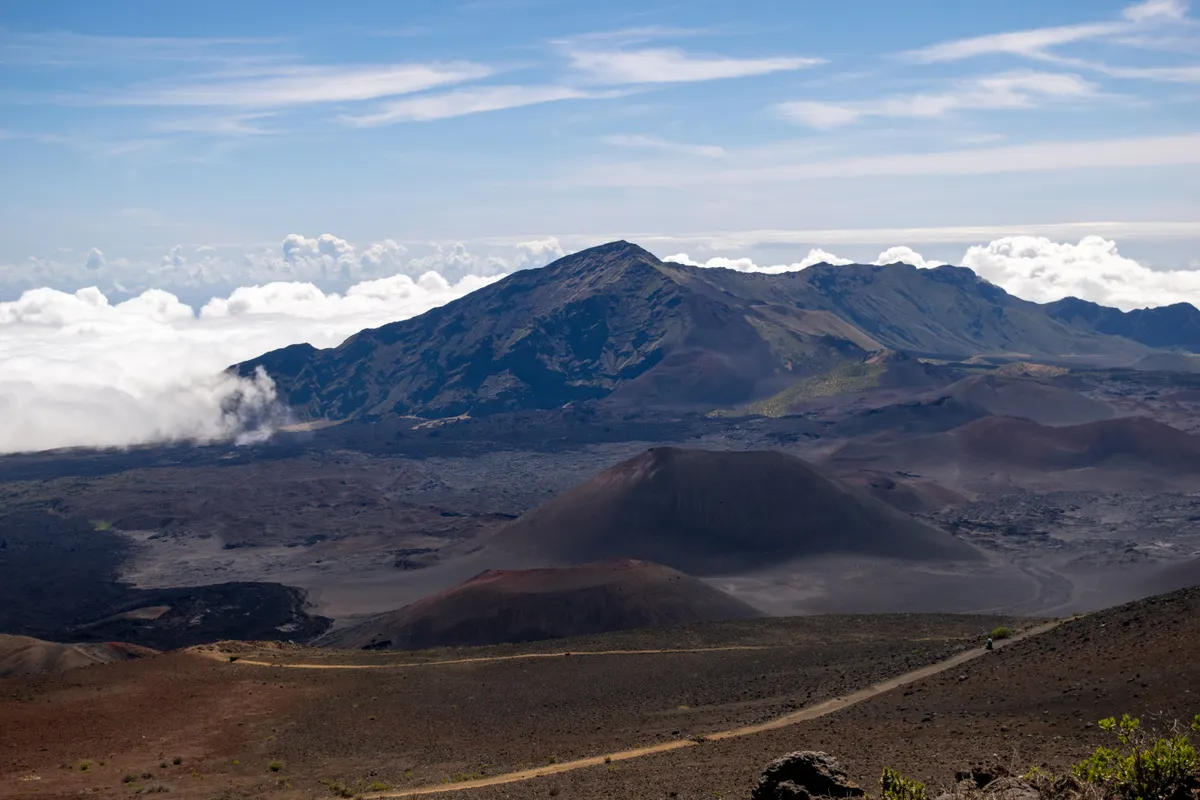
Photo, Aidan McCants / Pexels
Everyone obsesses over the Haleakala sunrise. They set 3 a.m. alarms, reserve a timed entry permit weeks ahead, and shiver in the dark with 200 strangers for a glimpse of dawn.
Here is my one strong opinion in this whole guide, the sunset at the Haleakala summit is the better deal, and almost nobody does it. Sunrise requires a reservation through the National Park Service and a wake up time that qualifies as a medical event. Sunset requires neither, no timed permit, a fraction of the crowd, and you do not have to negotiate with your own body clock at 3 a.m. to get there.
You are standing at 10,023 feet, often above the cloud layer, watching the sun sink into a sea of white while the volcanic crater glows red behind you. It is the closest thing to watching a sunset from an airplane while standing on solid ground.
Two non negotiables, because this is a real mountain,
- It is genuinely cold. Summit temperatures routinely drop into the 30s and 40s Fahrenheit, with wind. People show up in board shorts and flip flops and learn a hard lesson about altitude. Bring a real packable insulated jacket, long pants, and closed shoes.
- The drive down is in the dark. It is a long, winding descent with cyclists and nene geese, so take it slow and give your eyes time to adjust.
A couple more things the summit teaches people the hard way. At 10,000 feet there is about a third less oxygen, so move slowly, skip the summit entirely if you scuba dived that same day, and do not be surprised if a short walk to the overlook leaves you weirdly winded. Arrive at least 30 minutes before sunset to find parking at the Pu'u'ula'ula overlook and let your eyes adjust, and pack a flashlight or headlamp for the walk back to the car, once that sun's down, the summit is genuinely, stub your toe dark.
If you would rather not drive a 10,000-foot mountain road at night yourself, a guided Haleakala summit sunset tour handles the wheel while you handle the staring. Check the official National Park Service sunrise and sunset page for current hours and entry fees before you commit.
05
Sunset from the water: the Maui sunset sail

Photo, Jess Loiterton / Pexels
There is watching the sunset from the sand, and then there is watching it from the deck of a catamaran with a drink in your hand while a sea turtle surfaces twenty feet away and the entire west coast of Maui glows behind you. These are not the same experience, and the second one ruins you for the first.
Most sunset in Maui cruises leave from Lahaina or Ma'alaea Harbor, run two to three hours, and come in a few flavors, the casual cocktail and appetizers sail, the full sit down dinner cruise, and the winter version where you get whales as a bonus. December through April, you will often see humpbacks breaching while the sky turns, Maui's waters are the busiest humpback nursery in Hawaii.
The dinner cruises are the splurge, and on an anniversary or a honeymoon they are worth it. You are paying for the deck, the timing, and the part where you did not have to fight for parking or set up a single thing.
★4.8(974)
Maui Premium Sunset Dinner Cruise from Ka’anapali Beach
2.5 hours
Free cancellation
from
$166
The catamaran above sails out of Ka'anapali and pairs the west side sunset with dinner, it is the most popular pick on this coast for a reason. If you want a south side departure instead, the Ma'alaea sunset dinner cruise runs prime rib or fresh island fish from the other harbor.
A few practical notes before you book. Sailings are timed to leave the dock 60 to 90 minutes before sunset so you are actually on the water for the color, which means the listed departure time is earlier than your gut expects, read it twice and build in time to park at the harbor. Bring a light layer, too. Even in summer it gets breezy once the boat is moving across open water. And "open bar" means different things on different boats, unlimited on most cocktail sails, capped on some dinner cruises, so check before your third mai tai quietly becomes a line item.
One tip from people who've been seasick at sunset (a uniquely tragic way to ruin a beautiful moment), if you are prone to motion sickness, take something before you board, not when the swell hits. The ocean does not care about your dinner reservation.
06
The off script spots locals actually use
The beaches and the summit get all the attention, but Maui has a handful of sunset spots that rarely make the lists, and that is exactly why they are good.
Ho'okipa Beach Park on the north shore faces the wrong way for a classic over the water sunset, but it makes up for it with green sea turtles that haul out on the sand most evenings and the kind of windsurfers who make defying physics look insultingly easy, carving up the waves in the golden light. It is right on the Road to Hana route, so it doubles as a perfect first or last stop.
Lahaina Pali Trail rewards a short uphill hike with a panoramic, elevated view of the west Maui coastline and the islands beyond. You earn this one with your calves, but the payoff is a sunset most visitors never see.
'Iao Valley does not give you an ocean sunset, but the late light on the famous green Needle is its own quiet kind of magic, and the crowds have usually cleared out by then.
Olowalu, between Lahaina and Ma'alaea, is a wide, shallow, mellow stretch where the reef glows and the sunsets are huge. It is a roadside pullover that locals have been keeping low key for years.
And here is the contrarian move, your own resort's beach or lanai. There is a specific kind of joy in watching a perfect sunset having walked exactly forty steps from your room, holding a drink you did not have to buy at a bar, having fought no one for parking. Not every sunset needs to be an expedition. Some of the best ones are the ones you barely had to work for.
For the bigger picture of how to fill the daylight hours before the show, our guide to things to do in Maui covers the rest of the island.
07
Which Maui sunset is right for you?
Maui gives you four genuinely different sunset experiences, and the right one depends entirely on what kind of evening you are after. Picking the wrong one is not a disaster, there are no bad Maui sunsets, but matching the spot to your mood is how you go from "nice" to "the photo we framed."
Which Maui sunset is yours?
West Maui beachesOur pick
- Best for
- The iconic postcard — islands on the horizon, a drink within reach
- The catch
- Crowded, especially Ka'anapali at the Black Rock torch ceremony
South Maui
- Best for
- Soft sand, calm water, elbow room, and the island's clearest skies
- The catch
- Quieter scene — less spectacle, fewer beach bars
Haleakala summit
- Best for
- Above-the-clouds drama at 10,000 ft, and no reservation needed
- The catch
- Genuinely cold, plus a long dark drive back down
Sunset sail
- Best for
- Dinner, drinks, winter whales, and zero setup or parking
- The catch
- Costs roughly $90–$166 a head; book ahead in peak season
A little more on each, because the cards keep it short,
- West Maui beaches are for first timers and anyone who wants the iconic, postcard version with islands on the horizon and a drink within reach. It is the safe, spectacular default.
- South Maui is for couples and calm seekers who'd rather have soft sand and elbow room than a torch lighting ceremony and a crowd.
- Haleakala summit is for the once a trip bucket list swing, the dramatic, above the clouds version you will be describing to people for years.
- A sunset sail is for the special occasion, the anniversary, the "let us actually splurge tonight" evening where someone else handles every detail.
One more filter, your timeline and your weather luck. If you have got a single clear evening and you are torn between the summit and a sail, check the forecast first, the summit is only worth the drive on a genuinely clear night, while a sail still delivers something good under partial cloud. And if you are traveling with anyone who gets cold easily or carsick easily, the gentle answer is almost always a south side beach, no altitude, no swell, no negotiation required. The four card grid is tidy, but real trips are messier than a chart, pick for the weakest link in your group and nobody ends the evening quietly resenting you.
If you are on the island for several nights, the honest best answer is, do more than one. Beach sunset on night one, sail on your anniversary night, summit on the clear evening. They are free (mostly), and they never run out.
08
Where to stay for sunset views
Where you sleep on Maui quietly decides how many of these sunsets you actually catch. Stay on the right coast and the show comes to your lanai. Stay on the wrong one and every sunset becomes a 40-minute drive.
For sunset first lodging, base yourself on the west or south coast, they face the sunset, full stop. The north and east sides (Hana, Pa'ia, Haiku) are gorgeous in a dozen other ways, but they are built for sunrise, not sunset.
- Ka'anapali / Kapalua (West Maui): the resort strip with beachfront sunsets, the Black Rock ceremony, and walkable dinner. Higher prices, highest convenience.
- Wailea (South Maui): the polished, calmer luxury option, manicured beaches, reliable clear skies, top tier resorts. The honeymoon default.
- Kihei (South Maui): the value play. Same sunset facing coast as Wailea, a lot more condos and vacation rentals, a lot friendlier on the wallet.
- Lahaina area: recovering postfire. Check current availability and conditions before booking.
If you are weighing a resort against a condo or vacation rental, the sunset math is simple, a beachfront resort puts the show right outside your door but charges handsomely for it, while a Kihei condo a block back trades the thirty second walk for a much lower nightly rate and a kitchen to make breakfast in. Neither is wrong. The only genuinely bad sunset choice is basing yourself in central Maui near the airport to save a few dollars, then driving 30 minutes each way every single evening just to find an unobstructed horizon.
A west facing or ocean view room is worth the upcharge specifically because of the sunset, a room where you can watch the whole thing from bed pays for itself in evenings you did not have to leave. If you are planning a romantic trip around exactly this, our Hawaii honeymoon guide digs into the resort versus rental question in detail.
One booking tip, oceanfront and ocean-view are different categories at different prices, and "partial ocean view" can mean "if you lean off the balcony and look hard." Read the room description, not just the category name.
09
How to photograph the Maui sunset

Photo, Tyler Lastovich / Pexels
Your phone is better at sunsets than you think, and your instincts are probably sabotaging it. Here is how to come home with a photo that looks like the moment actually felt.
Tap to expose for the sky, not the sun. Tap the brightest part of the sky on your screen and the camera will darken the frame, saturating those oranges and pinks instead of blowing them out to a white smear. This one trick fixes 90 percent of disappointing sunset photos.
Get something in the foreground. A palm tree, a surfer, a lava rock, a silhouette of the person you are traveling with. An empty sky is pretty. A sky with a story in front of it is a photo. The silhouettes are doing the heavy lifting.
Shoot the afterglow, not just the sun. The best color often lands 10 to 20 minutes after the sun disappears. Everyone packs up the second it dips below the water, which is exactly when the sky does its best work. Be the person who stays.
Bring a small tripod for the low light. Once the sun's gone, there is not much light left, and handheld shots go blurry. A cheap travel tripod for your phone keeps the late, moody shots sharp and makes the couple selfie on the beach actually possible without recruiting a stranger.
Turn off the flash. I know it sounds obvious. I have watched a flash fire at a sunset from fifty yards away. The sun is 93 million miles off. Your little LED is not reaching it.
And then, and this is the important part, put the phone down and actually watch one. You will take 40 photos. You will keep two. The memory is the souvenir that does not live in a dead phone battery.
10
The green flash and other myths
Let us settle a few Maui sunset legends, because the misinformation out here is thicker than the sunscreen.
The green flash is real. That split second burst of green right as the sun's last sliver dips below a clean ocean horizon, it is a genuine optical phenomenon, not a tourist fairy tale. You need a flat, cloud free horizon and a bit of luck. Most people who "see" it are looking at the afterimage from staring at the sun, so do not do that. Glance, do not gawk.
No, you will not get a great sunset every single night. Maui has microclimates. The west and south stay drier and clearer. The north and east catch more clouds. A cloudy horizon can actually improve a sunset (clouds are what catch all that color) or flatten it entirely. It is a gamble, which is part of the charm.
The sun does not set "into" Haleakala from the beach. From the west and south coasts, it sets into the ocean, that is the whole point of those coasts. From central Maui (Kahului, Wailuku), the mountains can block the actual horizon, which is why nobody writes sunset guides about the airport.
You do not need to pay for a sunset. The single most expensive sunset and the totally free one happen in the same sky. A sail is worth it for the experience and the dinner, not because the sunset is somehow better at $166 a head. The sky does not check your receipt.
Sunset is not the time to swim out to "get a better view." The light fades fast, lifeguards go off duty, and the ocean at dusk is not where you want to be improvising. Watch from the sand.
11
A few honest tips before you go
A handful of things that separate a smooth sunset evening from a flustered one,
- Arrive 45 minutes early, every time. Worth repeating. Parking near popular sunset beaches fills up well before the sun does anything interesting.
- Bring a layer. Even at sea level, the temperature drops noticeably once the sun's down and the breeze picks up. At the summit, "a layer" means a real jacket.
- Pack out everything. These beaches are not cleaned by sunset elves. Whatever you carried in, bottles, snack wrappers, that collapsible chair, carries back out.
- Mind the park gates. Makena and a few others close in the evening. A towed rental car is a deeply unromantic end to a sunset.
- Check the weather, but go anyway. Even a "cloudy" forecast can deliver a stunner. Show up and find out.
- Download an offline map. West side cell service is patchy, and the exact moment you most want directions to a beach is the exact moment your phone decides to take a personal day.
- Bring a little cash. A few of the better lots and the food trucks parked near the beaches are still cash only, and nothing punctures a sunset run like circling town for an ATM.
And one honest aside, since I promised no sales pitch, we run sunset picnics, fully styled setup, food, the whole thing, but only on Oahu, starting at $349 for two. We do not operate on Maui, so on a Maui trip I would just tell you to grab a good bottle, claim a west side beach, and DIY it. If your island hopping also touches Oahu, that is a different conversation.
For the bigger sunset picture across all the islands, our guide to the best sunset in Hawaii compares Maui's against Oahu, Kauai, and the Big Island.
Now go stand on a beach and watch a star set into an ocean. It is the best free show in the Pacific, and it sells out every night.
Where to stay: compare Maui hotels on Booking.com or on Expedia to find your base.
FAQ
What time is sunset in Maui?
Sunset on Maui ranges from about 5:45 p.m. in December and January to roughly 7:15 p.m. in June and July. Spring and fall fall in between, near 6:30 p.m. Always check the exact time for your specific date, and arrive about 45 minutes early to catch the buildup and the parking.
Where is the best place to watch the sunset on Maui?
The best sunset on Maui is on the west and south coasts, where the sun sets directly into the ocean. Ka'anapali, Kapalua, and Napili on the west side and Wailea, Keawakapu, and Makena on the south side are the standouts. For a dramatic above the clouds option, head to the Haleakala summit. For a special occasion, book a sunset sail out of Lahaina or Ma'alaea.
Can you watch sunset from the Haleakala summit?
Yes, and it is an underrated alternative to the famous sunrise. Sunset at the Haleakala summit requires no timed entry reservation (sunrise does), draws far smaller crowds, and puts you above the clouds at over 10,000 feet. Bring a warm jacket, summit temperatures drop into the 30s and 40s Fahrenheit, and plan for a slow, dark drive back down.
Do you need a reservation for the Maui sunset?
No reservation is needed to watch the sunset from any Maui beach, and, unlike the Haleakala sunrise, none is needed at the summit for sunset either. The only sunset experiences you book ahead are sunset sails and dinner cruises, which sell out in peak season and on weekends.
When is the best time of year for Maui sunsets?
Maui has beautiful sunsets year round, but the south and west coasts are driest and clearest, giving you the best odds of a cloud free horizon. Winter (December through April) adds breaching humpback whales to sunset sails. Summer brings the latest sunset times, around 7:15 p.m., and the longest golden hours.
How early should I arrive for sunset on Maui?
Aim to arrive about 45 minutes before the listed sunset time. That buffer gets you a parking spot at popular beaches like Wailea and Ka'anapali, lets you settle in before the color starts, and means you are not the silhouette sprinting across the sand while everyone else is already filming. For sunset sails, plan to board at the posted departure time, which is usually 60 to 90 minutes before sunset itself.
Is a Maui sunset cruise worth it?
For a special occasion, yes. A sunset cruise pairs the view with dinner or drinks, no parking hassle, and, in winter, whale sightings, all from the deck of a catamaran. For an ordinary evening, a free beach sunset is just as gorgeous. The cruise buys you the experience and the convenience, not a better sun.
Disclosure: Some links on this page are affiliate links. If you book or buy through them we may earn a small commission, at no extra cost to you. As an Amazon Associate, we earn from qualifying purchases.