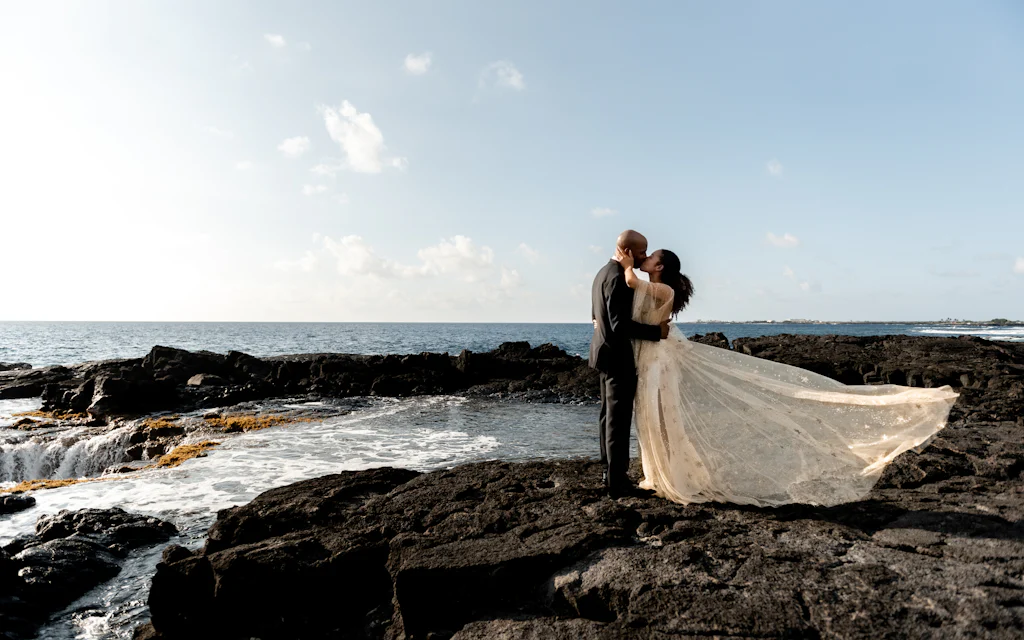
Hawaii Wedding Sites: The 10 Best Places to Marry on Oahu
21 min readYndira W. Tonin
The best Hawaii wedding sites on Oahu fall into two camps, free public beaches like Waimanalo, Makapu'u, and Kahala, where the ceremony costs you a $20 state permit and not much else, and resort venues like the Four Seasons or The Royal Hawaiian, where you trade money for polish, privacy, and a coordinator who handles everything. Pick the first if you want the raw Pacific and a small crowd. Pick the second if you want a lawn, a bathroom, and zero logistics.
That is the whole decision in two sentences. Everything below is the detail, which specific beaches are worth it, the permit and license paperwork nobody on the internet seems to explain, when to actually schedule the ceremony, and where to put your people for the week.
Table of Contents
- The best beach wedding sites on Oahu
- Public beach vs. resort venue
- Oahu wedding venues beyond the beach
- The permit and marriage license part
- What a Hawaii wedding actually costs
- When to schedule the ceremony
- Where to stay near your venue
- Make a few days of it
- FAQ, getting married on Oahu

Photo by Tanner Moran via Unsplash
01
The best beach wedding sites on Oahu
Oahu hands you a different mood every few miles. Here are the spots couples actually use, grouped by region, with the trade offs nobody mentions until you are standing there.
Waimanalo Beach (windward side). Three miles of soft white sand backed by the Ko'olau range, the postcard. Wide, uncrowded on weekday mornings, and big enough that another group setting up down the beach will not land in your photos. The water is gentle here, too, so it suits a barefoot ceremony with kids around. About 35 minutes from Waikiki.
Makapu'u Beach (southeast point). Lava rock formations, deep blue water, and a lighthouse on the headland. Dramatic rather than soft, better for ceremony photos than for a stroll, since the shore break can be punchy and the sand is steep. Roughly 40 minutes from Waikiki.
Kahala / Waialae Beach (near Waikiki). The convenient pick. Three miles from town, lined with palms, calm water, and a quiet residential feel. If your guests are staying in Waikiki and you do not want anyone driving an hour each way, this is the one that keeps the day simple.
Magic Island, Ala Moana Beach Park (Honolulu). A man made peninsula with a protected lagoon on one side and a clean line to Diamond Head and the sunset on the other. Central, easy parking, and the skyline backdrop is unmistakably Honolulu. It is also one of the more forgiving spots for an older crowd, flat, paved paths, shade, and restrooms in the park.
Diamond Head Beach Park (Honolulu). Tucked under the crater on the way to Kahala. Smaller and rockier underfoot, but the Diamond Head silhouette is the most recognizable frame in Hawaii. Make a morning of it, a guided Diamond Head tour for the out of town guests pairs naturally with an afternoon ceremony nearby.
Paradise Cove, Ko Olina (west side). A small white sand cove tucked beside the Ko Olina resorts, with a natural reef that keeps the water glassy and some of the most reliable sunsets on the island. The west side is drier and calmer than the windward coast, which is exactly why the resorts are out here in the first place.
Kualoa Regional Park (windward). The serrated cliffs and Mokoli'i island offshore (you have seen these ridges in roughly half the movies filmed in Hawaii) make this the most cinematic backdrop on Oahu. A broad grassy lawn fronts the beach, so it works for a larger group and for guests who would rather not stand in sand.
Sunset Beach / North Shore. Glassy in summer, big wave country in winter. Genuinely gorgeous, but it is a 60 to 75 minute drive and the winter surf crowds turn the two lane highway into a parking lot, only worth it if the North Shore means something to you specifically.
Pick the sand by your guest list
WaimanaloThe classic
The postcard, three miles of white sand under the Ko'olau. 35 min from Waikiki, gentle water, room to spread out.
Kahala / WaialaeClosest
Calm, palm lined, and 15 minutes from the Waikiki hotels, the one that keeps the day simple for guests.
Magic IslandEasiest
Flat paved paths, shade, restrooms, easy parking, the forgiving choice for an older or mixed age crowd.
Paradise CoveSunset bet
A reef calmed cove on the dry west side at Ko Olina, the most reliable sunset on the island.
02
Public beach vs. resort venue
Here is the honest trade off the venue listicles skip.
A public beach is essentially free, you pay the state permit (more on that below) and bring your own everything, chairs, arch, officiant, sound, flowers. You get the real, open beach and total freedom on location. You also get the public, anyone can walk through your shot, there is no private restroom beyond the park facilities, and you are responsible for cleanup and for following the rules. And there are rules, most beaches prohibit driving stakes into the sand or leaving permanent structures, amplified sound is often restricted, alcohol is banned in many city parks, and you are expected to pack out everything you bring in. None of it is hard. It just has to be planned.

Photo by Shoham Avisrur via Unsplash
A resort venue, Four Seasons Oahu, Aulani, The Royal Hawaiian, Halekulani, Turtle Bay, charges a site fee that often runs into the thousands, but you are buying a manicured lawn or semiprivate beach, restrooms, a rain backup, vendor coordination, and a place for guests to sleep and celebrate afterward. For anything over about 20 guests, the logistics alone usually justify the cost.
Public beach vs. resort venue
Public beachOur pick
From a $20 permit
- The real, open Pacific, any beach on the island
- You bring everything, chairs, arch, officiant, sound
- Anyone can walk through the shot
- Park restrooms, no rain backup
- Best under ~20 guests
Resort venue
Site fees ~$3,000 to 8,000+
- Manicured lawn or semiprivate beach
- Coordinator, vendors, and permits handled
- Private restrooms and a rain plan
- Rooms and the reception steps away
- Earns its fee past ~20 guests
The middle path, and the one most couples do not realize exists, is a small styled setup on a public beach for a small beach wedding, an elopement or vow renewal, just the two of you or a tiny group, a styled low table and florals, an officiant, and someone else handling the permit and teardown. Our Hawaii elopement guide breaks down the cost and the marriage license in full. If that is the vibe, that is the kind of thing we set up. For a full reception with a dance floor and a hundred guests, though, go with a resort, we are the wrong call for that, and we will tell you so.
03
Oahu wedding venues beyond the beach
Not every couple wants sand underfoot, and Oahu's named wedding venues, the ranches, gardens, and private estates, are the Hawaii wedding sites people picture when they say "destination wedding." A venue solves the three things a public beach cannot, privacy, a rain plan, and somewhere for eighty people to sit down. Published starting prices run from about $3,895 to five figures once a reception is involved, as of 2026. The variety is real, intimate outdoor spaces for twenty, garden chapels, ranch valleys, lawns that swallow 700, so treat this as a short tour of the wedding locations that come up in every planner conversation, not a directory.
Kualoa Ranch (Kaneohe)
The one couples ask about most. Kualoa Ranch is a 4,000-acre private nature reserve folded under the same serrated mountain ridges as the regional park next door, the valley has been the backdrop in so many films (Jurassic Park among them) that your guests will recognize it before you finish explaining where they are.
The garden venues here, Paliku Gardens and Moli'i Gardens, hold up to 250 guests with Kaneohe Bay and Mokoli'i island behind the ceremony, and weekday weddings are published from $5,495 + tax. For a backdrop this well known, that is one of the more reasonable site fees on the island.
The ranch also offers a dozen smaller ceremony sites beyond the two gardens, and your guests can spend the morning on ATV or zipline tours without leaving the property, the rare venue that doubles as the group activity.
Lanikuhonua Cultural Institute (Ko Olina)
The name translates roughly as "where heaven meets earth," which is a lot to live up to, and the property mostly does. Lanikuhonua is an oceanfront estate on Oahu's west coast beside the Four Seasons, open lawns, old coconut palms, a small private cove, and room for up to 700. Because it sits on the dry leeward side, its sunset odds are the best of any venue on this list. It is a private estate in function, too, the grounds host cultural events most of the year, wedding dates are limited, and the place stays genuinely secluded. Wedding photography is easy here, the lawn faces dead west into golden hour.
Haiku Gardens (Kaneohe)
A chapel and an open air gazebo above a lily pond, with the Ko'olau cliffs rising straight behind, the classic windward garden venue, green in the way only the rainy side of an island gets. Haleiwa Joe's restaurant sits on the same grounds, which makes the ceremony to reception walk about ninety seconds. The tropical gardens are the draw and the rain is the price, it is the windward side, so plan around morning light and treat the chapel as the built in indoor backup. Couples love the lily pond shot for a reason.
The North Shore wedding venues
If the crowd leans barefoot rather than ballroom, the North Shore has three estates worth the drive. Loulu Palm (Haleiwa) is a beachfront property for up to 150 guests, with rentals published from around $3,950. Sunset Ranch (above Pupukea) is a hilltop horse ranch with ocean views down the coast and room for 200, the ceremony meadow sits under a banyan tree overlooking the water. Dillingham Ranch (Waialua) is 2,700 acres of polo lawns and a century old palm grove running from the Waianae mountains to the sea.
The same caveat as Sunset Beach earlier applies to all three, each is a 60 to 75 minute drive from Waikiki, so put your guests up nearby or warn them honestly, they will be driving back in the dark.
The hotel lawns and the budget picks
The resort wedding venues cluster in two places. In Waikiki, The Royal Hawaiian's Ocean Lawn puts Diamond Head over your shoulder and takes anything from 50 to 800 guests, with Halekulani next door for something quieter. The Kahala Hotel publishes ceremony packages from $4,900. At Ko Olina, the Four Seasons and Aulani share the lagoons with Lanikuhonua. On the North Shore, Turtle Bay Resort, now the Ritz-Carlton, covers the polish end.
What the hotels actually sell is the complete wedding experience, every one offers wedding packages with the ceremony, reception, and rooms available in one contract, on site coordinators who run receptions every weekend, and an indoor ballroom when the rain plan activates.
One honest note, no resort on Oahu owns a private beach. Hawaii law keeps every shoreline public, so the brochure's "private beach ceremony" is really a semiprivate lawn with beach access. And there are real options below resort prices, Cafe Julia downtown seats about 180 in the courtyard and lanai of the 1927 Laniakea building, and Waimea Valley holds ceremonies inside a botanical garden up a North Shore valley.
Oahu wedding venues, by mood
Kualoa RanchCinematic
4,000 acres under the Ko'olau ridges, garden venues for up to 250, weekdays published from $3,895.
LanikuhonuaOceanfront
Oceanfront estate beside the Four Seasons at Ko Olina, lawns, a private cove, room for up to 700.
Haiku GardensGarden
Chapel and open air gazebo above a lily pond, Ko'olau cliffs straight behind, the windward garden classic.
Loulu PalmNorth Shore
Beachfront North Shore estate for up to 150, published from $6,350, barefoot, not ballroom.
How to choose a wedding venue on Oahu
Book for the guest list, not the photos. Under 10 people, skip the venue entirely, a permitted beach ceremony and a good dinner reservation beat a site fee, and the savings buy a professional photographer. Between 10 and 20, a styled beach setup still works if someone handles the logistics. Past 20, the unglamorous things, restrooms, parking, shade, sound, become the experience, and a venue with a coordinator earns every dollar. Whatever you choose, cap the drive at about 45 minutes from wherever most of your guests sleep. An hour each way is where a wedding day starts to fray.
Beyond the guest count, choosing comes down to style, and the homework is cheap, a local photographer's blog shows you real weddings at each venue in real light, which beats any brochure gallery. The dream wedding photos you have saved were mostly shot at the places above, that is what the site fee buys. And one thing is true of every wedding venue on this list, the view fills the photos, but the parking, the restrooms, and the shade decide whether your guests enjoyed the day.
04
The permit and marriage license part
This is the section every other guide leaves out, so read it carefully, there are two separate pieces of paper, and people mix them up constantly.
1. The marriage license is what makes you legally married. In Hawaii it costs $65, you apply online through the state, then both people appear in person, with photo ID, before a licensed marriage agent (they are all over the island) to pick it up. There is no blood test, no waiting period, and no residency requirement, which is part of why Hawaii is such a popular place to elope. The catch is timing, the license is valid for exactly 30 days and cannot be renewed, so apply during your wedding week, not the month before. Start at the official State of Hawaii marriage license site.
2. The beach wedding permit is what makes your ceremony legal on the sand. Hawaii requires a permit to hold a wedding on a state beach or shoreline, the standard shoreline ("Wiki") permit is priced at 10 cents per square foot with a $20 minimum, so a typical small setup lands right at $20 for its two hour window (as of 2026. Some state parks and county park venues run higher).
It is a separate application from the license, handled through the state land department. The details and application live on the Hawaii DLNR / State Parks site, and the official marriage license pages are a good plain English starting point.
If you book a resort venue or hire a full service planner, they almost always pull the beach permit for you. If you are doing a DIY public beach ceremony, that paperwork is on you, apply early, because approvals are not instant and popular dates fill. New to all this? Start with how to get married in Hawaii for the whole process step by step.
And budget for the officiant separately, a licensed marriage performer has to solemnize the ceremony and sign the license, whether that is a pro you hire or a friend who registers with the state to do it.
From engaged to legal on the sand
- 18 to 12 weeks out
Apply for the beach permit
The DLNR shoreline permit, 10 cents per square foot, $20 minimum. Popular dates and beaches fill, so file early.
- 2Within 30 days
Apply for the marriage license
$65, online through the state. It is valid for exactly 30 days and cannot be renewed, never apply before your wedding month.
- 3On island
Pick up the license in person
Both of you, with photo ID, before a licensed marriage agent. No blood test, no waiting period, no residency rule.
- 4Wedding day
A licensed performer signs
A registered officiant, a pro or a friend who registers with the state, solemnizes and signs the license.
05
What a Hawaii wedding actually costs
The legal minimum to get married in Hawaii is $85, the $65 marriage license plus the $20 beach permit, and couples have done it for exactly that, plus rings. Nobody budgets the minimum, though, so here are the planner published averages as of 2026, an all in beach destination wedding, ceremony, a simple restaurant reception, flights, and a week's hotel, averages $10,659, with a published range of $8,295 to $23,995, per a 15-year Hawaii wedding planner's cost data.
A venue wedding averages $16,838. The reception is the multiplier, the ceremony itself averages $3,200 on a beach against $5,200 at a venue, while travel and accommodation run about $6,931 either way.
That travel slice is also the consolation. Roughly $7,000 of the headline number is a Hawaii vacation you were presumably taking anyway, the wedding premium on top of the trip is smaller than the total makes it look. Most of the wedding planning workload, and most of the money, is the reception, not the ceremony.
For scale at the small end, our beach wedding packages run from $2,950 for up to 10 guests with the officiant, permit, florals, and styling handled, the services DIY couples most underestimate, and an elopement for two starts at $1,950. Both sit under the average cost of a venue ceremony alone, which is most of the argument for sand. The romantic math favors small, too, an intimate ceremony at golden hour with good photography runs a fraction of a ballroom night, and the natural beauty does not bill by the hour.
What a Hawaii wedding runs, as of 2026
06
When to schedule the ceremony
Two timing questions matter, the season and the hour.
Season. April through early June and September through early November are the sweet spot, warm, drier, fewer crowds, lower rates. Winter is peak season (and big surf on the North Shore). Summer brings the calmest water but the biggest crowds. There is no genuinely bad month to marry on Oahu. Our best time to visit Hawaii guide breaks down the trade offs month by month.
Hour. Aim for the last 90 minutes before sunset. The light goes soft and gold, the heat has broken, and the photos are unbeatable. Hawaii's sunset drifts from about 5:55 p.m. in December to 7:15 p.m. in June, our Oahu sunset guide has the month by month times so you can set the ceremony to land right in the glow rather than guessing.
Two more timing notes worth planning around. Weekdays are quieter and often cheaper than weekends at every venue, and a public beach is far emptier on a Tuesday morning than a Saturday afternoon.
The timing numbers that decide the photos
Always build in a weather backup. Hawaii's rain tends to blow through fast, but a five minute shower can still crash a 4 p.m. ceremony, a tent option or a flexible start time saves the day.
And if whales matter to you, the humpback season (December to March) overlaps with the most dramatic winter light, so a winter ceremony can come with a free show offshore, or book a whale watching tour and make it the main event.

Photo by Benoit Lamarche via Unsplash
07
Where to stay near your venue
Put your guests close to the ceremony and the entire day gets easier, no hour long convoys, no one getting lost on the H-1. There are two main bases on Oahu.
Ko Olina (west side) is best if you are marrying at Paradise Cove or one of the west side resorts. It is quiet, sunny, and the swimmable lagoons are steps from the rooms. You can search Ko Olina hotels (also on Booking.com) to compare the Four Seasons, Aulani, and the Marriott side by side.
Waikiki (Honolulu) is best for a Kahala, Magic Island, or Diamond Head ceremony, and for guests who want restaurants and nightlife within walking distance. It has the widest range of price points on the island, from beachfront landmarks to value high rises a block off the water, browse Waikiki hotels (also on Booking.com) to see the spread before you block rooms.
A small tip whichever side you choose, book a room facing west and your guests get the sunset thrown in for free.
Ko Olina or Waikiki for the guest block
Ko Olina, west side
Best for Paradise Cove and the west side resorts
- Quiet, sunny, and the most reliable sunsets on the island
- Swimmable lagoons are steps from the rooms
- Compare the Four Seasons, Aulani, and the Marriott side by side
- Beside Lanikuhonua for a west coast estate ceremony
Waikiki, Honolulu
Best for a Kahala, Magic Island, or Diamond Head ceremony
- The widest range of price points on the island
- Restaurants and nightlife within walking distance
- Beachfront landmarks down to value high rises a block off the water
- Closest base for guests who want the city, not the resort
For the wedding party specifically, think about the group, not just the couple. A block of rooms at one resort keeps everyone together and makes the morning of logistics far simpler than scattering guests across the island. If a bridal party is getting ready together, create the room block early, the photos start hours before the ceremony. And for a low key night with the whole crew before the big day, a group beach picnic on Oahu is an easy win, styled, fed, and set up for you, no one stuck planning.
If you have a big group or want a more private celebration, a large vacation rental on the windward side or at Ko Olina can host the gathering, the getting ready, and a small reception under one roof. And if your party is split across budgets and neighborhoods, our where to stay guides compare every base on the island.
Whichever you pick, give out of town guests the drive times up front, nobody wants to learn that the "quick trip" to the ceremony is 50 minutes, on the morning of the wedding.
08
Make a few days of it
Most of your guests flew a long way, give them a reason to stay. The add-ons that travel well for a wedding group,
- A sunset on the water. A small group sunset sail off Waikiki is the rare group activity that works for every age, open bar, the skyline going gold, a built in toast. It also makes a relaxed rehearsal dinner alternative the night before.
- A Diamond Head morning for the early risers, especially if you are marrying nearby, short, iconic, and done before the heat.
- Then the honeymoon. Once the wedding is behind you, the next decision is which island to disappear to, our Hawaii honeymoon guide lays out Oahu versus Maui, Kauai, and the Big Island for the week after.
A loose plan keeps a wedding trip from turning into a logistics marathon. Pick one group activity, one nice group dinner, and leave the rest open so people can rest, explore, or just sit on the beach, the full menu of activities lives in our things to do guides.
A loose plan for the wedding week
- 1The night before
A sunset on the water
A small group sunset sail off Waikiki works for every age, and it doubles as a relaxed rehearsal dinner alternative.
- 2Wedding morning
A Diamond Head morning
Short and iconic for the early risers, done before the heat, and a natural pair with an afternoon ceremony nearby.
- 3Wedding day
The ceremony at golden hour
Aim the vows at the last 90 minutes before sunset so the light does the decorating.
- 4The morning after
Schedule nothing
The couple's smartest move is to leave the next morning open. You will want it.
- 5The week after
Then the honeymoon
Decide which island to disappear to, Oahu versus Maui, Kauai, and the Big Island for the rest of the trip.
★4.9(2,336)
Waikiki Sunset Cocktail Sail on the Moana Catamaran
2 hours
Free cancellation
from
$90
The couple's smartest move is to schedule nothing for the morning after the wedding. You will want it.
And if the celebration itself is small, just the two of you, or a handful of people, a styled beach setup at golden hour is the kind of thing we put together, permits and all.
FAQ: getting married on Oahu
Do you need a permit to get married on a beach in Hawaii?
Yes. Hawaii requires a beach wedding permit for ceremonies on state beaches and shorelines, the standard shoreline ("Wiki") permit is $20 for a two hour window, applied for through the state land department, separately from your marriage license. Resort venues and planners usually handle it. DIY couples apply themselves, and should apply early.
How much is a marriage license in Hawaii?
$65. You apply online through the State of Hawaii, then both people appear in person before a licensed marriage agent. There is no residency requirement or waiting period, but the license is only valid for 30 days, so do not get it too far ahead.
What is the best beach to get married on in Oahu?
For convenience near Waikiki, Kahala (Waialae) Beach. For a dramatic windward backdrop, Waimanalo or Kualoa Regional Park. For reliable sunsets and calm water, Paradise Cove at Ko Olina. The best one depends on your guest count and how far you are willing to drive.
Can you get married on Waikiki Beach?
You can hold a small ceremony on the public stretches of Waikiki with the same state beach permit, but it is busy, narrow, and rarely private, most couples use it as a backdrop for photos and hold the actual ceremony at a quieter beach like Kahala or a nearby resort.
Is it cheaper to get married on a public beach or at a resort?
A public beach is far cheaper, your main cost is the roughly $20 state permit, but you supply everything and share the space with the public. A resort venue charges a site fee, often several thousand dollars, but includes a private setting, restrooms, a rain backup, and coordination. Small ceremonies favor the beach. Larger ones favor the resort.
When is the best time of year to get married in Hawaii?
April to early June and September to early November, warm, drier, fewer crowds, and lower rates. Whatever the month, aim the ceremony itself for the 90 minutes before sunset for the best light.
Do you need a wedding planner to get married in Hawaii?
Not legally. You can DIY a small beach ceremony with just an officiant, your marriage license, and the beach permit. A planner or a full service venue earns its fee once the guest count climbs or you want the permit, vendors, and a rain backup handled for you, but for a just the two of you elopement, you can absolutely run it yourself.
How far in advance should you plan a Hawaii beach wedding?
For a small ceremony, two to three months is comfortable, enough to lock the beach permit, the marriage license window, an officiant, and a photographer. For a larger wedding with a resort venue and traveling guests, six to twelve months is more realistic, since the best venues and vendors book out and group flights and room blocks are cheaper the earlier you reserve.
Where should you get married in Hawaii, Oahu, Maui, Kauai, or the Big Island?
Oahu, for most weddings with guests. It has the widest spread of wedding venues and beaches, the most direct flights, and rooms at every price point, so the trip asks the least of the people flying in. All four islands offer the same $65 license and similar permit rules, and all have sandy beaches you can marry on, a Maui wedding just trades Oahu's variety for resort polish, Kauai is the wild green choice for tiny ceremonies, and the Big Island is the wildcard. Our Hawaii honeymoon guide compares the four islands in depth.
Can you have the reception on the beach too?
Usually not a seated one. The shoreline permit covers a standing ceremony, not tables, tents, or a catered dinner on the sand, and alcohol is banned at most public beaches and city parks. Small groups solve it with a picnic style celebration after the vows. Everyone else books a restaurant, a venue lawn, or a vacation rental for the party.
Disclosure: Some links on this page are affiliate links. If you book or buy through them we may earn a small commission, at no extra cost to you. As an Amazon Associate, we earn from qualifying purchases.


