Shaka Sign: Hawaii's Hang Loose Hand Gesture, Explained (2026)
15 min readYndira W. Tonin
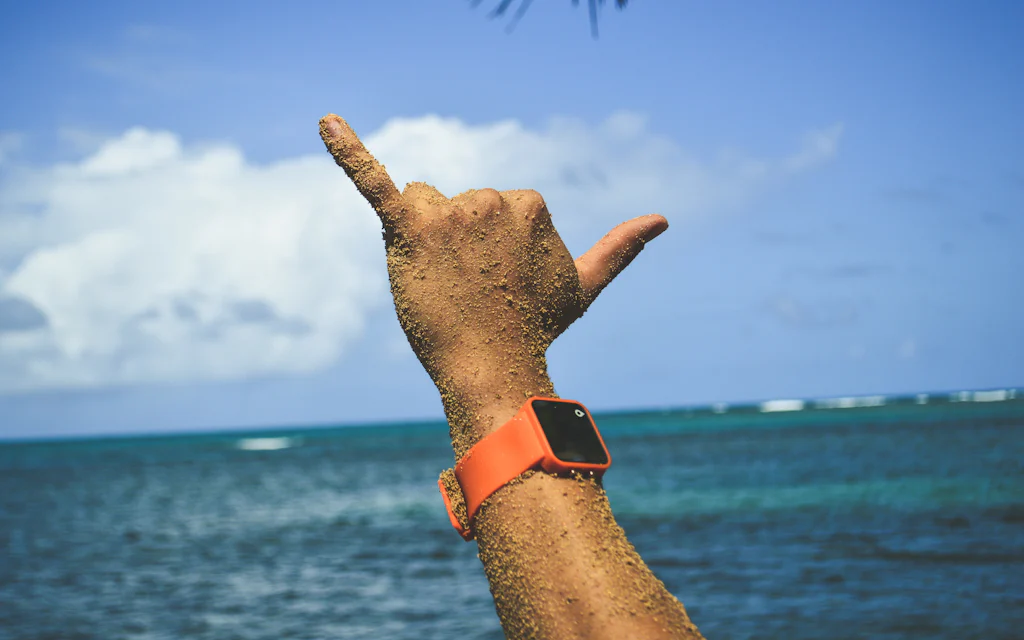
The shaka is Hawaii's iconic hand sign, thumb and pinky extended, the three middle fingers curled into the palm, often with a friendly shake of the wrist. You will see it everywhere in the islands, from drivers and surfers to grandmothers and toddlers, and it means, in a word, aloha, hello, goodbye, thank you, "hang loose," and "all good," all at once.
But the shaka is more than a "hang ten" pose for vacation photos. It is a genuine expression of the aloha spirit, friendship, gratitude, and respect, with real roots in Hawaiian history, and as of 2024 it is even Hawaii's official state gesture.
If you are heading to the islands, the shaka is one of the easiest and most rewarding bits of local culture to pick up. It costs nothing, it is welcomed from visitors, and it instantly warms up every small interaction, the driver who lets you in, the person you pass on a trail, the server who brings your plate lunch. Learn this one gesture and you will feel a little less like a tourist and a little more like a guest.
This guide covers what the shaka means, how to make one, where it came from (the famous Hamana Kalili story and the other theories), the etiquette of using it, and how it became an official symbol of the islands.
Table of contents
01
How to make a shaka
Making a shaka is simple. Extend your thumb and your pinky finger, and curl the three middle fingers down into your palm.
That is the whole gesture. For the full effect, hold your hand up with the back of it facing out (or the palm, both are fine) and give it a relaxed little shake from the wrist. The wrist wiggle is what separates a natural, lived in shaka from a stiff, posed one.
How to Throw a Natural Shaka
- 1Step 1
Extend thumb and pinky
Stick out your thumb and your pinky finger. These are the only two fingers that stay out.
- 2Step 2
Curl the middle three
Tuck the three middle fingers down into your palm. That is the whole shape of the gesture.
- 3Step 3
Shake from the wrist
Hold the hand up, palm facing either way, and give a loose little wiggle. The relaxed wrist is what reads as lived in, not posed.
- 4Keep in mind
Stay loose, not stiff
It is a relaxed wave, not a salute. Do not overthink which way the palm faces. Locals do it both ways.
A few small things keep it authentic. Keep it loose and casual, not rigid, this is a relaxed gesture, not a salute. And do not overthink which way your palm faces. Locals do it both ways without a second thought.
It is worth knowing what a shaka is not, because a couple of nearby gestures get confused with it. It is not the "call me" sign (which is held to the ear), and it is not the rock and roll "devil horns" (index and pinky, no thumb). The shaka is specifically thumb and pinky, three fingers down, a small distinction, but the one that makes it read as Hawaiian rather than generic.
You will also see variations in delivery. Some people give a single relaxed flash. Others hold it and waggle it for a few beats. Drivers often throw it low, near the window or the wheel. There is no correct intensity, match the moment. A quick flick says a casual "thanks". A held, wiggling shaka with a big grin says "great to see you."
If it feels awkward at first, that is normal, the relaxed wrist is the part most newcomers overdo or underdo. A good trick is to let the hand hang loose from the wrist, almost lazily, rather than holding it tense. Kids pick it up in seconds, which tells you everything, the shaka is meant to be effortless, so the moment you stop trying to perfect it, you have basically got it.

Photo by Fethi Benattallah on Unsplash
02
What the shaka means
There is no single translation of the shaka, because it carries a whole cluster of friendly meanings depending on the moment. At its core, it says aloha, and aloha itself means hello, goodbye, love, and a way of being all at once.
What a shaka says
Hello & goodbyegreeting
The everyday wave, thrown across a parking lot, a beach, or a car window.
Thanksmahalo
The classic driver's shaka, a quick thank you for being let in or waved through.
Hang looserelax
All good, no worries, take it easy, the laid back island default setting.
Right onstoked
Agreement, encouragement, shared good vibes, 'nice one,' 'we are good.'
Aloha spiritthe big one
Friendship, respect, gratitude, and local pride rolled into one gesture.
In everyday use, a shaka can mean hello or goodbye, a quick thank you, "hang loose" or "take it easy," "all good" or "no worries," and a general "right on" of agreement and shared good feeling. Context fills in the rest.
What ties all those meanings together is the aloha spirit, a genuine warmth, respect, and goodwill toward the person you are sending it to. That is why the shaka feels so different from a generic "cool" gesture, it is an offering of friendliness, not just a pose. The closest mainland cousins, a thumbs up, a friendly wave, a "thanks, man" nod, each capture a piece of it, but the shaka rolls them all into one.
Tone and context shade the meaning, the way "aloha" itself flexes from hello to goodbye. A shaka through a windshield is almost always "thanks." One thrown across a beach is "hey" or "all good." One at the end of a conversation is "see you" or "take care." You rarely have to think about which meaning is intended, the situation makes it obvious, and the warmth is the constant underneath all of them.
There is also a quiet humility to it. The shaka never demands attention or shows off. It is a low key, generous little signal that asks for nothing back except, ideally, another shaka. That modesty is a big part of why it has stayed meaningful even as it spread worldwide, it is hard to make a gesture this relaxed feel arrogant.
03
The origin: Hamana Kalili
The most widely told origin story traces the shaka to one man, Hamana Kalili of Laie (Lāʻie), on Oahu's North Shore, in the early 20th century.
As the story goes, Kalili worked at the Kahuku Sugar Mill and lost the three middle fingers of his right hand in an accident with the machinery. Unable to do his old job, he was reassigned to guard the sugar train that ran along the coast, waving it on when the way was clear.
His "all clear" signal, a wave with only his thumb and pinky remaining, became a familiar sight. Local kids, the story goes, began imitating the wave, and over time it spread from Laie across the island and the rest of Hawaii into the gesture we know today. It is a fittingly Hawaiian origin, a sign of welcome and reassurance, born from one man's everyday kindness.
Kalili is a real, documented figure, and his descendants and the Laie community still proudly claim the shaka as his legacy. The town sits on Oahu's North Shore near the Polynesian Cultural Center and Brigham Young University, Hawaii, and the story is woven into local memory there rather than being a vague legend.
What makes the tale resonate is not just the mechanics of the missing fingers, it is the meaning of the wave. Kalili's signal told people everything was okay, come on through. That a gesture born to mean "all clear, you are good" became the islands' symbol of friendliness and reassurance feels almost too perfect, which is part of why Hawaii holds onto this version so warmly.
04
Other origin stories
The Hamana Kalili story is the most beloved, but it is not the only theory, and historians treat the gesture's exact origin as uncertain.
One alternative credits Spanish immigrants in the plantation era, who are said to have folded down their middle fingers and raised thumb to lips as a friendly "let us share a drink" gesture toward the Hawaiians they met. Another names Lippy Espinda, a charismatic Oahu used car salesman and entertainer, who flashed the sign and the slang in his TV ads in the 1960s and helped popularize it widely.
The Theories Behind the Shaka
Hamana KaliliMost beloved
A Laie, Oahu, man who lost the three middle fingers of his right hand at the Kahuku Sugar Mill and waved the sugar train through with thumb and pinky. Kids imitated the wave.
Spanish immigrantsPlantation era
One theory credits plantation era Spanish immigrants who folded down their middle fingers and raised a thumb to the lips as a friendly offer to share a drink.
Lippy Espinda1960s TV
A charismatic Oahu used car salesman and entertainer who flashed the sign and the slang in his 1960s TV ads and helped popularize it widely.
The word itselfUncertain
The Oxford English Dictionary lists the origin of the word as uncertain, with one suggestion that it may come from Japanese, where Shaka is a byname for the Buddha.
Even the word "shaka" is a bit of a mystery. The Oxford English Dictionary lists its origin as uncertain, with one suggestion that it may come from Japanese (where "Shaka" is a byname for the Buddha). However it started, by the late 20th century the shaka had become an unmistakable shorthand for Hawaii itself, and a fixture of global surf culture.
These theories are not really in competition, and the truth is probably layered. A gesture this simple may well have emerged in more than one place. What matters is how Hawaii adopted it, named it, and filled it with the aloha spirit. The Kalili story is the one the islands have chosen to carry, and that choice is itself part of the gesture's meaning.
The spread is easier to trace than the spark. From the surf breaks of Oahu the shaka rode the global surge of surf culture in the 1960s and '70s, turning up wherever Hawaiian surfing did, California, Australia, Brazil, Japan. Today astronauts, presidents, and athletes throw it, which is exactly why the Hawaiian roots reminder matters, the sign traveled far from home.

Photo by Digital Reach on Unsplash
05
Shaka etiquette: how to use it
Here is the one strong opinion in this guide, use the shaka sincerely, or not at all. It is a real gesture of aloha, not a photo booth prop, and locals can tell the difference instantly.
The good news is that visitors are genuinely welcome to use it. Throwing a shaka is not appropriation, it is participation, as long as it is done with the right spirit. The best moves are the everyday ones, a shaka to the driver who lets you merge, a greeting to someone you pass on a trail, a "thank you" to the person who holds a door, a "we are good" across a parking lot. Used that way, it lands perfectly.
Where the shaka lands, and where it misses
The driving shakaLands
On two lane roads and one lane bridges, you let a car merge and a shaka comes back. Return it and you slot into the local rhythm.
Everyday goodwillLands
A greeting on a trail, a thank you to someone who holds a door, a we are good across a parking lot. Throw one real shaka with a smile and you get one right back.
The every photo shakaMisses
The forced tourist shaka with no warmth behind it. Flash it like a peace sign in a hundred selfies and you have missed the point.
The sarcastic shakaMisses
A mock shaka aimed at someone in frustration reads as the opposite of aloha, and locals clock it instantly. Used cynically, it just looks petty.
What to avoid is the forced, every single photo tourist shaka with no warmth behind it. The gesture means friendliness and respect. Flash it like a peace sign in a hundred selfies and you have missed the point. Throw one real shaka with a smile and you will get one right back, that exchange is the whole idea.
The driving shaka deserves its own note, because it is where visitors get the most mileage. On Hawaii's two lane roads and one lane bridges, traffic runs on courtesy, you let someone in, they throw a shaka, everyone stays relaxed. Return the favor, let a car merge, get your shaka, send one back, and you have quietly slotted into the local rhythm. It does more for the vibe of a drive than any amount of horn leaning ever could.
One gentle caution, a shaka should never be sarcastic or aimed at someone in frustration. Flipping the meaning, a mock shaka after someone cuts you off, reads as exactly the opposite of aloha, and locals clock it instantly. The gesture only works in its sincere form. Used cynically, it just looks petty. Keep it genuine and it never misfires.

Photo by Guy Kawasaki on Unsplash
06
Hawaii's official gesture
In 2024, Hawaii made it official. The state legislature passed Act 85, formally designating the shaka as the official gesture of the State of Hawaii, written into law (and even describing the form of the gesture).
Hawaii's Official Gesture, In Facts
The law was more than a fun bit of trivia. It recognized the shaka as a homegrown Hawaiian symbol, with the Hamana Kalili origin story and the islands' claim to the gesture front and center, at a time when the shaka has spread worldwide and its roots are easy to forget.
For visitors, the takeaway is simple, the shaka is not a generic surf bro sign that happens to show up in Hawaii. It started here, it means something here, and the state has formally claimed it as its own. Using it with that awareness, a small nod to where it comes from, is exactly the kind of respect that makes the gesture work.
The timing was not an accident, either. The push to make the shaka official came partly from a desire to anchor the gesture to Hawaii as it became a worldwide brand, on merchandise, in ads, and on the hands of people who have never set foot in the islands. Codifying it was a way of saying, this is ours, here is where it comes from, please remember that.
There is a nice symmetry in a state choosing a gesture of friendliness as an official symbol, alongside the usual state bird and flower. It says something about Hawaii's values that the thing it wanted to formalize was not a monument or a motto, but a small, daily act of goodwill between people.
07
The shaka and the aloha spirit
To really understand the shaka, it helps to understand the aloha spirit it carries. Aloha is not just "hello" and "goodbye". In Hawaii it is a whole way of treating people, with warmth, patience, humility, and care.
The shaka is that idea compressed into a flick of the hand. It says I see you, we are good, take care without a word. That is why it works equally well as a thank you in traffic, a hello to a stranger, and a goodbye to a friend, it is all the same underlying message of goodwill.
It also fits the islands' unhurried rhythm. A shaka is the opposite of rushing or honking. It is the gesture of someone who has decided that a little patience and friendliness costs nothing. Spend a week in Hawaii and you will feel that rhythm rub off, and you will find yourself throwing shakas without thinking, which is exactly how it should be.
That is the quiet test of whether you have "gotten" Hawaii, not whether you can name every beach, but whether the place has slowed you down enough that a stranger's small kindness gets a shaka instead of a blank look. The gesture is almost a barometer for the aloha spirit taking hold.
It is also a reminder that aloha runs both ways. Locals extend enormous warmth to visitors, and the shaka is one of the easiest ways to return it, to signal that you are not just taking from the islands but meeting their friendliness halfway. That reciprocity, more than any single rule, is what respectful travel in Hawaii looks like.
08
Seeing the shaka in Hawaii
You will not have to look hard. The shaka is woven into daily life across all the islands, on the road, in the water, behind the counter, and at every luau and gathering.
Where You Will See the Shaka
DriversOn the road
On every island the mahalo wave is practically the local turn signal. Let someone merge and you will get one back.
Surfers and lifeguardsAt the beach
A fixture in the water and on the sand, the laid back signal the gesture is best known for.
Luau and cultural showsGatherings
In photos and greetings at a luau or cultural show, where the aloha spirit is part of the welcome.
Official placesUnexpected
Newscasters signing off, athletes after a good play, politicians at ribbon cuttings, even the occasional road sign.
A few places you will see it constantly, from drivers on every island (the "mahalo" wave is practically the local turn signal), from surfers and lifeguards at the beach, in photos and greetings at a luau or cultural show, and anywhere the aloha spirit and the Hawaiian language are part of the welcome. It pairs naturally with the rest of Hawaii's living culture, from the ukulele to poi at the table.
You will also catch it in unexpected official places, newscasters signing off, athletes after a good play, politicians at ribbon cuttings, even the occasional road sign. It has become a kind of visual signature for the islands, the way a wink is for a person. None of it feels staged, because the gesture is genuinely part of how people communicate here.
The best way to learn it is simply to receive a few. Spend a couple of days driving, surfing, or chatting with people, and shakas will start coming your way. Return them, and you will feel the small, real pleasure of being waved into the islands' everyday kindness, which, in the end, is what the shaka has always been for.
A last, on brand note, we run beach picnics on Oahu (from $349 for two), and there is a lot of shaka throwing at a good sunset on the sand. However you spend your trip, learn the gesture, use it with a smile, and you will find Hawaii waves right back, that small exchange is one of the warmest things about the islands. Our picnic packages are here whenever you want the sunset half handled.
FAQ
What does the shaka mean?
The shaka is Hawaii's hand sign, thumb and pinky extended, middle three fingers curled, that expresses the aloha spirit. Depending on context it can mean hello, goodbye, thank you, "hang loose," "all good," or "right on." At its heart it is a friendly gesture of goodwill, respect, and shared good feeling.
How do you make a shaka sign?
Extend your thumb and your pinky finger while curling your three middle fingers down into your palm, then hold your hand up and give it a relaxed shake from the wrist. The palm can face either way. Keep it loose and casual rather than stiff, it is a friendly wave, not a salute.
Where did the shaka come from?
The most popular story credits Hamana Kalili of Laie, Oahu, who lost the three middle fingers of his right hand in a sugar mill accident and later waved the sugar train through with his thumb and pinky. Children imitating his wave are said to have spread the gesture. Other theories credit Spanish immigrants or 1960s entertainer Lippy Espinda. The exact origin is uncertain.
Is it okay for tourists to use the shaka?
Yes. Visitors are welcome to use the shaka, and doing so is seen as friendly participation, not appropriation, as long as it is sincere. Use it the way locals do, to thank a driver, greet someone, or say "all good." Just avoid the forced, every photo version with no warmth behind it.
Is the shaka the same as "hang loose"?
Essentially, yes, "hang loose" is the most common English translation, and the shaka is widely known as the "hang loose" sign in surf culture. But in Hawaii it carries more than that, it also means hello, goodbye, thank you, and the broader aloha spirit of friendliness and respect.
Is the shaka Hawaii's official gesture?
Yes. In 2024, Hawaii passed Act 85, formally designating the shaka as the official gesture of the State of Hawaii. The law even describes the form of the gesture and recognizes its Hawaiian origins, cementing the shaka as an official symbol of the islands.
Which hand do you use for a shaka?
Either hand works, there is no rule. The traditional Hamana Kalili story involves his right hand, but in everyday use people throw a shaka with whichever hand is free, including out a car window. Both palm out and palm in are equally acceptable.


