Loco Moco: The Classic Hawaii Comfort Food Explained
15 min readYndira W. Tonin
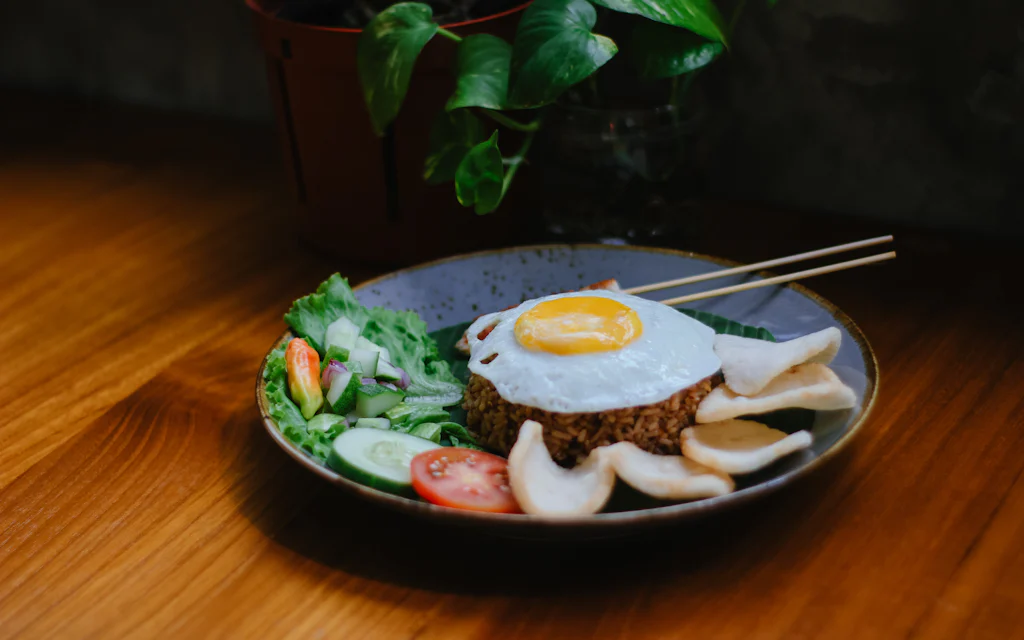
Loco moco is the ultimate Hawaii comfort food, a bed of hot white rice, a griddled hamburger patty smothered in rich brown gravy, and a fried egg on top. It is hearty, cheap, a little messy, and beloved across the islands, the kind of plate that locals grow up on and visitors fall for fast. If you want to eat like a local in Hawaii, loco moco belongs on the list.
These details were last verified in 2026.
It is also a genuinely local invention with a fun origin story, and it comes in endless variations once you get past the classic. Eaten at a no frills diner with a runny egg breaking into the gravy, it is one of the great cheap pleasures of the islands.
If you have only ever seen loco moco on an Instagram feed or a "weird foods" list, it is easy to underestimate, it looks like a pile of brown diner food, and it is. But that is the charm, it is honest, generous, unpretentious eating that three generations of locals love, and trying it is one of the easiest, cheapest ways to taste real, everyday Hawaii rather than the resort version.
This guide covers what loco moco actually is, where it came from, what it tastes like, the popular variations, where to eat the best version in Hawaii, and a classic loco moco recipe to make at home.
Table of contents
01
What is in a loco moco?
At heart, loco moco is four simple things stacked on a plate, humble ingredients that add up to something far greater than the sum of their parts.
Anatomy of a classic loco moco
1. White ricethe base
One or two scoops of hot white rice, the foundation that soaks up everything above it.
2. Hamburger pattythe protein
A seasoned beef patty, griddled, the classic core (though it gets swapped for Spam, kalua pork, and more).
3. Brown gravythe glue
A ladle of rich brown gravy poured over the patty and rice, tying the whole plate together.
4. Fried eggthe crown
A sunny side up egg on top, the runny yolk breaking into the gravy is the whole point.
From the bottom up, a scoop (or two) of white rice, a hamburger patty, a generous pour of brown gravy, and a fried egg crowning the whole thing. That is the classic. There is nothing fancy or precious about it, it is diner food, designed to be cheap and to fill you up, but the combination of starchy rice, savory beef, rich gravy, and a runny yolk is deeply satisfying in a way that has kept it on Hawaii menus for over 70 years.
It is usually served on a single plate or in a bowl (often as part of a "plate lunch," sometimes with a side of mac salad), eaten with a fork, and meant to be mixed together as you go. Think of it as Hawaii's answer to all the world's great rice and gravy comfort dishes, its own local creation, woven into the multicultural local cuisine we map out in our Hawaiian food guide.
Visitors sometimes mistake it for a mainland "hamburger steak", a fair guess, and wrong in ways that matter,
Loco moco vs mainland hamburger steak
Loco mocoOur pick
Hawaii, 1949
- Built on white rice, non-negotiable
- Sunny side up egg, yolk into the gravy
- All day food, breakfast through dinner
- Plate lunch portions, built to refuel
Hamburger steak
The mainland cousin
- Mashed potatoes or fries underneath
- No egg, the gravy works alone
- Strictly a lunch and dinner plate
- A square diner meal, not a monument
None of the components are exotic, which is exactly why it works as everyday food. It is the assembly, the proportions, and that final runny egg that make it unmistakably loco moco rather than just a burger over rice, a full meal stacked on one plate, invented to fill up hungry teenagers cheaply, which it still does.
02
The history: invented in Hilo, 1949
Loco moco has a specific, well documented birthplace and date, a rarity for a beloved dish, and the story is part of its charm.
It was created in 1949 in Hilo, on the Big Island, at a restaurant called the Lincoln Grill, run by Richard and Nancy Inouye. As the story goes, a group of teenagers from the Lincoln Wreckers Sports Club wanted something cheap, hot, and fast that was not just another sandwich. The Inouyes put a hamburger patty over rice with gravy (the egg came a little later), and a hearty new dish was born, at about 25 cents a plate.
The name is pure local whimsy, the boys named it after their friend George Okimoto, whose nickname was "Crazy", loco in Spanish, and "moco" got tacked on simply because it rhymed and sounded fun. The Lincoln Grill itself is long gone. Today Cafe 100, the Hilo institution the Miyashiro family opened in 1946, bills itself as the "Home of the Original Loco Moco" and serves more than 30 variations, and Hilo happily lets the origin claims coexist. From those Hilo beginnings, the dish spread across every island and up the price scale, but its soul is still that cheap, generous teenager's plate.
The origin story, in numbers
The dish is also a tidy little snapshot of 20th-century Hawaii. It uses rice (from the Asian plantation workers), a hamburger and gravy (American mainland influence), and a fried egg (universal), all assembled into something new and distinctly local, the same melting pot story behind plate lunch, Spam musubi, and so much of Hawaii's everyday food. Loco moco is not ancient or ceremonial. It is working class island ingenuity, born of wanting something hot and cheap that sticks to the ribs. That down to earth origin is a big part of why locals are so fond of it, and why it has never left a single diner menu in 75 years.
03
What does loco moco taste like?
Loco moco tastes like comfort, savory, rich, starchy, and deeply satisfying, the food equivalent of a warm blanket after a day in the ocean.
The magic is in how the parts combine. On their own they are plain. Together, the rich brown gravy soaks into the rice, the beef patty brings savory depth, and the runny egg yolk ties it all together into something almost luxurious. It is salty, umami heavy, and filling, not subtle, but deeply moreish.
Here is the one strong opinion in this guide, the egg has to be sunny side up. A loco moco lives or dies on that runny yolk breaking over the gravy and rice, it is the whole point. Order it over hard, or skip the gravy, and you have got a sad approximation. And while fancy restaurants now do "gourmet" loco moco with wagyu and demi glace, the truth is the $10 version at a local diner, eaten off a paper lined plate, is usually better than the $26 reinvention. This is soul food. It does not need improving.
A word on expectations, because loco moco surprises some visitors, it is not health food, and it is not trying to be. It is rich, heavy, and unapologetically indulgent, a plate built to refuel a surfer or fill a teenager, not to photograph for a wellness blog. Go in hungry, ideally after a morning in the ocean, and it is pure satisfaction. Order it as a dainty light lunch and you will be defeated halfway through. It is also quite salty (the gravy does that), so it pairs well with a big glass of water or an iced tea. Embrace what it is, generous, savory, a little excessive, and it delivers exactly the comfort it promises.
04
Loco moco variations
The classic is hamburger patty and egg, but loco moco is endlessly riffable, and the variations are half the fun. The common swaps replace the beef patty,
The variations worth ordering
Spam loco mocovery local
Fried Spam instead of (or with) the patty, an honest local thing, not a novelty.
Kalua porkleaning Hawaiian
Smoky shredded pork bridges the diner plate and traditional Hawaiian flavors.
Teriyaki beef or chickensweet savory
The teriyaki glaze swaps in for the plain patty.
Seafoodcoastal
Shrimp, mahi mahi, even ahi, the coastal twist.
Portuguese sausage or kalbiplantation heritage
Nods to the islands' mixed plantation table.
You will also see double patty and double egg monsters, vegetarian versions (a veggie patty or tofu, mushroom gravy), and upscale takes with hand formed patties and rich demi glace. The base formula, starch, protein, gravy, egg, is so sound that it carries almost anything. Try the classic first, then branch out. A kalua pork, teriyaki chicken, or Spam loco moco is a great second order, and it ties into the wider local food scene that makes Hawaii eating so much fun.
The variation that surprises mainland visitors most is the Spam loco moco, but Spam is genuinely beloved in Hawaii (the state eats more of it per capita than anywhere in the US, a legacy of plantation and wartime history), so fried Spam over rice with gravy and an egg is an honest, local thing rather than a novelty. The point is that loco moco is a format, not a fixed recipe, once you understand the rice protein gravy egg architecture, every version makes sense, and ordering a few different ones across a trip is a fun way to taste the islands' range.
05
Where to eat the best loco moco
Loco moco is everywhere in Hawaii, diners, drive-ins, food trucks, plate lunch counters, and even hotel restaurants, so you are never far from one. The best are usually the humblest.
The loco moco pilgrimage stops
Cafe 100Hilo, Big Island
Open since 1946 and self billed "Home of the Original Loco Moco", 30+ variations and the spiritual home.
Rainbow Drive-InKapahulu, Oahu
The iconic Honolulu drive-in, run by the Ifuku family since 1961, a perfect first plate.
Ken's House of PancakesHilo, Big Island
The 24-hour Kamehameha Avenue standby where Hilo actually eats.
Kihei CaffeKihei, Maui
A Travel & Leisure best breakfast pick where the loco moco earns the line out front.
Beyond those iconic stops, local diners and drive-ins statewide, Liliha Bakery, plate lunch counters, and small town grills, almost always do a solid, cheap version. The move is to eat it where locals do, a no frills counter, not a fancy restaurant. A Honolulu food tour is a great way to taste loco moco along with other local plates if you want a guided intro to the island's food.
A quick tip for finding a good one anywhere, look for the busy, unglamorous spots, a drive-in with a line of locals, a plate lunch counter, a diner that is been there forever. Those almost always beat a polished restaurant's version, and they are cheaper. Reading recent reviews for the words "loco moco" and "gravy" is a reliable filter. On the neighbor islands the same rule holds, small town grills and drive-ins are where the honest plates live.
Wherever you get it, loco moco is cheap, usually well under $15, and enormous, so come hungry. It is a perfect post beach or post hike refuel, and a genuine taste of everyday Hawaii rather than a tourist only treat. It is also one of the most reliable cheap eats for families and budget travelers, a single plate is often enough to split, and it turns up on nearly every casual menu, so you are never stuck hunting for it.
06
Loco moco recipe: how to make it at home
Loco moco is one of the easiest Hawaii dishes to recreate at home, four components, one pan plus a rice pot, ready in 30 to 40 minutes. This loco moco recipe serves four.
The ingredients: 2 cups uncooked white rice. 1 lb of ground beef (80/20, the fat keeps the patties juicy and flavorful. Leaner meat goes dry). Salt, black pepper, and a splash of Worcestershire sauce or shoyu (soy sauce) to season the patty mixture. 4 eggs. And for the gravy, 2 tablespoons each of butter and flour, 2 cups of beef broth, and, if you want it the local way, half a sliced onion and a few mushrooms.
The classic loco moco method
- 1Step 1
Cook the rice
Two cups of white rice in the cooker. Let it rest in its steam 5 to 10 minutes after it finishes.
- 2Step 2
Griddle the patties
A pound of 80/20 ground beef, seasoned and gently formed, 3 to 4 minutes per side, and do not overwork the mixture.
- 3Step 3
Build the gravy in the same pan
Butter, flour, then beef broth over the browned bits. Whisk and simmer 2 to 3 minutes until it thickens.
- 4Step 4
Fry the eggs sunny side up
Runny yolks, no exceptions. Crispy edges are encouraged.
- 5Step 5
Stack and serve
Rice, patty, gravy, egg, then break the yolk and eat it hot, fresh off the stove.
You cook everything in one pan, patties first over medium heat, about 3 to 4 minutes a side (if you like using a thermometer, pull them at 145°F), then set them aside and use the same pan for the gravy while the rice stays warm in the cooker.
A few tips that separate a good plate from a gray one. Mix the meat in a large bowl with your hands and stop as soon as it comes together, overworked patties turn tough. Scrape up the browned bits as you whisk the gravy. That fond is where the flavor lives. If the gravy will not thicken, keep it at a simmer another minute or two before you add more flour. And some local recipes stir a spoonful of ketchup or oyster sauce into the gravy for a faint sweetness, try it once before you judge it.
A few ways to level it up without overcomplicating it, extra gravy never hurt anyone. day old rice works if you like it a touch firmer. Topped with sliced green onions is the standard local serving move. And for the full island effect, add a scoop of macaroni salad on the side, plate lunch style. For a crowd, griddle a batch of patties, make one big pot of gravy, and fry eggs to order while everyone assembles their own, it works with whatever protein you have on hand. The patties and gravy can be made a day or two ahead and stored separately, which makes this one of the rare cooked from scratch recipes that is faster than takeout the second time. Eat it fresh off the stove, cheap and delicious and hard to mess up, which is the whole appeal, loco moco is honest home cooking, not a recipe to fuss over.
07
How locals eat Hawaii's favorite comfort food
A few small things separate a tourist loco moco from the way locals actually enjoy it.
First, mix it up. Loco moco is not meant to be eaten in tidy, separate bites, break the egg, swirl the yolk and gravy through the rice, and dig in. It is gloriously messy by design. Second, it is an any time food: locals eat loco moco for breakfast, lunch, or dinner (that egg makes it breakfast legal), and it is a classic hangover and post surf refuel. Third, embrace the plate lunch context, it often comes with the local "two scoop rice and mac salad" energy, and it is meant to fill you up for hours.
Fourth, pair it like a local: a loco moco with an iced tea, a POG (passion orange guava juice), or a local soda is the classic combo, and many people add a few shakes of hot sauce or shoyu at the table to taste. And if you are sharing, it splits well, order one loco moco and a side, and two people can graze.
And do not overthink the "best" version. The joy of loco moco is its unpretentiousness, a cheap, hot, generous plate at a counter where the menu has not changed in decades. Order it, mix it, enjoy it, and you have eaten a real piece of everyday island life, the same plate Hilo teenagers dreamed up in 1949. That accessibility is the point, there is no wrong way to eat a loco moco, no etiquette to learn, just a hot plate of comfort meant to be enjoyed.
08
Building a Hawaii food day
Loco moco is one stop on a genuinely great day of eating in Hawaii, the islands' local food scene is one of their underrated joys.
A perfect Oahu food crawl might string together a loco moco or plate lunch, some poke, a malasada for dessert, and a shave ice to cool down, savory, sweet, hot, cold, all in a day. Loco moco is the hearty anchor, have it for an early, filling breakfast or lunch and you are fueled for hours of beaches and hikes.
Timing helps you fit it all in without overeating, have the hearty stuff (loco moco, plate lunch, poke) earlier in the day when you have burned energy in the water, and save the sweet, lighter treats (shave ice, malasadas) for the afternoon. Most of these are cheap and casual, so a day of "eating around the island" costs far less than a few sit down restaurant meals, and tells you more about Hawaii. Loco moco, in particular, is a great way to start, it is filling enough to power a morning of beaches and hikes on a single inexpensive plate.
A last, on brand note, we run beach picnics on Oahu (from $349 for two), and while we do not serve loco moco at a sunset picnic, we are firm believers that the best Hawaii days mix great local food with time on the sand. Grab a loco moco, hit the beach, and you have got the formula. Our picnic packages handle the sunset half whenever you want it done for you.
FAQ
Is loco moco Hawaiian food?
Yes, local Hawaiian food, not traditional Native Hawaiian food. Loco moco was invented in Hawaii in 1949, so it is genuinely of the islands, but it belongs to the plantation era "local food" family (alongside plate lunch and Spam musubi) rather than to traditional Native Hawaiian cuisine like poi or kalua pig. Our Hawaiian food guide maps out the difference.
How many calories are in a loco moco?
Plan on roughly 1,000 to 1,500 calories for a classic diner plate, two scoops of rice, a beef patty, gravy, and an egg add up fast, and that is before the mac salad. Nobody orders loco moco for the macros. Order it after a morning in the ocean and call it fuel.
Is loco moco gluten free?
Usually not, the gravy is the problem. Diner gravy is almost always thickened with flour, so the standard plate is not gluten free even though the rice, beef, and egg are. At home it is an easy fix, thicken the gravy with cornstarch or a gluten free flour instead, and the rest of the recipe does not change.
Can you get loco moco outside Hawaii?
Yes, more easily every year. L&L Hawaiian Barbecue serves it at more than 200 locations across the mainland, plate lunch spots in most West Coast cities do a version, and Japan adopted loco moco decades ago, it is a lunch menu staple there, served in a bowl. None of them beat a Hilo counter, but they will cure the craving.
Is loco moco served at a luau?
Generally no. Luau menus lean traditional, kalua pig, poi, lomi salmon, haupia, while loco moco is everyday diner food. Do both, a luau for the traditional spread and the show, and a drive-in loco moco the next morning for the local life half of the picture.
Disclosure: Some links on this page are affiliate links. If you book or buy through them we may earn a small commission, at no extra cost to you. As an Amazon Associate, we earn from qualifying purchases.


