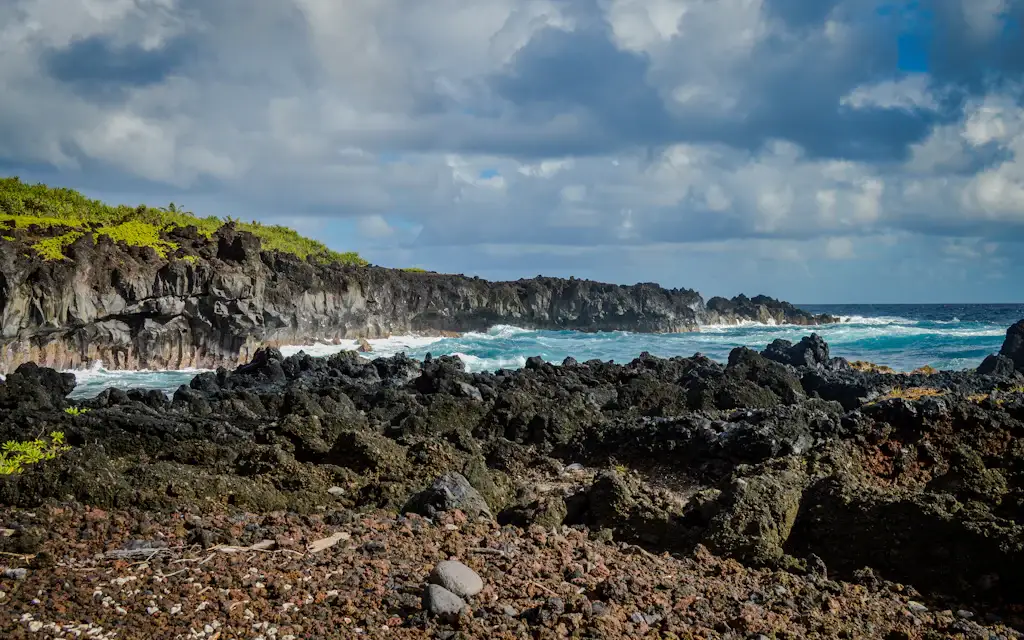
Venus Pools Maui: The Honest Truth About Waioka Pond
11 min readYndira W. Tonin
Venus Pools Maui is the guidebook nickname for Waioka Pond, a stream mouth swimming hole near Hana you reach by crossing private land — which is the part most guides skip. The pond itself sits on state land, but as of 2026 the only trail in cuts across posted Hana Ranch property, the spot floods fast enough to have killed people, and "Venus Pool" is a name no Hawaiian ever gave it. So this is the honest version: what it actually is, where it sits on the Road to Hana, why the access and the water are both real problems, and the legal places to swim instead.
It's a beautiful spot. It's also one of the few places on Maui where the responsible answer is usually "look, don't go." If you want the postcard without the trespassing and the flash flood risk, the back half of this guide is for you. We run beach picnics on Oahu, not Maui, so there's no pitch here — just the straight story on a place a lot of people search before they drive out to Hana.
01
What the Venus Pools (Waioka Pond) actually are
The real name is Waioka Pond, and "Venus Pool" is a label guidebooks invented decades ago that stuck because it sounds like somewhere you'd want to be. Old maps record the Hawaiian name as Waioka, likely shortened from Waioaoaka, which translates to something close to "open mouth of fresh water" — a description of exactly what the place is. Using the real name, when you talk about it, is a small sign of respect that the local people who live there notice.
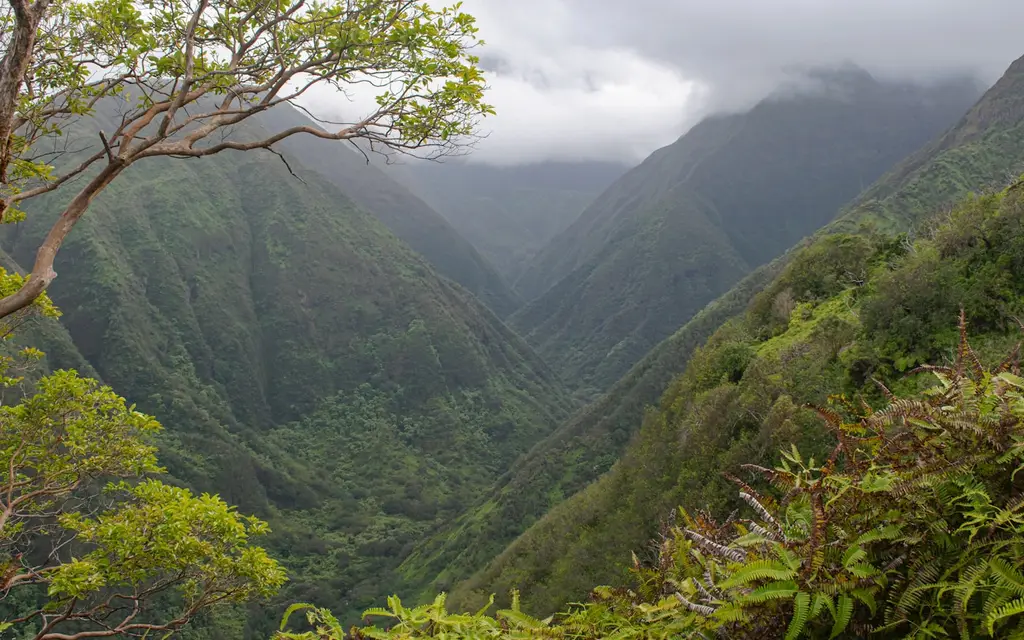
What you're looking at is not a waterfall and not a beach. It's a deep, natural pool where a freshwater stream meets the ocean, set in a lush green valley behind a low ridge of black rock, with cliff ledges around it that people jump from. On a calm, clear day it's genuinely striking: still green water, a sea cave at the far end, surf breaking just past the rock lip that separates the pond from the open Pacific. That postcard is real, and it's also the reason the place gets searched, photographed, and underestimated in roughly equal measure. On a map app it shows up as Waioka Pond; Venus Pool is just the nickname travelers type in.
It sits in East Maui, Hawaii, past the town of Hana, in the stretch of coast most visitors only see on a long Road to Hana day. There are no facilities — no bathroom, no lifeguard, no ranger, no posted hours. The hike in from the road is short, but reaching the water means a steep, muddy scramble — real hiking, not a stroll — and the whole area floods when the stream comes up. It's a wild spot on a remote coast, which is part of the appeal and most of the problem.
The spot: Waioka Pond (the "Venus Pool") · Where: ~mile marker 48 past Hana · Access: posted private land, no legal trail · The honest call: skip it and swim a legal pool instead
What it really is, before you drive out
02
Where Venus Pools Maui is, and the parking problem
Waioka Pond is located around mile marker 48 on the Hana Highway, past Hana town, on the ocean side of the road just before a bridge over the stream. If you've driven all the way to Hana and kept going toward Kipahulu, you've passed it. There's no sign, no gate marked for visitors, and nothing that says "park here" — which tells you most of what you need to know about how welcome cars are.
Parking is the first hard stop. There's roadside room for maybe five small cars on the ocean side, hemmed in by brush and thorns, and the parking area fills early. The other side of the road fronts private homes, and residents have made it clear, repeatedly, that they're tired of cars blocking their driveways and lawns. Hana police have shown up and written tickets to the long line of cars parked along the highway, no parking signs or not. A ticket on a rental car, on a road this far from anywhere, is a genuinely bad way to spend a Hana morning.
Getting to the Venus Pools Maui
Tap to open Google Maps with turn-by-turn directions.
It's roughly a 10-minute drive past Hana town, with no pullout sign and no marked lot, so the turnoff is easy to blow right past at highway speed. If you're determined to at least see it, park legally on the east side by the bridge and don't block anything — and if the handful of roadside spaces are full, the honest move is to keep driving rather than invent a spot in someone's yard. But "park legally" and "access legally" are two different questions, and the second one is where this gets complicated.
03
The access question at the Venus Pools: private land and kapu
Here's the part the pretty Waioka Pond (Venus Pool) photos leave out. The pond, the stream, and the shoreline are state land — but the only established trail to reach them crosses Hana Ranch private property. So you can stand on public ground at the water's edge, yet there's no legal way to walk there that doesn't cut across someone else's land.
Over the years the access has been a moving target: fences go up, someone cuts a gate into them, "no trespassing" signs appear and disappear, and the situation resets every season. That ambiguity is not an invitation. It means the landowner has repeatedly tried to keep people out, and people have repeatedly ignored it. When a place is kapu — set off, kept private — crossing anyway isn't a clever loophole. It's the exact behavior that gets beloved local spots fenced, posted, and lost for everyone.
The deeper point is that this is a place East Maui residents have asked visitors, plainly, to leave alone. Hana is one of the last truly Hawaiian communities on the island, and a swimming hole that locals would like to keep for themselves is not an unreasonable thing to grant them. If the gap in the fence and the worn path make it feel like everyone goes, remember that "everyone goes" is precisely the problem the signs are responding to. Respecting it is simple in practice: if the trail is fenced or posted when you arrive, turn around. A locked gate or a fresh sign is an answer, not an obstacle to route around, and the family that owns the land doesn't owe visitors an explanation for either one.
What's public vs what's private
On state land
public, in theory
- The pond itself
- The stream and the shoreline
- The rocks at the water's edge
On Hana Ranch land
private, posted, kapu
- The only established trail in
- The fence, the gate, and the worn path
- Every realistic way to actually reach the water
04
Why Waioka Pond is genuinely dangerous
Set the access question aside for a moment, because even with permission this would be a risky place to swim. Waioka Pond sits at the bottom of a flash flood zone, and people have died here. The stream that feeds the pool drains a large, steep watershed, and rain miles inland that you never see can make the stream flow heavily and send a wall of brown water down the streambed with almost no warning. A pool that was glassy and green ten minutes ago becomes a churning flood that pins swimmers against the rocks. This is not a rare freak event on this coast; it's how these streams behave.
The cliff jumping that draws people carries its own risks. The ledges range from roughly 10 feet up to a high 35 or 40 feet, but the pool has shallow spots only about five feet deep and hidden, submerged rocks you can't see from above. People misjudge the entry, hit bottom, or land on rock, and a single slip on the wet ledges can end the day. There's no lifeguard, the nearest hospital is small and far, and cell service out here is unreliable.
Then there's the water itself. Freshwater streams and ponds in Hawaii can carry leptospirosis, a bacterial infection picked up through cuts or swallowed water, and a brackish pond at the bottom of a runoff valley is exactly the kind of water the state health department warns about. Be aware that the danger here is seasonal but real: the smart move is to avoid the water entirely if there's any rain in the forecast. Add the long drive, the remoteness, and the lack of any help if something goes wrong, and the math is simple: the spot is beautiful and the downside is severe.
Why Waioka Pond is dangerous
Flash floodsDeadly
the stream drains a steep watershed; rain you can't see sends a deadly surge with no warning, and people have died here.
Shallow jumpsHazard
ledges run 10 to 40 feet, but parts of the pool are only about five feet deep over hidden rock.
No help nearbyHazard
no lifeguard, spotty cell service, and the nearest small hospital is far down the road.
Bad waterHazard
brackish runoff pools can carry leptospirosis, a real bacterial risk in Hawaii fresh water.
05
Where to swim legally near the Venus Pools instead
The good news is that the Road to Hana has some of the best legal swimming holes on Maui, Hawaii — no trespassing or gambling on a flash flood required. The honest swap for the Venus Pools is Twin Falls — a legal, easy, swimmable stop near mile marker 2 on a working farm that charges about $10 to park. The walk is a flat 1.8 miles round trip to a couple of pools, it's the most family-friendly waterfall hike on the island, and it's right at the start of the drive instead of two hours past Hana.
Farther along, Waianapanapa State Park gives you the famous black sand beach, sea caves, and natural freshwater pools, all on public land with a reservation system and real parking. And if your heart is set on the Hana side pools, the Kipahulu section of Haleakala National Park — the place people call Oheo Gulch — is the legal, ranger managed version of the same idea: a $30-per-vehicle pass good for three days, real trails, and the 400-foot Waimoku Falls on the Pipiwai Trail. Swimming in the pools there is currently closed for flooding safety, so it's a look-don't-swim stop, but it's a legal, spectacular one.
If you'd rather not drive the cliff road or fight for parking at all, a guided Road to Hana tour hands the wheel to someone who knows the road, hits the legal stops, and skips exactly the kind of trespassing problem the Venus Pools represents.
★4.9(945)
Maui: Road to Hana Adventure with Farm to Table Lunch
9 to 11 hours
Free cancellation
from
$259
Legal Road to Hana swims
Twin Falls (MM 2)Swim
a legal farm with about $10 parking and a flat 1.8-mile walk to swimmable pools - the honest swap.
WaianapanapaSwim
the black-sand-beach state park: sea caves, freshwater pools, real parking, by reservation.
Seven Sacred PoolsView
Oheo Gulch in Haleakala National Park - legal to visit ($30 for 3 days); pools closed to swimming for now.
A guided tourEasy
let someone else drive the cliff road and hit the legal stops - no parking scramble, no trespassing.
06
Making the call on the Venus Pools Maui
So, should you go? For most visitors, the straight answer is no — and not as a scold, but as the genuinely better trip. The access is contested, the parking gets ticketed, the water can turn deadly with no warning, and the people who live there have asked you not to. That's four good reasons stacked on one swimming hole, and Twin Falls is right there at mile 2 doing the same job without any of them. The only real draw of Waioka Pond over a legal pool is the bragging-rights photo, and a photo is a thin reason to trespass on a place where people have drowned.
If you only do one thing with this information, do this: cross the Venus Pools off the must do list and put a legal swim in its place. You'll get the green pool and jungle experience, you won't be looking over your shoulder for a ticket or a flash flood, and you'll leave a Hawaiian community a little more whole than you found it. Skip it, swim somewhere legal, and the only thing you'll have missed is a parking ticket and a story that starts with crossing a fence you were asked not to. That's the rare travel decision that's better for you and for the place.
The Road to Hana has more genuine, accessible beauty per mile than almost anywhere in Hawaii. You don't have to trespass to find it. For the swims actually worth planning around, read our Maui waterfalls guide next — nearly all of them sit right on the same drive, legal and signed.
Should you go to the Venus Pools?
For most visitors: noVerdict
contested access, ticketed parking, deadly water, and a community that has asked you to stay out.
It's kapu - respect itRespect
a gap in the fence isn't permission; "everyone goes" is exactly what the signs are responding to.
Swap in a legal swimDo instead
Twin Falls does the same job at mile 2, without the risk or the trespassing.
If you go anywayCaution
only in dry, settled weather, with permission, water shoes, and nothing valuable in the car.
FAQ: Venus Pools Maui
Is there a waterfall at the Venus Pools?
No — Waioka Pond is a stream mouth pool, not a waterfall. People expect a cascade because of the name and the photos, but it's a deep pond where a freshwater stream meets the sea, with cliff ledges around it rather than a falls. For actual waterfalls on the same drive, Twin Falls and the 400-foot Waimoku Falls on the Pipiwai Trail are the real thing.
Is the Venus Pool the same as the Seven Sacred Pools?
No, they're two different places people constantly mix up. Oheo Gulch sits inside Haleakala National Park's Kipahulu section, farther past Hana, and is legal to visit with a $30 pass. The Venus Pools (Waioka Pond) are a separate, unofficial spot around mile marker 48 with the private land access problem described above.
Can you camp at Waioka Pond?
No — there's no camping at Waioka Pond. It's a small, remote, privately accessed spot with no facilities of any kind. For legal camping near Hana, nearby Waianapanapa State Park — the black sand beach park — has cabins and a campground you can reserve, and the Kipahulu campground in Haleakala National Park is a tent option near Oheo Gulch.
What should you bring if you go anyway?
Sturdy water shoes, a dry bag, and zero valuables you'd hate to lose. The hiking and scrambling down is muddy, rocky, and slick, the rocks around the pool are sharp, and there's no safe place to leave anything in the car on a road known for break-ins. Check the inland weather and the stream first — any rain in the forecast turns the flash flood risk from theoretical to immediate.
Cover photo: Tyke Jones on Unsplash. Valley photo: rjb Studios on Unsplash.
Disclosure: Some links on this page are affiliate links. If you book or buy through them we may earn a small commission, at no extra cost to you. As an Amazon Associate, we earn from qualifying purchases.


